

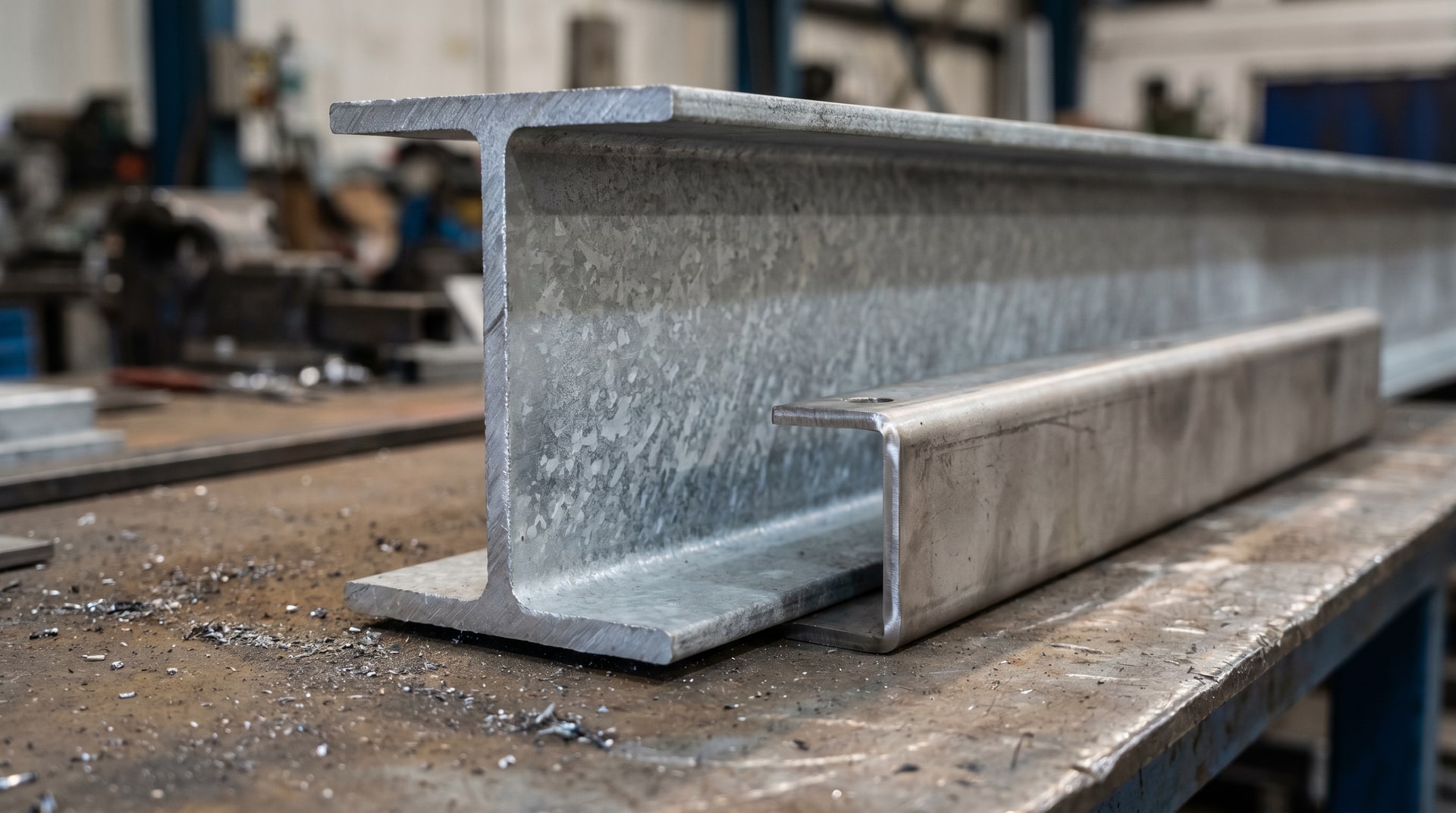
When a fabricator sends material to a galvanizing facility expecting a finished zinc coating, the assumption is almost always that the process will work. In most cases involving carbon steel, that assumption is correct. But when the substrate is something other than plain carbon or low-alloy steel, the outcome can be very different: bare areas, no coating at all, or a result that fails inspection before the piece ever leaves the plant. Understanding why this happens requires looking at the actual chemistry driving the galvanizing reaction, not just a list of metals that pass or fail.
The American Galvanizers Association addresses this directly in their article on what types of metals will not galvanize. At V&S Galvanizing, we expand on that foundation to explain what is actually happening at the material level, how iron content and alloy chemistry influence performance, and why this is often misunderstood in the field.
The Core Requirement: Iron as the Reactive Ingredient
Hot-dip galvanizing is not simply a coating process in the way that painting or powder coating is. It is a metallurgical reaction. When steel is immersed in a bath of molten zinc at approximately 830-850 degrees Fahrenheit, the zinc does not merely adhere to the surface. It reacts with the iron in the steel to form a series of zinc-iron intermetallic alloy layers, each progressively richer in zinc as you move toward the outer surface. The outermost layer is essentially pure zinc. Together, these layers constitute the galvanized coating.
This means iron is not optional. Iron is the reactive partner in the process. Without sufficient iron at the surface of a material, the zinc has nothing to chemically bond with, and no durable coating forms. This single principle explains why certain materials are fundamentally incompatible with hot-dip galvanizing, regardless of how the process conditions are adjusted.
Copper and Aluminum: Why They Cannot Be Galvanized
Copper and aluminum are two of the most common non-ferrous metals encountered in fabrication and construction. Both are widely used for their respective properties, but neither will develop a galvanized coating when subjected to the hot-dip process.
Copper contains no iron. When copper is immersed in molten zinc, there is no iron-zinc intermetallic reaction available to form the bonded alloy layers that define a galvanized coating. The zinc may wet the copper surface temporarily under certain conditions, but it will not produce the metallurgically bonded structure of true galvanizing. Any zinc that appears to cling to the copper surface is not a galvanized coating in the functional sense.
Aluminum presents a related but slightly different situation. Aluminum is also iron-free, so the same absence of the galvanizing reaction applies. Additionally, aluminum forms a tenacious native oxide layer almost instantaneously upon exposure to air. Even if the standard flux pretreatment used in galvanizing were able to prepare the surface, the lack of iron in the base material means no zinc-iron alloy layer can develop. Aluminum does have its own corrosion protection mechanisms, but galvanizing is not among them.
For projects that involve both carbon steel and copper or aluminum components, this material incompatibility is an important design consideration. Mixed-material assemblies should be evaluated carefully before submitting to a galvanizer, since only the ferrous portions will emerge with a coating.
400-Series Stainless Steel and the Role of Chromium
Stainless steel is an interesting case because it does contain iron. Yet 400-series stainless steels will not develop a galvanized coating either. The reason lies in the chromium content and how it behaves at the surface.
400-series stainless steels are ferritic or martensitic grades, defined primarily by their chromium content, which typically ranges from about 11% to 30%. Chromium is what gives stainless steel its characteristic corrosion resistance: it forms a passive chromium oxide layer on the surface that is extremely stable and self-repairing when damaged. This passive layer is beneficial for corrosion resistance in service, but it presents a fundamental problem for galvanizing.
The galvanizing process relies on a chemically active, clean iron surface. The flux treatment prior to immersion is designed to remove iron oxides and other contaminants so that the molten zinc can make direct contact with the steel. The chromium oxide passive layer on stainless steel is far more resistant to the flux chemistry than ordinary iron oxides. It does not clean away in the same way, and it effectively shields the iron in the base metal from the incoming zinc. As a result, the zinc-iron reaction that would form a coating cannot initiate properly, and no galvanized layer develops.
This is not a process optimization problem that can be solved by increasing flux concentration or adjusting bath temperature. It is a fundamental materials incompatibility. Engineers specifying corrosion protection for stainless steel components need to rely on the inherent corrosion resistance of the stainless alloy itself, or explore other surface treatment options suited to that material family.
Chrome-Moly Steels: Partial Galvanizing and Its Consequences
Chrome-moly steels occupy a more nuanced position in this discussion. These are low-alloy steels that contain chromium and molybdenum as alloying additions, used primarily for their elevated-temperature strength and pressure vessel applications. Unlike 400-series stainless, chrome-moly grades do not carry chromium levels high enough to form a consistently passivating surface layer in the way stainless steel does. They are ferrous materials in the conventional sense.
Despite this, chrome-moly steels often present significant problems in the galvanizing bath. The elevated chromium content, even at levels well below stainless steel ranges, can interfere with the zinc-iron reaction locally across the surface. The result is not a complete absence of coating, but a coating with substantial bare areas: regions where the zinc-iron alloy layers failed to develop properly, surrounded by areas where coating did form.
This creates a significant inspection and performance problem. A galvanized coating with many bare spots is not simply a cosmetic issue. The bare areas are unprotected steel, exposed to corrosion. And because the transition zones between coated and bare regions can create localized galvanic cells under wet conditions, the presence of partial coating may in some circumstances accelerate rather than retard corrosion at the exposed zones. From a quality standpoint, a component with pervasive bare areas would typically fail the coating continuity requirements of the applicable specification, requiring touch-up or rejection.
Fabricators working with chrome-moly grades should discuss material compatibility with their galvanizer before processing. The specific chromium and molybdenum content of the grade, along with the intended service environment, will inform whether galvanizing is a viable corrosion protection strategy or whether an alternative approach is warranted.
What Makes Carbon Steel the Right Substrate for Galvanizing
Given the compatibility issues described above, it is worth briefly clarifying why carbon steel works so reliably. Plain carbon steel and many low-alloy structural steels present an iron-rich surface that is well-suited to the galvanizing reaction. The iron in the steel is chemically accessible after proper surface preparation, the flux treatment effectively removes iron oxides, and the zinc bath temperature and immersion conditions are optimized for the carbon steel-zinc system.
That said, even within carbon steel, certain compositional variables influence how the galvanized coating forms, particularly silicon and phosphorus content in the steel. Some silicon ranges can produce thicker, more reactive coatings with a matte gray appearance. But these are variations in coating character, not failures of the galvanizing reaction itself. For the purposes of this discussion, the key point is that iron availability and surface chemistry are both prerequisites, and carbon steel satisfies both.
Our team processes carbon steel and many standard structural grades routinely through hot-dip galvanizing, and the consistency of results with compatible materials is what makes it such a reliable corrosion protection system for infrastructure, industrial, and architectural applications.
Mixed-Material Assemblies and Pre-Submittal Planning
One of the most common real-world scenarios where material compatibility becomes an issue is mixed-material fabrication: an assembly that combines carbon steel structural members with stainless fasteners, copper fittings, aluminum brackets, or other non-ferrous components. If such an assembly is submitted for galvanizing as a unit, the carbon steel portions will galvanize normally. The non-ferrous and incompatible ferrous components will not.
Beyond simply not receiving a coating, there are practical processing concerns. Copper in particular can cause contamination of the zinc bath if pieces enter the kettle with copper components attached. Even small amounts of copper contamination in the zinc bath can affect coating quality on subsequent work. This is why galvanizers need to know the full material composition of assemblies before processing, not after.
The most straightforward approach is to design assemblies so that corrosion protection strategies are matched to each material type. Carbon steel members get galvanized. Stainless steel components rely on their passive layer. Aluminum members are protected by anodizing or left with their natural oxide layer if the environment permits. When assemblies must combine these materials, connection design should account for the fact that they will emerge from the galvanizer with different surface conditions.
Engineering Implications for Specification and Design
For engineers writing specifications that call for hot-dip galvanizing, understanding which materials are and are not compatible is a prerequisite for producing a buildable document. Specifying galvanizing for a component later discovered to be 400-series stainless creates a conflict that cannot be resolved at the galvanizing plant. It has to be resolved at the design stage.
Similarly, when reviewing fabrication drawings or material takeoffs for galvanized projects, the material designations matter. A specification that calls for ASTM A36 structural steel and then substitutes a chrome-moly grade during procurement without engineering review can introduce galvanizing incompatibility mid-project, at significant cost and schedule impact.
The practical guidance here is straightforward: before any material goes to a galvanizer, confirm that the substrate is carbon or low-alloy steel appropriate for galvanizing. If there is any uncertainty about alloy content, particularly chromium levels, discuss the material with the galvanizer in advance. Most experienced galvanizers can assess whether a given grade is likely to galvanize successfully, and that conversation is far less costly than processing a rejected lot.
Work With a Team That Understands Material Compatibility Before Processing Begins
The limits of hot-dip galvanizing are defined by chemistry, not by process capability. Materials that lack iron, or that carry alloy additions creating a passivated surface barrier, simply cannot develop the zinc-iron metallurgical bond that defines a durable galvanized coating. Knowing this before fabrication decisions are made, before materials are ordered, and before assemblies are submitted to a galvanizer is what separates smooth project execution from costly late-stage problems.
At V&S Galvanizing, our team brings that materials knowledge into every project conversation. If you are working through a specification, evaluating mixed-material assemblies, or uncertain whether a particular steel grade is a good candidate for galvanizing, we are glad to work through those questions with you. Reach out through our contact page to connect with our technical team.
Frequently Asked Questions About Metals and Galvanizing Compatibility
Why can't copper be hot-dip galvanized?
Copper contains no iron, and the galvanizing reaction requires iron at the substrate surface to form zinc-iron intermetallic alloy layers. Without iron, there is no chemical bond between the zinc bath and the copper surface, so no galvanized coating can develop.
Why won't 400-series stainless steel galvanize even though it contains iron?
400-series stainless steels carry high chromium content that creates a stable passive chromium oxide layer on the surface. This layer resists the flux chemistry used in galvanizing and prevents the zinc from making direct contact with the underlying iron, blocking the reaction needed to form a coating.
What happens if you try to galvanize aluminum?
Aluminum does not contain iron and also forms a tenacious native oxide layer immediately upon air exposure. Both factors prevent the zinc-iron alloy reaction from initiating. The result is no functional galvanized coating, regardless of process conditions.
Can chrome-moly steel be galvanized at all?
Some chrome-moly grades can develop a partial galvanized coating, but the result typically includes many bare areas where the elevated chromium content interfered with the zinc-iron reaction locally. A coating with pervasive bare areas will generally fail specification requirements and raises real corrosion performance concerns in service.
Is there a chromium threshold above which steel will not galvanize?
The source literature does not define a precise numerical threshold, but the pattern is clear: as chromium content increases, galvanizing compatibility decreases. Standard carbon steels with trace chromium galvanize reliably. Low-alloy chrome-moly grades produce inconsistent coatings with bare areas. High-chromium 400-series stainless steels do not develop a coating at all.
What should a fabricator do before submitting a mixed-material assembly for galvanizing?
Identify every material in the assembly and confirm that non-ferrous and incompatible ferrous components, such as copper fittings or stainless fasteners, are either removed before processing or noted for the galvanizer. Copper contamination in the zinc bath is a real risk, and the galvanizer needs accurate material information to assess the job correctly.
Does the galvanizing process differ for different compatible steel grades?
The fundamental process is the same, but steel chemistry, particularly silicon and phosphorus content, can influence coating thickness, appearance, and reactivity in the bath. These are variations in coating character among compatible materials, not compatibility failures. Discussing specific grades with your galvanizer before processing helps set accurate expectations.
Can any surface treatment make non-ferrous metals galvanizable?
No standard pretreatment resolves the fundamental incompatibility. The zinc-iron alloy reaction requires iron in the base material. No flux or surface preparation chemistry can substitute for iron that is not present, or overcome the passivating layer on high-chromium alloys in a way that produces a durable, specification-compliant coating.
