

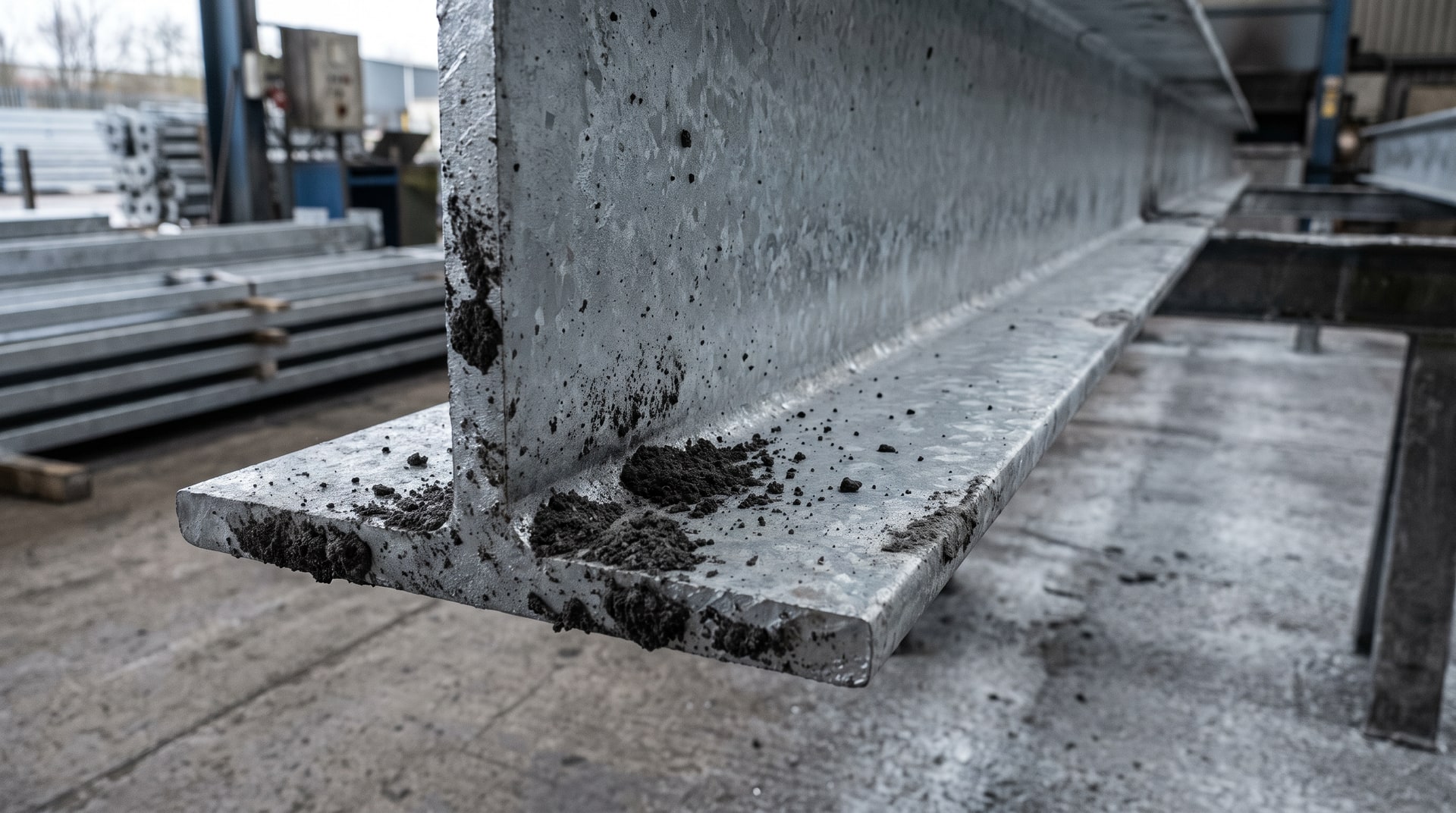
Anyone who has worked around a hot-dip galvanizing operation long enough has encountered it: a freshly galvanized structural beam pulled from the kettle, looking clean and metallic on most surfaces, but with a cluster of black powdery deposits clinging to the underside of a top flange or tucked inside a recessed corner. The reaction is usually alarm. The part looked perfect everywhere else, and now there is this dark, dusty material that looks like contamination, damage, or a process failure. In most cases, it is none of those things.
What you are looking at is a skimmings inclusion, one of the more visually striking but technically benign conditions that can appear on a galvanized surface. Understanding what it is, why it forms, and what the applicable specification actually permits makes all the difference between a rational response and an unnecessary rejection dispute.
The American Galvanizers Association addresses this directly in their article on skimmings inclusions. At V&S Galvanizing, we expand on that foundation to explain what is actually happening at the material level, how kettle chemistry and part geometry influence where skimmings appear, and why this condition is often misunderstood in the field.
How Zinc Oxide Forms on a Molten Zinc Surface
To understand skimmings inclusions, you first need to understand what happens at the surface of a galvanizing kettle during normal operation. The kettle holds molten zinc at temperatures typically in the range of 820 to 860 degrees Fahrenheit. That surface is constantly exposed to ambient air, and zinc, like most metals in a molten state, reacts with atmospheric oxygen when given the opportunity.
The result is a thin, continuous layer of zinc oxide that forms on top of the melt. This is not a sign of a problem with the zinc or the process. It is simply the natural oxidation behavior of the metal at elevated temperature. Operators routinely skim this layer off the surface before and during dipping, which is where the term "skimmings" originates. The material removed during skimming is primarily zinc oxide, and it has a characteristic dark, powdery or dross-like appearance.
The oxide layer can also incorporate small amounts of zinc chloride or ammonium chloride from the flux chemistry used earlier in the galvanizing process. Flux residues that are not fully driven off during preheating can migrate to the zinc surface and become incorporated into the oxide skin. This does not fundamentally change the visual character of the skimmings, but it does explain why the composition of the deposit is not pure zinc oxide in every case.
Why Skimmings End Up Trapped Under Flanges
The geometry of the steel being galvanized has a direct influence on whether skimmings inclusions appear and where they land. When a structural member like a wide-flange beam is lowered into the kettle at an angle (as is standard practice to allow gases and air to escape), the molten zinc flows across the steel surface and the part becomes fully immersed. On withdrawal, the steel is lifted back out through the zinc surface.
As the part clears the melt, the surface oxide layer that had re-formed during the dip gets displaced by the emerging steel. Sections of that oxide film can fold underneath horizontal surfaces, particularly under the top flanges of beams, inside channels, or along any geometry that traps the floating oxide as the part rises. The oxide is lighter than the molten zinc and floats. Any configuration where steel emerges and creates a pocket or overhang can scoop up that floating material and pin it against the newly coated surface.
This is not a failure of technique in most instances. Even experienced operators dipping well-designed parts will occasionally produce a skimmings inclusion under a deep flange or in a tight interior corner. The physics of the situation create conditions where some entrapment is difficult to fully avoid. Fabrication geometry that limits drainage and air venting compounds the problem, which is one reason vent and drain hole placement matters so much in the design phase.
What ASTM A123 Actually Permits
ASTM A123 is the governing specification for hot-dip galvanized coatings on iron and steel articles. Section 6.4 of that standard addresses appearance, and it explicitly does not prohibit skimmings from appearing on the coating surface. That allowance is not an oversight or a concession to process limitations. It reflects the technical reality that the presence of a skimmings deposit does not compromise the protective function of the coating beneath it.
The key distinction embedded in the specification is between a coating defect and a cosmetic deposit. A true coating defect, such as bare steel exposed through the coating or a region with insufficient zinc thickness, represents a failure of corrosion protection. A skimmings inclusion is neither of those things. The zinc coating formed correctly on the steel surface underneath the deposit. The oxide material simply settled onto the surface during withdrawal and adhered as the zinc solidified.
Understanding this distinction is important for anyone involved in inspecting galvanized steel against ASTM A123. A rejection based solely on the presence of skimmings is not supported by the specification. That said, the practical realities of customer expectations create their own pressures, which we address further below.
The Coating Beneath the Powder Is Intact
One of the most important facts about skimmings inclusions is that the galvanized coating underneath them is not affected. When a cross-section of a skimmings inclusion is examined under a microscope, the image shows the black oxide deposit sitting on top of an intact zinc coating that covers the steel substrate in the normal layer structure. The intermetallic layers have formed, the free zinc outer layer is present, and the coating thickness in that area is within the expected range.
This is fundamentally different from a situation where a flux inclusion or other contamination interferes with the metallurgical bonding during the dip. In those cases, the coating itself may not form properly, leaving voids or unbonded regions. A skimmings inclusion does not prevent coating formation. The zinc bonded to the steel before the oxide film arrived on the surface, so the protective architecture of the coating is complete regardless of what sits on top of it.
For corrosion protection purposes, a skimmings deposit does not reduce the service life of the coating. The zinc beneath it will oxidize, carbonate, and form the stable patina layer the same way it would on any other surface area. The black powder itself is not corrosive to the steel and does not accelerate zinc consumption in that area.
Why Customers Still Reject Parts with Skimmings
The specification permits skimmings, the coating beneath them is intact, and the corrosion protection is uncompromised. Yet in practical experience, most customers will not accept a galvanized part that visibly carries deposits of black powder. This is not an unreasonable position, even if it does not align strictly with the technical specification.
Part of the issue is aesthetics. When a customer receives a structural beam for a visible architectural application, or even a utilitarian structural application where the work is expected to look professionally finished, a cluster of black deposits on a flange does not inspire confidence. It looks like something went wrong, even when nothing did. For customers who are not deeply familiar with galvanizing chemistry, distinguishing a benign skimmings deposit from actual contamination or coating failure is not intuitive.
There is also a practical concern about the deposit itself. While the underlying coating is sound, the black powdery material is loosely adherent and will eventually shed. In some service environments, that shedding material could be a nuisance. For structures where the steel is located above equipment, finished surfaces, or areas of human activity, loose black powder falling from a beam flange during initial service is something an owner would reasonably want to avoid.
The sensible approach, which aligns with good customer relations, is to remove the skimmings before delivery when a customer's standards or contract requirements call for a clean appearance. The specification may permit it, but giving the customer a part that meets their expectations is the right outcome regardless of what the minimum standard allows.
Proper Removal Without Damaging the Coating
Removing skimmings deposits is straightforward, but the method matters. The goal is to dislodge the loosely adhered oxide material without removing meaningful amounts of the zinc coating beneath it. Two tools are appropriate for this work: a nylon bristle brush or a hand grinder used with appropriate care.
A nylon bristle brush is the more conservative option and is well suited to most situations. The bristles have enough mechanical action to break up the powdery deposit and sweep it away, but they are not hard enough to abrade the zinc surface aggressively. For light to moderate deposits, brushing is usually sufficient to restore a clean appearance.
A hand grinder can be used for more tenacious deposits, but restraint is necessary. Zinc is a relatively soft metal, and a grinder can remove coating thickness quickly. The operator needs to work lightly, using just enough pressure to clean the surface without grinding through to the intermetallic layers. After removal by either method, the exposed zinc surface should be visually inspected and, if warranted, measured to confirm that adequate coating thickness remains in that area.
It is worth noting that the act of removing skimmings does not constitute a repair in the traditional sense. There is no bare steel to address, no touch-up compound required, and no change to the corrosion protection profile of the part. The removal is a finishing step, not a remediation of a coating failure.
Design and Process Choices That Reduce Skimmings Entrapment
While skimmings inclusions are not a structural or corrosion concern, they do add a finishing step and can generate customer service friction. It is worth understanding the upstream factors that reduce their frequency.
From a design standpoint, parts with horizontal surfaces and limited drainage paths are more susceptible. A wide-flange beam with narrow flange overhangs and good vertical orientation during dipping presents fewer opportunities for oxide entrapment than a complex fabricated assembly with multiple horizontal shelves and blind pockets. When fabricators are designing steel for galvanizing, orienting surfaces to facilitate drainage, providing vent and drain holes in enclosed sections, and avoiding geometries that trap floating material all reduce the likelihood of skimmings deposits forming in problematic locations.
From a process standpoint, regular skimming of the kettle surface before dipping operations and careful management of dipping and withdrawal angles and speeds help minimize the oxide film thickness at the moment of part withdrawal. Operators experienced with specific part geometries develop an intuitive sense of withdrawal angles that minimize entrapment under difficult features. Our team at V&S Galvanizing accounts for part geometry when planning the dipping sequence, and parts with deep flanges or complex cross-sections receive extra attention during withdrawal to reduce the incidence of skimmings inclusions where it is practically avoidable.
Work With a Team That Understands the Details
Skimmings inclusions are one of those conditions in hot-dip galvanizing where technical accuracy and practical field experience both matter. Knowing that ASTM A123 section 6.4 permits these deposits and understanding why the coating beneath them is fully intact gives inspectors, engineers, and fabricators the grounding they need to assess the condition correctly. That knowledge also prevents unnecessary rejections, rework disputes, and confusion on the job site when a part arrives with black powder on a flange.
At V&S Galvanizing, our team brings that level of process knowledge to every project. We work with fabricators to flag geometries that are prone to skimmings entrapment before parts go into the kettle, and we take care during finishing to deliver parts that meet customer expectations, whether that means addressing skimmings deposits directly or advising on what the specification permits when a dispute arises.
If you have questions about a specific part, a coating appearance concern, or how to design steel for a cleaner galvanizing outcome, reach out through our contact page and we will walk through it with you.
Frequently Asked Questions About Skimmings Inclusions
Are skimmings inclusions a coating defect under ASTM A123?
No. ASTM A123 section 6.4, which governs coating appearance, does not prohibit skimmings inclusions. They are a recognized surface condition, not a specification nonconformance. The coating beneath the deposit is intact and meets the standard's protective requirements.
Does the presence of black skimmings powder mean the steel beneath is unprotected?
No. Cross-sectional analysis shows that the galvanized coating forms completely on the steel surface before skimmings settle onto it. The zinc intermetallic layers and the free zinc layer are present underneath the deposit, so corrosion protection is not reduced.
What causes the black color of skimmings deposits?
The black color comes primarily from zinc oxide, which forms when the molten zinc surface reacts with atmospheric oxygen. The deposit can also contain small amounts of zinc chloride or ammonium chloride carried over from flux chemistry, but zinc oxide is the dominant component and gives the deposit its dark, powdery character.
Why do skimmings tend to appear under beam flanges rather than on open surfaces?
Zinc oxide is less dense than molten zinc and floats on the melt surface. When a part is withdrawn from the kettle, the floating oxide layer gets displaced. Horizontal overhangs like beam flanges can trap sections of that floating film as the part rises through the zinc surface, pinning oxide material against the freshly coated underside.
What is the correct way to remove skimmings without damaging the coating?
A nylon bristle brush is the preferred tool for light deposits. A hand grinder can be used carefully for more stubborn material, but operators must avoid excessive pressure since zinc is soft and coating thickness can be reduced quickly. After removal, the surface should be inspected to confirm adequate coating thickness remains.
Can skimmings inclusions be prevented entirely through fabrication design?
Not entirely, but their frequency and severity can be reduced. Designs that avoid large horizontal overhangs, include adequate vent and drain holes, and allow for good drainage during withdrawal give the zinc oxide film fewer opportunities to become entrapped. Parts with complex cross-sections or multiple horizontal shelves will always carry a higher risk of some skimmings entrapment.
If a customer rejects a part due to skimmings, is the galvanizer at fault?
Not from a specification standpoint, since ASTM A123 permits skimmings on the coating surface. However, customer satisfaction is a practical consideration. Removing the deposits with a brush or grinder before delivery is a reasonable finishing step, and most galvanizers will address visible skimmings as part of normal quality practice even when the specification does not require it.
Does removing skimmings require touch-up or repair compound afterward?
No. Because the coating beneath the skimmings deposit is intact, removal does not expose bare steel. There is no substrate to protect with zinc-rich paint or other repair materials. After cleaning, the remaining zinc surface provides the same corrosion protection as any other area of the galvanized coating.
