

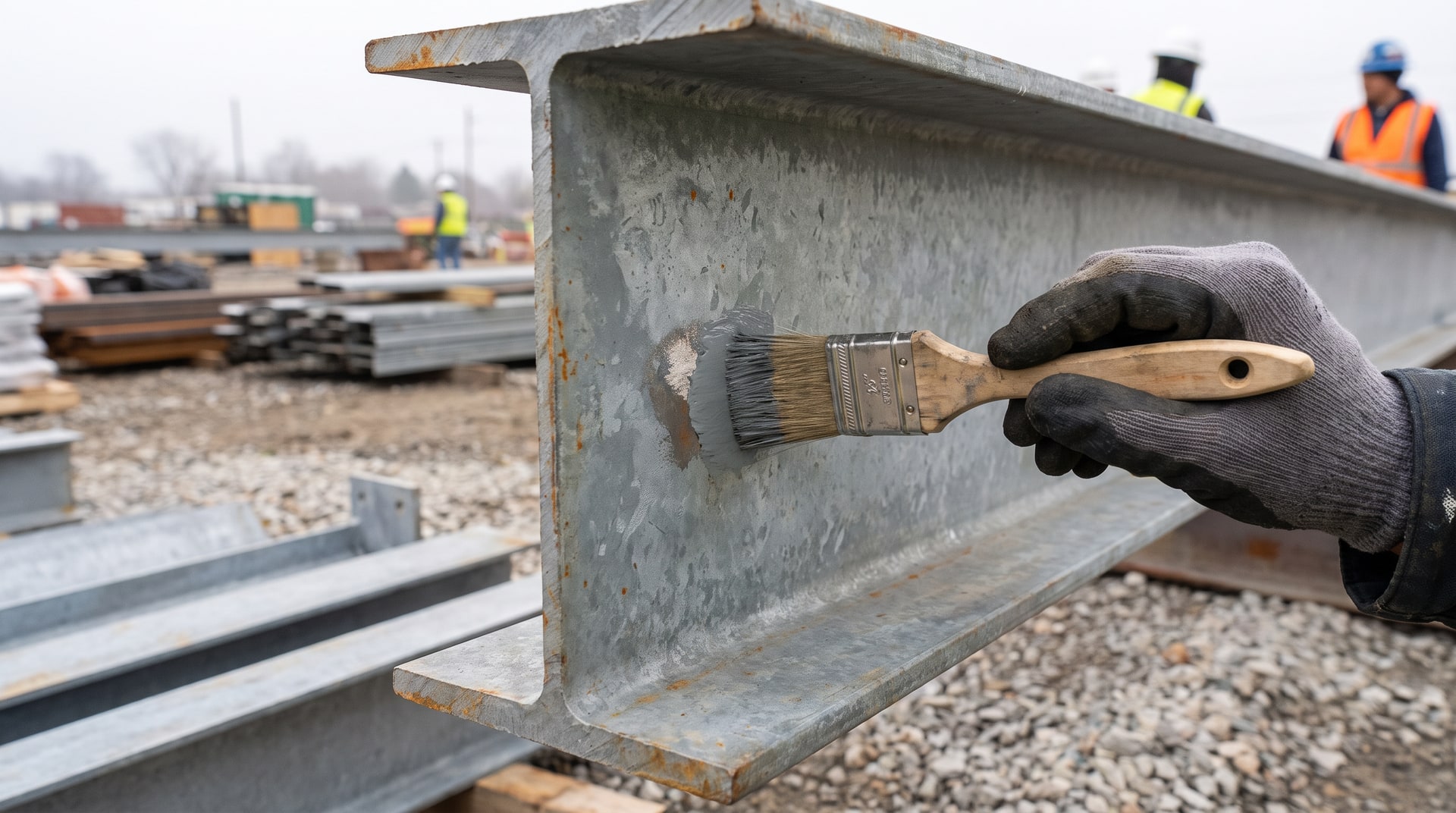
Hot-dip galvanized steel arrives at a jobsite with one of the most durable zinc coatings available, but the work environment does not stop once the steel leaves the galvanizing facility. Handling with hooks and chains, fabrication adjustments in the field, cut-and-fit modifications, and the general roughness of construction activity can all introduce coating damage that was never present when the material passed inspection at the plant. When an inspector finds a defect larger than what the original acceptance criteria permitted, the natural question is: what now?
The answer is more straightforward than many contractors and engineers expect, largely because the rules governing in-field repair are actually less restrictive than the rules that apply before shipment. The American Galvanizers Association addresses this directly in their article on repairing coating damage after delivery to a jobsite. At V&S Galvanizing, we expand on that foundation to explain what is actually happening at the material level, how repair method selection influences long-term performance, and why the distinction between plant-level and field-level acceptance criteria is often misunderstood in the field.
Why Jobsite Coating Damage Is Not a Failure of the Galvanizing Process
Zinc is a remarkably tough coating material, and the metallurgical bond formed during hot-dip galvanizing makes it far more resistant to abrasion and impact than most paint systems. The coating is not a surface layer sitting on top of the steel. It is a series of zinc-iron alloy layers that grow outward from the steel surface during immersion, capped by a layer of relatively pure zinc. This structure gives galvanized coatings genuine hardness, and it is part of why they survive decades of exposure in harsh environments.
That said, even hard coatings have limits. Dragging galvanized members across concrete, clamping them between steel jaws without protection, welding in the field without proper precautions, and sawing or drilling after galvanizing are all common activities that can cut through or scrape away the zinc at localized points. None of this reflects a deficiency in the original galvanizing work. It reflects the physical reality of construction. Recognizing this distinction matters because it shapes how repair is evaluated and executed.
How the Acceptance Standard Changes Once Steel Leaves the Plant
ASTM A123/A123M is the governing specification for hot-dip galvanized coatings on fabricated steel. Within Section 9 of that standard, there are specific limits on how much uncoated or defective area can be repaired on newly galvanized steel before it is accepted and shipped. Those limits are tight: the repair area must be less than 1 inch in the narrowest dimension, and total repair area cannot exceed 0.5% of the accessible surface area or 36 square inches per ton, whichever is less.
These restrictions exist because repair materials, however competent, are not metallurgically equivalent to the original galvanized coating. The zinc-iron alloy layers formed during immersion galvanizing provide a bonding mechanism and a predictable thickness profile that touch-up materials approximate but do not replicate exactly. So at the plant level, limiting repair area is a quality control measure to ensure that shipped product is genuinely galvanized steel, not mostly repainted steel.
Once that steel has been accepted and delivered to a jobsite, the situation is different. ASTM A123/A123M makes clear that those size restrictions apply to acceptance of new product prior to shipment, not to in-service repair. There is no ASTM specification that places a maximum allowable repair size on coating defects found or introduced after delivery. From a standards perspective, a qualified field repair of virtually any size defect is permissible, provided the work is executed according to ASTM A780.
ASTM A780: The Standard That Governs How Repairs Are Done
ASTM A780, titled Standard Practice for Repair of Damaged and Uncoated Areas of Hot-dip Galvanized Coatings, defines three accepted methods for repairing galvanized coatings, along with the material requirements and thickness criteria for each. It applies equally to repairs performed at the galvanizing facility and to those done in the field. The methods are: application of zinc-rich paint, application of zinc-based solder, and thermal spray (zinc metallizing).
What all three methods have in common is the use of zinc as the primary repair material, which is essential for maintaining galvanic protection. A coating that does not contain sufficient zinc cannot provide the same cathodic sacrificial protection that makes galvanized steel corrosion-resistant. Using a standard epoxy paint or a zinc-free primer as a field touch-up material would restore visual appearance without restoring corrosion protection, which is the actual function of the coating. ASTM A780 exists to prevent that kind of substitution.
Zinc-Rich Paint: The Most Common Field Repair Method
Zinc-rich paint is the method most commonly used for field repair, primarily because it requires no specialized equipment and can be applied with a brush or spray. The critical technical requirement is zinc content: the dry film must contain either 65% to 69% metallic zinc by weight, or greater than 92% metallic zinc by weight. These two ranges reflect the two general classes of zinc-rich paint, where the higher-zinc products rely on metallic particle-to-particle contact within the dry film to achieve conductivity and cathodic protection.
Zinc-rich paints are classified as either organic or inorganic based on the type of binder used. Organic binders include epoxies and similar polymers. Inorganic binders are typically silicate-based. For touch-up applications on areas that are otherwise undamaged hot-dip galvanized steel, inorganic binders are considered particularly suitable because they are more chemically compatible with the zinc surface and tend to weather more consistently alongside it.
The coating thickness applied must be at least 50% greater than the surrounding galvanized coating thickness, but the total applied thickness cannot exceed 4.0 mils (100 micrometers). This upper limit matters practically because applying excessive paint thickness introduces the risk of cracking, delamination, and inconsistent film formation. The goal is a repair that matches the surrounding coating in terms of protective function, not one that builds up an arbitrary thickness in hopes of more coverage.
Surface preparation is non-negotiable. The steel in the repair area must be clean and dry before any paint is applied. Contamination from oils, mill scale remnants, rust, or moisture will prevent adhesion and compromise the repair. In most field situations, wire brushing or light abrasive cleaning is sufficient for small areas, but the surface must visibly be clean bare metal before the paint goes on.
Zinc-Based Solder: Matching Appearance Where It Matters
Zinc-based solder is applied as a stick or powder using a torch, and the repair area must be preheated to approximately 600 degrees Fahrenheit (315 degrees Celsius) before the solder is worked into the damaged zone. The acceptable alloy compositions for solder used in this application are defined within ASTM A780, and products outside those compositions are not compliant regardless of zinc content.
The thickness requirement for solder repairs follows the same principle as the base specification: the repaired area must meet the minimum coating thickness required under ASTM A123/A123M for the material category of the part being repaired, with a maximum of 4 mils (100 micrometers). Because solder flows and solidifies in a way that conforms to the surface geometry, experienced applicators can achieve very consistent thickness profiles over small areas.
One reason zinc-based solder is often selected on architecturally visible steel is appearance. Solder repairs, when applied carefully, blend into the surrounding zinc coating more naturally than paint. The metallic character of the repaired zone tends to weather in ways that visually track with the rest of the coating over time. For structural work hidden from view, this is irrelevant. For exposed elements on a building facade or a bridge railing, it matters significantly to the owner and architect.
Zinc Metallizing: The High-Performance Option for Larger Areas
Zinc metallizing, also called thermal spray or zinc spray, involves melting zinc in a flame or electric arc and projecting the molten droplets at high velocity onto the prepared surface using compressed air or gas. The zinc used is nominally 99.5% pure or better, which means the deposited material is very close in composition to the pure zinc outer layer of a conventionally galvanized coating.
The process requires equipment that is not standard on most jobsites, which limits its practical use in field settings compared to paint. However, for large repair areas or for situations where the highest-performance zinc coating is required, metallizing produces a result that more closely approximates the properties of the original galvanized surface than either paint or solder. The deposited coating has good bond strength, solid zinc content, and a thickness that can be controlled by the operator within the range required by ASTM A123/A123M for the applicable material category.
It is worth noting that metallized zinc does not form the same zinc-iron alloy layers present in immersion-galvanized coatings. The protection mechanism relies on the high zinc purity and good adhesion of the sprayed deposit rather than a true metallurgical bond. In practice, for repair areas, this distinction rarely affects performance outcomes. But understanding it clarifies why metallizing is a repair method and not a substitute for the full immersion process on new fabrications.
Reading Thickness Requirements Correctly: A Common Source of Confusion
Both ASTM A123/A123M and ASTM A780 specify thickness requirements for repair coatings, and the interaction between the two can cause confusion in the field. The short version: the repair material must meet the coating thickness requirement that applies to the steel being repaired, based on its material category under ASTM A123/A123M, and in no case should the repair exceed the 4-mil maximum.
The rule for zinc-rich paint adds a layer to this: the paint must be applied at 50% greater thickness than the surrounding coating. This overage accounts for the fact that zinc-rich paint does not provide quite the same corrosion resistance per unit thickness as immersion-galvanized zinc, and the additional film thickness compensates for that difference. An applicator who tries to match surrounding coating thickness exactly with paint will end up with an under-protected repair area.
What this means practically is that anyone performing a field repair needs to know two things before starting work: the actual measured thickness of the surrounding galvanized coating, and the minimum specified thickness for the material category of the part. Both values influence how the repair material is applied and how compliance is verified after application.
Work With a Team That Understands the Full Picture
Jobsite coating damage is a normal part of construction, and the standards framework around field repair of hot-dip galvanized steel is well-developed and practical. ASTM A780 gives inspectors, contractors, and engineers a clear path forward when defects are found after delivery, and the three approved repair methods cover the range of situations encountered in the field. What differentiates a good outcome from a poor one is not the method selected but the quality of execution: surface preparation, material selection within specification, correct thickness application, and verification.
At V&S Galvanizing, we work with fabricators, engineers, and contractors throughout the project cycle, and we are familiar with the questions that arise when coating issues are discovered in the field. If you are dealing with a coating defect and need guidance on the right repair approach for your specific material category and exposure environment, our team is available to help. Reach out through our contact page and we will connect you with someone who can give you technically grounded answers.
Frequently Asked Questions About Jobsite Repair of Hot-Dip Galvanized Coatings
Is there a maximum size limit for coating defects that can be repaired in the field?
No. Unlike the acceptance criteria at the galvanizing plant under ASTM A123/A123M, there is no ASTM specification that limits the size of a coating defect that can be repaired after the steel has been accepted and delivered to a jobsite. Any size defect can be addressed using one of the three methods defined in ASTM A780.
What are the three approved methods for repairing galvanized coatings in the field?
ASTM A780 recognizes three methods: application of zinc-rich paint, application of zinc-based solder, and zinc metallizing (thermal spray). Each method has specific material composition requirements and coating thickness criteria that must be met for the repair to be considered compliant.
Why does zinc-rich paint have to be applied thicker than the surrounding coating?
ASTM A780 requires zinc-rich paint repairs to be applied at a thickness at least 50% greater than the surrounding galvanized coating, up to a maximum of 4.0 mils (100 micrometers). The additional thickness compensates for the fact that zinc-rich paint provides slightly less corrosion protection per unit thickness compared to immersion-galvanized zinc, ensuring the repair zone achieves equivalent protective performance.
What zinc content is required for zinc-rich paint used in galvanizing repairs?
The dry film must contain either 65% to 69% metallic zinc by weight, or greater than 92% metallic zinc by weight. Products outside these ranges do not meet the ASTM A780 criteria regardless of their overall zinc content or marketed performance claims.
When should zinc-based solder be chosen over zinc-rich paint for a field repair?
Zinc-based solder is generally preferred when appearance is a priority. Solder repairs blend visually with the surrounding zinc coating and tend to weather more consistently alongside it. For architecturally exposed steel or any application where the repair zone will be visible to inspectors or building owners over time, solder provides a more aesthetically matched result than paint.
Does zinc metallizing produce the same zinc-iron alloy layers as immersion galvanizing?
No. Thermal spray zinc does not form the zinc-iron alloy layers that develop during immersion galvanizing. The deposited coating achieves corrosion protection through high zinc purity and mechanical adhesion rather than a true metallurgical bond. For repair applications this difference is rarely significant in practice, but it is why metallizing is classified as a repair method and not a replacement for the full hot-dip galvanizing process.
What surface preparation is required before applying a zinc-rich paint repair?
The repair area must be clean and dry. Any contamination from oil, grease, moisture, rust, or loose zinc must be removed before paint is applied. In most field situations, wire brushing or light abrasive cleaning to bare metal is sufficient. Inadequate surface preparation is one of the most common causes of repair failure, even when the correct paint product is used.
How do the size restrictions in ASTM A123/A123M apply to field repairs versus plant-level acceptance?
The size restrictions in ASTM A123/A123M, specifically the limits on repair areas being less than 1 inch in the narrowest dimension and not exceeding 0.5% of accessible surface area or 36 square inches per ton, apply only to the acceptance of newly galvanized steel at the galvanizing plant prior to shipment. They do not govern repairs made after the steel has been accepted and delivered. Once steel is at a jobsite, repair size is governed by ASTM A780, which does not impose an area limit.
