

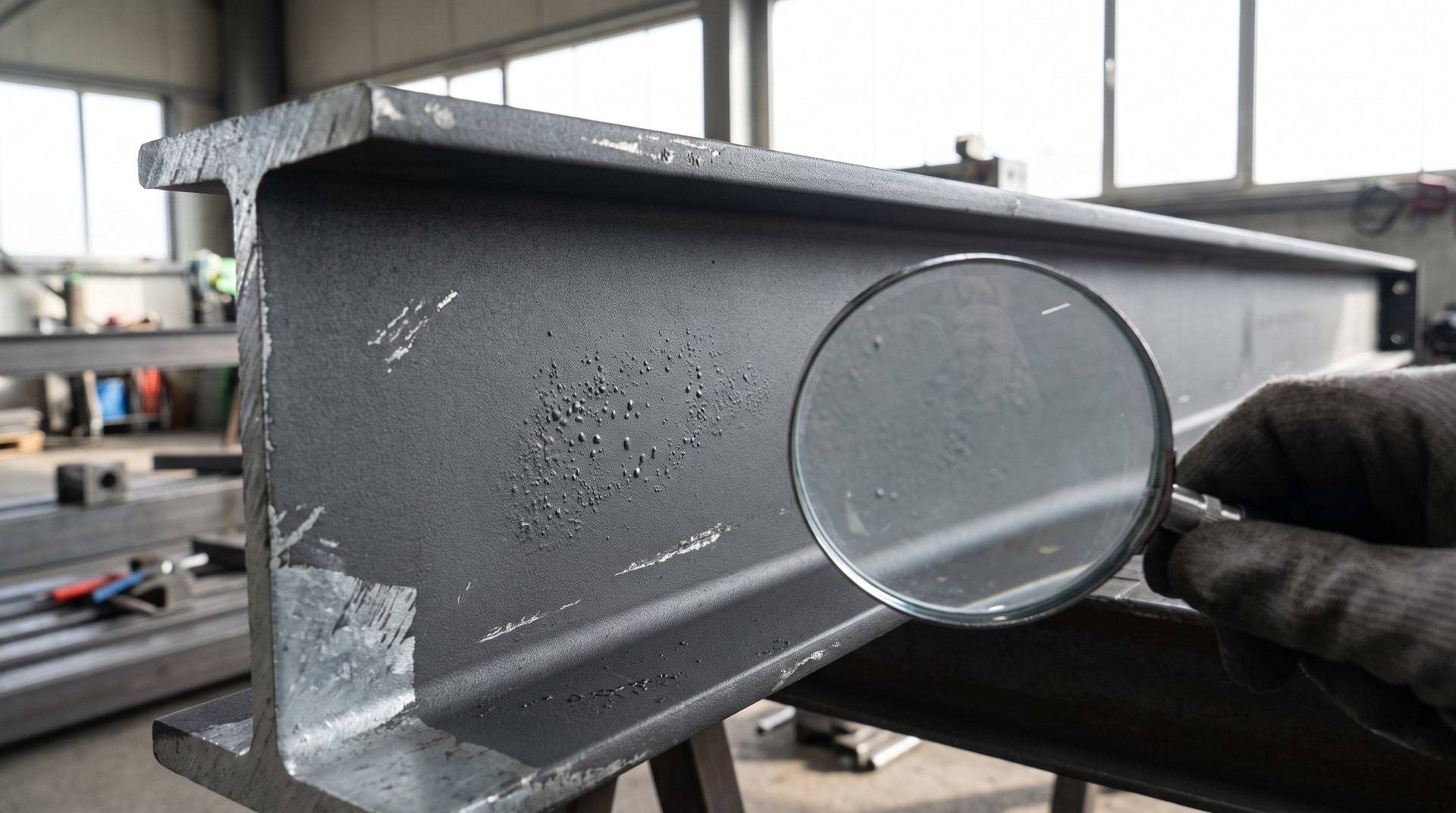
When engineers and fabricators specify a duplex system, combining hot-dip galvanizing with a powder coating topcoat, they are pursuing one of the most durable corrosion protection strategies available for structural steel. The logic is straightforward: the zinc sacrificial layer handles electrochemical attack, while the powder coating provides an additional barrier against moisture, UV exposure, and mechanical abrasion. In practice, though, the interface between those two layers is where things can go wrong. Blistering, pinholes, and poor adhesion are real failure modes, and they are almost always traceable to a phenomenon called outgassing.
Outgassing is frequently misunderstood on the shop floor. It tends to get blamed on the powder itself, or on oven calibration issues, when the actual source is the galvanized surface beneath. Understanding the mechanism is the first step toward preventing it reliably.
The American Galvanizers Association addresses this directly in their article on powder coating adhesion and outgassing over galvanized steel. At V&S Galvanizing, we expand on that foundation to explain what is actually happening at the material level, how surface preparation and thermal treatment influence performance, and why this problem is often misdiagnosed in the field.
What Outgassing Actually Is and Why It Happens
The term "outgassing" refers to the release of trapped air or water vapor from within or beneath a coating during the thermal curing cycle. When powder coating is applied over galvanized steel and then baked to cure, the oven temperature drives a rapid expansion of any gas or moisture present at the substrate surface. If that expanding gas has nowhere to go laterally, it forces its way through the uncured powder film, leaving behind a crater, pinhole, or blister once the coating solidifies.
There are two distinct sources of that gas when hot-dip galvanized steel is involved. The first is zinc oxides and other metal oxides that form naturally on the galvanized surface when it is exposed to air. These oxide compounds are somewhat porous at the microscopic level and can hold moisture or trap air within their structure. When heated, they release that moisture as vapor.
The second source is the galvanized coating itself. The outermost layer of a galvanized surface is not perfectly smooth at the microscopic scale. Small crevices and surface irregularities can capture water or air during handling, washing, or storage. Once the part enters a curing oven, those pockets heat up quickly, pressure builds, and the gas escapes through the powder film. This is the same basic physics behind why porosity in castings causes problems during surface coating.
Neither of these mechanisms is unique to a particular powder product or oven manufacturer. They are inherent to the combination of a porous oxide-bearing zinc surface and a thermally cured polymer coating. That is why the solution has to begin at the substrate preparation stage, not at the powder application stage.
The Role of Surface Oxides in Adhesion Failure
A common misconception is that a freshly galvanized surface is automatically ready for powder coating. It is not. Fresh galvanizing is bright and relatively clean, but it begins oxidizing almost immediately upon contact with air. Zinc oxide and zinc hydroxide form a thin layer on the surface, and in humid conditions, zinc carbonate can also develop over time. These compounds are the same ones responsible for the "white rust" or wet storage stain that appears on galvanized steel stored in confined, moist conditions.
Beyond the adhesion problems caused by moisture retention within those oxides, there is a mechanical issue as well. Powder coatings rely on both chemical bonding and mechanical interlocking with the substrate surface profile. A heavily oxidized galvanized surface presents a chemically inconsistent, weakly bonded layer between the zinc and the powder. Even if outgassing does not occur, adhesion can be poor because the powder is effectively bonding to loose oxide rather than to the zinc metal itself.
This is why surface preparation is not optional in a duplex system. It is the foundation on which everything else depends.
Sweep Blasting: Opening the Surface Without Damaging the Zinc
The most direct mechanical approach to oxide removal is a light sweep blast, conducted in accordance with SSPC-SP 16, "Brush-Off Blast Cleaning of Coated and Uncoated Galvanized Steel, Stainless Steels, and Non-Ferrous Metals." This standard is specifically written for non-ferrous surfaces and calibrates the blast parameters to remove surface contamination and oxides without cutting through the zinc layer itself.
A sweep blast does several things simultaneously. It removes zinc oxides from the surface, which directly reduces the moisture retention problem. It opens up surface cavities that have trapped air, allowing that air to escape before the part ever enters an oven. And it increases the surface profile of the zinc, which gives the powder coating more mechanical texture to grip. That combination of cleanliness and profile is what makes sweep blasting one of the most effective preparatory steps in the duplex coating process.
The key word in SSPC-SP 16 is "brush-off." This is not aggressive abrasive blasting. The intent is to clean and profile the zinc surface without depleting the coating thickness. Operators who approach this step with the same parameters they use on bare structural steel risk cutting through the zinc alloy layers and exposing the steel substrate, which defeats the purpose entirely. Proper media selection, nozzle distance, and angle control are all critical here.
Chemical Cleaning as a Complement or Alternative
Where sweep blasting is not practical, or as a supplement to mechanical preparation, a phosphate wash can be used to remove surface oxides and provide a chemically active surface for powder adhesion. Phosphate treatments are mildly acidic solutions that dissolve zinc oxides and lightly etch the surface, creating a fine crystalline phosphate layer. That layer improves the mechanical anchor for the powder coating and can also provide some degree of additional corrosion resistance at the interface.
When specifying a phosphate wash for galvanized steel, it is important to use proprietary formulations designed specifically for zinc surfaces. Standard iron phosphate systems developed for bare steel may react aggressively with zinc, stripping the surface rather than conditioning it. Suppliers who serve the galvanizing and metal finishing industries offer products formulated for this specific application.
One critical constraint applies when phosphate treatment is used ahead of powder coating: the pre-bake oven temperature must not exceed 535 degrees Fahrenheit. Above that threshold, the phosphate conversion layer begins to decompose, converting from the adherent crystalline structure into a powdery residue. A powder coating applied over that degraded layer will have poor adhesion even if the rest of the process is executed correctly. This temperature ceiling has to be communicated clearly to whoever is operating the pre-bake oven.
Pre-Baking: The Step That Changes the Thermal Equation
Surface preparation removes oxides and opens surface cavities, but it does not address moisture that may have re-entered the surface during washing, rinsing, or atmospheric exposure between prep and coating. Pre-baking solves that problem by driving all remaining moisture out of the zinc surface before the powder is ever applied.
The pre-bake oven should be set approximately 65 degrees Fahrenheit higher than the curing oven temperature. The logic here is simple: if the curing oven can drive outgassing through a cured powder film, then a hotter pre-bake oven can drive the same outgassing through open air before the coating is in place. Any air or moisture that escapes during pre-baking causes no damage at all, because there is no film to blister.
The part should remain in the pre-bake oven until the galvanized surface reaches the oven set temperature, and the general guidance is to allow approximately one hour to ensure that all trapped gases and moisture have been expelled. After pre-baking, the part needs to cool to a temperature compatible with powder application, following the powder manufacturer's instructions. Rushing that cooling step can cause other problems, including poor powder flow and uneven film build.
One practical detail that is easy to overlook: powder coating should follow the pre-bake as quickly as possible. The clean, dry zinc surface that comes out of the pre-bake oven will begin re-oxidizing on contact with ambient air. The longer the gap between pre-bake and powder application, the more oxide can reform, and the greater the risk of adhesion issues or residual moisture re-absorption. In a well-organized production line, this transition happens within minutes.
Curing Temperature Strategy: Lower and Slower Wins
Even with thorough surface preparation and a proper pre-bake, outgassing can still occur during the powder curing cycle if the oven temperature is pushed too high. The relationship between temperature and outgassing risk is direct: higher temperatures accelerate gas expansion, increasing the pressure that drives vapors through the partially cured film before it can seal around the disruption.
The preferred approach is to cure at the lowest temperature the powder system will tolerate and extend the cure time accordingly. This matters in two ways. First, a lower temperature means slower gas expansion, which reduces the pressure driving gas through the film. Second, a longer cure time increases the chance that any small craters or pinholes that do form will be resealed as the powder flows and levels before final crosslinking occurs. Some powder chemistries are more prone to this self-healing behavior than others, but the principle applies broadly.
This is not an argument for under-curing powder coatings. A powder coating that has not reached full crosslink density will have inferior mechanical and chemical resistance properties. The goal is to find the low end of the manufacturer's recommended cure window and use that, rather than pushing temperatures upward to shorten cycle times. In production settings where throughput pressure exists, this tradeoff has to be managed deliberately.
Why the Duplex System Is Worth the Additional Effort
It would be understandable to look at the surface preparation requirements, the pre-bake step, and the curing temperature constraints and conclude that this combination is more complicated than it is worth. That would be the wrong conclusion. A properly executed duplex system, hot-dip galvanizing combined with powder coating, delivers corrosion protection that neither system provides on its own.
The zinc layer in a galvanized coating provides sacrificial cathodic protection, meaning that even if the powder coating is scratched or damaged, the zinc beneath continues to protect the underlying steel electrochemically. The powder coating, in turn, slows the rate at which the zinc is consumed by isolating it from the environment. The two layers interact synergistically: each one extends the service life of the other. For structures exposed to aggressive environments, coastal atmospheres, or industrial pollution, this combination can extend service life by decades compared to either coating alone.
The growing popularity of duplex systems in architectural and infrastructure applications has also pushed powder chemistry and application equipment forward. Products specifically formulated for application over zinc substrates are now commercially available, and applicators with experience in this combination understand the specific surface preparation requirements. What was once a niche or difficult application has become increasingly routine when the process is handled by experienced applicators.
At V&S Galvanizing, our hot-dip galvanizing process is designed to produce a surface that is well-suited to duplex coating when customers intend to topcoat their parts. Understanding the full system, not just the galvanizing step in isolation, is part of how we support projects where long-term performance is the priority.
Work With a Team That Understands the Full System
Powder coating over galvanized steel is not inherently difficult, but it does require that everyone involved, the galvanizer, the powder applicator, and the specifying engineer, understands the mechanisms at play. Outgassing is not a defect in the powder or a calibration error in the oven. It is a predictable consequence of applying a thermally cured coating over a substrate that contains surface oxides and microscopic moisture traps, and it is entirely preventable when the preparation steps are executed correctly.
The process logic is consistent: remove oxides mechanically or chemically, expel trapped moisture and air through pre-baking at a temperature above the cure cycle, and cure the powder at the lowest acceptable temperature over a sufficient time window. When those three elements are aligned, duplex systems perform as designed, and the corrosion protection they deliver justifies the investment in the additional process steps.
If you are specifying a duplex system for a project or working through a quality issue on powder-coated galvanized parts, our team is glad to talk through the details. Visit our contact page to reach us directly.
Frequently Asked Questions About Powder Coating Adhesion and Outgassing on Galvanized Steel
What causes outgassing when powder coating over galvanized steel?
Outgassing occurs when zinc oxides on the galvanized surface or trapped air and moisture within surface crevices of the zinc coating are heated during the powder curing cycle. The expanding gas forces its way through the partially cured powder film, leaving behind craters, pinholes, or blisters that compromise adhesion and coating continuity.
Is a sweep blast required before powder coating galvanized steel?
A sweep blast per SSPC-SP 16 is one of the most effective preparatory steps. It removes surface oxides, opens trapped-air cavities in the zinc surface, and increases the surface profile to improve mechanical adhesion. It can be used alone or in combination with a phosphate wash treatment. Neither step is always mandatory, but both significantly reduce outgassing risk.
At what temperature should the pre-bake oven be set for galvanized steel before powder coating?
The pre-bake oven should be set approximately 65 degrees Fahrenheit higher than the powder curing oven temperature. If the parts have gone through a phosphate wash, the pre-bake temperature must not exceed 535 degrees Fahrenheit, as higher temperatures will break down the phosphate conversion layer into a powdery residue that undermines powder adhesion.
How long should galvanized steel be pre-baked before powder coating?
The part should remain in the pre-bake oven until the galvanized surface reaches the oven set temperature, and approximately one hour is the typical guideline to ensure all entrapped moisture and gases have been expelled. After pre-baking, the part must cool to a temperature compatible with powder application per the powder manufacturer's instructions before coating begins.
Does curing temperature affect outgassing risk in powder-coated galvanized parts?
Yes. Higher curing temperatures accelerate gas expansion, increasing the pressure driving vapors through the powder film before it fully cures. Using the lowest curing temperature within the powder manufacturer's recommended window, combined with a longer cure time, reduces outgassing events and also gives any small craters that do form a better chance of resealing as the powder flows before final crosslinking.
Can a phosphate wash replace sweep blasting before powder coating galvanized steel?
A phosphate wash can serve as a stand-alone surface treatment for galvanized steel prior to powder coating. It removes zinc oxides with a mildly acidic solution and lightly etches the surface to improve adhesion profile. However, it does not mechanically open trapped-air cavities in the zinc surface the way a sweep blast does. For the highest-risk applications, using both treatments together is the most thorough approach.
Why does powder need to be applied immediately after pre-baking galvanized steel?
The pre-bake produces a clean, dry zinc surface that is free of oxides and moisture. Once that surface is exposed to ambient air, zinc oxidation begins again almost immediately. Any delay between the pre-bake cool-down and powder application allows a new oxide layer to form, which reintroduces both adhesion and outgassing risk. Minimizing that gap is an important process control in duplex system production.
Does a duplex system of galvanizing plus powder coating provide better corrosion protection than either alone?
Yes. The zinc layer provides sacrificial cathodic protection, continuing to protect the steel even at coating damage sites. The powder coating isolates the zinc from the environment, slowing its consumption rate. The two systems extend each other's service life synergistically, making a properly executed duplex coating significantly more durable than galvanizing or powder coating applied independently, particularly in aggressive or coastal environments.
