

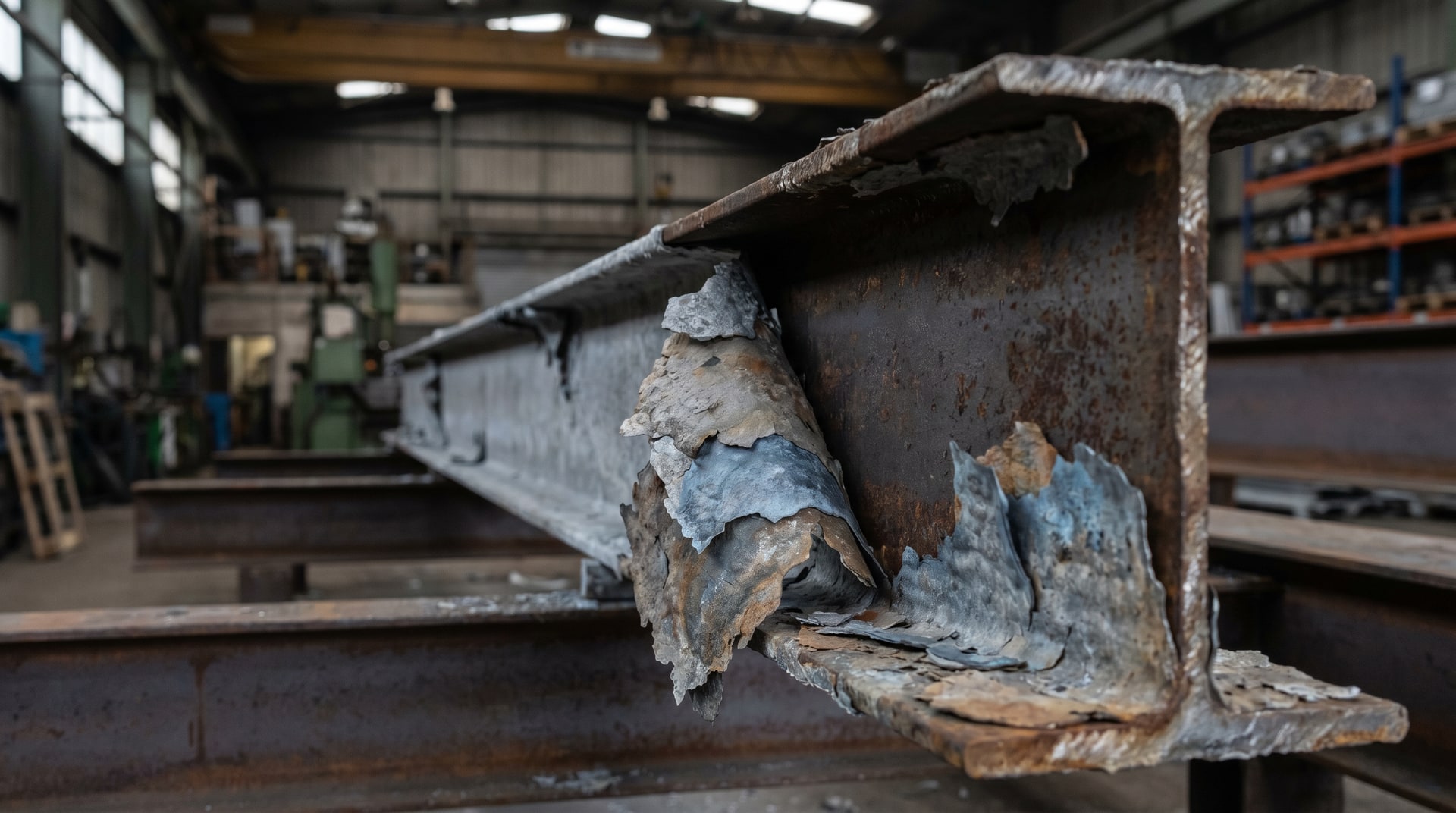
Most conversations about hot-dip galvanizing coating thickness focus on the minimum: meeting the specification, hitting the required mils, satisfying the inspector. That framing makes sense because an undersized coating is the more common failure mode in practice. But there is another side to this problem that does not get nearly enough attention, and it matters just as much. Coating thickness can actually work against you when it climbs too high, and the consequences do not always show up until a part is already at the job site.
The American Galvanizers Association addresses this directly in their article on maximum coating thickness. At V&S Galvanizing, we expand on that foundation to explain what is actually happening at the material level, how steel chemistry influences coating build-up, and why this is often misunderstood in the field.
There Is No Specification Maximum, But That Does Not Mean Anything Goes
One of the first things engineers and fabricators ask when this topic comes up is whether the applicable specification places a ceiling on coating thickness. The straightforward answer is no. Current hot-dip galvanizing specifications do not define a maximum coating thickness. From a purely regulatory standpoint, a thicker coating is not a nonconformance on its own.
There is, however, a requirement that the coating meets the intended use of the product. That distinction is important. If excess zinc has flowed into a threaded area, a bearing surface, or a mating face during the galvanizing process and the resulting drips or runs interfere with assembly, those areas must be ground smooth before the part is acceptable. So while the specification does not cap thickness numerically, it does hold coatings accountable for fit and function. A part buried under an unusually heavy zinc deposit can fail that requirement even without a single crack or peel in sight.
The practical consequence is that galvanizers and fabricators cannot rely on specification limits as a safety net here. Instead, they need to recognize the conditions that create excessive thickness and manage those conditions proactively.
What Actually Happens When a Galvanized Coating Gets Too Thick
To understand the flaking risk, it helps to think about what a galvanized coating actually is at the metallurgical level. Hot-dip galvanizing does not simply deposit a layer of zinc on the surface of steel. It creates a series of zinc-iron intermetallic alloy layers that form through a diffusion reaction, with a relatively pure outer zinc layer on top. Each layer has its own composition, hardness, and coefficient of thermal expansion.
When a galvanized part is withdrawn from the molten zinc bath and begins to cool, every layer in that coating contracts at its own rate. The steel substrate contracts at one rate, the intermetallic layers contract at slightly different rates, and the outer zinc layer contracts at yet another rate. At normal coating thicknesses, the stresses generated by these mismatched contraction rates are small enough that the coating holds together without any meaningful risk of separation.
Once the total coating thickness exceeds 10 mils (250 microns), the stress picture changes significantly. The thicker intermetallic layers amplify the forces acting at the interfaces between them. The stress is no longer trivial, and the coating becomes susceptible to separation at the layer boundaries. That separation is what produces the characteristic flaking seen on heavily coated parts: chunks or sheets of brittle zinc-iron alloy lifting away from the surface.
It is worth noting that this stress does not always cause immediate, visible flaking right out of the kettle. A coating can look intact when a part leaves the galvanizing plant and then delaminate during handling, shipping, or final assembly. Any additional mechanical stress applied to the part after galvanizing can trigger the separation that cooling alone did not complete. By the time flaking is discovered, the part may already be on-site, making the remediation far more expensive than it would have been if caught earlier.
Why Steel Section Size Matters More Than Many Expect
Not all steel parts respond to the thermal cycle of galvanizing the same way, and section thickness plays a significant role in how severe the flaking risk becomes when coating thickness is elevated.
Sheet metal and thin-gauge parts cool quickly after being withdrawn from the zinc bath. Because they lose heat rapidly, the thermal stresses in the coating resolve over a short time frame and the coating solidifies under relatively uniform conditions. Thick structural members behave very differently. A heavy beam or a large-diameter pole retains heat much longer, meaning the coating and the substrate go through a prolonged and uneven cooling process. The differential contraction stresses persist longer and accumulate more, making thick sections considerably more susceptible to coating flaking when the zinc deposit is already heavy.
This is why the concern about excessive coating thickness is most acute for structural applications: large beams, poles, heavy plate fabrications, and similar components. If that same steel chemistry that drives a thick coating is present in a thin sheet application, the flaking risk is much lower simply because the thermal dynamics are more forgiving. Engineers and fabricators specifying galvanizing on heavy structural elements should treat this as a real design and process consideration, not just a theoretical edge case.
Steel Chemistry Is the Root Cause of Excessive Coating Build-Up
Understanding why some steel develops an unusually thick galvanized coating requires looking at what happens during the zinc-iron reaction itself. The rate at which intermetallic layers grow during galvanizing is strongly influenced by the chemistry of the steel being processed, particularly its silicon and phosphorus content.
Steels with elevated silicon or phosphorus levels react with molten zinc much more aggressively than standard structural steels. The intermetallic layer growth accelerates, sometimes dramatically, producing a coating that is several times thicker than what the same immersion time would yield on a low-reactive steel. This phenomenon is well documented in galvanizing practice and is one of the primary reasons why two seemingly identical parts processed side by side can come out of the same kettle with substantially different coating thicknesses.
The practical implication is that knowing the steel chemistry before processing is not optional when thick coatings are a concern. If the material certification indicates silicon or phosphorus levels in the ranges known to drive reactive behavior, or if previous experience with a particular steel or supplier has produced thick coatings, that information should inform how the part is processed and what inspection steps are applied afterward. Our team at V&S Galvanizing factors steel chemistry into the process evaluation precisely because the consequences of being caught off guard by reactive steel are costly and difficult to reverse.
The Economics of Getting This Wrong
Excessive coating thickness is not just a technical problem. It carries a direct financial cost that compounds quickly if it is not caught at the right point in the process.
Zinc is not free. A coating that is two to eight times thicker than the specification requires represents two to eight times the zinc consumption on that part. For a single component, that might be a manageable overage. Across a full project run of heavy structural members, the zinc cost alone can be significant. Add to that the labor and process costs associated with stripping a flaked or excessively thick coating and re-galvanizing the part, and the economics deteriorate quickly.
The situation becomes genuinely serious when flaking is not detected before shipment. A part that arrives at a job site with delaminating zinc creates a cascade of problems: the part may be rejected, it has to be transported back for remediation, the project schedule is disrupted, and there may be contractual implications depending on the application. None of that is theoretical. It happens on real projects when the warning signs of excessive coating thickness are not acted on before the part leaves the plant.
The practical guidance here is straightforward. If a coating looks unusually thick during visual inspection, measure it. If the measurement confirms thickness above 10 mils (250 microns), test the part for flaking adhesion before it ships. Those two steps add minimal time and cost at the plant and can prevent a much larger problem downstream.
How to Identify and Evaluate Potentially Problematic Coatings
Visual inspection is often the first indicator that a coating has built up beyond normal levels. Galvanized surfaces that appear dull gray rather than the typical bright or matte silver, have a rough or lumpy texture, or show obvious drips and heavy runs are candidates for closer evaluation. These visual cues do not confirm a problem on their own, but they are reliable prompts to take a measurement.
Coating thickness measurement on galvanized steel is performed with a magnetic thickness gauge, a straightforward and widely available tool. Taking readings at multiple locations across the part gives a representative picture of where the heaviest deposits are. If readings consistently exceed 10 mils (250 microns), especially on a thick structural section, the part should be tested for flaking before it is shipped or assembled.
The flaking test itself involves applying a moderate bending or impact stress to the coating and observing whether any material separates. The specific protocol can vary, but the goal is to induce the kind of mechanical stress that the part will experience in handling and assembly so that any latent delamination is detected at the plant rather than at the job site. This is not an exotic quality control step. It is a practical safeguard that takes relatively little time and can prevent a remediation nightmare. For fabricators and specifiers who want to learn more about our hot-dip galvanizing process and how we handle quality evaluation, that context is worth understanding before a project begins.
What Fabricators and Specifiers Can Do Ahead of Time
The most effective way to manage the risk of excessive coating thickness is to anticipate it before steel goes into the kettle. This means treating steel chemistry information as a process input, not just a certification document to file away.
When material test reports are available, they should be reviewed for silicon and phosphorus content. If the supplier or mill cannot provide chemistry data, and the steel is being used on a critical structural application, it is worth testing a sample before committing to a full production run. If previous jobs using the same steel source or the same fabricated part geometry have produced thick coatings, that history is predictive and should be communicated to the galvanizer.
Fabricators can also help by flagging parts that are likely to be heavily processed or that have complex geometry where zinc may pool during withdrawal. Good communication between the fabrication team and the galvanizer before processing begins reduces surprises on both sides. The goal is not to avoid galvanizing reactive steel but to go into the process with accurate expectations and the right inspection plan in place.
Work With a Team That Understands the Full Coating Picture
Managing coating thickness is not just about meeting minimums. It requires understanding the conditions that drive coatings outside the practical performance range in either direction, recognizing the material and thermal factors at play, and having the inspection discipline to catch problems before they become expensive. That kind of process knowledge comes from experience with a wide range of steel types, part geometries, and applications, not just from reading a specification sheet.
At V&S Galvanizing, our team brings that depth of experience to every project. We pay attention to steel chemistry, we measure what needs to be measured, and we test before we ship. If you have questions about how coating thickness will behave on a specific part or material, or if you have had flaking issues on previous projects and want to understand why, reach out through our contact page. We are glad to talk through the details before the steel ever hits the kettle.
Frequently Asked Questions About Maximum Coating Thickness in Hot-Dip Galvanizing
Is there a maximum coating thickness defined in ASTM galvanizing specifications?
No. Current hot-dip galvanizing specifications do not set a numerical maximum coating thickness. However, the specification does require that the coating be suitable for the intended use of the product. If excessive zinc creates drips or runs that interfere with fit or assembly, those areas must be corrected before the part is acceptable.
At what coating thickness does flaking become a realistic risk?
Flaking becomes a significant concern when the total galvanized coating thickness exceeds 10 mils (250 microns). Above that level, the stress generated by differential thermal contraction between the steel substrate and the zinc-iron intermetallic layers during cooldown is high enough to cause separation between those layers.
Why does flaking sometimes not appear until after the part has been shipped?
The thermal stress from galvanizing may not be enough on its own to cause immediate, visible separation. The coating can appear intact when it leaves the plant but then delaminate when additional mechanical stress is applied during handling, loading, transport, or final assembly. That is why testing for adhesion before shipment is important when coating thickness is elevated.
Which types of steel parts are most susceptible to flaking from excessive coating thickness?
Thick structural members such as heavy beams, poles, and large plate fabrications are the most susceptible. Thick sections retain heat longer after galvanizing, which extends the period of differential thermal contraction and amplifies the stress in the coating. Thin sheet metal parts cool quickly and are much less prone to this type of flaking even when the coating is relatively thick.
What causes some steel to develop a much thicker galvanized coating than other steel?
Steel chemistry is the primary driver. Elevated silicon or phosphorus content accelerates the zinc-iron diffusion reaction during galvanizing, producing intermetallic layers that are far thicker than those formed on standard structural steel. Two parts processed side by side in the same kettle for the same duration can come out with very different coating thicknesses depending on their respective chemistries.
How do you test a galvanized part for flaking risk before it ships?
First, measure coating thickness with a magnetic gauge at multiple locations. If readings consistently exceed 10 mils (250 microns), apply a controlled bending or impact stress to the coating and observe whether any material separates. This replicates the kind of mechanical loading the part will experience in handling and assembly, allowing latent delamination to be detected at the plant rather than at the job site.
Does a thicker galvanized coating provide proportionally better corrosion protection?
Up to the normal performance range, additional zinc thickness does provide additional service life because the zinc corrodes sacrificially over time and more zinc means more material available before the steel substrate is exposed. However, once thickness climbs into the range where flaking is a risk, the practical benefit is undermined. A coating that delamines leaves the underlying steel exposed and provides no protection at all in those areas. The added zinc cost without a proportional performance benefit, combined with the flaking risk, is why excessive thickness is considered a process problem rather than a quality advantage.
Can a part with a flaked galvanized coating be salvaged?
Yes, but the remediation is costly. The flaked or excessively thick coating typically must be stripped and the part re-galvanized. If flaking is discovered after the part has shipped, the costs of transport, delay, and project disruption are added on top of the stripping and re-processing costs. Identifying and addressing the problem before shipment is substantially less expensive than dealing with it in the field.
