

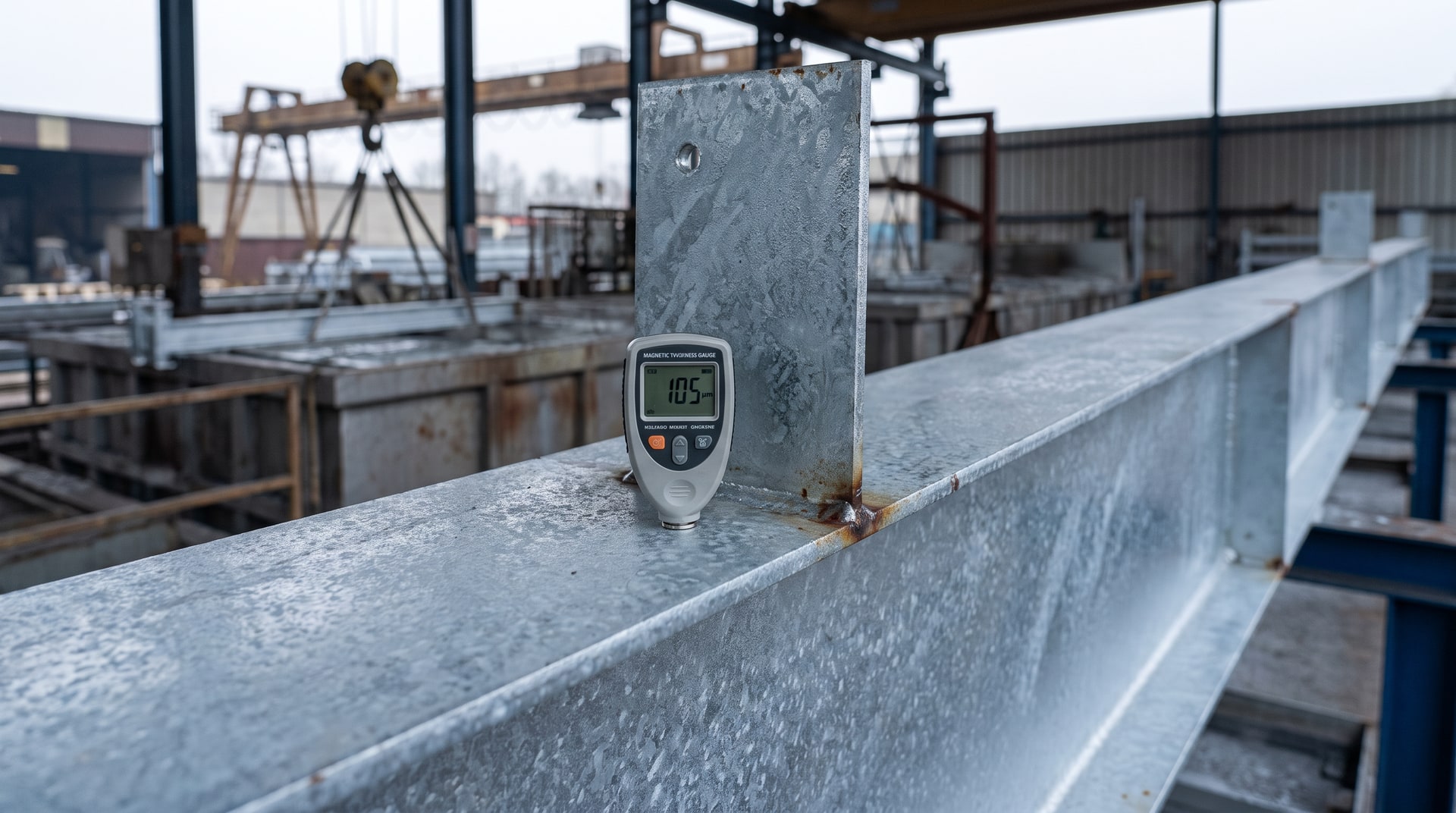
Galvanizers get this question more often than you might expect: a customer submits a project and specifically requests that the work be done to ISO 1461 rather than ASTM A123. For most shops operating under North American standards, that request raises an immediate question about what, exactly, will need to change. Are these two specifications essentially interchangeable? Are there meaningful differences in how the coating must be applied, measured, or documented? And if a galvanizer routinely produces work that meets ASTM A123, does that coating automatically satisfy ISO 1461 as well?
The short answer is that the two specifications are more similar than different, and work produced to ASTM A123 will typically meet or exceed what ISO 1461 requires. But the details matter, especially when a customer has contractual or export obligations tied to one standard or the other. Scope language, inspection lot definitions, local thickness requirements, and documentation practices all vary in ways that affect how a job is managed and certified.
The American Galvanizers Association addresses this directly in their article on ISO 1461 vs. ASTM A123. At V&S Galvanizing, we expand on that foundation to explain what is actually happening at the material level, how coating thickness requirements influence performance, and why the distinction between these two specifications is often misunderstood in the field.
What Each Specification Is Actually Covering
Both ISO 1461 and ASTM A123 are general hot-dip galvanizing specifications that apply to fabricated iron and steel articles. In simple terms, they both describe the minimum acceptable quality of a zinc coating applied by immersing steel into a bath of molten zinc after surface preparation. Neither is a process specification in the strict sense. They define outcomes, not procedures.
Where they differ in scope is largely a matter of geography and organizational structure. ASTM A123 is the dominant North American standard and is written specifically for structural steel, fabrications, and various steel product categories. ISO 1461 is the international standard and, importantly, it consolidates requirements that ASTM distributes across multiple specifications. A notable example: the ISO 1461 standard incorporates requirements for centrifuged articles, which in the ASTM system are handled separately under ASTM A153. This structural difference means that when a specifier writes ISO 1461 on a drawing, they may inadvertently be referencing a broader document than they realize.
The practical implication for fabricators and contractors is that switching between the two standards is not purely a paperwork exercise. The inspection requirements, lot definitions, and documentation expectations are genuinely different, and one cannot simply substitute one specification for the other without reviewing all the relevant clauses.
Coating Thickness: Where the Two Standards Actually Diverge
Coating thickness is the most technically consequential area of comparison, and it is where engineers spend most of their attention when evaluating the two standards side by side.
ASTM A123 organizes its minimum average coating thickness requirements around two variables: the steel product category (structural shapes, strip and bar, plate, pipe and tubing, wire, reinforcing bar, and forgings and castings) and the measured steel thickness. This produces a matrix of minimum coating grades expressed in mils (thousandths of an inch). A structural shape thicker than 5/8 inch, for example, requires a minimum average coating thickness of 100 mils under A123. Thinner material in that same category can be accepted at lower thicknesses, down to 45 mils for material under 1/16 inch.
ISO 1461 takes a simpler approach. Its requirements are presented in a single consolidated table that does not separate articles by the same material categories that ASTM uses. This makes the documents look more different than they actually are in practice. When you map the two tables against each other and compare equivalent steel thicknesses and article types, the minimum average thickness values are actually quite close. The consistent finding from that comparison is that ASTM A123 typically requires more coating on most types and thicknesses of steel than ISO 1461 does. A coating that satisfies A123 will generally satisfy ISO 1461 on the same article.
One notable difference is the concept of minimum local coating thickness. ISO 1461 specifies not just a minimum average across the test specimen, but also a minimum local thickness that any individual measurement must meet. These local minimums are 0.4 to 0.6 mils lower than the minimum average requirements. In the ASTM system, a comparable concept exists only in ASTM A153 for castings and fasteners, not in A123 itself. This matters in practice because a coating that passes the average thickness test could still fail ISO 1461 if a localized measurement falls below the local minimum threshold.
| Material Category | <1/16 in. [<1.6 mm] | >1/16 to <1/8 in. [>1.6 to <3.2 mm] | >1/8 to 3/16 in. [>3.2 to <4.8 mm] | >3/16 to <1/4 in. [>4.8 to <6.4 mm] | >1/4 to <5/8 in. [>6.4 to <16.0 mm] | >5/8 in. [>16.0 mm] |
|---|---|---|---|---|---|---|
| Structural Shapes | 45 | 65 | 75 | 75 | 100 | 100 |
| Strip and Bar | 45 | 65 | 75 | 75 | 75 | 100 |
| Plate | 45 | 65 | 75 | 75 | 75 | 100 |
| Pipe & Tubing | 45 | 45 | 75 | 75 | 75 | 75 |
| Wire | 35 | 50 | 60 | 65 | 80 | 80 |
| Reinforcing Bar | -- | -- | -- | -- | 100 | 100 |
| Forgings and Castings | -- | -- | -- | 100 | 100 | 100 |
Understanding these distinctions is important when designing a fabricated assembly with mixed steel thicknesses or complex geometry, where coating distribution may not be perfectly uniform across all surfaces.
Handling Low-Reactivity Steels Under Both Standards
Steel chemistry has a direct effect on how a zinc coating develops, and both specifications acknowledge this by providing guidance for steels that do not react normally with the zinc bath. The steels most likely to cause problems are those with very low silicon content and those that are aluminum-killed. These chemistries tend to form thinner coatings because the iron-zinc reaction that drives coating growth is inhibited at the steel surface.
This is not a rare edge case. Many modern structural steels are produced with tight compositional controls that can land in these low-reactivity ranges. When a galvanizer encounters a heat of steel that consistently produces below-minimum coatings despite correct bath chemistry and processing parameters, both ISO 1461 and ASTM A123 provide a mechanism for addressing the situation. Both standards recognize that achieving the standard minimum thickness on these steels may not be consistently possible under normal conditions and provide guidance accordingly.
The practical takeaway for engineers and specifiers is that calling out ISO 1461 or ASTM A123 does not automatically guarantee a specific minimum thickness if the steel supplied has low-reactivity chemistry. Coordinating steel selection with the galvanizer early in a project reduces the risk of disputes over coating thickness at the inspection stage. This is a point that frequently gets overlooked when the specification is written into a contract without any discussion with the galvanizing shop.
Centrifuged Articles and the ASTM A153 Connection
One of the more structurally interesting differences between the two systems is how centrifuged articles are handled. Centrifuging is a process used for small articles, particularly fasteners and hardware, where excess zinc is spun off immediately after withdrawal from the bath to prevent zinc bridging and maintain thread clearances. The coating that results is thinner and behaves differently than the coating on structural steel.
Under the ASTM system, centrifuged articles fall under ASTM A153, a separate specification entirely. Under ISO 1461, these articles are incorporated into the same document. This integration makes ISO 1461 a more self-contained reference for projects that include both structural fabrications and hardware, but it also means the comparison between ISO 1461 and A153 categories is not straightforward. The ASTM categories for centrifuged articles are defined by a combination of part size and steel thickness, while ISO 1461 uses its own category structure. A direct side-by-side comparison requires careful attention to which article type maps to which category in each system.
For fabricators supplying assemblies that include both structural steel and hardware, this distinction is worth flagging before a job starts. The applicable thickness requirements and inspection procedures differ depending on whether the article was centrifuged, and a single project may need to reference more than one ASTM specification to cover everything that ISO 1461 addresses in one document.
Adhesion, Appearance, and Repair Allowances
Both specifications set expectations for coating adhesion and appearance, and both permit limited repairs to areas where the zinc coating is missing or damaged. The general principles are consistent: the zinc coating must be continuous and adherent, cosmetic variation in appearance is acceptable provided the coating meets thickness requirements, and small areas of bare steel resulting from handling or minor defects can be repaired using approved methods such as zinc-rich paint or zinc solder.
Where the specifications differ in their adhesion testing approach, the underlying requirement is similar: the coating must not separate from the base steel under normal handling. Neither standard permits coatings that flake, crack, or delaminate under reasonable service conditions. A coating that develops a dull gray patina or minor surface roughness over time is not considered defective under either standard, provided the underlying zinc layer remains intact and adheres properly.
Repair limits and acceptable repair materials follow comparable logic in both documents. In practice, repair requirements matter most for large fabrications where some surface damage during handling is difficult to avoid entirely. Engineers specifying for harsh or immersed environments should always discuss repair limits with the galvanizing team before assuming that field-applied repairs will satisfy the performance requirements of a given project.
Inspection Lots, Sampling, and Reference Areas
The way inspection is organized differs meaningfully between the two standards, and this is an area where a specifier substituting one standard for the other can run into compliance complications that have nothing to do with the actual coating quality.
Both ISO 1461 and ASTM A123 use the concept of an inspection lot to define the group of articles against which sampling and acceptance decisions are made. However, the definitions of what constitutes a lot, how large a control sample must be relative to lot size, and how reference areas for thickness measurement are defined are not identical. ISO 1461 specifies that for each reference area, five or more measurements must be made at widely dispersed points to represent the entire surface of the test specimen. This systematic dispersal requirement ensures that localized thin areas are not masked by high readings elsewhere on the piece.
The sampling plan differences can affect project documentation and delivery timelines, particularly on large contracts where the lot structure determines how many specimens must be measured and how rejection of a lot is handled. Galvanizers producing work under ISO 1461 for export or international procurement need to be prepared to document inspection results in a format that satisfies the standard's specific certification requirements, which differ from what is typically generated for domestic ASTM jobs.
Understanding these procedural differences matters most when a third-party inspector is involved or when the customer has a formal quality management system that specifies how inspection records are to be structured.
Certification and Documentation Requirements
Both standards allow for the issuance of a declaration or certificate of conformance confirming that the galvanized coating meets the relevant specification. The content of that certificate, however, is not identical under the two standards, and a certificate written to ASTM A123 may not satisfy the documentary requirements of a contract that calls for ISO 1461 compliance.
ISO 1461 has specific requirements for what information must appear in the certificate or declaration. These requirements reflect the international character of the standard, where traceability and formal documentation carry additional weight in cross-border procurement. Galvanizers working on projects with export obligations or foreign ownership should verify with their customer which certificate format is required before the job is completed, since generating the right documentation retroactively can be complicated.
At the practical level, most customers are well served by understanding that if their project was galvanized to ASTM A123, the coating itself will typically satisfy the physical requirements of ISO 1461. The documentation, however, may need to be reformatted or supplemented to formally demonstrate ISO compliance. This is a coordination issue, not a coating quality issue, but it can delay project closeout if it is not addressed proactively.
Work With a Team That Understands Both Standards
The distinction between ISO 1461 and ASTM A123 is not simply a matter of one being stricter than the other. They are parallel general specifications developed through different standards bodies, organized differently, and applied in different contractual contexts. In most practical scenarios, a coating produced to ASTM A123 will meet the physical coating requirements of ISO 1461. But the inspection structure, documentation requirements, and local thickness provisions differ in ways that can create real compliance issues if they are not addressed at the start of a project rather than after the steel has been dipped.
For engineers, fabricators, and contractors navigating this comparison, the most important step is to clearly define which standard governs at the contract level, communicate that to the galvanizing shop early, and confirm that the inspection and certification process is aligned with the chosen specification. If you have a project that involves ISO 1461 requirements, export procurement, or any uncertainty about which standard applies, our team is ready to work through the details with you. Reach out through our contact page and we will make sure the right specification is applied from the first piece to the last.
Frequently Asked Questions About ISO 1461 and ASTM A123
If my project is galvanized to ASTM A123, will it automatically pass ISO 1461?
In most cases, yes. ASTM A123 typically requires equal or greater coating thickness than ISO 1461 for equivalent steel categories, so a coating that satisfies A123 will generally meet the physical thickness requirements of ISO 1461. However, ISO 1461 also includes minimum local coating thickness requirements and different inspection and certification provisions that must be independently verified. The coating quality usually transfers; the documentation may not without additional steps.
What is the minimum local coating thickness requirement under ISO 1461, and does ASTM A123 have an equivalent?
ISO 1461 specifies that individual spot measurements must meet a minimum local thickness that is approximately 0.4 to 0.6 mils lower than the minimum average thickness requirement. ASTM A123 does not include an equivalent local thickness requirement. A comparable concept exists in ASTM A153 for castings and fasteners, but not for the structural steel articles covered by A123.
How does ISO 1461 handle centrifuged articles compared to the ASTM system?
ISO 1461 incorporates centrifuged articles directly into the standard, whereas the ASTM system addresses them through a separate specification, ASTM A153. This makes ISO 1461 a more self-contained document for projects that include hardware and fasteners alongside structural fabrications. Comparing the two systems for centrifuged articles requires care because the ASTM and ISO category definitions use different criteria involving part size and steel thickness.
Why do low-reactivity steels create compliance issues under both specifications?
Steels with very low silicon content and aluminum-killed steels tend to inhibit the iron-zinc reaction that drives coating growth. The result is a thinner-than-normal coating even when galvanizing parameters are correctly set. Both ISO 1461 and ASTM A123 acknowledge this and provide guidance for cases where normal thickness requirements cannot be consistently achieved on these steels. Specifying coating thickness requirements without coordinating steel chemistry with the galvanizer can lead to disputes at inspection.
What differences in inspection lot definitions should I be aware of when substituting one standard for the other?
ISO 1461 and ASTM A123 define inspection lots differently, and the control sample size relative to lot size also differs. For coating thickness measurement, ISO 1461 requires five or more measurements at widely dispersed points within each reference area. These structural differences in inspection procedure can affect how many specimens must be tested, how rejection of a lot is handled, and how results are recorded. Substituting one standard for the other without reviewing these procedural clauses can create compliance gaps even when the coating itself is acceptable.
Are the certification requirements different under ISO 1461 compared to ASTM A123?
Yes. ISO 1461 has specific requirements for the content of a declaration or certificate of conformance that differ from what is typically generated for domestic ASTM work. A certificate written to ASTM A123 may not satisfy the documentary requirements of a contract calling for ISO 1461 compliance. This is particularly relevant for projects with export obligations or international procurement requirements, where traceability documentation is scrutinized more closely.
Does ISO 1461 require more or less coating thickness than ASTM A123 for structural steel?
ASTM A123 typically requires more coating thickness than ISO 1461 for most structural steel article types and thickness ranges. The differences are generally small, but the consistent direction is that A123 sets a higher minimum average thickness. This is why work produced to ASTM A123 will usually satisfy the physical coating requirements of ISO 1461, but not always the reverse.
When should a fabricator or specifier specifically call out ISO 1461 rather than ASTM A123?
ISO 1461 should be called out when the project involves international procurement, export to countries where ISO standards are contractually required, or when the customer's quality management system mandates ISO-compliant documentation. In purely domestic North American projects, ASTM A123 is the appropriate specification. Using ISO 1461 on a domestic contract without a clear reason adds documentation complexity without a meaningful change in coating quality.
