

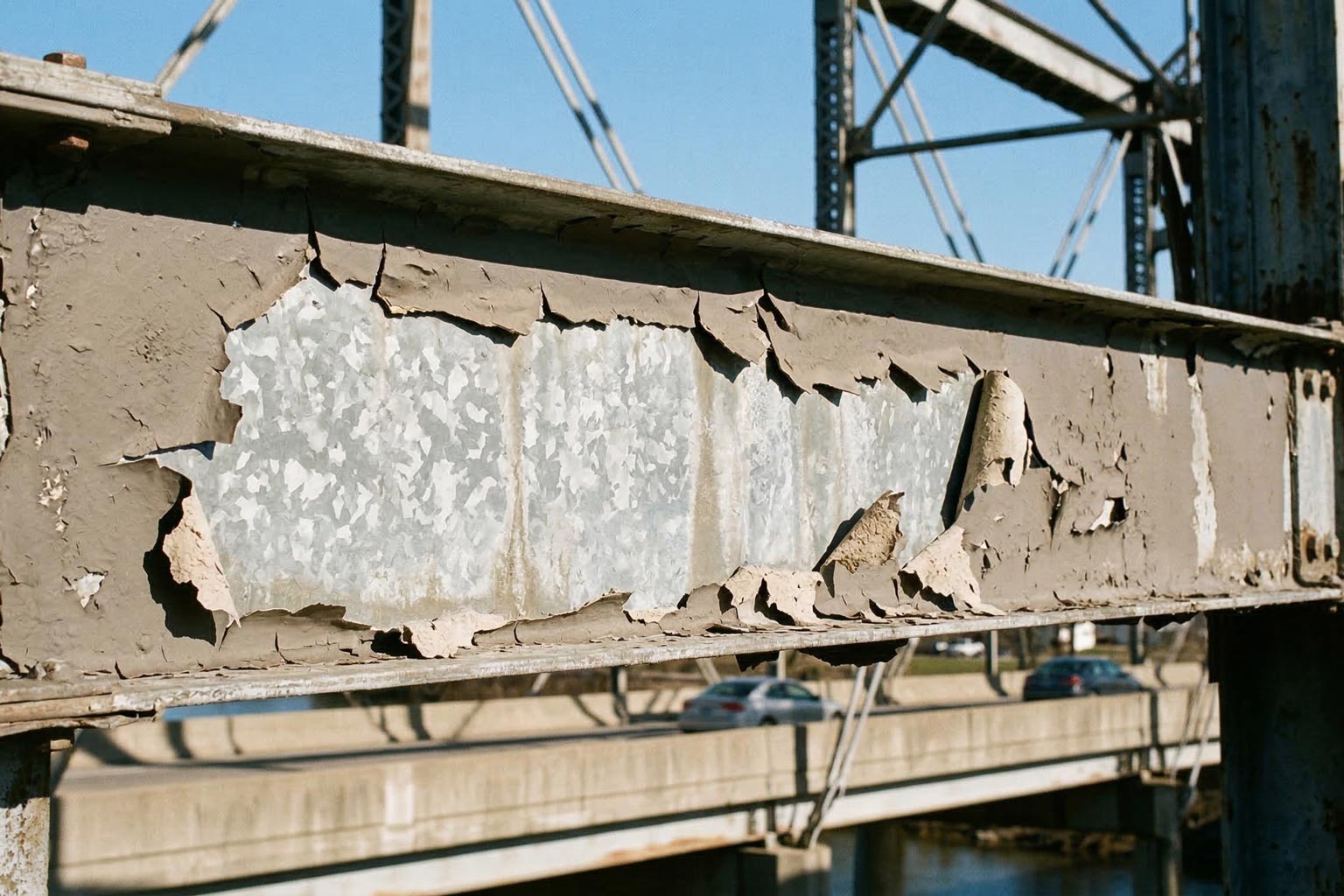
Painting over galvanized steel can significantly extend service life when properly designed as a duplex system. However, when adhesion fails, blistering, peeling, or delamination may occur prematurely. These failures are often attributed to galvanizing itself, when in reality they are typically related to surface chemistry, improper preparation, or incompatible coating systems.
The Galvanize It article addressing paint failure over galvanized steel provides a helpful starting point and can be reviewed here. This expanded technical discussion examines the chemical interactions between zinc and coatings, the importance of surface conditioning, environmental influences, and how to design a durable duplex system.
Zinc Surface Chemistry and Its Impact on Adhesion
Freshly galvanized steel has a reactive zinc surface. Immediately after galvanizing, zinc begins reacting with oxygen, moisture, and carbon dioxide to form zinc oxide and zinc hydroxide. Over time, these convert into stable zinc carbonate patina.
Paint adhesion depends heavily on the condition of this surface.
If painting occurs on:
- Very fresh reactive zinc
- Surfaces contaminated with oils or passivation residues
- Areas with zinc salts or white rust
Adhesion may be compromised.
Understanding zinc surface chemistry is fundamental to preventing paint failure.
Common Causes of Paint Failure
Inadequate Surface Preparation
The most frequent cause of paint adhesion failure is insufficient surface preparation.
Common issues include:
- Failure to remove oils or contaminants
- Painting over passivated surfaces without conditioning
- Lack of mechanical profiling
- Incomplete removal of zinc salts
Proper preparation may include:
- Solvent cleaning
- Sweep blasting
- Chemical pretreatment
- Mild abrasion
Surface preparation must align with the paint manufacturer’s requirements.
Painting Too Soon After Galvanizing
Fresh zinc surfaces may contain reactive residues that interfere with coating cure.
Some systems benefit from controlled weathering prior to painting. Others require immediate surface treatment and primer application.
Timing and preparation must be coordinated.
Incompatible Paint Systems
Not all paints are suitable for galvanized steel.
Coatings must be compatible with:
- Zinc substrate chemistry
- Expected exposure environment
- Surface profile
Certain alkyd systems may react with zinc, causing saponification and adhesion loss.
Specification of primer and topcoat systems should follow manufacturer guidance specific to galvanized substrates.
Zinc Salts and White Rust
If galvanized steel is stored improperly in high humidity or stacked without ventilation, zinc salts may form on the surface.
Painting over these salts without removal can result in blistering and early failure.
Inspection prior to painting should confirm the surface is clean, dry, and free of corrosion products.
Designing a Durable Duplex System
A duplex system combines hot dip galvanizing and paint for enhanced durability.
Benefits include:
- Increased corrosion protection
- Extended service life beyond either system alone
- Improved aesthetics
- Enhanced performance in aggressive environments
Properly designed duplex systems rely on:
- Correct galvanizing thickness
- Surface preparation matched to coating system
- Compatible primers
- Environmental exposure evaluation
Adhesion testing may be appropriate in critical applications.
Environmental Considerations
Paint systems over galvanized steel may be used in:
- Marine atmospheres
- Industrial chemical exposure
- High humidity environments
- Architectural applications
Environmental severity influences coating selection and surface preparation requirements.
Aggressive exposures demand more robust primer systems and stricter preparation protocols.
Inspection and Failure Analysis
When paint failure occurs over galvanized steel, evaluation should consider:
- Surface preparation records
- Coating system compatibility
- Environmental exposure
- Storage conditions
- Adhesion testing results
Failure should not be attributed solely to galvanizing without comprehensive analysis.
The zinc layer often remains intact even when paint delaminates.
Preventing Adhesion Problems
To reduce risk of paint failure:
- Confirm paint manufacturer approval for galvanized substrates
- Ensure surface is clean and properly conditioned
- Remove zinc salts prior to coating
- Avoid painting over heavy passivation residues
- Coordinate timing between galvanizing and coating
Collaboration between galvanizer, fabricator, and coating applicator improves long term performance.
If you would like technical guidance regarding duplex system design, surface preparation protocols, or coating compatibility, please reach out through our contact page.
Proper coordination ensures that both galvanizing and paint systems perform as intended.
Paint failure over galvanized steel is typically the result of surface preparation errors, incompatible coating systems, or environmental factors rather than deficiencies in the galvanized coating itself. Understanding zinc surface chemistry, ensuring appropriate pretreatment, and selecting compatible primer systems are essential to achieving durable duplex performance. With proper design and coordination, painting over galvanized steel can significantly extend service life.
Frequently Asked Questions About Painting Over Galvanized Steel
Why does paint sometimes peel from galvanized steel?
Peeling usually results from inadequate surface preparation, painting over zinc salts, or use of incompatible coating systems rather than failure of the galvanized coating itself.
Can freshly galvanized steel be painted immediately?
It can be painted if properly prepared and conditioned. Some systems require surface profiling or chemical pretreatment before application.
What is white rust and does it affect paint adhesion?
White rust consists of zinc salts formed in moist storage conditions. It must be removed prior to painting to ensure proper adhesion.
Are all primers suitable for galvanized steel?
No. Primers must be specifically designed for zinc substrates. Certain alkyd systems may react with zinc and cause adhesion problems.
Does painting over galvanizing extend service life?
Yes. A properly designed duplex system can significantly increase overall corrosion protection and durability.
Is sweep blasting necessary before painting?
Light abrasive sweep blasting is often recommended to improve mechanical adhesion and remove surface contaminants, depending on coating manufacturer guidance.
Can passivation treatments affect paint bonding?
Yes. Some post galvanizing passivation treatments may need to be removed or conditioned prior to painting.
If paint fails, does that mean galvanizing has failed?
Not necessarily. The galvanized coating often remains intact and protective even if the paint layer delaminates.
