
When a project enters the specification phase, one of the first questions fabricators and engineers ask is a straightforward one: what is this going to cost? For corrosion protection systems, that question is rarely as simple as it sounds. The number on an initial quote is only one part of the picture, and for hot-dip galvanizing, that initial number has been shifting in a favorable direction for decades.
The American Galvanizers Association addresses this directly in their article on how much galvanizing costs. At V&S Galvanizing, we expand on that foundation to explain what is actually happening at the material and process level, how zinc market dynamics and operational efficiency influence what you pay, and why cost comparisons between galvanizing and other protective systems are often misunderstood in the field.
Why the Price of Zinc Is Central to the Conversation
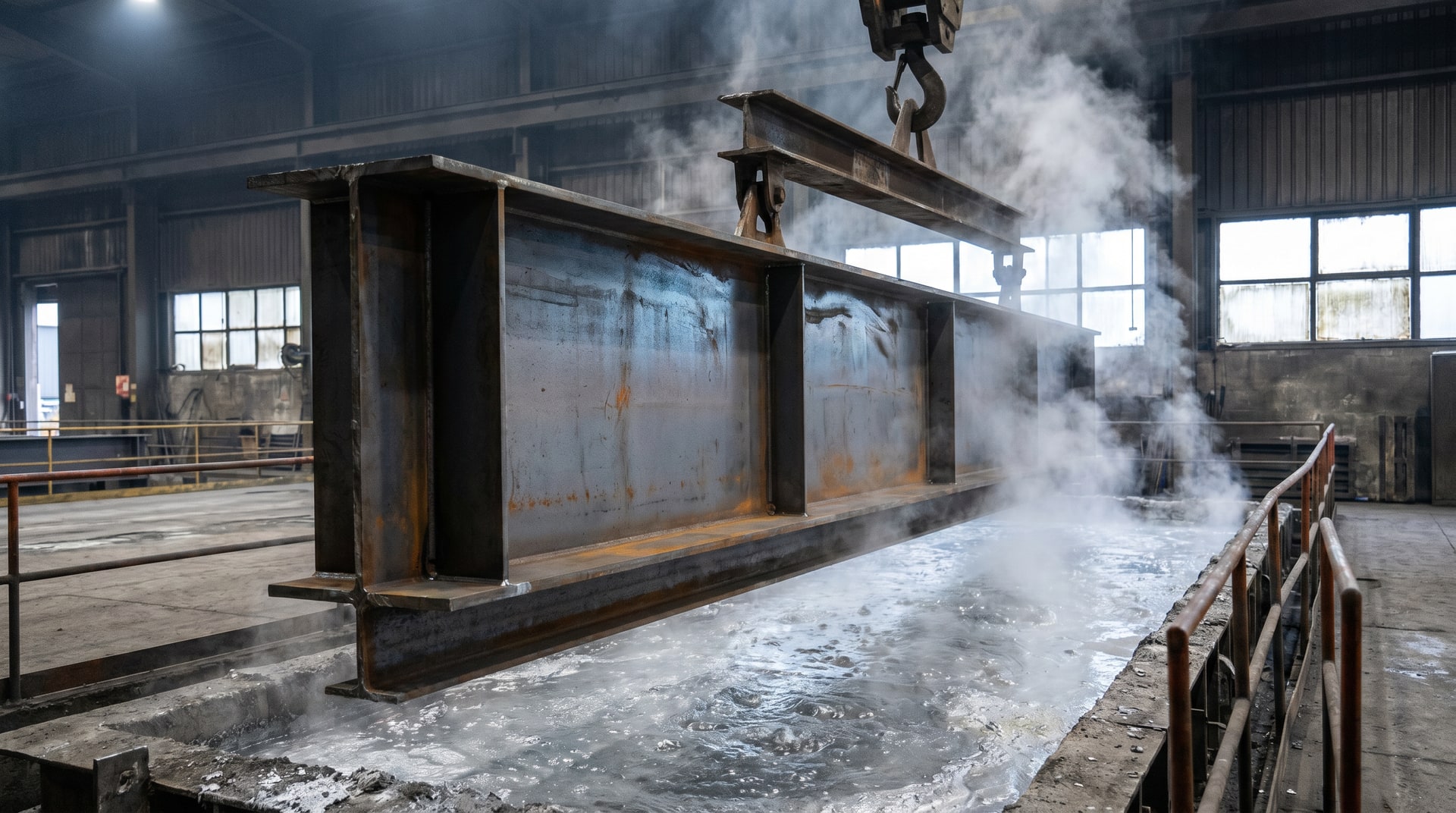
Hot-dip galvanizing is fundamentally a zinc-consumption process. Fabricated steel is immersed in a bath of molten zinc, and through a series of iron-zinc alloy reactions at the steel surface, a metallurgically bonded coating forms. The zinc consumed in that process is the primary raw material cost in galvanizing, which means zinc commodity pricing has a direct bearing on what galvanizers charge.
What the AGA's research has documented is that zinc pricing has remained relatively stable over the past two decades compared to many other industrial commodities. This stability is significant. When you evaluate coatings systems against each other, a system whose primary input cost fluctuates less is easier to budget around and tends to remain competitive on an initial-cost basis across economic cycles.
Zinc prices are influenced by global supply and demand, mining output, energy costs for smelting, and trade conditions. While no commodity is immune to short-term volatility, the long-term trend for zinc has supported galvanizing as a cost-competitive option rather than a premium-priced one. That is worth understanding when you are comparing a galvanizing quote against an alternative system, particularly if the alternative relies on materials or labor inputs that are themselves subject to significant price swings.
The Role of Process Efficiency in Keeping Costs Competitive
Beyond raw material pricing, the galvanizing industry has made substantial improvements in process technology over the past twenty years. These efficiencies are not always visible to the customer, but they directly affect what a galvanizer can charge while maintaining margin.
Kettle design and thermal management have improved, reducing energy consumption per unit of throughput. Flux chemistry has been refined to produce cleaner, more consistent coating formation with less rework. Material handling systems in modern plants allow for faster cycle times and better utilization of kettle capacity. Together, these advances mean that galvanizing plants can process more material in the same time window, with less waste, than they could in earlier generations of the process.
For the customer, the practical effect is that galvanizing has not inflated in cost at the rate one might expect given general industrial cost pressures. The combination of stable zinc pricing and improved operational efficiency is precisely why, as the AGA notes, galvanizing has steadily become more competitive and often less expensive on an initial basis than many other corrosion protection systems.
Initial Cost vs. Life-Cycle Cost: What the Numbers Actually Mean
One of the most persistent misconceptions in corrosion protection procurement is treating initial cost as the only relevant cost. It is an understandable shortcut when budgets are tight and schedules are pressing, but it frequently leads to decisions that cost more over the life of a structure.
Hot-dip galvanizing provides a metallurgically bonded coating that, in many environments, will protect steel for decades without any maintenance. The zinc coating corrodes sacrificially at a predictable and measurable rate, and the alloy layers beneath the pure zinc outer surface provide additional protection even as the outer layer weathers. There is no periodic recoating cycle, no surface preparation between maintenance applications, and no labor cost associated with routine upkeep.
Paint systems and other applied coatings often carry a lower initial unit price per square foot, but they require periodic inspection, surface preparation, and reapplication to maintain effectiveness. When those recurring costs are amortized over a structure's service life and expressed in present-value terms, the cost relationship between galvanizing and organic coatings frequently reverses. Galvanizing often becomes the less expensive option when measured over ten, twenty, or thirty years.
The AGA's Life-Cycle Cost Calculator exists specifically to make this comparison rigorous rather than anecdotal. It allows engineers and specifiers to input realistic maintenance intervals, labor rates, and coating performance data to produce a true cost comparison rather than a simple per-square-foot comparison at the time of application. For any project with a service life longer than ten years, running that calculation is worth the time.
What Drives Variation in Galvanizing Quotes Between Shops
If you have submitted the same set of drawings to multiple galvanizers and received meaningfully different quotes, that is not unusual, and understanding why it happens helps you evaluate those quotes more accurately.
Steel tonnage and piece geometry are the most significant variables. Heavier material means more zinc consumed and longer immersion times. Complex geometry, parts with enclosed spaces, or assemblies with drainage issues require additional handling attention and may need venting or draining provisions added before processing. The cost of that preparation work factors into the quote.
Throughput timing also matters. Galvanizers operating near full capacity may price differently than those with open kettle time. Regional differences in energy costs, labor markets, and zinc acquisition costs can create variation between shops in different geographic areas. And kettle dimensions matter: if your material requires a very large kettle, you need a plant equipped with one, and there are fewer of those, which can affect pricing.
Design decisions made during fabrication have a real impact on what galvanizing costs. Parts designed to rack efficiently, drain completely, and process cleanly through a kettle cost less to galvanize than parts that require special handling, double-dipping, or significant post-processing work. Working with your galvanizer early in the design process is one of the most direct ways to control cost at the specification stage.
How Galvanizing Compares to Alternative Systems at the Outset
A direct initial-cost comparison between hot-dip galvanizing and other systems depends heavily on the specific alternative being evaluated, the size and complexity of the work, and the geographic market. That said, some general observations hold across typical structural work.
Three-coat paint systems applied to structural steel often require significant surface preparation, typically SSPC-SP10 near-white blast or equivalent, followed by primer, intermediate coat, and topcoat application with mandatory dry times between coats. The surface prep alone is a substantial cost driver, and any rework for adhesion failures or application defects adds more. When labor is fully costed, three-coat systems on structural steel are frequently more expensive on an initial basis than galvanizing, particularly for complex or irregular shapes where paint application is labor-intensive.
Metallized coatings, epoxy systems, and specialty coatings occupy different cost positions depending on the application environment and performance requirements. There is no single answer that applies universally, which is exactly why tools like the AGA's Life-Cycle Cost Calculator and consultations with experienced galvanizers are more useful than rules of thumb.
What the AGA's research makes clear is that hot-dip galvanizing is no longer the expensive option it may once have been perceived as, and in many standard structural applications it is cost-competitive or favorable even at the initial quote stage.
Getting Accurate Pricing for Your Project
Galvanizing is priced on a project-specific basis. There is no meaningful universal list price for galvanizing the way there might be for a commodity product, because the variables involved, including material weight, geometry, surface condition, steel chemistry, coating specification, and logistics, all affect what a galvanizer will quote for a specific job.
The most reliable way to get an accurate price is to submit actual fabrication drawings or certified mill tonnage information directly to a galvanizer. Providing complete information about the steel chemistry, particularly silicon and phosphorus content, allows the galvanizer to assess whether any special process controls are needed to achieve the specified coating thickness and appearance. Steel with reactive chemistry can require modified immersion parameters, and that affects cost.
Location matters logistically. Transportation to and from the galvanizing plant is frequently a meaningful portion of the total project cost for galvanizing, particularly for heavy structural work. The AGA's Galvanizer Locator and GalvaSource tools are useful for identifying member galvanizers by region, which helps optimize the logistics side of the cost equation.
For projects where hot-dip galvanizing is being specified under ASTM A123 for structural steel or ASTM A153 for hardware and fasteners, it is worth confirming that the galvanizer you are quoting with is equipped to meet those standards and can document compliance. Not all shops operate to the same quality systems, and specification compliance has cost implications if rework is required.
Common Misunderstandings That Inflate Perceived Galvanizing Costs
Some of the reluctance to specify galvanizing comes from cost perceptions that are outdated or based on incomplete information. A few of these are worth addressing directly.
The assumption that galvanizing is inherently more expensive than painting persists in some segments of the market, but it is not consistently accurate. As the AGA notes, improvements in process technology and stable zinc pricing have made galvanizing more competitive than it was in earlier decades. If the last time someone on your team priced galvanizing against painting was fifteen years ago, those numbers deserve a fresh look.
Another common misunderstanding involves the cost of specification compliance for coating thickness. Engineers sometimes assume that achieving a heavier coating grade under ASTM A123 will be significantly more expensive than the standard coating. In practice, the galvanizing process naturally builds coating thickness in proportion to steel thickness and immersion time, and the incremental cost of meeting higher specification grades is often smaller than expected.
There is also a tendency to underestimate the cost of field touch-up and repair for paint systems, particularly on complex structural assemblies. Paint on edges, weld seams, and interior angles is vulnerable to damage during erection, and repairing those areas in the field is expensive. Hot-dip galvanizing covers those same vulnerable areas with a metallurgically bonded coating that is far more resistant to mechanical damage during handling and erection, reducing the post-erection cost burden.
Work With a Team That Understands the Full Cost Picture
Evaluating the cost of hot-dip galvanizing accurately means looking beyond the line item on a single quote. The initial price reflects zinc material costs, process labor, energy, and logistics, all of which have become more favorable for galvanizing over the past two decades. The life-cycle picture adds decades of avoided maintenance costs, eliminated recoating cycles, and reduced inspection burden. When both sides of that equation are considered honestly, galvanizing consistently holds its position as one of the most cost-effective corrosion protection systems available for structural steel.
At V&S Galvanizing, we work with engineers, fabricators, and contractors throughout the project cycle to help them understand what galvanizing will actually cost for their specific work, and why that cost makes sense relative to the alternatives. If you are in the early stages of a project and want to discuss specifications, design for galvanizing, or pricing for your fabricated steel, reach out through our contact page and our team will follow up directly.
Frequently Asked Questions About Hot-Dip Galvanizing Cost
Is hot-dip galvanizing always more expensive than painting on an initial cost basis?
Not consistently. The AGA notes that due to stable zinc pricing and process technology improvements over the past two decades, galvanizing has become more competitive and is often less expensive on an initial basis than other corrosion protection systems, including multi-coat paint systems applied to structural steel. The actual comparison depends on material complexity, surface preparation requirements, and regional labor and material costs.
What is the most important factor in getting an accurate galvanizing quote?
Providing complete and accurate information is the single most important factor. That means submitting fabrication drawings, certified steel tonnage, steel chemistry data (particularly silicon and phosphorus content), and the applicable specification, such as ASTM A123 or A153. Incomplete information leads to estimates with wide margins, while detailed submissions allow galvanizers to price more precisely and accurately.
How does steel chemistry affect galvanizing cost?
Steels with elevated silicon or phosphorus content can produce thicker, faster-growing alloy layers during galvanizing. This reactive behavior may require modified immersion parameters, slower processing, or additional handling to meet specification requirements. These adjustments can affect per-ton pricing. Confirming steel chemistry before fabrication and communicating it to your galvanizer early helps avoid pricing surprises.
Does part geometry affect how much galvanizing costs?
Yes, significantly. Parts with enclosed spaces, complex geometry, or poor drainage characteristics require additional preparation work, including venting holes or drainage provisions, and may require special handling in the kettle. Parts that rack efficiently and drain cleanly process faster and at lower cost. Engaging your galvanizer during the design phase can reduce galvanizing costs by optimizing part geometry before fabrication is complete.
How does transportation cost factor into the total cost of galvanizing?
For heavy structural work, transportation to and from the galvanizing plant can represent a meaningful portion of total project galvanizing cost. Choosing a galvanizer close to the fabrication shop or project site reduces that burden. The AGA's Galvanizer Locator is a practical tool for identifying nearby member galvanizers and comparing logistics costs alongside processing quotes.
What is a life-cycle cost comparison and why does it matter for galvanizing decisions?
A life-cycle cost comparison accounts for all costs associated with a corrosion protection system over a structure's service life, including initial application, periodic inspection, surface preparation for recoating, and recoating labor and materials. Because hot-dip galvanizing typically requires no scheduled maintenance for decades in many environments, its life-cycle cost is often lower than systems with lower initial prices but recurring maintenance requirements. The AGA's Life-Cycle Cost Calculator enables a rigorous, present-value comparison between galvanizing and alternative systems.
Why do galvanizing quotes vary between different shops for the same project?
Several factors drive variation: kettle capacity and dimensions, regional energy and labor costs, current throughput and scheduling, and differences in zinc acquisition pricing. A shop with open kettle time may quote differently than one running near capacity. Geographic location affects logistics costs. The key is to compare quotes that are based on identical scope and specification, so the differences reflect actual shop-level variables rather than different assumptions about the work.
Does specifying a heavier coating grade under ASTM A123 substantially increase galvanizing cost?
In most cases, the incremental cost of meeting a heavier coating grade is smaller than engineers expect. The galvanizing process builds coating thickness naturally in proportion to steel thickness and immersion time, so achieving thicker coatings on heavier steel sections often occurs without significant process modification. The clearest cost impact comes when a heavier grade is specified on thinner material, which may require process adjustments. Discussing your specification requirements directly with your galvanizer before finalizing drawings is the most reliable way to understand any cost implications.
