
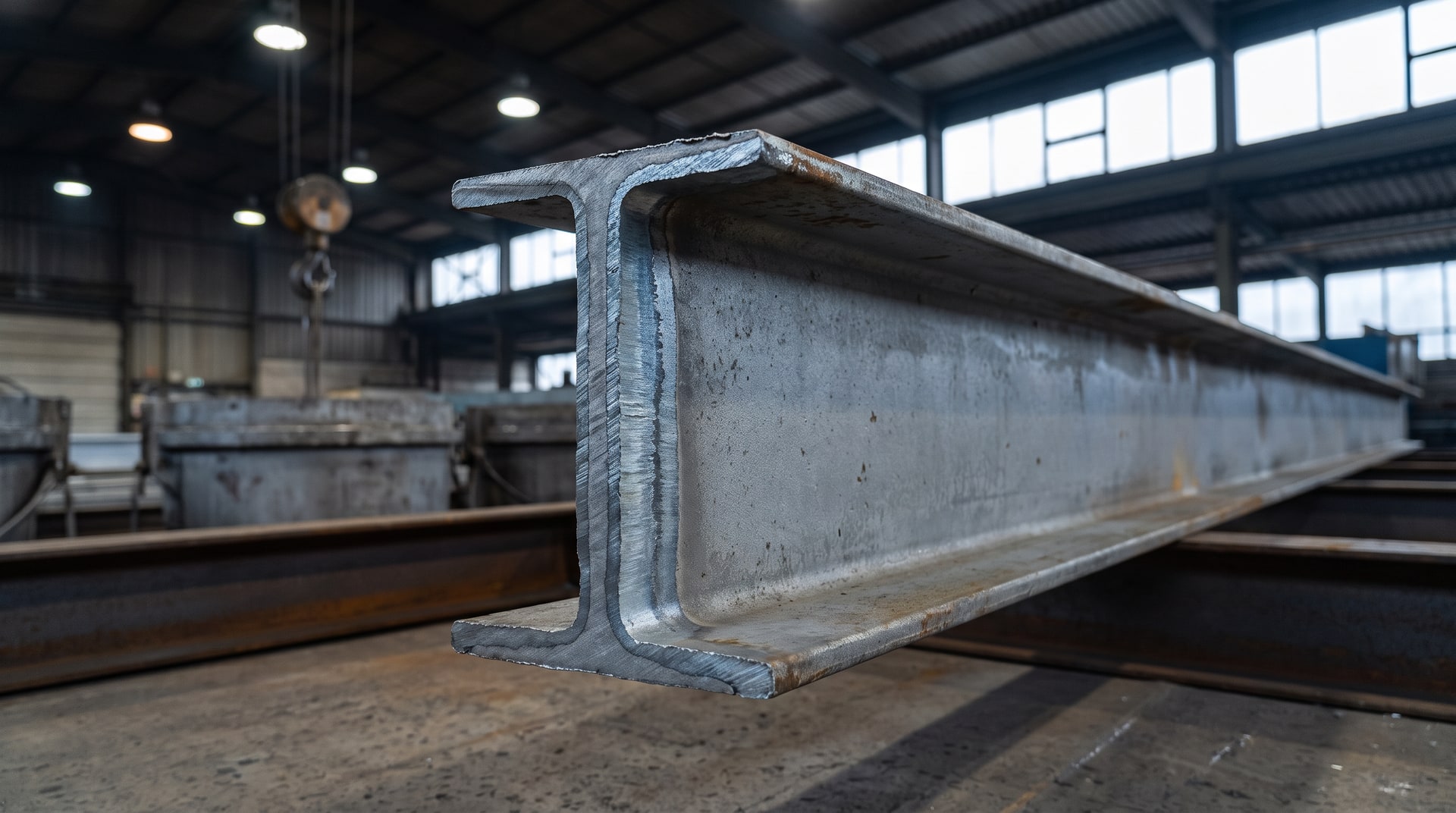
Walk through any structural steel project and you will notice something quickly: not all galvanized steel looks the same. Some pieces come out of the kettle with a bright, mirror-like shine. Others emerge with a flat, matte gray surface. To most people on a job site, this difference looks like a quality issue. The shiny parts seem right; the dull parts seem like something went wrong. That assumption, while understandable, is almost always incorrect, and acting on it can lead to misguided rejections, unnecessary rework, and real cost consequences for a project.
The appearance of a galvanized coating is not a reliable indicator of its corrosion protection. It is, however, a reliable indicator of what happened during the metallurgical reaction between the steel and the zinc bath. Understanding that reaction, and the variables that shape it, is how engineers and fabricators make better decisions about steel selection, specification, and inspection.
The American Galvanizers Association addresses this directly in their article on dull gray vs. shiny galvanized finishes. At V&S Galvanizing, we expand on that foundation to explain what is actually happening at the material level, how steel chemistry influences the coating structure, and why the appearance question is often misunderstood in the field.
The Coating Is Not One Layer: It Is a Metallurgical Structure
Hot-dip galvanizing is not a coating applied to steel the way paint is applied to a wall. It is the result of a diffusion reaction between iron in the base steel and zinc in the molten bath. That reaction produces a series of zinc-iron intermetallic alloy layers that bond metallurgically to the steel. The coating that forms on what is called non-reactive steel, steel whose chemistry falls within the recommended limits, has four distinct layers.
Working outward from the base steel, these layers are the gamma layer, the delta layer, the zeta layer, and the eta layer. The gamma, delta, and zeta layers are all intermetallic alloys, meaning they contain both iron and zinc in varying proportions. These alloy layers are actually harder than the base steel itself, which is why galvanized steel offers exceptional abrasion resistance. The outermost layer, the eta layer, is essentially pure zinc with the same composition as the zinc in the galvanizing kettle. That eta layer is what gives galvanized steel its characteristic bright, shiny surface.
When the coating has a full, intact eta layer, the finish looks bright. When the eta layer is thin, minimal, or absent entirely, the intermetallic layers beneath are exposed, and those layers do not reflect light in the same way. They appear dull and gray. So the question of appearance is really a question of how much free zinc remained on the surface after the metallurgical reaction finished.
How Steel Chemistry Drives the Reaction
ASTM A123 explicitly acknowledges that silicon, phosphorus, and carbon content in steel affect the galvanized coating. ASTM A385 goes further by recommending specific limits and ranges for steel chemistry to produce a high-quality coating. Steel that falls within those recommendations behaves predictably in the galvanizing bath.
For non-reactive steel, the metallurgical reaction between iron and zinc completes itself within roughly six or seven minutes of immersion. After that point, additional time in the bath has little effect on coating thickness. The reaction reaches equilibrium, and the coating stabilizes with a well-developed eta layer intact at the surface.
Reactive steel is a different matter entirely. Silicon and phosphorus act as catalysts in the iron-zinc diffusion reaction. When either element is present above recommended levels, the reaction accelerates dramatically and does not self-limit the way it does for non-reactive steel. Instead, it continues as long as free zinc is available and temperature remains above approximately 500 degrees Fahrenheit. This means the longer reactive steel stays in the bath, the thicker the coating grows, and that growth is linear with respect to time.
The layer that grows most aggressively under reactive conditions is the zeta layer. In reactive steel, the zeta layer can become severely overgrown and can constitute the vast majority of the total coating thickness. It grows in long vertical columns toward the coating surface. Because intermetallic layers do not produce a bright finish when exposed, a coating dominated by the zeta layer will appear dull gray rather than shiny. Reactive steel coatings can reach thicknesses exceeding 10 mils, far beyond what forms on non-reactive steel, precisely because this reaction does not stop.
Thickness vs. Appearance: The Performance Question
Here is where the practical misunderstanding causes the most damage. A dull gray coating is often assumed to be inferior to a bright shiny one. In reality, the opposite may be true when it comes to corrosion protection.
The corrosion protection that galvanizing provides is directly proportional to coating thickness. A thicker coating means more zinc available to sacrifice cathodically before the base steel is ever reached. If a dull gray coating produced by a reactive steel reaction is thicker than a bright shiny coating on non-reactive steel, it will outlast the shinier coating in service.
This is critical from an inspection standpoint. You cannot evaluate service life by looking at a coating. You must measure it with a calibrated coating thickness gauge. ASTM A123 sets minimum coating thickness requirements, and those requirements are about protection, not aesthetics. A coating that meets thickness requirements is a coating that performs, regardless of how it looks. Our team sees this confusion arise regularly, particularly when owners or inspectors unfamiliar with galvanizing assume a bright finish means a better coating.
What Happens During and After Withdrawal from the Bath
Several process variables beyond steel chemistry also influence how a galvanized coating looks when it comes out of the kettle.
Withdrawal speed is one of them. The faster a part is pulled from the molten zinc bath, the less zinc has time to drain back before it solidifies. A slower withdrawal allows more excess zinc to run off, producing a thinner but more uniform eta layer. A faster withdrawal rate traps more free zinc on the surface, which can increase both brightness and overall coating thickness.
Cooling conditions after withdrawal matter too, particularly for reactive steel on thick, heavy sections. When a large part cools slowly, the temperature near the surface can remain above 500 degrees Fahrenheit long enough for the metallurgical reaction to continue, even outside the bath. If reactive steel consumes the entire eta layer during this post-withdrawal cooling period, the zeta intermetallic layer will grow to the surface and the part will visibly transition from shiny to dull as it cools. This is not a defect introduced after the fact. It is the continuation of a reaction that started in the bath.
Quenching provides the most direct way to interrupt this post-withdrawal reaction. Immersing galvanized steel in a quench tank immediately after withdrawal drops the temperature by several hundred degrees in a short time, stopping the diffusion reaction before it can consume the eta layer. Water, chromate, and phosphate quench options are all used in practice. Quenching is particularly valuable for reactive steel on heavier sections where slow air cooling would otherwise allow the reaction to continue.
Kettle Chemistry and What Galvanizers Add to the Bath
The composition of the zinc bath itself plays a role in coating appearance and quality. Galvanizers add small amounts of aluminum to the molten zinc specifically to increase coating brightness. Aluminum improves the reflectivity of the eta layer and produces a cleaner, shinier surface on non-reactive steel.
Nickel additions to the galvanizing bath serve a different purpose. Nickel does not directly brighten the coating in the way aluminum does. Instead, it suppresses the reactivity of steel by limiting the growth of the intermetallic alloy layers. By keeping that growth in check, nickel indirectly improves coating brightness. For galvanizers working regularly with steel whose chemistry is borderline or moderately reactive, nickel additions to the bath are one tool available to manage coating thickness and appearance without requiring a change in steel specification.
These bath chemistry adjustments are operational decisions made by the galvanizer based on the material being processed. They are part of why working with an experienced galvanizer matters. Understanding how to balance aluminum and nickel additions relative to the steel coming through the operation is a process control skill, not something that happens automatically.
Surface Preparation and Its Influence on Reactive Steel
If reactive steel cannot be avoided, there are methods to limit its effect on coating appearance and thickness. One approach that may seem counterintuitive is abrasive blasting the steel surface before galvanizing.
Blasting roughens the steel surface, creating a profile of peaks and valleys. That texture physically interferes with how the zeta intermetallic layer grows. Because the zeta layer grows in long vertical columns toward the coating surface, the irregular geometry introduced by blasting disrupts that columnar growth pattern. The result is a somewhat thinner, more controlled intermetallic layer and a better chance of retaining a visible eta layer at the surface.
Limiting submersion time and using lower bath temperatures are additional options. Since the iron-zinc reaction on reactive steel is time and temperature dependent, reducing either variable reduces the extent of intermetallic growth. These are trade-offs the galvanizer must manage carefully because the steel still needs adequate time in the bath at adequate temperature to achieve a complete, well-bonded coating.
The most effective long-term solution remains specifying steel with chemistry within the limits recommended by ASTM A385. Selecting steel with controlled silicon, phosphorus, and carbon levels removes the root cause of reactive behavior rather than managing its symptoms. When project specifications allow it, this is always our first recommendation to fabricators and engineers working through hot-dip galvanizing requirements.
Reading a Galvanized Coating in the Field
Given everything above, the practical takeaway for engineers, inspectors, and contractors is straightforward. Appearance alone tells you something about what happened metallurgically, but it tells you almost nothing about whether the coating will protect the steel adequately in service.
A bright shiny finish indicates a well-developed eta layer and likely non-reactive steel chemistry or effective bath management. It is an aesthetically desirable outcome and often indicates a coating structure with good ductility characteristics. But a thin shiny coating may provide less protection than a thick dull one.
A dull gray finish indicates that intermetallic layers are at or near the surface, that the eta layer is minimal or absent, and that the steel was likely reactive. It may also mean the coating is quite thick. Dull gray coatings meet ASTM A123 requirements routinely, and many perform excellently in service over long periods.
What matters for compliance and performance prediction is measured coating thickness, not surface appearance. Rejection of galvanized coatings based solely on color or sheen, without thickness measurement, is technically unsupportable under the applicable standards.
Work With a Team That Understands the Metallurgy Behind the Finish
The distinction between dull gray and shiny galvanized coatings is not a simple question of quality control passing or failing. It reflects the interplay of steel chemistry, bath composition, process parameters, and cooling conditions, each of which can vary from one job to the next. Knowing which variables drove a particular outcome is what allows a galvanizer to make meaningful adjustments and what allows an engineer or fabricator to specify intelligently.
At V&S Galvanizing, our team applies this understanding to every project we process. We monitor bath chemistry, manage submersion times relative to the material we are running, and work with customers upstream when steel selection has the potential to create coating challenges. When coating appearance is a project concern, whether for aesthetic reasons or because a customer needs to understand what they are seeing, we can walk through exactly what the finish indicates and what the measured thickness confirms.
If you have questions about galvanized coating appearance, steel reactivity, or how to specify galvanizing for a specific application, reach out through our contact page and we will connect you with someone on our technical team.
Frequently Asked Questions About Dull Gray vs. Shiny Galvanized Finishes
Does a dull gray galvanized coating provide less corrosion protection than a shiny one?
Not necessarily. Corrosion protection from a galvanized coating is directly proportional to its thickness, not its appearance. A dull gray coating that is thicker than a shiny coating will offer greater service life. Coating thickness must be measured with a gauge to evaluate protection, not assessed visually.
What causes a galvanized coating to appear dull gray instead of shiny?
A dull gray appearance occurs when the eta layer, the outermost pure zinc layer responsible for brightness, is thin or absent. This typically happens when steel contains elevated silicon or phosphorus levels that catalyze an accelerated iron-zinc diffusion reaction, causing the zeta intermetallic layer to grow to or near the coating surface. Intermetallic layers do not produce a bright finish when exposed.
Can a galvanized coating look shiny when it leaves the kettle and turn dull as it cools?
Yes. On reactive steel in thick, heavy sections, the iron-zinc metallurgical reaction can continue after the part is removed from the bath if the steel cools slowly. As long as the temperature stays above roughly 500 degrees Fahrenheit and free zinc is available, the reaction proceeds. If the eta layer is fully consumed during cooling, the zeta layer reaches the surface and the finish turns from shiny to dull. Quenching immediately after withdrawal stops this reaction.
What steel chemistry limits should I specify to get a bright galvanized finish?
ASTM A385 provides the recommended limits and ranges for silicon, phosphorus, and carbon content in steel intended for hot-dip galvanizing. Staying within those limits gives you non-reactive steel, which produces a coating with a full eta layer and a bright finish. Your steel supplier or galvanizer can advise on mill certifications and chemistry review before fabrication begins.
Can a galvanizer do anything to improve brightness when reactive steel must be used?
Several options are available. Abrasive blasting the steel surface before galvanizing disrupts columnar growth of the zeta layer. Limiting submersion time and using lower bath temperatures reduces intermetallic growth. Adding aluminum to the bath improves brightness directly; adding nickel suppresses steel reactivity and indirectly improves brightness. Quenching after withdrawal prevents post-bath consumption of the eta layer.
Is a dull gray galvanized coating compliant with ASTM A123?
Yes, provided it meets the minimum coating thickness requirements specified in ASTM A123 for the applicable steel category. ASTM A123 does not require a specific surface appearance. It requires minimum coating thickness, which is measured instrumentally. A dull gray coating that meets thickness requirements is a compliant coating.
Why do some galvanized coatings on reactive steel end up being very thick?
On reactive steel, the iron-zinc diffusion reaction does not self-limit after a few minutes the way it does on non-reactive steel. Instead, coating thickness grows linearly with time in the bath. The zeta intermetallic layer continues to develop in long vertical columns toward the surface for as long as free zinc and sufficient temperature are present. This is why reactive steel coatings can exceed 10 mils, significantly thicker than coatings on non-reactive steel.
Does withdrawal speed from the galvanizing kettle affect coating appearance?
Yes. Faster withdrawal rates give less time for excess zinc to drain from the part before it solidifies. This can produce thicker coatings and, on non-reactive steel with a healthy eta layer, a brighter appearance because more free zinc is retained at the surface. Withdrawal speed is one of several process variables a galvanizer manages to influence coating characteristics.
