

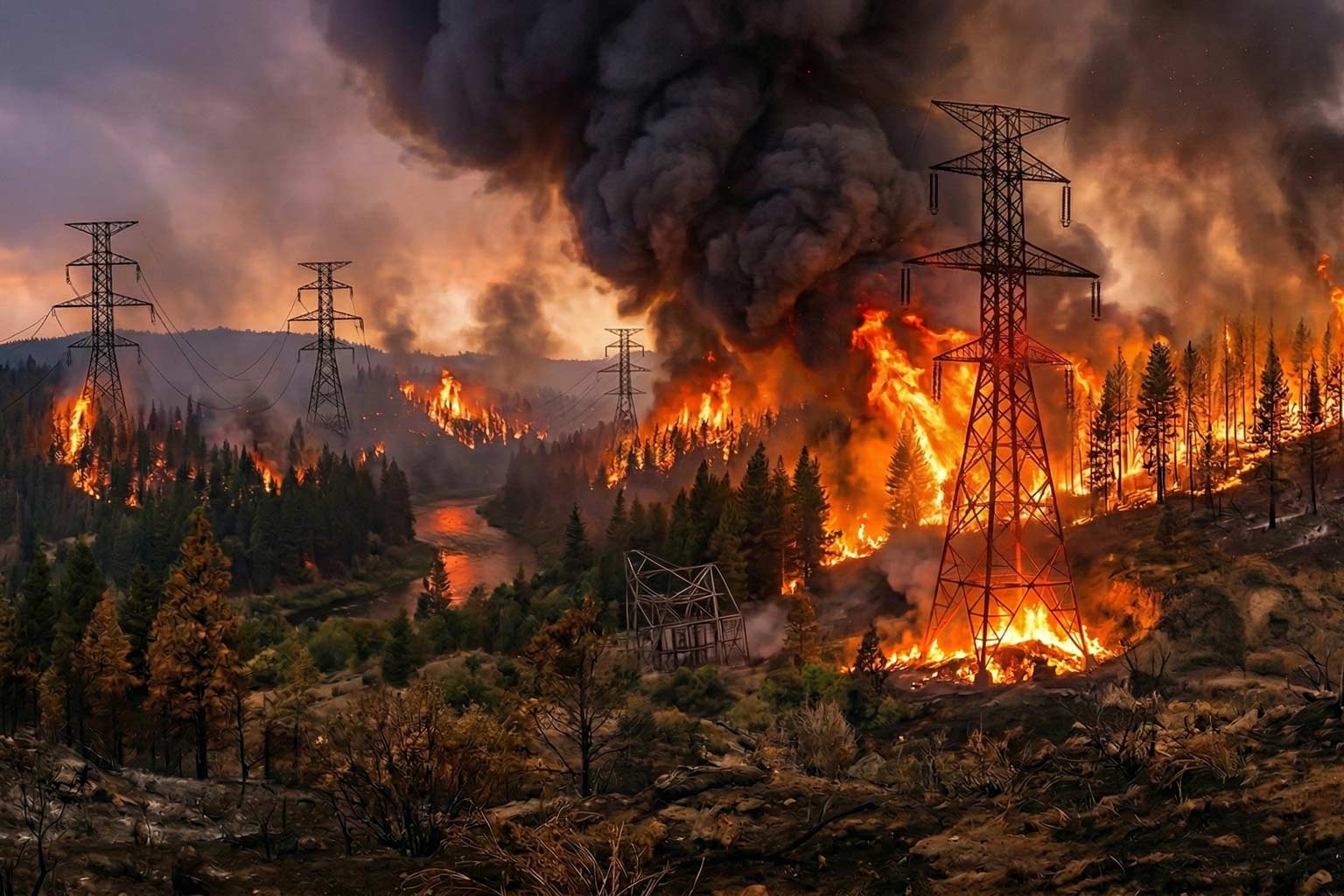
Wildfires present extreme thermal environments that can expose structural materials to high radiant heat, direct flame contact, and extended elevated temperature conditions. In regions where infrastructure, fencing, utility structures, communication towers, or transportation components are constructed from galvanized steel, engineers must evaluate how both the steel substrate and its zinc coating respond to wildfire exposure.
Hot dip galvanizing is a corrosion protection system created through total immersion of steel into molten zinc, forming a metallurgically bonded coating. When subjected to wildfire conditions, the performance assessment must distinguish between:
- Thermal response of the zinc coating
- Structural response of the steel member
- Residual corrosion protection following exposure
Technical background and field observations related to this topic are discussed in the Galvanize It knowledgebase resource available here.
Understanding material behavior at elevated temperatures allows for accurate post event evaluation rather than relying solely on visual surface appearance.
Thermal Behavior of Zinc in Fire Conditions
Zinc undergoes predictable phase transitions when exposed to elevated temperatures. The melting temperature of zinc is approximately 787 F or 419 C.
Wildfire temperatures vary widely depending on fuel source, wind intensity, and exposure duration. In certain localized conditions, temperatures may exceed the melting point of zinc. When this occurs:
- The outer free zinc layer may liquefy
- Surface texture may change
- Discoloration or dulling may occur
- Portions of the alloy layers may remain adhered to the steel
The galvanized coating is not a single homogeneous layer. It consists of multiple zinc iron intermetallic layers formed during immersion in molten zinc. These alloy layers are metallurgically bonded to the steel substrate and may not behave identically to the outermost zinc layer during thermal exposure.
Melting of the surface zinc does not necessarily mean total loss of corrosion protection.
Structural Steel Response Compared to Coating Response
The structural integrity of a galvanized member is governed by the steel substrate, not the zinc coating.
Structural steel retains significant mechanical strength at temperatures below critical transformation thresholds. While strength decreases progressively at elevated temperatures, zinc melting alone does not indicate that the steel has reached temperatures associated with structural failure.
Engineering assessment after wildfire exposure should include:
- Inspection for permanent deformation
- Evidence of buckling or warping
- Measurement of cross sectional changes
- Evaluation of connection integrity
The zinc coating serves a corrosion protection function and does not contribute to load bearing capacity.
Surface Condition After Wildfire Exposure
Following exposure to wildfire heat, galvanized surfaces may exhibit visible changes, including:
- Matte or darkened appearance
- Ash accumulation
- Surface oxidation
- Localized thinning of the outer zinc layer
Surface discoloration alone does not confirm coating failure. Because of the metallurgical bond and layered structure of galvanizing, residual protective layers may remain even when the surface appearance is altered.
Coating evaluation should include thickness measurements using calibrated magnetic gauges and visual inspection for coating continuity.
Corrosion Protection After Fire Events
Wildfire environments often introduce additional corrosive factors, such as:
- Combustion byproducts
- Increased moisture from firefighting efforts
- Chemical residues from burned materials
If sufficient coating thickness remains after exposure, galvanizing continues to provide both barrier and cathodic protection to the underlying steel.
Where coating loss has occurred, localized repair using zinc rich repair methods may restore corrosion protection in accordance with galvanizing repair standards.
This inspectable and repairable characteristic distinguishes galvanizing from many organic coatings that may blister, char, or delaminate under high temperature exposure.
Material Selection Considerations in Wildfire Prone Regions
When specifying materials for wildfire prone regions, engineers may evaluate:
- Non combustible characteristics of steel
- Thermal response of corrosion protection systems
- Post event inspectability
- Long term durability
Hot dip galvanizing does not function as a fireproofing system. However, it does not contribute to combustion and can maintain corrosion protection performance when residual coating thickness remains within acceptable limits.
Accurate post wildfire evaluation requires separating cosmetic coating changes from structural performance criteria.
Frequently Asked Questions About Galvanized Steel and Wildfire Exposure
Does galvanized steel ignite during a wildfire?
No. Steel is non combustible. The zinc coating does not function as a fuel source during wildfire exposure.
At what temperature does zinc melt?
Zinc melts at approximately 787 F or 419 C.
If zinc melts, is the steel structurally compromised?
No. Structural integrity depends on the steel substrate. Zinc melting does not determine load carrying capacity.
Can galvanized steel still resist corrosion after wildfire exposure?
Yes. If sufficient coating thickness remains, corrosion protection continues. Areas of coating loss may be repaired using zinc rich repair materials.
Should galvanized structures automatically be replaced after fire exposure?
No. Replacement decisions should be based on structural inspection of the steel and measurement of remaining coating thickness rather than surface discoloration alone.
For further technical reference and documented field observations, consult the Galvanize It article at:
https://galvanizeit.org/knowledgebase/article/the-resilience-of-hot-dipped-galvanized-structures-in-wildfires
