

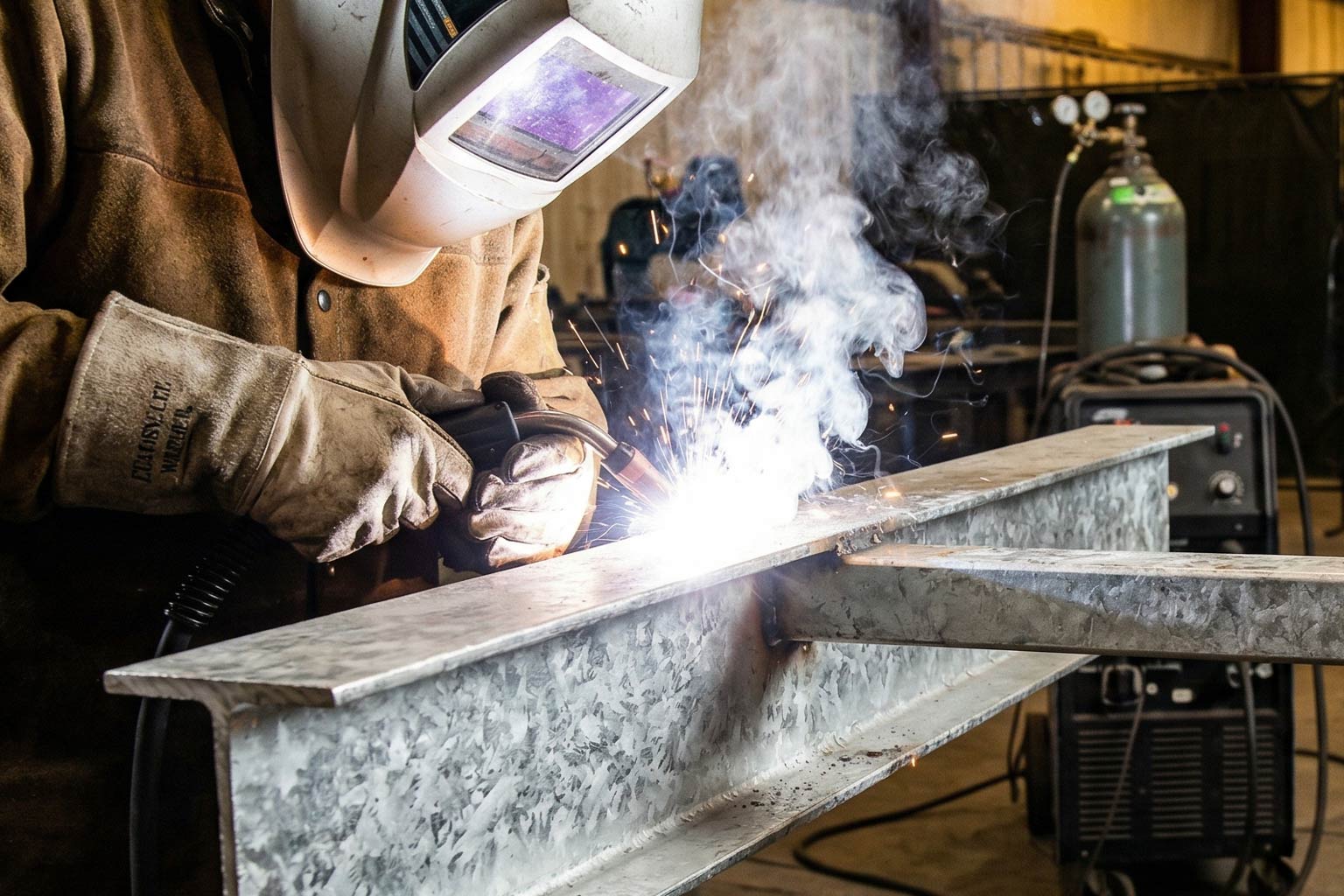
Steel fabrications often incorporate multiple material types to achieve specific performance characteristics. Stainless steel components may be combined with galvanized carbon steel in structural assemblies, mechanical systems, or infrastructure projects. While each material offers advantages, engineers frequently question how welding or joining these materials may affect corrosion protection and whether embrittlement risks exist.
The American Galvanizers Association provides technical insight into this topic in the following article.
Expanding on that foundation, this article examines the metallurgical factors involved when galvanized and stainless steels interact during welding, potential embrittlement mechanisms, and best practices for fabrication and design.
Understanding Embrittlement in Steel
Embrittlement refers to the reduction of ductility in a material, making it more susceptible to cracking or fracture under stress. Several metallurgical processes can lead to embrittlement depending on temperature exposure, alloy composition, and fabrication practices.
In galvanizing and welding environments, potential embrittlement mechanisms may include:
- Hydrogen embrittlement
- Liquid metal embrittlement
- Heat affected zone changes during welding
Understanding these mechanisms helps engineers evaluate whether specific fabrication methods could influence structural performance.
Liquid Metal Embrittlement and Galvanizing
Liquid metal embrittlement occurs when certain molten metals interact with steel under stress conditions. Because galvanizing involves immersion in molten zinc, this phenomenon is sometimes discussed in relation to galvanized steel.
However, liquid metal embrittlement is generally associated with specific conditions:
- High tensile stresses in the steel
- Susceptible steel microstructures
- Exposure to molten metal during processing
Proper fabrication design and stress control significantly reduce the likelihood of embrittlement during galvanizing.
For most structural steels used in galvanizing applications, this condition is rare when recommended design practices are followed.
Welding Galvanized Steel
Welding galvanized steel is common during fabrication or field modifications. When welding occurs after galvanizing, the zinc coating in the weld zone is typically removed due to the heat generated during welding.
This creates a localized area where:
- The coating is vaporized
- Bare steel becomes exposed
- Post weld repair is required to restore corrosion protection
Appropriate repair methods, such as zinc rich coatings or thermal spray zinc, are used to protect the weld area after fabrication.
Interaction Between Stainless Steel and Galvanized Steel
When stainless steel components are connected to galvanized carbon steel, engineers should consider galvanic corrosion behavior.
Galvanic corrosion occurs when two dissimilar metals are electrically connected in the presence of an electrolyte.
In such systems:
- Zinc typically acts as the sacrificial metal
- Stainless steel behaves as the more noble metal
The zinc coating may corrode preferentially in localized areas depending on environmental exposure and electrical connectivity.
Proper design strategies can mitigate this effect.
Preventing Galvanic Corrosion
Several design techniques can reduce galvanic interaction between stainless and galvanized steel components.
These include:
- Using insulating materials between metals
- Minimizing direct electrical contact
- Designing assemblies that limit moisture retention
- Applying protective coatings where appropriate
These measures help maintain long term corrosion protection in mixed metal assemblies.
Fabrication Planning for Galvanized Assemblies
When assemblies involve both stainless and galvanized components, early fabrication planning is beneficial.
Engineers should consider:
- Welding sequence
- Material compatibility
- Corrosion protection strategies
- Field repair requirements
Coordination between designers, fabricators, and galvanizers helps ensure both materials perform as intended.
Inspection and Quality Assurance
After welding or assembly, inspectors should verify:
- Structural integrity of welded joints
- Restoration of zinc coating where required
- Proper isolation of dissimilar metals if specified
Inspection ensures that both corrosion protection and structural performance meet project requirements.
Technical Coordination for Galvanized Fabrications
Hot dip galvanizing provides long term corrosion protection for structural steel across many infrastructure and industrial applications. When fabrication involves welding operations or mixed material assemblies, technical coordination helps ensure the best outcome.
If you would like assistance evaluating fabrication details, welding considerations, or corrosion protection strategies for your project, our team can help review your requirements.
Please reach out through our contact page:
https://www.hotdipgalvanizing.com/contact
Early coordination helps ensure galvanized coatings and fabricated assemblies perform reliably in service.
Embrittlement concerns in galvanized steel are typically associated with specific metallurgical conditions that can be avoided through proper design and fabrication practices. When welding galvanized steel or combining it with stainless steel components, engineers should consider coating repair requirements, galvanic corrosion behavior, and appropriate isolation techniques. With proper planning, galvanized and stainless steel assemblies can provide durable long term performance.
Frequently Asked Questions About Welding and Embrittlement in Galvanized Steel
Can welding cause embrittlement in galvanized steel?
Welding itself does not typically cause embrittlement in galvanized steel when proper fabrication procedures are followed. However, welding removes the zinc coating locally and requires repair to restore corrosion protection.
What is liquid metal embrittlement?
Liquid metal embrittlement occurs when molten metal interacts with stressed steel, potentially causing cracking. In galvanizing, this condition is rare when recommended fabrication practices are followed.
Can galvanized steel be welded after galvanizing?
Yes. Galvanized steel can be welded, but the coating near the weld area will be removed by the heat and must be repaired afterward.
Does stainless steel cause corrosion on galvanized steel?
When stainless steel and galvanized steel are electrically connected in the presence of moisture, galvanic corrosion can occur. Zinc may corrode preferentially.
How can galvanic corrosion between stainless and galvanized steel be prevented?
Insulating materials, protective coatings, and proper design practices can reduce electrical contact and minimize galvanic corrosion.
Are mixed metal assemblies common in structural design?
Yes. Many infrastructure and industrial assemblies combine galvanized carbon steel with stainless steel components to balance strength, corrosion resistance, and cost.
Does galvanizing weaken welded structures?
No. When welding and galvanizing are performed correctly and coatings are repaired where necessary, the structural integrity of the assembly remains intact.
Should galvanizers be consulted during design of welded assemblies?
Yes. Early coordination helps ensure fabrication practices, galvanizing processes, and corrosion protection strategies align with project requirements.
