
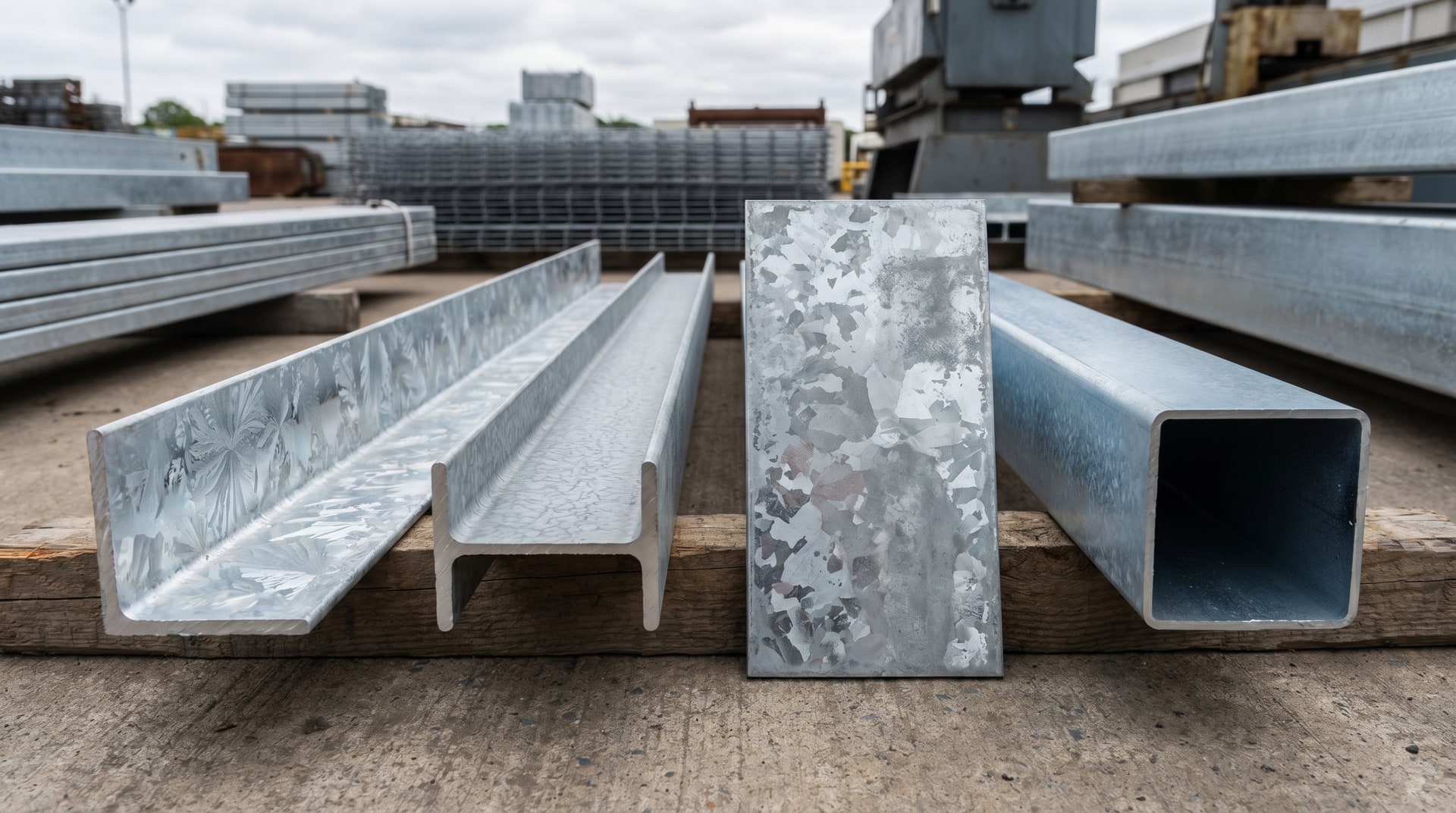
It’s common for project teams to expect galvanized steel to have a uniform, consistent appearance across all components. When parts come back with variations in color, brightness, or texture, it can raise questions about quality and consistency.
At V&S Galvanizing, this is one of the most frequent conversations we have with customers. The reality is that variation in appearance is a normal and expected outcome of the hot dip galvanizing process. The American Galvanizers Association provides additional technical context on this topic, which we expand on here to help you better understand what you’re seeing and why it happens.
Why Galvanized Steel Does Not Look Uniform
Hot dip galvanizing is a metallurgical reaction between molten zinc and steel. Unlike paint or powder coating, which are applied as surface layers, galvanizing forms a series of zinc-iron alloy layers that grow out of the steel itself.
Because of this:
- The coating develops based on how the steel reacts with zinc
- Each piece of steel may behave slightly differently
- Visual variation is a natural result of the process
Even when all parts are processed at the same time, differences in material and fabrication can lead to noticeable variation in appearance.
Steel Chemistry Is the Biggest Factor
The most significant driver of appearance variation is steel chemistry.
Elements such as:
- Silicon
- Phosphorus
Influence how quickly and aggressively the zinc coating forms.
For example:
- More reactive steels may produce thicker, dull gray coatings
- Less reactive steels may produce brighter, shinier finishes
This is why two pieces of steel with different chemistry can look completely different after galvanizing, even though both meet all specifications.
Thickness of the Steel
Steel thickness also plays a role in how the coating develops.
Thicker sections:
- Retain heat longer during galvanizing
- Allow the zinc-iron reaction to continue longer
- Often produce thicker, more matte coatings
Thinner sections cool more quickly and may result in a smoother or brighter finish.
Cooling Rate After Galvanizing
How quickly the steel cools after being removed from the zinc bath can affect the final appearance.
Cooling influences:
- Crystal formation (spangle)
- Surface texture
- Color variation
Faster cooling may produce different visual characteristics compared to slower cooling.
Surface Condition Before Galvanizing
The starting condition of the steel also affects the final appearance.
Factors include:
- Surface roughness
- Mill scale presence
- Fabrication marks
- Cleaning effectiveness
Even though the galvanizing process includes thorough surface preparation, underlying variations can still influence how the coating develops.
Fabrication Details and Geometry
Complex fabrications can show variation across different areas of the same part.
Examples include:
- Welded areas reacting differently than base metal
- Corners and edges building thicker coatings
- Sections with different mass cooling at different rates
These differences are normal and expected.
Mixed Steel in One Assembly
Assemblies made from different steel sources or batches may show noticeable variation.
Even if the parts are:
- Fabricated together
- Galvanized together
They may not look identical due to differences in chemistry and processing history.
Why Appearance Does Not Equal Performance
One of the most important things to understand is that appearance does not determine performance.
A galvanized coating that is:
- Dull gray
- Bright silver
- Smooth or textured
Can all provide the same level of corrosion protection as long as it meets specification requirements.
Performance is based on:
- Coating thickness
- Adhesion
- Coverage
Not visual uniformity.
Setting Expectations Early
Many appearance concerns can be avoided by setting expectations before galvanizing.
Project teams should understand:
- Variation is normal
- Uniform color is not guaranteed
- The process prioritizes protection, not cosmetics
This helps prevent unnecessary concern or rejection of acceptable material.
Work With a Team That Helps You Interpret Results
Appearance variation is one of the most misunderstood aspects of galvanizing. Knowing what is normal versus what requires attention can save time and avoid unnecessary delays.
At V&S Galvanizing, we work with customers to review coating results, explain appearance differences, and ensure everyone is aligned on performance expectations before and after processing.
If you have questions about coating appearance, material selection, or what you’re seeing on your project, reach out to our team through our contact page.
Frequently Asked Questions About Galvanized Steel Appearance Differences
Why do galvanized parts from the same project look different?
Differences in steel chemistry, thickness, and fabrication can cause parts to react differently during galvanizing, resulting in variation in appearance.
Does a dull gray coating mean something is wrong?
No. Dull gray coatings are often caused by more reactive steel and can indicate a thicker zinc-iron alloy layer. They still provide full corrosion protection.
Can galvanized steel be made to look uniform?
Not reliably. Because galvanizing is a metallurgical process, appearance variation is expected and cannot be fully controlled like paint.
Does coating color affect performance?
No. Corrosion protection is determined by coating thickness and adhesion, not color or brightness.
Why do thicker steel sections look different?
Thicker steel retains heat longer, allowing the coating to grow more, which can lead to a more matte or textured appearance.
Do welded areas look different after galvanizing?
Yes. Welds can react differently than base metal, leading to visible variation in finish.
Is it acceptable for galvanized coatings to vary in appearance?
Yes. As long as the coating meets specification requirements for thickness and coverage, variation in appearance is acceptable.
When should appearance be a concern?
Appearance should be evaluated if there are bare spots, poor adhesion, or coating buildup that affects functionality.
