

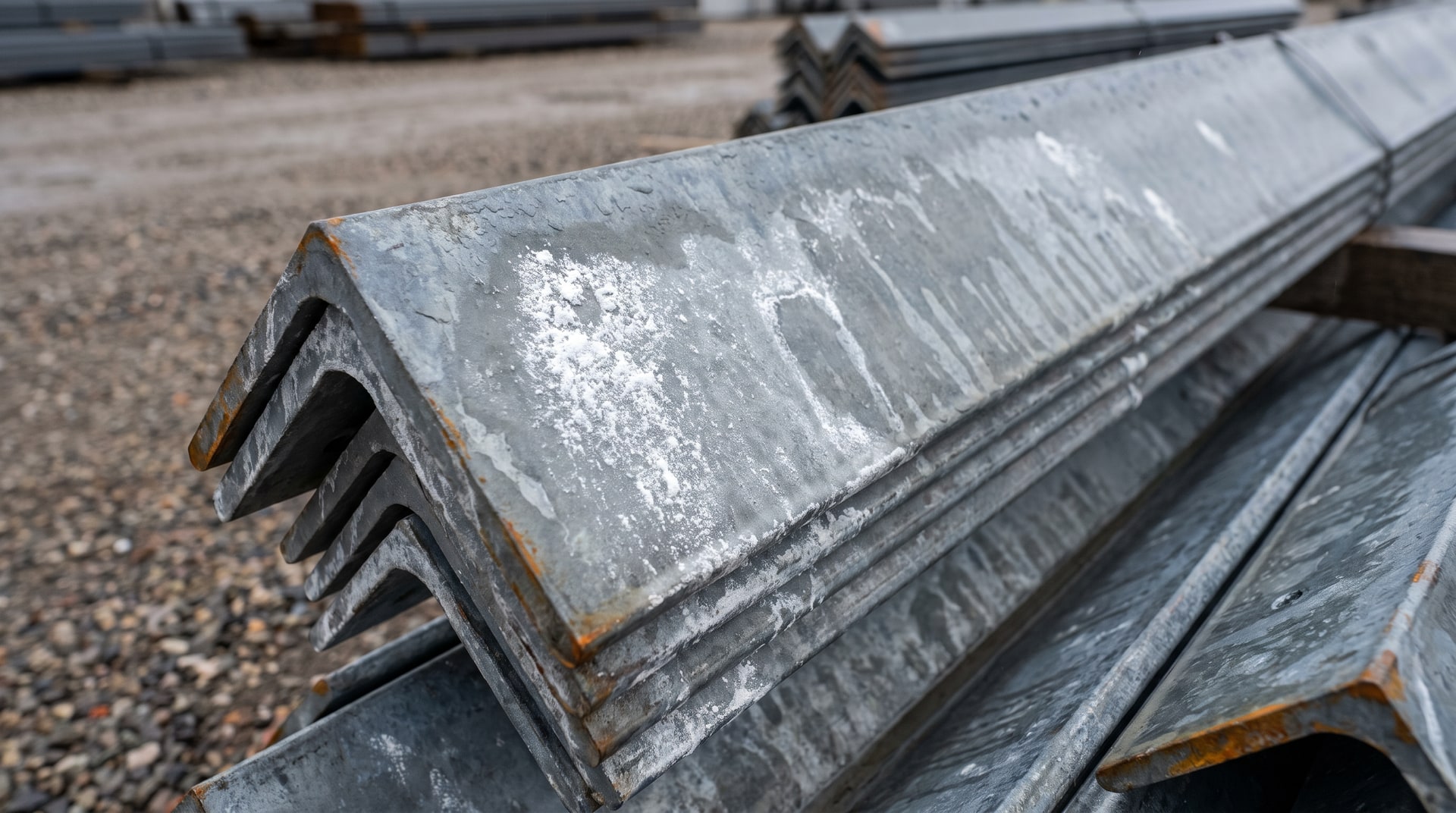
Few things generate more confusion on a jobsite than a freshly galvanized shipment that arrives looking anything but fresh. The zinc coating is supposed to be bright, metallic, and consistent, so when fabricators or contractors unwrap a bundle of galvanized steel and find patches of white, powdery buildup across the surface, the natural reaction is to assume something went wrong during the galvanizing process. In most cases, nothing went wrong at all. What they are looking at is wet storage stain, a well-documented and largely cosmetic phenomenon that occurs when freshly galvanized steel is stored in conditions that trap moisture against the zinc surface.
The American Galvanizers Association addresses this directly in their article on handling customer complaints about wet storage stain. At V&S Galvanizing, we expand on that foundation to explain what is actually happening at the material level, how moisture and airflow influence the reaction, and why this condition is often misunderstood in the field.
What Wet Storage Stain Actually Is
Wet storage stain is the common name for a group of zinc corrosion products that form when freshly galvanized steel is exposed to moisture in a confined, low-airflow environment. The technical term used in the industry is "white rust," though that label can be misleading because the result is not structural rusting of the base steel. It is a surface reaction confined to the zinc coating itself.
The chemistry is straightforward. Zinc is a reactive metal, and freshly galvanized steel has a particularly reactive surface because the outer layer, called the eta layer, is essentially pure zinc. When water contacts this surface in the presence of oxygen but without adequate carbon dioxide from free-circulating air, the zinc oxidizes and forms zinc oxide and zinc hydroxide. These compounds appear as a white, powdery or bulky deposit on the surface. The reaction is accelerated when pieces are stacked directly against one another, because water becomes trapped between the contact surfaces and cannot evaporate or be replenished with fresh air.
In open-air conditions with good airflow, the zinc surface naturally develops a stable patina over time. Carbon dioxide from the atmosphere reacts with the zinc hydroxide to form zinc carbonate, a dense, tightly adhering compound that is actually highly protective. Wet storage stain is what happens when that stabilization process is interrupted or bypassed by pooled, trapped moisture.
Why Freshly Galvanized Steel Is Most Vulnerable
The timing of wet storage stain matters. Steel that has been galvanized and exposed to normal atmospheric conditions for even a few weeks becomes significantly less susceptible. The reason is that the eta layer of pure zinc slowly develops the zinc carbonate patina mentioned above, which creates a passive, water-resistant surface. A newly galvanized piece has not yet had time to develop that protection.
This is why the period between leaving the galvanizing plant and arriving at the final installation site is the highest-risk window. If galvanized steel is bundled tightly, wrapped in plastic, stored in an unventilated container, or left outdoors in a low-lying area where water collects, the conditions are ripe for wet storage stain to develop. Even morning condensation across a flat stack of plates can be enough moisture to initiate the reaction if pieces are in close contact with no drainage path.
The flat geometry of some structural components makes the problem worse. Flat bar, sheet, angle iron, and plate all have broad, flat faces that can sit flush against adjacent pieces. Water gets in, and with no airflow between the surfaces, it stays in contact with the zinc long enough for the reaction to progress. Round or hollow sections fare better simply because their geometry allows water to drain and airflow to reach the surface.
How to Identify Wet Storage Stain Versus Coating Damage
The most important diagnostic step when white or gray deposits appear on galvanized steel is determining whether what you are looking at is wet storage stain or something more serious. The two conditions look similar at a glance but have very different implications for the steel's long-term performance.
Wet storage stain typically presents as a white, chalky, or bulky powder on the surface. It may be loosely adherent or somewhat consolidated depending on how long it has been forming and how much moisture was involved. Critically, when this material is removed, the zinc coating underneath should still be largely intact. The stain occupies space on the surface but has generally not consumed a significant thickness of the zinc coating beneath it.
Coating damage or advanced corrosion looks different. If you see dark gray or brown areas where the zinc has been consumed down to the steel substrate, or if the surface has a pitted, rough texture after cleaning that was not there originally, that indicates something beyond surface staining. Base metal exposed at this stage will begin to develop red rust immediately, which is a clear visual indicator that the protective zinc layer has been breached.
A simple scratch or wipe test with a damp cloth or soft brush can help. Light wet storage stain comes off with minimal effort. If the deposit resists cleaning and the surface beneath looks discolored or pitted, that warrants further inspection with a magnetic thickness gauge to verify that coating thickness remains within specification.
The Performance Question: Does Wet Storage Stain Reduce Service Life?
This is the question engineers and specifiers ask most often, and the answer requires some nuance. Light to moderate wet storage stain, where the deposit is removable and the zinc coating beneath is still present and continuous, does not meaningfully reduce the corrosion protection offered by the galvanized coating. The zinc carbonate that forms as stain gradually stabilizes actually becomes part of the protective patina system once the piece enters service and begins weathering normally.
However, heavy or severe wet storage stain is a different matter. If the reaction has been sustained long enough and the zinc surface has been significantly consumed in the process, the effective coating thickness is reduced. Since hot-dip galvanizing protects steel through both barrier protection and cathodic protection, any reduction in coating thickness translates directly to a shorter service life in proportion to how much zinc was lost. The relationship is not catastrophic with mild staining, but with severe cases it can be measurable.
This is why inspection and documentation at the time of receipt matters. If galvanized steel arrives with wet storage stain visible, that condition should be noted, assessed, and addressed before the steel goes into service, not after. Coating thickness measurements should be taken in affected areas and compared against the applicable ASTM specification requirements to confirm the coating is still within acceptable range.
Storage and Handling Practices That Prevent It
Prevention is straightforward in principle, though it requires deliberate attention from everyone involved in the supply chain, from the galvanizer through the fabricator and contractor. The goal is simple: keep moisture from being trapped against the zinc surface for extended periods.
Galvanized steel should be stored in a way that promotes drainage and airflow between pieces. Stacking flat sections with small separators, spacers, or dunnage between them allows air to circulate and any moisture to drain rather than pool. Even small separations, a few millimeters at minimum, make a meaningful difference. Storing steel under cover or in a dry environment is the simplest intervention, but when outdoor storage is unavoidable, the orientation and support of the material matters considerably.
Avoid wrapping freshly galvanized steel tightly in plastic or impermeable sheeting, particularly when there is any chance of moisture being sealed inside. If wrapping is necessary for shipping, use breathable packaging or ensure the material is thoroughly dry before sealing. Containers used for shipping galvanized steel should be checked for existing moisture accumulation before loading.
If there is a known delay between galvanizing and installation, that window should factor into how the steel is stored. Leaving galvanized material sitting flat in a low area of a yard through rainy weather without any drainage provisions is avoidable with basic planning.
Cleaning and Remediation When Stain Is Already Present
When wet storage stain has already formed, the appropriate response depends on its severity. Light staining that has not significantly consumed the zinc layer can often be addressed by simple cleaning followed by exposure to normal atmospheric conditions. Once the steel begins weathering in open air, the zinc carbonate patina re-establishes itself and the visible discoloration diminishes over time.
More consolidated or heavy deposits may require mechanical or chemical cleaning. Light mechanical cleaning, using a stiff nylon brush or similar non-metallic tool, removes surface deposits without damaging the zinc underneath. Avoid using steel wire brushes or abrasive grinding tools on galvanized steel unless you are specifically planning to treat the surface afterward, as these can cut into the zinc and reduce coating thickness in the affected area.
Mild acidic solutions can dissolve the zinc corrosion products chemically. Dilute solutions of vinegar or proprietary cleaning compounds formulated for zinc surfaces have been used successfully in the field. After any chemical cleaning, the surface should be rinsed thoroughly and dried, then inspected to confirm the zinc coating remains intact. Touch-up with zinc-rich paint or cold galvanizing compound may be appropriate if areas of the coating are found to be compromised after cleaning.
Regardless of the cleaning method, a thickness measurement in the cleaned area should be taken afterward to confirm adequate coating remains. This step is often skipped in the field, but it is the only way to be certain that the cleaned surface still meets specification requirements for the intended service environment.
Responsibility and Communication in the Supply Chain
Wet storage stain creates real friction between galvanizers, fabricators, and end customers, because by the time the stain is visible, it can be genuinely difficult to determine exactly where and when conditions allowed it to develop. A piece of steel may leave a galvanizing plant in clean condition, transit through a distributor's yard for two weeks in wet weather, and arrive at a jobsite with visible staining. Assigning blame is less productive than establishing shared protocols.
From our perspective at V&S Galvanizing, good communication at the front end of a project prevents most of these disputes. When customers have specific storage timelines, shipping requirements, or exposure conditions they anticipate, sharing that information allows us to make recommendations about packaging, orientation, and timing that reduce the risk. Similarly, when galvanized material is received and shows any discoloration, documenting the condition immediately, with photographs and thickness readings, gives all parties the information they need to assess responsibility and determine the appropriate next step.
We also recommend that customers who are specifying hot-dip galvanizing for projects with long storage timelines or outdoor pre-installation storage consider including storage requirements in their project documentation. Clear expectations about how galvanized steel is to be handled between delivery and installation help avoid the scenario where wet storage stain develops simply because no one thought to specify otherwise.
Work With a Team That Knows the Full Lifecycle of a Galvanized Coating
Understanding wet storage stain is part of understanding how zinc coatings actually behave in the real world. The galvanizing process produces an excellent protective coating, but that coating has its own chemistry and its own response to environmental conditions, including the period between the plant and the project. Engineers and specifiers who account for that reality in their storage and handling specifications get better outcomes, fewer complaints, and more accurate service life estimates.
At V&S Galvanizing, we work with engineers, fabricators, and contractors throughout the project cycle, not just at the point of processing. If you have questions about how to store, handle, or inspect galvanized steel, or if you have received material with visible staining and want guidance on how to assess it, reach out to our team through our contact page. We are glad to help you work through the specifics and determine the right path forward.
Frequently Asked Questions About Wet Storage Stain on Galvanized Steel
Is wet storage stain the same as white rust?
Yes, the terms refer to the same condition. "White rust" is the common technical shorthand for the zinc oxide and zinc hydroxide deposits that form when freshly galvanized steel is exposed to trapped moisture without adequate airflow. Neither term should be confused with red rust, which indicates corrosion of the base steel rather than the zinc coating.
Does wet storage stain mean the galvanizing job was done incorrectly?
Not typically. Wet storage stain is a post-process condition caused by storage and handling after the steel leaves the galvanizing plant. A properly galvanized piece can develop wet storage stain if it is stacked tightly, wrapped in plastic while damp, or stored in a wet environment without drainage. The galvanizing process itself is rarely the root cause.
How do I know if the zinc coating is still usable after wet storage stain has formed?
Clean the affected area with a non-metallic brush and inspect the surface underneath. If the zinc is still present and continuous, use a calibrated magnetic thickness gauge to measure remaining coating thickness in multiple spots across the affected area and compare the readings against the applicable ASTM specification. If thickness is within spec and the base steel is not exposed, the coating is still functional.
Can wet storage stain affect structural integrity or load capacity?
Wet storage stain is a surface phenomenon on the zinc layer and does not affect the mechanical properties of the underlying steel. It has no bearing on yield strength, tensile strength, or load capacity of the structural members. The concern is corrosion protection, not structural performance.
What is the best way to clean wet storage stain in the field?
Start with a stiff nylon brush and water. For heavier deposits, a dilute acidic solution such as white vinegar can dissolve the zinc corrosion products without damaging sound zinc underneath. Rinse thoroughly after any chemical cleaning, let the surface dry, and inspect with a thickness gauge before proceeding. Do not use steel wire brushes or abrasive grinding wheels on the galvanized surface unless you plan to apply a zinc-rich touch-up compound afterward.
How long does it take for wet storage stain to develop after galvanizing?
Under ideal conditions for stain formation, meaning tight stacking, sustained moisture contact, and poor airflow, visible deposits can form within 24 to 72 hours. The rate depends on temperature, the volume of moisture involved, and how tightly pieces are stacked. Freshly galvanized steel is most vulnerable during the first several weeks before a stable zinc carbonate patina develops.
Does weather exposure eventually eliminate wet storage stain once the steel is installed?
Light to moderate wet storage stain often diminishes noticeably once galvanized steel is installed and begins normal outdoor weathering. As carbon dioxide from the atmosphere reacts with residual zinc hydroxide on the surface, a tightly adhering zinc carbonate patina forms and the visual discoloration fades. Severe staining where significant zinc has been consumed does not reverse, since that zinc is already gone, but the remaining coating continues to perform its protective function.
Should wet storage stain be called out in project specifications or purchase orders?
It is worth addressing, particularly for projects with long lead times or outdoor pre-installation storage. Specifying requirements for ventilated storage, minimum separation between stacked pieces, and inspection upon receipt gives all parties in the supply chain clear expectations and reduces disputes after delivery. Some project specifications also establish acceptable thresholds for surface condition at time of acceptance, which simplifies field assessment decisions.
