

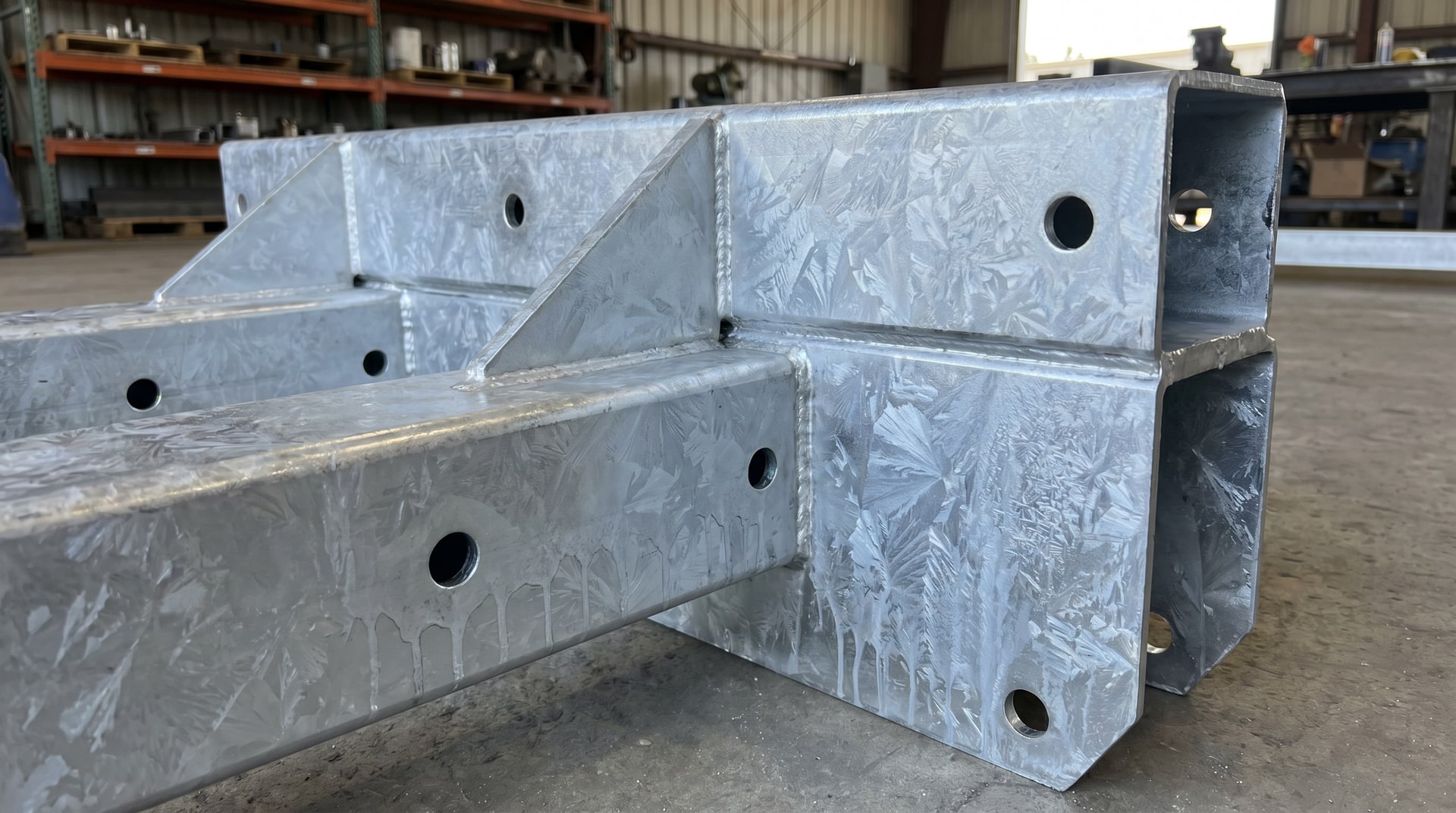
High-quality hot dip galvanized coatings don’t happen by accident. They are the result of proper design, thoughtful fabrication, and close coordination between engineers, fabricators, and the galvanizer. While the galvanizing process itself is consistent and controlled, the condition and design of the steel entering the process have a direct impact on coating quality, appearance, and long-term performance.
At V&S Galvanizing, we work closely with project teams to ensure that steel is fabricated in a way that allows the galvanizing process to perform as intended. The American Galvanizers Association outlines key design and fabrication considerations here.
This article expands on those concepts and focuses on the most important steps you can take to ensure a successful galvanizing outcome.
Why Design Matters Before Galvanizing
Hot dip galvanizing is a total immersion process. Steel is submerged in molten zinc, which must be able to:
- Flow freely across all surfaces
- Reach internal cavities
- Drain completely after immersion
If a fabrication prevents zinc from flowing or draining properly, coating defects can occur. That’s why design decisions made early in the project have a direct impact on coating quality.
Venting and Drainage Are Critical
Proper venting and drainage are among the most important design requirements.
Vent holes allow air to escape during immersion and enable molten zinc to fully coat internal surfaces. Drain holes allow zinc to exit the fabrication during removal from the bath.
Without proper venting and drainage:
- Air pockets can prevent coating formation
- Trapped zinc can create safety hazards
- Incomplete drainage can affect coating uniformity
Well-designed fabrications allow zinc to move efficiently through the entire structure.
Surface Preparation Starts with Fabrication Quality
The galvanizing process includes multiple surface preparation steps, but fabrication quality still plays a major role.
At V&S Galvanizing, our process includes:
- Surface Preparation Assessment
- Caustic Cleaning to remove oils, grease, and organic residue
- Rinse and Quality Check
- Pickling using hydrochloric acid to remove mill scale and rust
- Secondary Rinse
- Flux Application to promote proper zinc bonding
However, certain fabrication issues cannot be corrected during processing.
Common challenges include:
- Weld slag or spatter left on surfaces
- Heavy paint or coatings that are not removable
- Excessive surface contamination
Clean, properly prepared steel ensures uniform coating development.
Welding and Fabrication Considerations
Weld quality directly impacts galvanizing results.
Best practices include:
- Removing weld slag and flux residues
- Avoiding excessive weld buildup that can trap zinc
- Designing welds that allow proper drainage
Poor welding practices can create localized coating irregularities or interfere with zinc flow.
Avoiding Overlapping Surfaces
Overlapping steel surfaces can trap air, moisture, or chemicals.
When overlaps are unavoidable, proper venting must be included to allow cleaning solutions and molten zinc to reach all surfaces.
Unsealed overlaps can lead to:
- Incomplete coating coverage
- Trapped solutions that affect coating quality
- Long-term corrosion concerns
Whenever possible, designs should minimize or properly vent overlapping areas.
Material Selection and Steel Chemistry
Steel chemistry plays a role in how coatings develop.
Elements such as silicon and phosphorus influence:
- Coating thickness
- Surface appearance
- Reaction rate with zinc
While fabricators may not always control steel chemistry, understanding its impact helps set expectations for coating results.
Handling and Lifting Design
Fabrications must be designed to be safely handled during galvanizing.
This includes:
- Providing adequate lifting points
- Ensuring structural rigidity
- Avoiding designs that may distort under heat
Large or complex assemblies should be reviewed in advance to ensure they can be safely processed.
Communication Early in the Process
One of the most effective ways to ensure high-quality galvanizing is early coordination.
Working with a galvanizer during the design phase allows teams to:
- Confirm venting and drainage requirements
- Review fabrication details
- Identify potential coating challenges
- Align expectations for performance and appearance
At V&S Galvanizing, we encourage early conversations to help prevent costly rework and ensure smooth project execution.
Quality Starts Before the Steel Reaches the Kettle
Hot dip galvanizing is a highly controlled process, but coating quality is heavily influenced by what happens before the steel arrives at the galvanizing facility.
Design, fabrication, and preparation all contribute to:
- Coating uniformity
- Complete coverage
- Long-term corrosion performance
Projects that follow best practices from the beginning consistently achieve better results.
Work With a Team That Supports Your Project
Every project is different, and successful galvanizing depends on understanding the details of your fabrication and application.
At V&S Galvanizing, we work with engineers, fabricators, and contractors to ensure designs are optimized for galvanizing before production begins.
If you want to review your design, fabrication approach, or project requirements, visit our contact page to connect with our team.
High-quality galvanized coatings begin with proper design and fabrication. Venting, drainage, surface preparation, welding practices, and material selection all influence how the coating develops during the galvanizing process. By addressing these factors early and coordinating with the galvanizer, project teams can ensure consistent coating quality and long-term performance.
Frequently Asked Questions About Designing for Galvanizing
Why is venting important in galvanizing?
Venting allows air to escape during immersion and ensures molten zinc can fully coat all internal surfaces. Without proper venting, incomplete coating and safety issues can occur.
What happens if drainage is not properly designed?
Poor drainage can trap molten zinc inside the fabrication, leading to uneven coatings, added weight, and potential safety concerns during processing.
Can surface preparation fix fabrication issues?
Surface preparation removes contaminants like oil and rust, but it cannot fix fabrication issues such as poor weld quality, trapped overlaps, or improper design.
Why does weld quality matter for galvanizing?
Weld slag, spatter, or poor weld geometry can interfere with zinc bonding and create coating inconsistencies. Clean, smooth welds improve coating results.
Do overlapping surfaces affect galvanizing?
Yes. Overlapping surfaces can trap air and prevent proper coating unless they are designed with appropriate venting.
Does steel chemistry affect coating quality?
Yes. Elements like silicon and phosphorus influence coating thickness and appearance. Some steels produce thicker or more reactive coatings.
Why should designers coordinate with galvanizers early?
Early coordination helps identify design issues, confirm requirements, and avoid costly rework or delays during production.
What is the most important factor for achieving high-quality galvanizing?
Proper design that allows zinc to flow, coat, and drain freely is the most critical factor in achieving consistent, high-quality galvanized coatings.
