

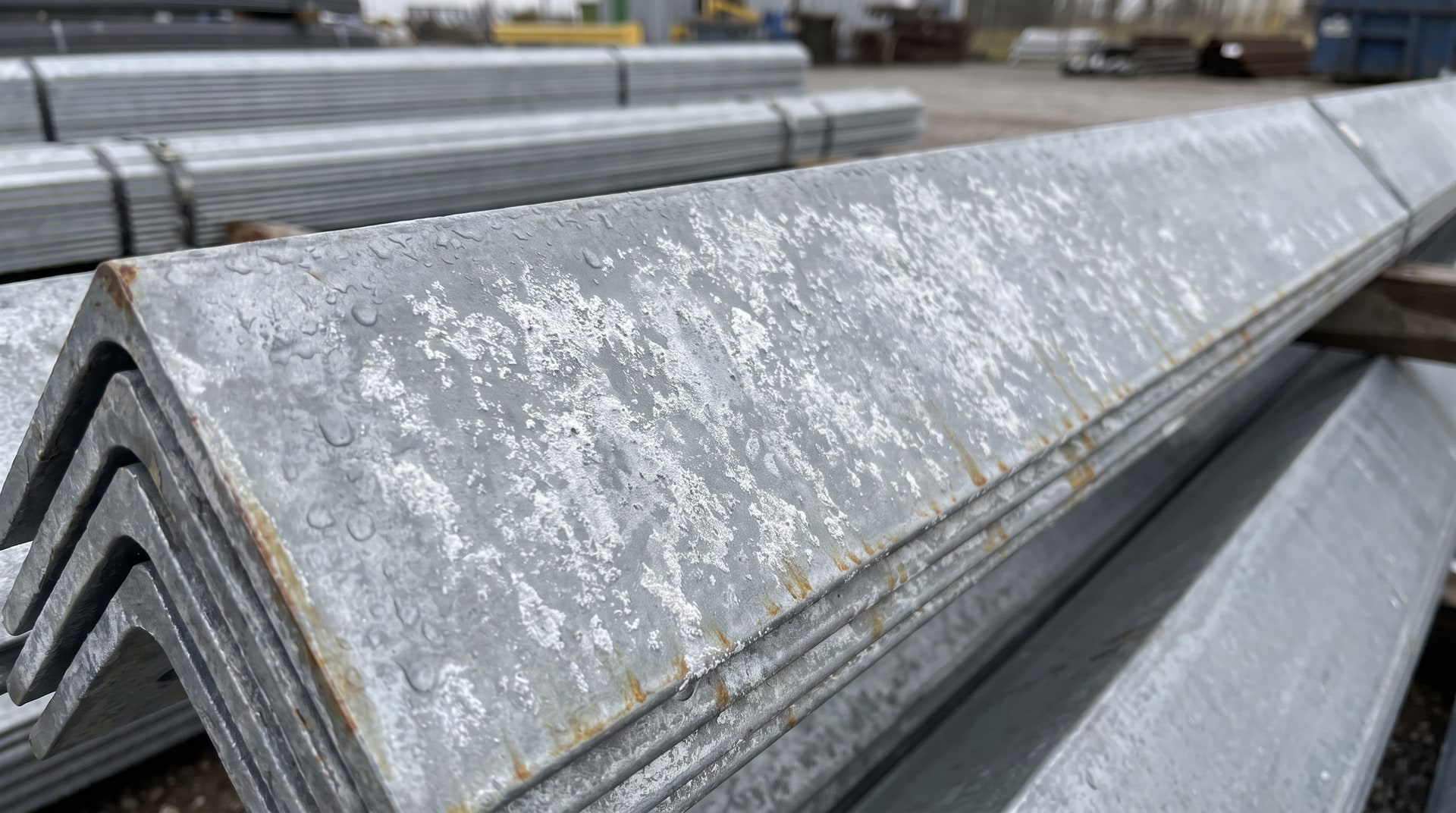
When freshly galvanized steel arrives on a job site or sits in a storage yard, it rarely stays in a perfectly dry, well-ventilated environment. Rain, condensation, and trapped moisture between stacked pieces create exactly the conditions that produce wet storage stain. The result is a white, powdery or waxy deposit on the zinc surface that can range from barely noticeable to visually alarming. For many engineers and contractors who encounter it for the first time, the immediate question is whether the coating has been compromised and whether the steel is still fit for service.
The answer depends entirely on the severity, and that severity is something you have to know how to read correctly. Misidentifying light staining as structural damage leads to unnecessary rejection of serviceable material. Dismissing advanced staining as cosmetic leads to coating failures in the field. Neither outcome is acceptable.
The American Galvanizers Association addresses this directly in their article on damage caused by wet storage stain. At V&S Galvanizing, we expand on that foundation to explain what is actually happening at the material level, how moisture and airflow influence corrosion progression, and why the visual appearance of wet storage stain is so often misread in the field.
How Zinc Behaves When It Gets Wet
To understand wet storage stain, you first need to understand what zinc is doing when galvanized steel is exposed to a normal outdoor environment. In open air, freshly galvanized zinc reacts with oxygen and carbon dioxide to develop a thin, tightly adherent patina of zinc carbonate. This patina is chemically stable and forms the real long-term barrier that gives hot-dip galvanizing its service life. It is essentially what zinc wants to become when it has access to circulating air and alternating wet-dry cycles.
Wet storage stain occurs when that natural process is short-circuited. When moisture is trapped against the zinc surface without adequate airflow, the chemistry shifts. Instead of forming stable zinc carbonate, the zinc reacts primarily with water and oxygen to produce zinc hydroxide and zinc oxide. These compounds are bulky, loosely adherent, and white to gray in color. They look alarming because they are volumetrically larger than the zinc they came from, creating a visible powdery or waxy layer that can cover the steel entirely. But the corrosion product itself is not dense, and in mild cases the amount of zinc actually consumed to produce it is small relative to the total coating thickness.
The critical variable is whether the underlying zinc surface has had meaningful material removed. A thick layer of white corrosion product does not necessarily mean deep zinc loss. That distinction is what separates a manageable condition from one requiring regalvanizing.
Why Stacked and Bundled Steel Is Particularly Vulnerable
Wet storage stain rarely develops on steel that is standing upright, spaced apart, and exposed to moving air. It concentrates on surfaces that are in contact with each other or very close to it. Bundled angle iron, nested channels, stacked plate, and tightly banded structural members all create geometry where moisture accumulates and oxygen exchange is severely restricted.
In those confined spaces, the wet-dry cycling that promotes stable carbonate formation simply does not happen. Water gets in between pieces, capillary action keeps it there, and the reactive zinc surface sits in sustained contact with trapped moisture. This is why wet storage stain is fundamentally a storage and handling problem, not a galvanizing quality problem. The coating that produced the stain may have been perfectly applied and well within specification. The conditions it was stored under did the damage.
Temperature gradients compound this. In a storage yard, the underside of a steel bundle warms more slowly than the top surface. Condensation forms preferentially on cooler surfaces, concentrating moisture exactly where airflow is already worst. Seasonal changes, overnight dew, and rain that cannot drain freely from nested sections all feed the same mechanism over days and weeks.
Reading the Severity: Light, Medium, and Heavy Stain
Light wet storage stain is the most common presentation. The zinc surface shows white or off-white deposits that are dusty or chalky in texture, usually concentrated along contact lines or in corners where moisture pooled. When you wipe the surface, the deposit comes away easily and the zinc beneath is intact and shows normal luster. In this condition, the coating has lost very little material. The AGA is direct about this: wet storage stain is often light and superficial despite the presence of a bulky corrosion product, and in the vast majority of cases it does not indicate serious degradation or likely reduction in expected service life.
Medium stain involves heavier deposit buildup and some visible etching of the zinc surface beneath the corrosion product. The deposits are denser, sometimes waxy rather than powdery, and do not wipe away cleanly. The zinc surface below may appear roughened or matte. At this stage, some meaningful coating thickness has been consumed. Whether the remaining coating is adequate depends on what it started with and what the service environment demands. Medium stain warrants a careful inspection, including coating thickness measurement, before the steel is accepted into a project without further treatment.
Heavy stain is where the real concern begins. The AGA is clear that medium and heavy wet storage stain can cause damage to the galvanized coating and can eventually destroy it if left untreated. In advanced stages, the characteristic white and gray corrosion products transition to black. That color change is diagnostic. Black corrosion product on a galvanized surface signals that the zinc has been substantially consumed in the affected area and that base steel corrosion may be beginning. When this occurs, the piece must be stripped and regalvanized. There is no remediation short of that which will restore the coating to an acceptable condition.
The Black Corrosion Product: What It Means and Why It Matters
The color shift from white or gray to black is one of the clearest visual indicators in galvanizing inspection. Understanding why it happens clarifies why the AGA treats it as a threshold for regalvanizing rather than remedial cleaning.
White and gray corrosion products are zinc-based compounds: zinc hydroxide, zinc oxide, and partially formed zinc carbonates. Black corrosion product typically indicates the presence of zinc sulfide or iron corrosion products, either of which signals that the zinc barrier has been breached in that area. If iron is corroding, it means the zinc in that zone is gone or too thin to provide galvanic protection. The steel is now corroding directly, and no surface cleaning or touch-up treatment will rebuild the lost zinc layer to a meaningful thickness over a broad area.
This is also why visual inspection alone, while useful for identifying black stain, needs to be paired with coating thickness measurement for medium stain cases. A magnetic thickness gauge applied to several locations around a stained area gives you actual data on remaining zinc. If the remaining coating is within specification for the intended service, the steel may still be acceptable after appropriate cleaning. If it is not, the decision about stripping and regalvanizing should not be deferred.
Cleaning Light to Medium Wet Storage Stain
For light stain, cleaning is straightforward and the steel can typically return to service or continue through fabrication without any special treatment beyond removing the loose deposit. A stiff bristle brush and clean water will remove the majority of light wet storage stain. Some practitioners use a dilute solution of a mild acid to help dissolve the zinc hydroxide deposits, but this should be done carefully with attention to rinsing, since residual acid left on the surface will continue to attack the zinc.
Medium stain requires more deliberate assessment. The surface should be cleaned, dried, and then gauged for coating thickness before any decision is made. If thickness is adequate, the steel can proceed. If thickness is marginal, a documented record of the condition and remaining life expectation should accompany the material, particularly if it is going into a corrosive service environment.
The goal of cleaning is not to make the steel look like it just came out of the galvanizing bath. Cleaned zinc may have a matte or slightly textured appearance in areas where stain was present. That is normal and does not indicate ongoing corrosion if the surface has been properly dried and will now be exposed to circulating air. What you are looking for after cleaning is a surface that is free of loose deposits and where the zinc beneath is continuous and measurably adequate.
Prevention: Airflow and Drainage Are the Actual Solutions
Given that wet storage stain is a storage and handling condition rather than a coating defect, prevention is primarily an operations and logistics problem. The fundamental requirement is that galvanized steel should be stored in a way that allows moisture to drain and air to circulate across all coated surfaces.
For bundled or stacked material, this means using dunnage to separate pieces so that contact surface area is minimized and air can move between members. Even small separations, a few centimeters of clearance, dramatically change the moisture behavior between surfaces. Steel should be stored on inclines where possible so that water runs off rather than pooling in nested sections. Where indoor storage is available, it is strongly preferred over outdoor storage for material that will sit for an extended period before use.
If outdoor storage is unavoidable, covering the material to prevent rain ingress while still allowing air circulation is more protective than wrapping it completely with impermeable sheeting. Impermeable covers that trap condensation underneath them create exactly the confined, moisture-saturated environment that promotes stain. A cover that sheds rain but leaves the sides open for air movement is a better design choice.
Timing also matters. Galvanized steel that ships in the same orientation it left the galvanizing line, with adequate separation between pieces, and that arrives at a site where it is promptly erected or stored correctly, rarely develops serious stain. Problems accumulate when material sits in bundles for weeks in humid conditions, is moved and restacked, gets rained on, and does not dry between cycles.
Implications for Coating Specification and Acceptance
Wet storage stain creates practical questions at the inspection and acceptance stage. A batch of galvanized steel that arrives with visible white staining may trigger rejection by personnel who are not familiar with how to assess severity. Conversely, a batch with heavy staining and black deposits may be accepted by someone who assumes all white rust is cosmetic.
For engineers and specification writers, the key is building inspection protocols that account for wet storage stain explicitly. Acceptance criteria should distinguish between light superficial stain, which does not compromise coating integrity, and medium or heavy stain, which requires thickness verification and potentially remediation or regalvanizing. Inspection should include both visual assessment and physical measurement in affected areas.
For contractors receiving galvanized material, the delivery point is the moment to document stain condition. Once material is incorporated into a structure and stained areas become inaccessible, the opportunity to remediate is gone. If there is any doubt about the extent of staining or the adequacy of remaining coating in affected areas, that question needs to be resolved before erection, not after.
Our team at V&S Galvanizing works through these kinds of assessment questions routinely. Understanding what wet storage stain looks like at different severity levels, and knowing what it means for coating performance, is part of what we bring to conversations with our customers and inspectors.
Work With a Team That Understands Zinc at the Coating Level
Wet storage stain is one of those topics where the visual impression and the actual technical condition can be very different from each other. The same white deposit that looks like serious coating failure in a light case is genuinely alarming in an advanced case. Getting that call right requires knowing what to look for, knowing how to measure, and understanding what the zinc coating is doing in each scenario. The AGA's guidance is clear: superficial stain does not compromise service life, but advanced stain with black discoloration means the coating is gone and regalvanizing is required. That boundary matters, and identifying it correctly is not something to leave to guesswork at the job site.
If you have galvanized material with visible staining and you need a technical assessment of coating condition, or if you are specifying storage requirements for a project involving galvanized steel, our team is available to help. Reach out through our contact page and we will work through the specifics of your situation with you.
Frequently Asked Questions About Wet Storage Stain on Galvanized Steel
Does wet storage stain mean the galvanizing has failed?
Not necessarily. In the vast majority of cases, wet storage stain is light and superficial. The white corrosion product is bulky and visible, but the actual amount of zinc consumed to produce it is small relative to total coating thickness. Light stain does not indicate serious degradation or a likely reduction in service life. Only medium and heavy stain, particularly when black corrosion product is present, signals real coating damage.
What causes the white powdery deposits on galvanized steel during storage?
The deposits form when moisture is trapped against the zinc surface without adequate airflow. Instead of developing the stable zinc carbonate patina that forms in open air, the zinc reacts with trapped water and oxygen to produce zinc hydroxide and zinc oxide. These compounds are white, bulky, and loosely adherent. The problem is fundamentally about moisture retention and restricted air circulation, not about coating quality.
When does wet storage stain require the steel to be regalvanized?
Regalvanizing is required when the corrosion product has turned black. Black coloration in advanced wet storage stain indicates that a significant amount of zinc coating has been consumed in that area and that base steel corrosion may be underway. At that point, the coating cannot be restored by cleaning or touch-up, and the piece must be stripped and regalvanized. Medium stain without black product warrants coating thickness measurement to determine remaining adequacy before a decision is made.
How do you tell the difference between light and heavy wet storage stain in the field?
Light stain is powdery or dusty, white in color, and wipes away from a zinc surface that is still intact and shows normal metallic luster beneath. Heavy stain involves dense, sometimes waxy deposits that do not clean away easily, a roughened or etched zinc surface below, and in the most serious cases a transition from white or gray to black coloration. A magnetic coating thickness gauge is the most reliable tool for quantifying zinc loss in intermediate cases where visual assessment alone is inconclusive.
Is wet storage stain a defect in the galvanizing process itself?
No. Wet storage stain is a storage and handling condition, not a coating process defect. A properly applied galvanized coating that meets specification can still develop wet storage stain if it is stored in conditions where moisture is trapped against the surface. The stain reflects the storage environment, not the quality of the galvanizing work. This distinction matters for determining responsibility when staining is discovered at delivery or installation.
Can you prevent wet storage stain without indoor storage?
Yes, with proper handling. The key is ensuring moisture can drain and air can circulate across all coated surfaces. This means using dunnage to separate stacked pieces, storing material on an incline so water runs off, and using covers that shed rain without trapping condensation underneath. Impermeable wrapping that prevents airflow actually worsens the problem by creating a sealed humid environment around the steel. Even modest separation between pieces significantly reduces stain development.
Does cleaning wet storage stain restore the coating to its original condition?
Cleaning removes the corrosion product and stops active staining, but it does not restore zinc that was consumed in forming the deposit. After cleaning, the surface may appear matte or slightly textured rather than the bright finish of freshly galvanized steel. That appearance change is normal and does not indicate ongoing corrosion, provided the remaining coating thickness is adequate for the intended service environment. For medium stain cases, coating thickness measurement after cleaning is the definitive check.
At what stage of staining should an inspector reject galvanized steel at delivery?
Light stain is generally not grounds for rejection if coating thickness is within specification. Medium stain should trigger thickness measurement in affected areas before acceptance. Heavy stain with black corrosion product is grounds for rejection pending regalvanizing. Inspection protocols for galvanized material should specify these severity thresholds explicitly rather than relying on a general visual pass-fail judgment, since the consequences of misclassifying either end of the spectrum are significant.
