

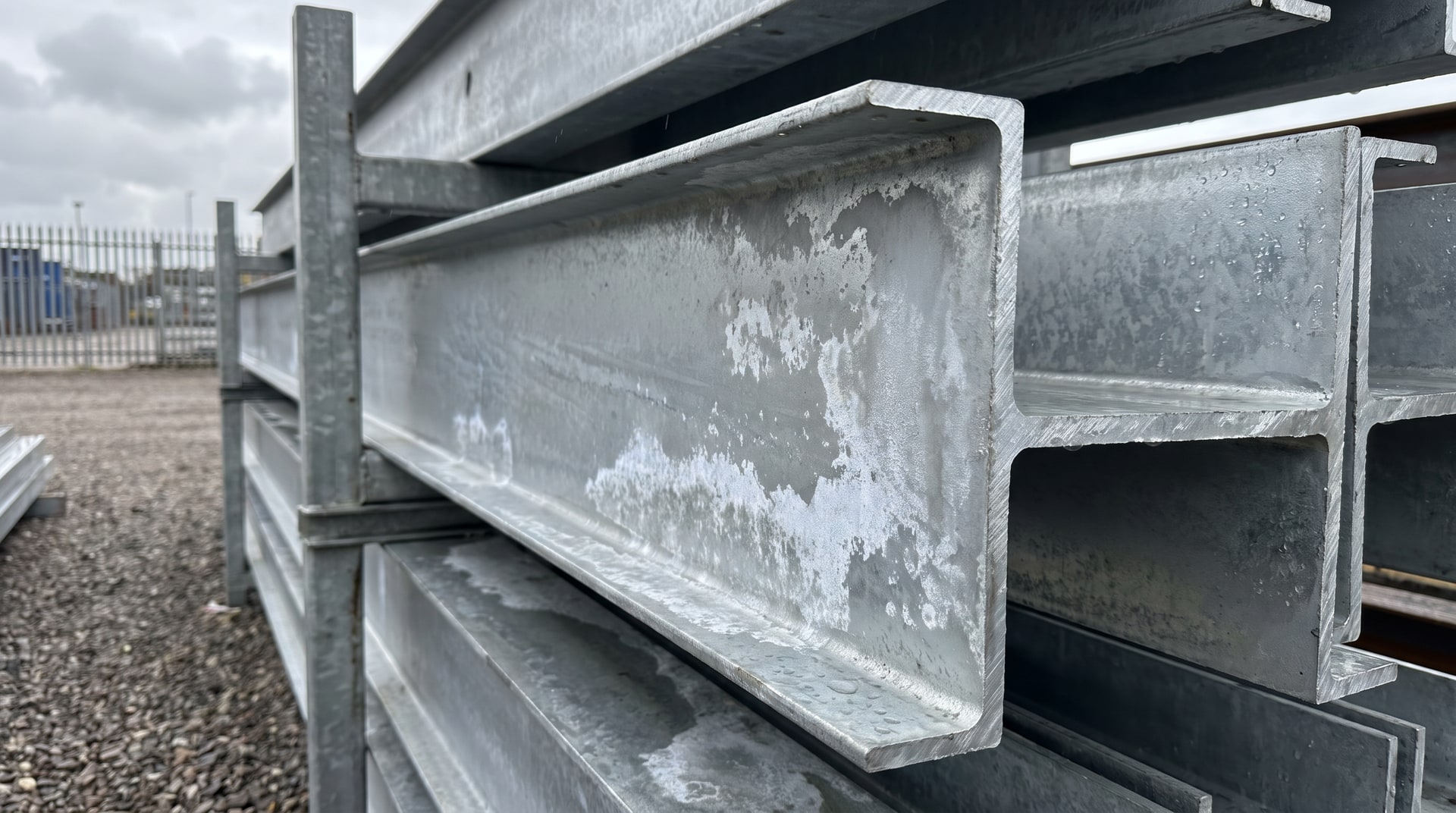
Anyone who has received a shipment of freshly galvanized steel and noticed a chalky, white residue on the surface has likely experienced wet storage stain firsthand. The visual impact can be jarring, particularly if the product is headed toward an application where appearance carries weight. Questions follow quickly: Is the coating damaged? Has something gone wrong at the galvanizing plant? Does this need to be addressed before installation?
The answers depend on understanding what wet storage stain actually is, what it is not, and how the zinc coating behaves over time once it leaves a controlled environment. The American Galvanizers Association addresses this directly in their article on weathering versus cleaning wet storage stain. At V&S Galvanizing, we expand on that foundation to explain what is actually happening at the material level, how storage conditions influence performance, and why this is often misunderstood in the field.
What Wet Storage Stain Is and How It Forms
Wet storage stain is the accumulation of white zinc corrosion products on the surface of newly galvanized steel. Despite being commonly called "white rust," that term is technically misleading. True rust is iron oxide, the product of ferrous corrosion. Wet storage stain has nothing to do with iron. It is composed primarily of zinc oxide and zinc hydroxide, both of which form when freshly galvanized zinc reacts with moisture in the absence of adequate airflow.
The distinction matters because it reframes how serious the condition actually is. The zinc is reacting, but it is reacting predictably. The problem arises specifically when newly galvanized parts are stacked tightly together or stored in humid environments without sufficient air circulation or dry cycles. Under those conditions, moisture becomes trapped between surfaces, and the natural weathering sequence that zinc follows gets interrupted before it can complete.
In a normal outdoor exposure scenario, a fresh zinc surface follows a defined progression: it reacts with moisture and oxygen to form zinc oxide, then with carbon dioxide in the atmosphere to form zinc carbonate, the stable and highly protective compound that forms the classic gray zinc patina. Wet storage stain occurs when that progression stalls. The zinc surface continues reacting with trapped moisture but cannot progress to the final stable carbonate stage because free-flowing air and dry cycles are absent.
The Chemistry Behind the White Residue
Two compounds are responsible for the visible appearance of wet storage stain, and understanding the difference between them helps with identification in the field.
Zinc oxide is the drier of the two. It presents as a white, powdery deposit on the surface and is the more common form seen on moderately affected parts. Zinc hydroxide is stickier, sometimes described as tacky or gelatinous to the touch, and typically indicates more prolonged or severe moisture exposure. Both compounds are substantially more voluminous than the zinc metal consumed in forming them, which is a key reason wet storage stain looks worse than it is. The coating is not disappearing at a rate proportional to how much white material has accumulated on the surface.
This volumetric expansion of zinc corrosion products creates a visual alarm that frequently outpaces the actual loss in coating thickness. What appears to be a dramatic surface change may reflect only a very thin layer of zinc that has transitioned from metallic zinc to oxide or hydroxide form. The underlying coating beneath that surface layer remains largely intact.
Light, Medium, and Heavy: Why Severity Classification Matters
Not all wet storage stain warrants the same response, and the appropriate course of action changes significantly depending on severity. The AGA distinguishes between light, medium, and heavy classifications, and this framework has real practical implications for fabricators, contractors, and inspectors.
Light and medium wet storage stain generally do not compromise the hot-dip galvanized coating's ability to perform as intended. The zinc underneath is still present, still bonded to the steel, and still capable of providing both barrier and cathodic protection. Once the galvanized parts are installed and exposed to free-flowing air and natural wet and dry cycles, the surface begins weathering toward the stable zinc carbonate patina on its own. The white residue gradually weathers away over time, and the coating assumes its characteristic matte gray appearance.
Heavy wet storage stain is a different situation. When stain is heavy enough to have produced unacceptable coating thickness loss or visible bare spots, it must be remediated. The coating's ability to provide long-term corrosion protection depends on maintaining adequate zinc thickness above the steel substrate. If wet storage stain has progressed to the point where coating thickness falls below acceptable limits, or where the steel is exposed, that is no longer a cosmetic issue.
When Weathering Alone Is Sufficient
For the vast majority of galvanized steel products, light to medium wet storage stain resolves naturally after installation without any intervention. This is the central message that gets lost when a receiver sees white deposits and assumes something is structurally wrong with the coating.
Once installed, steel members are exposed to the atmospheric conditions that zinc needs to complete its weathering cycle. Free-flowing air carries carbon dioxide. Rain wets the surface, and drying periods follow. This alternating wet and dry exposure is exactly what drives the formation of zinc carbonate, the compound that gives weathered galvanizing its long service life. Zinc carbonate is chemically stable, tightly adherent, and highly insoluble, meaning it resists further dissolution and provides durable protection to the zinc layer beneath it.
The AGA's documentation includes photographic evidence of this: a part photographed at installation with medium wet storage stain present and photographed again fourteen weeks later, by which point the weathering process had resolved the surface condition naturally. This kind of time-lapse observation is reassuring, but it requires patience and an understanding that the coating is behaving correctly, not failing.
Weathered galvanized surfaces that have completed this natural progression to zinc patina formation are notably resistant to further corrosion attack. The patina acts as a self-sealing barrier, and in many environments it regenerates if disrupted.
The Case for Cleaning: When Aesthetics Drive the Decision
If weathering resolves light and medium stain on its own, why would anyone choose to clean it? The answer is almost always aesthetic. Certain projects carry requirements for a particular appearance at the time of installation, not just at steady state after exposure. Architectural metalwork, visible structural elements in public spaces, or owner specifications that mandate a uniform appearance at handover are all situations where the natural weathering timeline is not acceptable.
Specifying removal of light or medium wet storage stain in these cases is reasonable, but it comes with a tradeoff: cleaning restarts the weathering clock. The protective zinc patina had not yet formed, and cleaning removes whatever early-stage zinc corrosion products were present, leaving the surface in an even more reactive state than it was initially. The part then needs to weather from scratch in its installed environment. This is not necessarily a problem, but it is a consequence that specifiers and project teams should understand before adding a cleaning requirement to the project scope.
Cleaning must also be approached carefully to avoid damaging the underlying hot-dip galvanized coating. The AGA provides specific recommended procedures in their publication on wet storage stain, and those guidelines exist precisely because the wrong chemical cleaning agent can remove more than just the surface deposits. Aggressive treatments can strip zinc coating and accelerate the very corrosion the galvanizing was meant to prevent.
Storage Practices That Prevent the Problem
Understanding the cause of wet storage stain points directly to the prevention strategy. The problem begins with poor storage conditions, and addressing those conditions is far more effective than cleaning after the fact.
Freshly galvanized steel should be stored in a way that promotes airflow between individual members. Tight stacking, where surfaces contact each other with no gap, creates the trapped moisture environment that drives wet storage stain formation. Racking parts at an angle, using spacers between stacked members, or storing them vertically when geometry allows can all significantly reduce the risk.
Storage location matters too. Covered, ventilated storage is preferable to open outdoor exposure in humid climates, particularly during periods of prolonged rain or high humidity. Where outdoor storage is unavoidable, ensuring the parts are elevated off the ground, positioned to drain freely, and arranged to allow air circulation on all sides reduces exposure duration and severity.
At our facility, we handle galvanized product with these principles in mind. For customers with sensitive projects or tight delivery timelines where early installation is not guaranteed, we can discuss how the product should be staged and stored after pickup to minimize the risk of storage stain developing during the gap between delivery and installation.
What Inspectors and Specifiers Should Know
Wet storage stain is a frequent source of confusion during inspection and project closeout. An inspector encountering white surface deposits on a newly delivered shipment needs to evaluate the condition accurately rather than reflexively calling it a coating defect.
The first step is to distinguish between light or medium stain and heavy stain. Light to medium stain typically wipes or brushes off relatively easily, leaving intact zinc beneath. Heavy stain, by contrast, may be associated with a rough or pitted surface texture, visible thinning of the coating, or bare metal exposure. In those cases, coating thickness measurement is appropriate to determine whether the remaining zinc is within specification.
Specifiers writing project requirements should think carefully before adding blanket cleaning mandates for wet storage stain. Unless aesthetics at installation are a genuine project requirement, cleaning light or medium stain adds cost, delays delivery or installation, and restarts the weathering timeline without providing any performance benefit. A better approach is to specify acceptable storage conditions and handling practices that reduce the likelihood of significant stain developing in the first place.
For projects where a clean appearance at handover is genuinely required, the cleaning specification should reference the AGA's recommended procedure and explicitly prohibit chemical treatments that could damage the zinc coating. That level of specificity protects both the project owner and the coating's long-term integrity.
Work With a Team That Understands Zinc Behavior in the Field
Wet storage stain is one of those conditions that looks alarming, generates questions, and often triggers unnecessary remediation simply because the underlying chemistry is not well understood by everyone who encounters it. The reality is that a freshly galvanized zinc surface is dynamic. It is actively transitioning from a reactive metallic state to a stable patina, and that transition takes time. Interrupting it with poor storage, or misidentifying normal light stain as a coating failure, can create problems where none actually existed.
Hot-dip galvanizing remains one of the most durable and cost-effective corrosion protection systems available for structural steel, and its performance depends on both the quality of the coating applied and the conditions it experiences after leaving the plant. Understanding the difference between a cosmetic surface condition and a genuine coating defect is part of getting the most out of that investment.
If you have questions about a specific shipment, a project specification, or best practices for storing galvanized steel, our team is available to help you work through the details. Reach out through our contact page and we will be glad to assist.
Frequently Asked Questions About Wet Storage Stain on Galvanized Steel
Does wet storage stain mean the galvanized coating has failed?
Not in most cases. Light and medium wet storage stain indicates that zinc oxide and zinc hydroxide have formed on the surface due to poor storage conditions, but the underlying coating remains intact and functional. The coating has not failed. It is reacting with trapped moisture before it has had the opportunity to complete its natural weathering cycle. Once installed and exposed to free-flowing air and wet and dry cycles, the surface weathers and the protective zinc patina develops normally.
Is wet storage stain the same thing as white rust?
The two terms are often used interchangeably, but wet storage stain is the technically accurate description. White rust implies iron corrosion, which is not what is occurring. Wet storage stain is composed of zinc oxide and zinc hydroxide, both of which are zinc corrosion products, not ferrous ones. The distinction matters because it signals a surface condition on the zinc coating rather than corrosion of the steel beneath it.
Will wet storage stain affect how long a galvanized coating lasts?
Light and medium wet storage stain generally do not reduce the service life of a hot-dip galvanized coating in any meaningful way. The zinc consumed in forming zinc oxide and zinc hydroxide represents a very small fraction of the total coating thickness, and once the surface weathers to a stable zinc carbonate patina, long-term performance is not compromised. Heavy wet storage stain is the exception, as it may involve coating thickness loss significant enough to reduce service life, which is why it must be addressed.
When is cleaning wet storage stain actually required?
Cleaning is required in two situations: first, when heavy stain has caused unacceptable coating thickness loss or created bare spots; second, when project aesthetics demand a specific appearance at the time of installation rather than after natural weathering. For light and medium stain on projects without critical appearance requirements, cleaning is not necessary for the coating to perform as intended and in fact restarts the weathering timeline.
What is the risk of using the wrong cleaning method on wet storage stain?
Using an aggressive or inappropriate chemical cleaning agent can remove not just the surface deposits but also the underlying zinc coating itself. This is a real risk when cleaning is not performed according to the AGA's recommended procedure. Stripping zinc from the coating surface reduces thickness and could introduce bare areas that require touch-up repair, creating additional cost and potentially compromising long-term corrosion protection.
How should galvanized steel be stored to prevent wet storage stain from forming?
The key is airflow and drainage. Parts should not be stacked tightly with surfaces in direct contact. Using spacers between members, racking parts at an angle, or storing vertically all promote air circulation. Storage in covered, ventilated areas is preferable to open outdoor exposure in humid climates. Parts should be elevated off the ground and positioned so water drains freely rather than pooling between surfaces.
Does wet storage stain only occur on new galvanized steel?
Wet storage stain is primarily a concern for newly galvanized steel because fresh zinc surfaces are more reactive and have not yet developed the protective zinc carbonate patina. Once that patina has formed through natural weathering, the surface is much less susceptible to the type of moisture-driven oxide buildup that causes wet storage stain. Galvanized surfaces that have already weathered are described as seldom attacked under the same conditions that would affect fresh zinc.
If a spec requires cleaning wet storage stain, what should the cleaning procedure reference?
Cleaning specifications should reference the procedure outlined in the AGA publication on wet storage stain. That document provides guidance on acceptable cleaning methods that remove surface deposits without damaging the zinc coating. The specification should also explicitly prohibit chemical agents that are too aggressive for zinc surfaces, and should confirm that coating thickness will be verified after cleaning to ensure the remaining zinc meets project requirements.
