

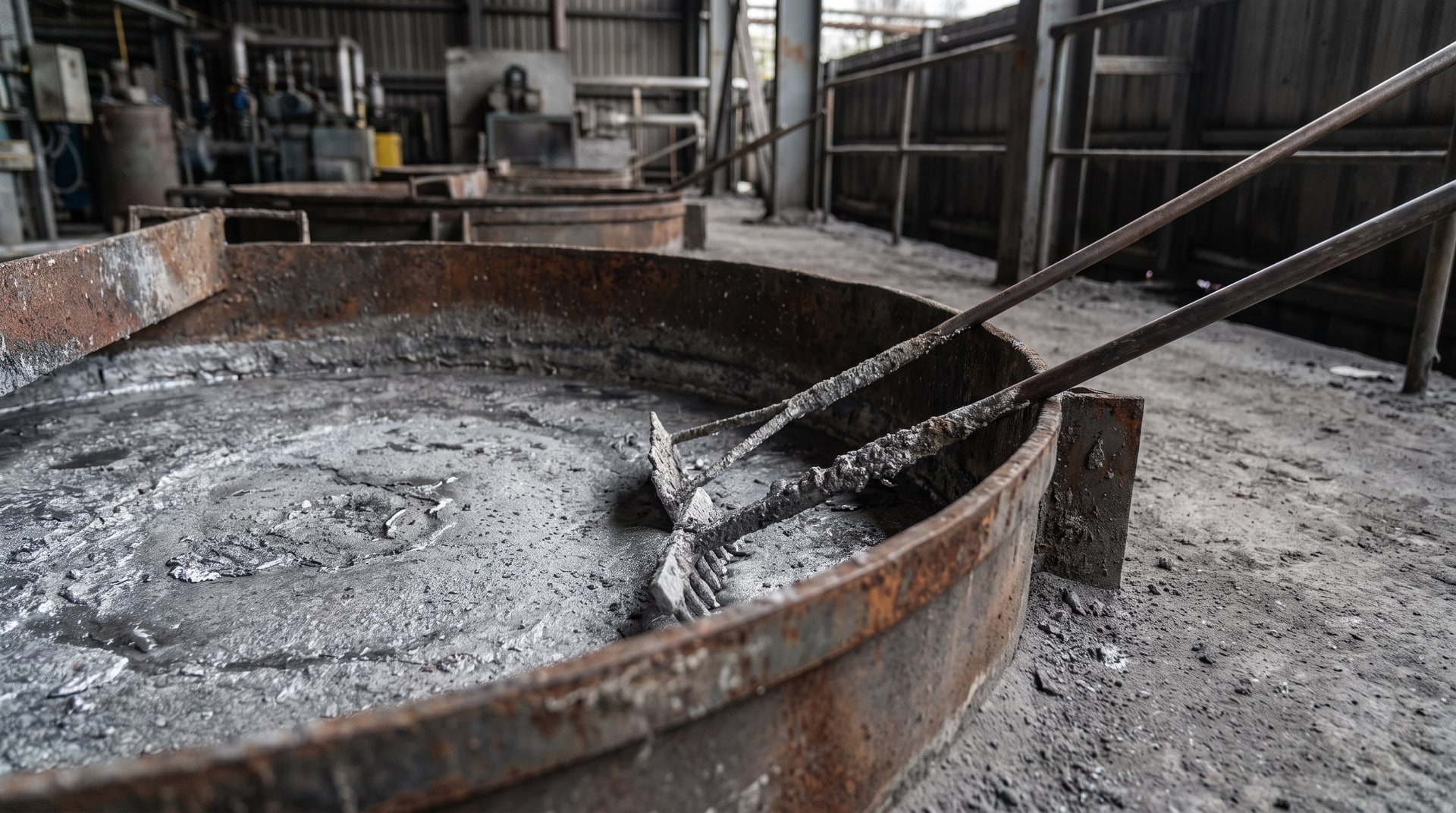
The galvanizing kettle is the single most capital-intensive piece of equipment in any hot-dip galvanizing facility. It is a massive steel vessel, sometimes exceeding 50 feet in length, that holds molten zinc at temperatures typically around 840°F (449°C). Everything about how a galvanizing operation is managed, from the chemistry of the zinc bath to the way steel parts are loaded and retrieved, has a direct bearing on how long that kettle will last before it requires replacement. Kettles are not cheap. A single replacement can cost hundreds of thousands of dollars and require weeks of planned downtime. Extending service life is not just a maintenance preference; it is an operational and financial priority.
What makes kettle longevity complicated is that the very process the kettle enables is also the process that degrades it. Molten zinc attacks the steel walls of the kettle through a diffusion-driven metallurgical reaction that is fundamentally the same reaction that produces the protective zinc-iron alloy coating on galvanized steel. Understanding that mechanism, and knowing which variables accelerate or slow it, is how skilled galvanizers protect this asset over time.
The American Galvanizers Association addresses this directly in their article on ways to extend kettle service life. At V&S Galvanizing, we expand on that foundation to explain what is actually happening at the material level, how zinc bath chemistry and operational discipline influence kettle degradation, and why this topic is often underappreciated outside of the galvanizing facility itself.
The Mechanism Behind Kettle Wear: What Is Actually Happening at the Wall
A galvanizing kettle is fabricated from low-carbon steel plate. When that plate is placed in continuous contact with molten zinc, the zinc diffuses into the iron at the interface, forming a series of zinc-iron intermetallic layers. This is the same fundamental reaction that creates the coating layers on galvanized steel, but here it works against the kettle. Over time, the kettle wall loses thickness from the inside as iron atoms are consumed by the advancing intermetallic zone.
The rate of this dissolution is not uniform. It is governed primarily by temperature, zinc bath chemistry, and the local flow dynamics of the molten zinc against the wall surface. Hotter temperatures accelerate atomic diffusion, which means any practice that raises bath temperature beyond the operational minimum contributes meaningfully to wall thinning. Similarly, alloying elements in the zinc bath can either accelerate or retard the diffusion process, which is why bath chemistry management is one of the most effective levers a galvanizer has for extending kettle life.
Mechanical stress compounds the problem. Thermal gradients across the kettle wall, particularly during startup, shutdown, or uneven heating, induce stress concentrations. In a vessel that is already experiencing progressive wall thinning, localized stress can initiate cracking that propagates far faster than uniform dissolution alone would predict. This is why thermal management is treated as seriously as chemical management in well-run facilities.
Temperature Control as a Primary Protection Strategy
Operating a zinc bath at the lowest temperature consistent with producing compliant coatings is one of the most straightforward ways to slow kettle degradation. The relationship between temperature and zinc-iron diffusion rate is not linear; relatively small increases in bath temperature produce disproportionately larger increases in reaction rate at the kettle wall. Every degree of unnecessary superheat comes at a cost.
In practice, this means galvanizers pay close attention to the relationship between material throughput and bath temperature. When production is high and steel is being immersed continuously, the bath loses heat rapidly and heaters must compensate. When production drops, the bath temperature can drift upward if heat input is not reduced accordingly. Tight temperature control across varying production levels requires attentive process management and well-calibrated heating systems.
There is also a gradient concern along the kettle length and depth. Burner placement and firing patterns influence where the hottest zones develop within the molten bath. Areas near active burners experience higher metal temperatures and, therefore, accelerated wall attack. Operators who understand their specific kettle geometry can adjust firing patterns to distribute heat more evenly, reducing localized hot spots that would otherwise concentrate wear in predictable zones.
Zinc Bath Chemistry and Its Effect on Kettle Corrosion
The composition of the zinc bath matters beyond just its effect on coating quality. Certain alloying additions that galvanizers use to manage coating appearance and thickness also influence how aggressively the bath attacks the kettle walls. Bismuth and tin, for example, are commonly used as lead alternatives in lead-free or low-lead bath formulations. The interaction of these elements with the iron kettle wall is an active area of concern because some combinations can accelerate iron dissolution under specific conditions.
Aluminum is another element worth careful management. Small additions of aluminum, often in the range used to control dross formation and surface finish, can affect the character of the zinc-iron intermetallic that forms on the kettle wall. Depending on concentration and bath temperature, aluminum's influence on kettle attack rates can vary. This is not an argument against aluminum additions; it is an argument for understanding the full system effect of any chemistry adjustment rather than optimizing for coating quality alone.
Iron content in the bath also matters in a feedback loop that is easy to overlook. As the kettle wall dissolves, it contributes iron to the bath. Elevated dissolved iron in the zinc bath, beyond what is manageable through normal dross formation, can alter the bath's attack behavior on the kettle itself. Keeping dissolved iron under control through regular dross removal is therefore not just about coating cleanliness; it is part of a system that protects the kettle over the long term.
Dross Management and Its Connection to Kettle Longevity
Dross is the zinc-iron intermetallic compound that settles to the bottom of the kettle as the bath becomes saturated with dissolved iron. Left unmanaged, dross accumulation at the kettle bottom can create localized thermal and chemical conditions that accelerate wall attack in that zone. The dross layer itself is not inert; its presence changes the temperature profile and fluid dynamics at the kettle floor.
Regular dross pumping or removal is standard practice, but the frequency and thoroughness of that operation matter for kettle health, not just product quality. Excessive dross buildup on the kettle bottom can insulate the floor from effective heat transfer, creating zones that cycle between overheating and under-temperature depending on burner activity. These thermal cycles contribute to stress fatigue in the kettle floor plates over time.
The positioning of parts during galvanizing also influences where dross accumulates most rapidly. Work that drags along the kettle bottom during immersion or retrieval damages the intermetallic layer on the kettle floor and stirs dross in ways that reintroduce iron-rich material into suspension. Good rigging and handling practices protect the kettle floor as much as they protect the workpiece itself.
Mechanical and Thermal Shock: Less Obvious Threats to Kettle Integrity
Most galvanizers understand the chemical attack mechanism intuitively. The mechanical threat to kettle integrity is less often discussed but equally important to manage. Every time a large steel assembly is immersed in the zinc bath, it displaces molten zinc and introduces a significant mass of cold steel that must be heated. The thermal load from a large workpiece can locally cool a section of the bath by tens of degrees in seconds, and the rebound as that zone reheats creates stress cycling in the kettle wall.
Over thousands of immersion cycles, this repeated thermal stress fatigues the kettle material in the most active immersion zones. The corners of a kettle, where two wall planes meet and stress concentrations are geometrically highest, are particularly vulnerable. Kettle designs and operational procedures that minimize the severity and frequency of thermal shock events contribute directly to extended service life.
Physical contact between the workpiece and the kettle wall is another mechanical concern. Parts that swing freely during immersion or that are improperly balanced on the jig can make contact with the kettle walls. Even brief contact can damage the thin intermetallic layer that provides some degree of passivation at the wall surface, exposing fresh steel to direct zinc attack. Proper jig design and load balance are part of kettle protection, even if they are rarely framed that way.
Kettle Construction Materials and Design Considerations
Not all kettles are equal in their starting resistance to zinc attack. The steel used to fabricate a kettle, its plate thickness, and the weld quality and geometry all influence how the vessel responds to the chemical and mechanical environment it will spend its service life in.
Low-silicon steel is preferred for kettle fabrication for reasons analogous to why silicon content in fabricated steel affects coating behavior. Silicon-bearing steels can produce more reactive intermetallic zones, and a kettle fabricated from steel with elevated silicon content may experience faster wall thinning in service. Specifying appropriate steel chemistry during kettle procurement is a foundational decision that pays dividends over the decades of service life that follows.
Weld joints deserve particular attention. Welds introduce residual stresses and can have different microstructural characteristics than the base plate, affecting how they respond to zinc attack. Weld geometry matters too; internal weld profiles that create crevices or irregular surfaces provide sites where dross can accumulate and where thermal gradients are sharpest. Smooth internal weld profiles, achieved through proper procedure and post-weld treatment, reduce these localized vulnerability points.
Inspection Practices That Catch Problems Before They Become Failures
A well-maintained kettle is also a regularly inspected kettle. Ultrasonic thickness testing of kettle walls allows operators to map the actual remaining wall thickness at multiple points across the vessel surface. This data, collected on a consistent schedule, reveals where thinning is accelerating and provides the lead time needed to plan either targeted intervention or orderly replacement rather than responding to an unplanned failure.
Thermographic inspection using infrared cameras is another tool that experienced facilities use to identify hot spots on the external kettle surface during operation. A zone that is running hotter than surrounding areas on the exterior often reflects a combination of thinner wall and higher local heat flux, a combination that warrants closer monitoring and potentially a change in burner management or bath temperature in that zone.
These inspection practices do not stop degradation, but they transform an unpredictable failure event into a managed, plannable process. For a piece of equipment with this level of capital cost and replacement lead time, that transformation has significant operational and financial value. At V&S Galvanizing, our operational approach to hot-dip galvanizing incorporates process discipline at every stage, including the equipment management practices that keep our facility operating reliably for the customers who depend on predictable turnaround.
Work With a Team That Manages the Full Process, Not Just the Product
Kettle service life is ultimately a measure of operational discipline across every dimension of a galvanizing facility's management: how carefully temperature is controlled, how thoroughly chemistry is monitored, how consistently dross is removed, how thoughtfully parts are handled during immersion and retrieval, and how rigorously the vessel itself is inspected over time. None of these are glamorous topics, but each one has a measurable effect on how long the most expensive piece of equipment in the building remains in reliable service.
For engineers, fabricators, and project teams working with galvanized steel, understanding these operational realities helps explain why not all galvanizers deliver the same consistency or quality. A facility that manages its kettle well is also a facility that manages its bath chemistry well, its process temperatures well, and its coating outcomes well. These disciplines are not separable. If you have questions about our process, our capabilities, or how we maintain quality standards across a range of project types, visit our contact page to reach our technical team directly.
Frequently Asked Questions About Galvanizing Kettle Service Life
Why does the galvanizing kettle degrade over time even when it appears to be operating normally?
The kettle degrades because molten zinc continuously reacts with the steel walls through a diffusion-driven process that forms zinc-iron intermetallic compounds. This is the same metallurgical reaction that creates the protective coating on galvanized steel, but at the kettle wall it progressively consumes iron from the interior surface, thinning the wall over time. The process is ongoing under normal operating conditions and cannot be stopped, only managed and slowed.
What is the single most effective practice for extending kettle service life?
Maintaining bath temperature at the lowest level consistent with producing compliant coatings is generally the highest-impact practice. Temperature has a disproportionate effect on zinc-iron diffusion rates at the kettle wall, so avoiding unnecessary superheat, especially during low-production periods when the bath would otherwise drift hot, directly reduces the rate of wall thinning.
How does zinc bath chemistry affect the kettle, beyond its effect on coating quality?
Alloying elements added to manage coating appearance, such as bismuth, tin, or aluminum, also influence how the bath interacts with the kettle wall. Some combinations can accelerate iron dissolution under specific temperature conditions. Additionally, as dissolved iron builds up in the bath from kettle wall attack, it changes bath dynamics in ways that feed back into the corrosion process. Bath chemistry decisions should always consider the system-level effect on the kettle, not only the coating outcome.
Does dross management really affect kettle longevity, or is it just about product quality?
Dross management affects both. Heavy dross accumulation on the kettle floor alters the local thermal environment, creating zones that cycle between overheating and under-temperature depending on burner activity. This thermal cycling fatigues the kettle floor plates and can accelerate localized attack. Regular, thorough dross removal is a kettle protection practice, not only a product quality practice.
What role does the steel used to fabricate the kettle play in how long it lasts?
The steel chemistry used in kettle fabrication matters significantly. Low-silicon steel is preferred because silicon-bearing steels form more reactive intermetallic zones when in contact with molten zinc, leading to faster wall thinning. Weld quality and weld profile geometry also matter, as welds introduce residual stresses and can create geometric features that concentrate both thermal gradients and dross accumulation.
How do galvanizers know when a kettle is approaching the end of its service life?
Periodic ultrasonic thickness testing maps remaining wall thickness at multiple points across the kettle surface. When thickness readings fall below safe operating thresholds, or when the rate of thinning in a particular zone accelerates noticeably, the facility can plan for replacement or intervention with sufficient lead time. Infrared thermography can also identify external hot spots that correspond to zones of accelerated thinning, providing an additional early warning signal during active operation.
Can physical contact between galvanized parts and the kettle wall during immersion cause damage?
Yes. The kettle wall develops a thin zinc-iron intermetallic layer that provides a degree of passivation. Parts that swing freely on the jig or are improperly balanced can contact the kettle wall, disrupting that layer and exposing fresh steel directly to molten zinc attack. This accelerates localized thinning at contact points. Proper rigging, load balance, and immersion control are part of kettle protection, even though they are typically discussed in terms of workpiece quality.
Why is thermal shock during steel immersion a concern for the kettle, not just the workpiece?
Large steel assemblies carry significant cold mass into the bath, locally cooling sections of the zinc and then forcing rapid reheating as the burners compensate. The kettle wall in active immersion zones experiences repeated rapid temperature cycles as a result. Over thousands of immersion events, this thermal fatigue degrades the wall material, particularly at geometric stress concentrations like corners and weld joints. Managing immersion size, frequency, and load distribution reduces the severity of these cycles on the kettle structure.
