

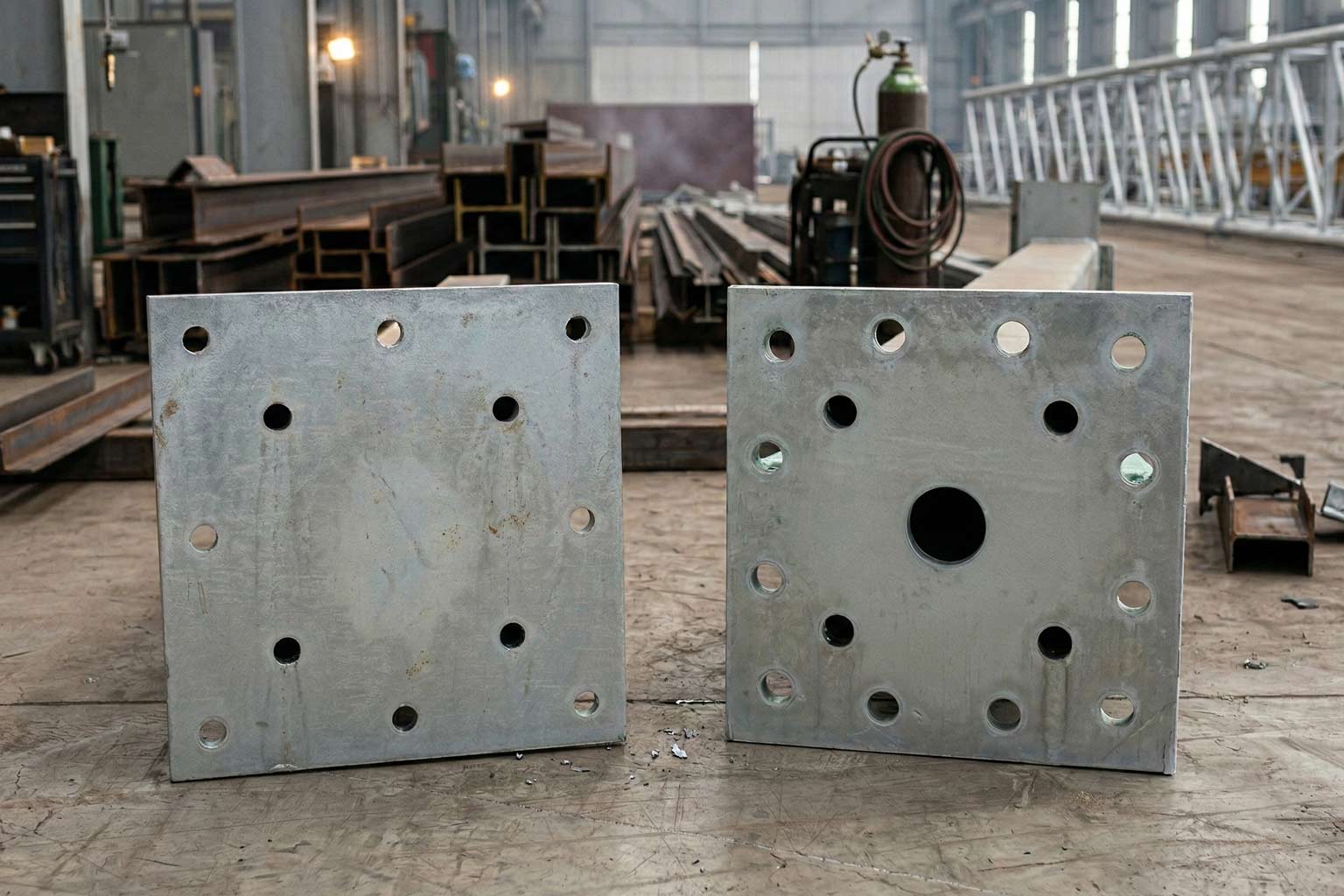
Hollow structural steel sections are widely used in infrastructure, transportation, utility, architectural, and industrial applications. When these assemblies are specified for hot dip galvanizing, proper venting and drainage hole design becomes a critical engineering requirement rather than a fabrication afterthought.
Hot dip galvanizing is a total immersion process. Steel is sequentially cleaned, fluxed, and then immersed in molten zinc at approximately 450 C. For hollow square, rectangular, and circular assemblies, air and processing solutions must be able to freely enter and exit the section during each stage.
Improper venting can lead to incomplete internal coating, unsafe pressure buildup, excess zinc retention, or costly rework. Proper detailing ensures coating continuity, process safety, and long term corrosion protection performance.
This article expands upon guidance provided in the Galvanize It technical resource on venting and drainage in tubular assemblies, which can be referenced here.
Why Venting and Drainage Design Is Critical
Preventing Incomplete Internal Coating
For zinc to form a continuous metallurgical bond with steel, molten zinc must contact all surfaces. Trapped air pockets prevent zinc from reaching interior surfaces, resulting in uncoated regions that reduce corrosion resistance.
Preventing Pressure Buildup
Residual cleaning solutions or moisture trapped inside a sealed section rapidly convert to steam during immersion. Without proper venting, internal pressure can increase dramatically and create rupture hazards.
Ensuring Proper Drainage
During withdrawal from the zinc bath, molten zinc must be able to drain freely. Inadequate drainage holes may cause excess zinc buildup or uneven coating thickness.
ASTM A385 provides guidance on designing openings that promote safe and effective galvanizing.
Circular Versus Square and Rectangular Hollow Sections
Circular Tubes
Round hollow sections typically allow smoother internal fluid movement due to their geometry. However, proper vent and drain hole placement is still required. Placement must reflect how the section will be lifted and immersed.
Square and Rectangular Sections
Square and rectangular hollow structural sections present greater venting challenges. Internal corners can trap air and processing fluids, especially when immersion occurs at an angle.
Single centered holes often do not adequately relieve corner pockets. For this reason, multi hole configurations are frequently recommended.
Recommended Venting Configurations
Two Hole Configuration
Two holes placed near opposite corners improve airflow compared to a single central opening and reduce the risk of trapped air in interior corners.
Four Hole Configuration
A four hole configuration located near each corner provides the most reliable performance for square and rectangular assemblies.
Benefits include:
- Improved airflow regardless of immersion angle
- Better molten zinc entry
- Reduced pressure buildup risk
- Improved drainage during withdrawal
When fully open ends are not feasible, multi hole venting strategies provide an effective alternative.
Engineering Coordination and Best Practices
To ensure successful galvanizing outcomes:
- Identify enclosed volumes early in the design phase
- Determine likely immersion orientation
- Size vent and drain holes according to ASTM A385 guidance
- Coordinate with the galvanizer before finalizing fabrication drawings
These steps reduce delays, improve coating quality, and enhance processing safety.
Frequently Asked Questions About Venting and Drainage in Hot Dip Galvanizing
What is the purpose of vent and drain holes in hot dip galvanizing?
Vent and drain holes allow air, cleaning solutions, and molten zinc to flow freely through hollow steel sections during galvanizing, preventing trapped air, pressure buildup, and incomplete coating.
Where should vent holes be placed?
Vent holes should be located at the highest point of the assembly during immersion to allow trapped air to escape.
Where should drain holes be located?
Drain holes should be positioned at the lowest point during immersion and withdrawal so molten zinc and processing solutions can fully exit the section.
Are square tubes more difficult to galvanize than round tubes?
Yes. Square and rectangular hollow structural sections are more prone to trapped air due to internal corner geometry and often require multi hole venting configurations.
What standard governs venting requirements?
ASTM A385 provides guidance for proper venting and drainage design to ensure high quality zinc coatings and safe processing.
Proper venting and drainage design is fundamental to achieving safe, consistent, and high performance hot dip galvanized coatings on hollow steel assemblies. For further technical diagrams and reference information, review the original Galvanize It article at:
https://galvanizeit.org/knowledgebase/article/venting-and-drainage-holes-in-square-and-circular-tubular-assemblies
