
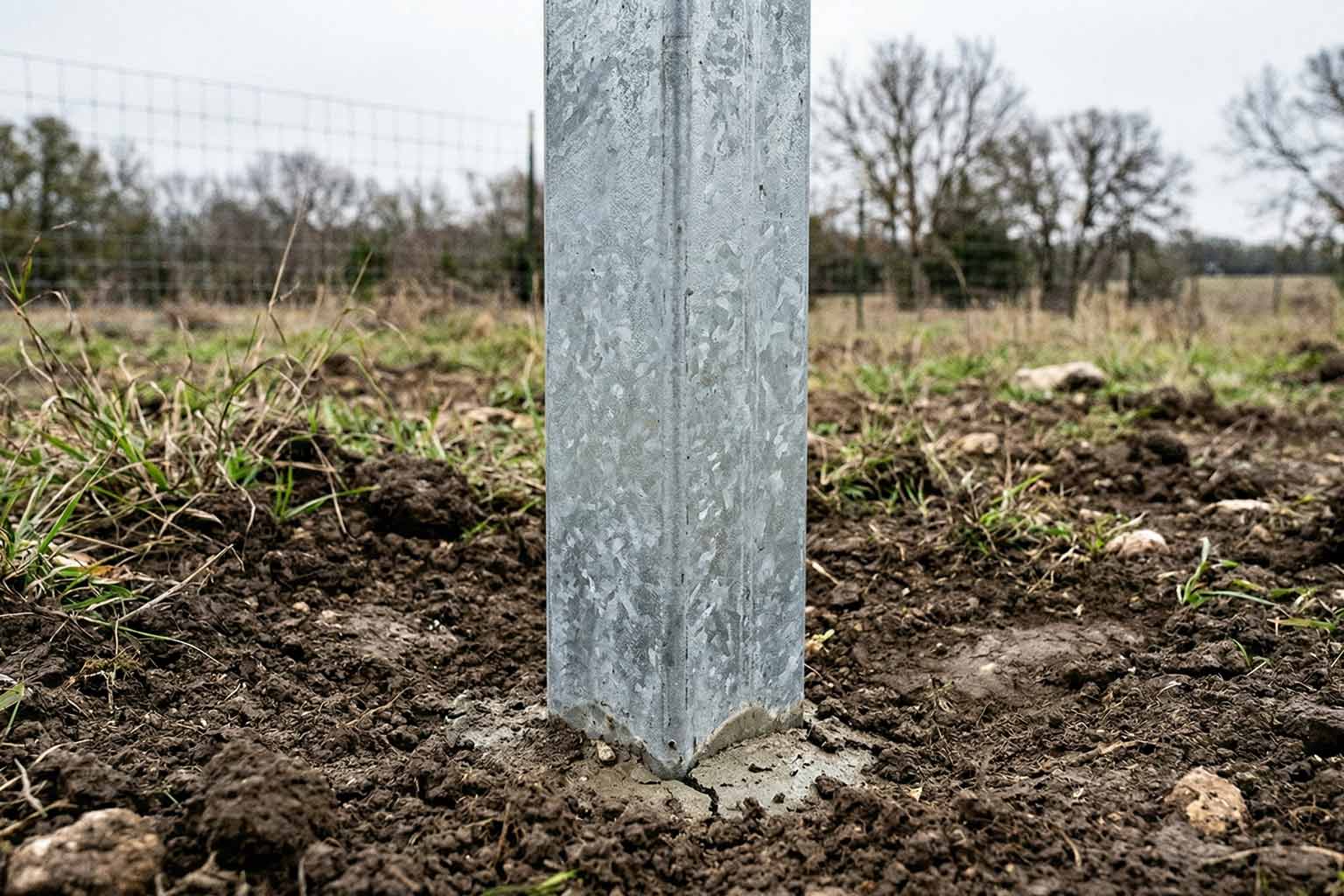
Hot dip galvanized steel is frequently specified for buried or partially buried applications such as light poles, guardrail posts, agricultural supports, sign structures, and utility components. When steel is placed in soil rather than exposed to air, the corrosion environment changes significantly. Understanding how zinc performs underground is essential for accurate service life planning.
Soil corrosion is influenced by a combination of chemical and physical factors including moisture content, oxygen availability, resistivity, pH, and the presence of chlorides or sulfates. Because soil conditions vary widely from site to site, performance evaluation must consider environmental characteristics rather than relying on a single universal corrosion rate.
The following discussion outlines the key technical principles governing underground performance.
How Zinc Corrodes in Soil
In atmospheric environments, galvanized steel develops stable zinc corrosion products that slow further degradation. In soil, corrosion mechanisms are influenced by reduced oxygen levels and variable moisture conditions.
Zinc in soil typically corrodes at a relatively uniform rate compared to bare steel, which may experience localized pitting. The protective performance of galvanizing underground is largely determined by soil resistivity and moisture.
Higher resistivity soils tend to be less corrosive. Low resistivity soils, often associated with higher moisture and dissolved salts, increase corrosion rates.
Unlike atmospheric exposure categories such as ISO C1 through CX, soil corrosion rates must be assessed using site specific characteristics.
Key Soil Properties That Influence Corrosion
Several soil parameters directly affect galvanized steel performance:
Soil Resistivity
Resistivity is one of the most reliable indicators of soil corrosivity. Low resistivity soils allow greater electrical conductivity, which can accelerate corrosion processes.
Moisture Content
Soils that remain consistently wet generally present higher corrosion risk than well drained soils.
pH
Extremely acidic or highly alkaline soils may increase corrosion rates. Moderate pH ranges tend to support slower zinc corrosion.
Chlorides and Sulfates
Dissolved salts increase soil conductivity and may elevate corrosion rates, particularly in coastal or deicing salt influenced environments.
Because these factors vary widely, underground corrosion performance must be evaluated based on geotechnical data whenever possible.
Typical Performance of Galvanized Steel Underground
The Galvanize It resource explains that galvanized steel has demonstrated strong performance in many soil conditions, particularly where resistivity is moderate to high and moisture is not continuously excessive.
Zinc coatings tend to corrode in a predictable manner, providing gradual material loss rather than sudden localized failure.
In many common soil types, galvanized steel can provide decades of service life before significant section loss occurs, depending on coating thickness and site conditions.
Service life estimation should relate expected zinc corrosion rate to the actual coating thickness applied.
Comparing Soil to Atmospheric Exposure
Atmospheric corrosion often progresses differently than soil corrosion due to oxygen availability and cyclic wetting.
In soil:
- Oxygen levels are lower
- Moisture may be retained for longer durations
- Corrosion products remain in contact with the surface
These conditions can influence how protective corrosion layers form and persist.
Engineers should avoid directly applying atmospheric corrosion rates to buried applications without adjustment for soil characteristics.
Design Considerations for Buried Galvanized Steel
When specifying galvanized steel for underground use, engineers should consider:
- Expected soil resistivity
- Drainage characteristics
- Depth of burial
- Coating thickness selection
- Whether additional protection systems are required
In highly aggressive soils, alternative protective measures such as increased coating thickness or supplemental systems may be evaluated.
For projects involving buried structural steel, coordination with an experienced galvanizer can assist in selecting appropriate coating thickness and fabrication details. We provide hot dip galvanizing services for structural and fabricated steel components, and project specific questions can be directed through our contact page.
Early consultation helps align coating specification with soil exposure conditions.
Inspection and Maintenance Considerations
Once installed underground, inspection access may be limited. For this reason, appropriate coating thickness selection at the time of galvanizing is critical.
Periodic above grade inspections can help evaluate transition zones where steel passes from soil to air, as this interface may experience different corrosion conditions.
Repair of underground coatings after installation is significantly more complex than atmospheric repair, reinforcing the importance of proper initial specification.
Galvanized steel performs reliably in many soil environments when soil characteristics are properly evaluated and coating thickness is appropriately selected. Corrosion rates underground depend on resistivity, moisture, pH, and salt content. Predictable zinc corrosion behavior supports long term durability in a wide range of burial conditions.
For the original technical discussion, review the Galvanize It article at:
https://galvanizeit.org/knowledgebase/article/galvanized-steel-performance-in-soil-1
If you are planning a project involving buried galvanized steel and would like to discuss coating thickness or fabrication considerations, please contact us through our contact page.
Frequently Asked Questions About Galvanized Steel in Soil
Does galvanized steel corrode underground?
Yes, but zinc corrodes at a predictable rate influenced by soil properties such as resistivity and moisture.
What soil factor most strongly influences corrosion?
Soil resistivity is one of the most important indicators of corrosivity.
Is galvanized steel suitable for buried applications?
Yes. In many soil types, galvanized steel provides long service life when coating thickness is appropriate for the environment.
Do acidic soils increase corrosion?
Yes. Extremely acidic or highly alkaline soils may increase zinc corrosion rates.
Should soil testing be performed before specifying galvanized steel?
Where possible, soil testing provides valuable data to support accurate service life estimation.
