

When a hot-dip galvanized steel component moves into the next phase of its service life, whether that means receiving a topcoat, being repaired in the field, or being re-evaluated for corrosion protection, the condition of the zinc surface matters enormously. Surface preparation is not a generic step. The method selected, the degree of cleanliness achieved, and the profile left behind directly determine how well a subsequent coating adheres or how effectively a repair holds up under exposure. Getting this wrong does not just affect aesthetics. It affects the structural integrity of the entire corrosion protection system.
What complicates things for engineers and fabricators is that the standards governing this work come from multiple organizations. The ASTM specifications that govern galvanized steel routinely reference SSPC surface preparation standards published by AMPP (the Association for Materials Protection and Performance). Understanding which SSPC standard applies to which situation, and why, requires knowing the logic behind each one.
The American Galvanizers Association addresses this directly in their article on SSPC Surface Preparation Standards. At V&S Galvanizing, we expand on that foundation to explain what is actually happening at the material level, how surface condition influences coating performance, and why these distinctions are often misunderstood in the field.
Why Surface Preparation Standards Exist Separately from Galvanizing Specifications
Hot-dip galvanizing specifications like ASTM A123 govern the galvanizing process itself. But when a galvanized surface needs to be painted, powder coated, or repaired, the relevant ASTM specifications, primarily A780, D6386, and D7803, do not reinvent procedures for cleaning and profiling surfaces. Instead, they reference SSPC standards that were developed specifically for surface preparation work.
This cross-referencing approach makes sense because surface preparation science is discipline-neutral. The same physics that governs how well a paint adheres to blast-cleaned carbon steel also governs adhesion to a zinc surface. Contamination by oil and grease undermines bonding regardless of substrate. A profile too shallow for mechanical interlocking fails whether the substrate is steel or zinc. By referencing SSPC standards, the ASTM galvanizing specifications leverage decades of coatings industry research without duplicating it.
What this means in practice is that an engineer or inspector working with galvanized steel in a duplex system needs to be fluent in both worlds: the galvanizing specifications and the SSPC preparation standards they cite.
The First Step Is Always Contamination Removal: SSPC-SP1
Before any mechanical preparation begins, SSPC-SP1 Solvent Cleaning is the required baseline. Its purpose is straightforward: remove all visible oil, grease, soil, drawing and cutting compounds, and other soluble contaminants. On a galvanized surface, this matters more than it might seem. The zinc coating picks up oils during handling, storage, and fabrication. Those oils are invisible on the bright silver surface but chemically incompatible with virtually every topcoat system.
The specification requires dust removal with a stiff bristle brush before solvent cleaning begins, and then removal of dust again after, either by blowing off with clean dry air or vacuum cleaning. Application methods include wiping or scrubbing, direct solvent spray, vapor degreasing, immersion, alkaline cleaners, and steam cleaning. Each has appropriate uses depending on part geometry and facility capabilities.
Both ASTM D6386 (paint preparation) and D7803 (powder coating preparation) call out SSPC-SP1 as the initial cleaning step. No mechanical surface preparation method is effective if oil and grease remain. A blast profile applied over a contaminated surface does not produce a clean, high-energy bonding surface. It produces a contaminated profile, which is worse than a clean flat surface in some cases because it increases the contact area between the contaminant and the coating.
Hand Tools and Power Tools: SP2 and SP3 in Context
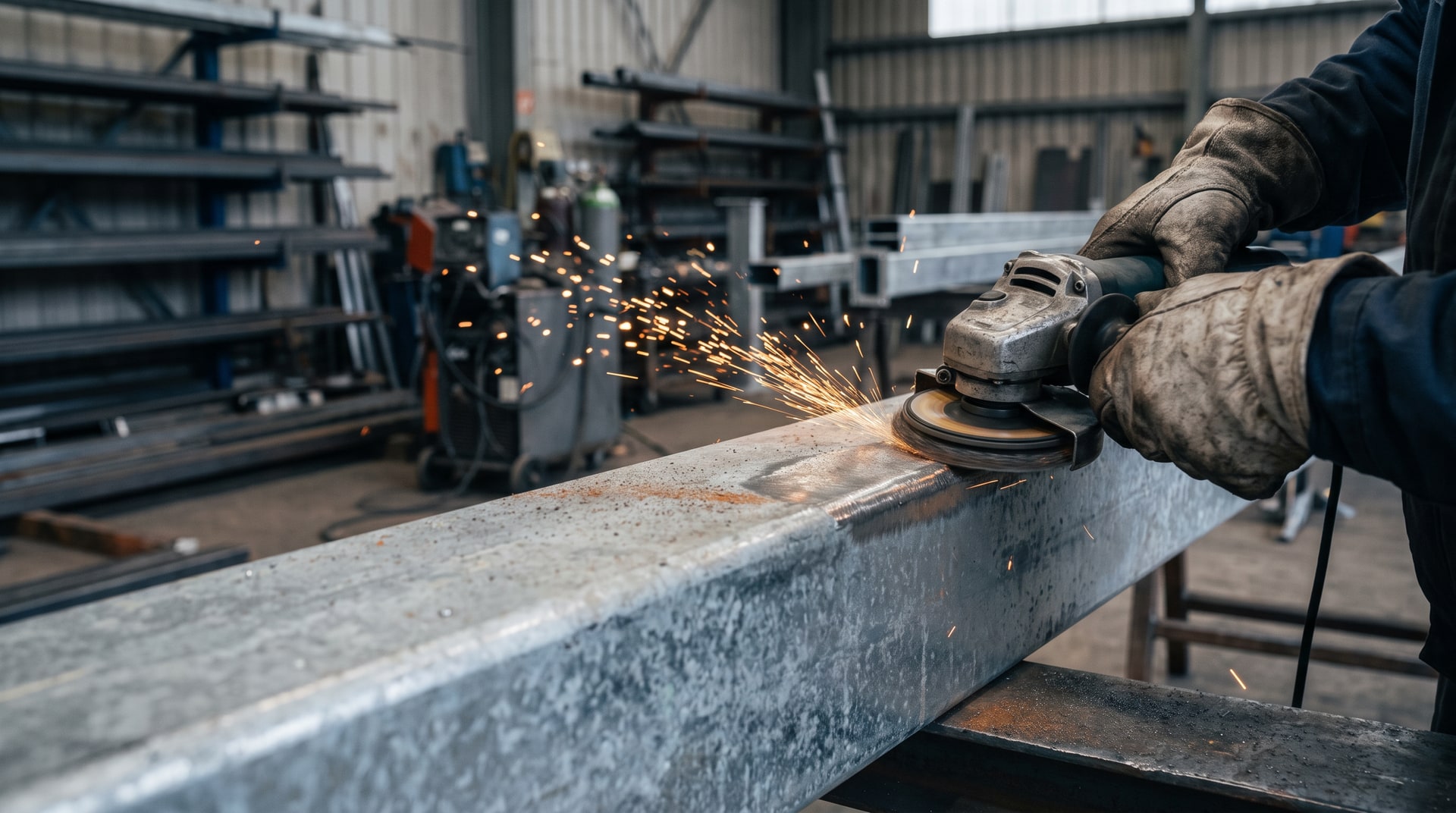
SSPC-SP2 Hand Tool Cleaning and SSPC-SP3 Power Tool Cleaning address the removal of loose mill scale, rust, loose paint, weld slag, and other non-adherent matter using non-powered and powered tools respectively. Both standards require SSPC-SP1 cleaning first and dust removal after. SP3 adds a requirement that power tools must not create burrs, sharp ridges, or sharp cuts, which is especially relevant when working on a zinc coating that can be damaged by aggressive tooling.
In the galvanizing context, these two standards are treated as largely interchangeable for two specific purposes. First, for smoothing the galvanized surface and removing zinc high spots before further preparation steps. Second, for cleaning light deposits of zinc reaction products. Both D6386 and D7803 reference SP2 and SP3 in the same sections for these tasks, treating them as equivalent options.
There is one notable distinction. ASTM A780, which governs repair of damaged galvanized coatings, calls out SP2 as an acceptable method when circumstances prevent blast cleaning or power tool cleaning (for zinc dust paint repairs). SP3 is not specifically cited by A780 for that purpose, which reflects a conservative choice for field repair conditions where tool selection may be constrained.
The reason these methods work on a galvanized surface is that the zinc-iron alloy layers beneath the outer zinc layer are relatively hard. The outermost free zinc layer can be worked with tools without necessarily exposing bare steel, as long as the tools are used correctly and the coating is thick enough. For smoothing and contamination removal rather than deep profiling, SP2 and SP3 achieve what is needed without compromising coating integrity.
Blast Cleaning Options: Matching Intensity to the Application
Several SSPC standards address abrasive blast cleaning, and each represents a different level of cleaning intensity. Understanding the differences is critical because the correct choice depends on what the surface will be subjected to after preparation.
SSPC-SP7 Brush-Off Blast Clean is the least aggressive blast option. Its goal is not to strip the surface but to remove loose contaminants while allowing adherent coatings to remain, and to roughen the surface for topcoat adhesion. A hot-dip galvanized coating presents a specific challenge for paint adhesion: the zinc surface is relatively smooth, and it carries a layer of zinc oxide and zinc hydroxide that interferes with paint bonding. A brush-off blast removes these oxides and creates the necessary profile. ASTM D6386 cites SSPC-SP7 as the basis for its sweep blasting requirements when preparing newly galvanized metal for painting.
SSPC-SP16 Brush-Off Blast Cleaning of Coated and Uncoated Galvanized Steel is a standard written specifically for galvanized substrates and similar non-ferrous metals. It produces a profiled surface free of oil, grease, dirt, dust, and metal oxides when viewed without magnification. Uniquely, SP16 includes inspection procedures specific to galvanized steel, including checking for passivation treatments and wet storage stain. ASTM D7803 (powder coating over galvanized steel) calls out SP16 for sweep blasting newly galvanized metal to develop an acceptable profile. D6386 uses a similar procedure but does not cite SP16 by name.
SSPC-SP10 Near-White Metal Blast Cleaning and SSPC-SP5 White Metal Blast Cleaning represent the more aggressive end of the spectrum. SP10 requires a surface free of all visible contamination with no more than five percent random staining on any unit area. SP5 requires complete removal of all coatings, scale, rust, oxides, and foreign matter. In the galvanizing repair context, A780 calls for SP10 when field conditions include immersion service, where a zinc dust paint repair must bond to a thoroughly cleaned surface to perform under continuous water exposure. SP5 is reserved for sprayed zinc (metallizing) repairs, where the thermal spray process requires the cleanest possible steel surface for the sprayed zinc to bond metallurgically.
Power Tool Cleaning to Bare Metal: SSPC-SP11
SSPC-SP11 Power-Tool Cleaning to Bare Metal occupies a position between blast cleaning and hand tool cleaning in terms of the surface it produces. The standard requires a surface free of all visible contamination when viewed without magnification, with a surface profile of no less than one mil (25.4 microns) between peaks and valleys. Both grinding tools and impact tools are acceptable.
This profile requirement is what distinguishes SP11 from SP2 and SP3. Where SP2 and SP3 are used for smoothing and contamination removal, SP11 is used when a measurable mechanical key is needed for coating adhesion. On galvanized steel, ASTM D6386 notes that painting should follow SP11 preparation as quickly as possible, because the freshly prepared zinc surface will begin to re-oxidize and the window for optimal adhesion is limited.
For field repairs, A780 permits SP11 in two scenarios: repairing damaged areas with zinc-rich paint in less critical exposure conditions, and for metallizing repairs where blast cleaning is not practical. Both uses reflect the reality that field conditions often do not accommodate abrasive blast equipment. SP11 provides a pragmatic alternative that still achieves adequate surface preparation for the repair system to function.
Waterjetting and the Fully Weathered Galvanized Surface: SSPC-SP12
Waterjetting under SSPC-SP12 takes a different approach from mechanical and abrasive methods. Using water at pressures of 10,000 psi or higher through a standard nozzle, waterjetting removes loose rust, loose scale, and loose coatings without creating a new profile in the substrate. This is a critical distinction. Waterjetting does not add profile; it reveals or preserves existing profile.
For galvanized steel, this characteristic makes SSPC-SP12 most relevant for fully weathered surfaces. When a galvanized coating has been exposed to the atmosphere for approximately six months, the zinc surface transforms. The initial zinc oxide and zinc hydroxide layer that resists paint adhesion converts to zinc carbonate, which is water-insoluble and forms a finely etched, roughened surface that is compatible with paint. This weathered surface already has an acceptable profile for topcoating.
Waterjetting a fully weathered galvanized surface, after first removing oil and grease per SSPC-SP1, cleans away loose particles without disturbing the etched carbonated profile. ASTM D7803 specifically calls out SSPC-SP12 for this application, with the condition that water pressure stay below 1,450 psi to avoid damaging the zinc coating. D6386 describes the same process conceptually without naming the standard.
The practical takeaway is that a fully weathered galvanized surface, properly cleaned with low-pressure waterjetting, can accept a paint topcoat without blast preparation. This is relevant for maintenance repainting of structures that have been in service long enough to develop the carbonate layer.
Repair Scenarios and the Logic Behind Standard Selection
ASTM A780 governs the repair of damaged or uncoated areas on hot-dip galvanized steel, and its use of SSPC standards reflects a tiered approach based on exposure conditions and repair method. The pattern is worth understanding rather than simply memorizing.
For zinc dust paint repairs, the aggressiveness of surface preparation scales with exposure severity. In less critical conditions, SP11 (power tool cleaning) is acceptable. Where immersion is involved, SP10 (near-white blast) is required. When circumstances prevent both blast and power tool cleaning entirely, SP2 (hand tool cleaning) is the fallback option. This progression makes engineering sense: the more aggressive the corrosion environment the repair will face, the cleaner and more profiled the surface must be for the repair material to adhere and protect effectively.
For zinc spray (metallizing) repairs, A780 requires SP5 (white metal blast) as the standard preparation. Metallizing involves spraying molten zinc onto a surface, and the bond formed is primarily mechanical. A white metal blast provides the deepest, cleanest profile available, maximizing the bond area and eliminating any contamination that could create an unbonded inclusion. Where blast cleaning is impractical for a metallizing repair, SP11 is permitted as an alternative.
These distinctions matter to fabricators, inspectors, and engineers managing maintenance programs because the wrong choice does not simply result in a sub-optimal surface. It can result in a repair that appears sound but fails prematurely, leaving the underlying steel exposed to the environment the repair was meant to exclude.
| SSPC Standard | ASTM A780 | ASTM D6386 | ASTM D7803 |
|---|---|---|---|
| SSPC-SP1 | 5.3.2 - Surface cleaning prior to surface preparation | 5.1.2.3 - Surface cleaning step removing oil and grease | |
| SSPC-SP2 | A2.1.2 - Clean areas when circumstances do not allow blast or power-tool cleaning | 5.2.1 - Removal of zinc high spots; 5.3.3 - Cleaning of light deposits of zinc reaction products | 5.1.1 - Surface smoothing and removing loose particles |
| SSPC-SP3 | 5.2.1 - Removal of zinc high spots; 5.3.3 - Cleaning of light deposits of zinc reaction products | 5.1.1 - Surface smoothing and removing loose particles | |
| SSPC-SP5 | A3.3 - Prepare surface for zinc spray | ||
| SSPC-SP7 | 5.4.1 - Acceptable surface preparation standard for profiling surface of newly galvanized metal | ||
| SSPC-SP10 | A2.1.2 - Prepare surface for zinc rich paint repair | ||
| SSPC-SP11 | A2.1.2 - Prepare surface for zinc rich paint repair in less critical field exposure conditions; A3.3 - Prepare surface for metallizing repair where abrasive blast cleaning is impractical | 5.4.2.1 - Acceptable surface preparation standard for profiling surface of newly galvanized metal | |
| SSPC-SP12 | 5.3.2 - Cleaning fully weathered galvanized steel to maintain existing profile | ||
| SSPC-SP16 | 5.1.3.1 - Sweep blasting newly galvanized metal to add surface profile |
Work With a Team That Understands the Full Specification Chain
Surface preparation for galvanized steel is not a single task. It is a sequence of coordinated steps governed by interlocking standards from multiple organizations. The SSPC standards define the methods and end conditions. The ASTM galvanizing specifications define which methods apply to which situations. Getting both right requires familiarity with the full specification chain, not just one part of it.
At V&S Galvanizing, we work closely with engineers, fabricators, and coating contractors who need to navigate these requirements accurately. Whether the project involves preparing newly galvanized steel for a duplex coating system, repairing damaged areas in the field, or evaluating a weathered surface for repainting, understanding the applicable standards is essential to producing work that performs as designed. The right preparation method is the one that matches the repair material, the exposure environment, and the condition of the existing zinc surface.
If you are working through a project that involves surface preparation decisions for galvanized steel and want to discuss the technical requirements in detail, reach out through our contact page and our team will help you work through the options.
Frequently Asked Questions About SSPC Surface Preparation Standards for Hot-Dip Galvanized Steel
What is the first required step before any mechanical surface preparation on a hot-dip galvanized coating?
SSPC-SP1 Solvent Cleaning must be completed before any mechanical preparation. Oil and grease left on the zinc surface will contaminate any profile created by tools or blasting, compromising adhesion of the subsequent topcoat or repair material. Both ASTM D6386 and D7803 specify this as the mandatory initial step.
Why does ASTM D7803 require water pressure below 1,450 psi when using SSPC-SP12 on galvanized steel?
Waterjetting at higher pressures risks damaging the zinc coating itself. Since SSPC-SP12 is used to clean fully weathered galvanized surfaces without disturbing the existing profile, using pressure above 1,450 psi could erode the finely etched zinc carbonate layer that makes the surface suitable for paint adhesion, defeating the purpose of the preparation.
What distinguishes SSPC-SP16 from SSPC-SP7 when preparing a galvanized surface for topcoating?
SSPC-SP16 was written specifically for galvanized and non-ferrous metal substrates. It includes unique inspection procedures for passivation treatments and wet storage stain on galvanized steel. SSPC-SP7 is a general brush-off blast standard. ASTM D7803 (powder coating) references SP16 by name, while D6386 (painting) references SP7 for its sweep blasting requirements.
When does ASTM A780 require near-white metal blast cleaning (SSPC-SP10) rather than a less aggressive method for zinc dust paint repairs?
ASTM A780 requires SSPC-SP10 when the repair area will be in immersion service. The more aggressive cleaning is necessary because immersion conditions represent the highest corrosion stress a coating repair will face, and the zinc dust paint must bond to a thoroughly clean surface to provide adequate protection under continuous water exposure.
Are SSPC-SP2 and SSPC-SP3 interchangeable for all galvanizing-related applications?
For most applications referenced in ASTM D6386 and D7803, they are treated as interchangeable for smoothing the galvanized surface and removing zinc high spots. However, ASTM A780 cites SP2 but not SP3 for zinc dust paint repairs when blast or power tool cleaning is not possible, making SP2 the only named option in that specific repair scenario.
Why is SSPC-SP5 (white metal blast) specified for metallizing repairs rather than a less aggressive blast standard?
Metallizing (thermal zinc spray) bonds to the substrate mechanically. The bond forms between the sprayed zinc droplets and the peaks and valleys of the blasted surface. Any contamination or residual coating remaining on the surface creates unbonded inclusions that can undermine the repair. A white metal blast provides the cleanest, most deeply profiled surface possible, which is why ASTM A780 requires it for zinc spray repairs.
What does it mean for a hot-dip galvanized surface to be fully weathered, and why does it matter for surface preparation?
A fully weathered galvanized surface is one where the outer zinc layer has converted primarily to water-insoluble zinc carbonates, typically after approximately six months of atmospheric exposure. This carbonate layer is chemically stable, resistant to moisture, and has a finely etched texture suitable for paint adhesion. A weathered surface can be prepared for topcoating by removing loose particles with low-pressure waterjetting (per SSPC-SP12) without the need for abrasive blasting, because the existing profile is already adequate.
What surface profile does SSPC-SP11 require, and how does that compare to what blast cleaning provides?
SSPC-SP11 requires a minimum profile of one mil (25.4 microns) between peaks and valleys, achieved with grinding or impact tools. This is comparable to what some less aggressive blast cleans produce. The key difference is method: SP11 uses power tools rather than abrasive media, making it viable in field conditions where blast equipment is impractical. ASTM D6386 notes that painting should follow SP11 preparation as quickly as possible to prevent re-oxidation of the freshly prepared zinc surface.
