

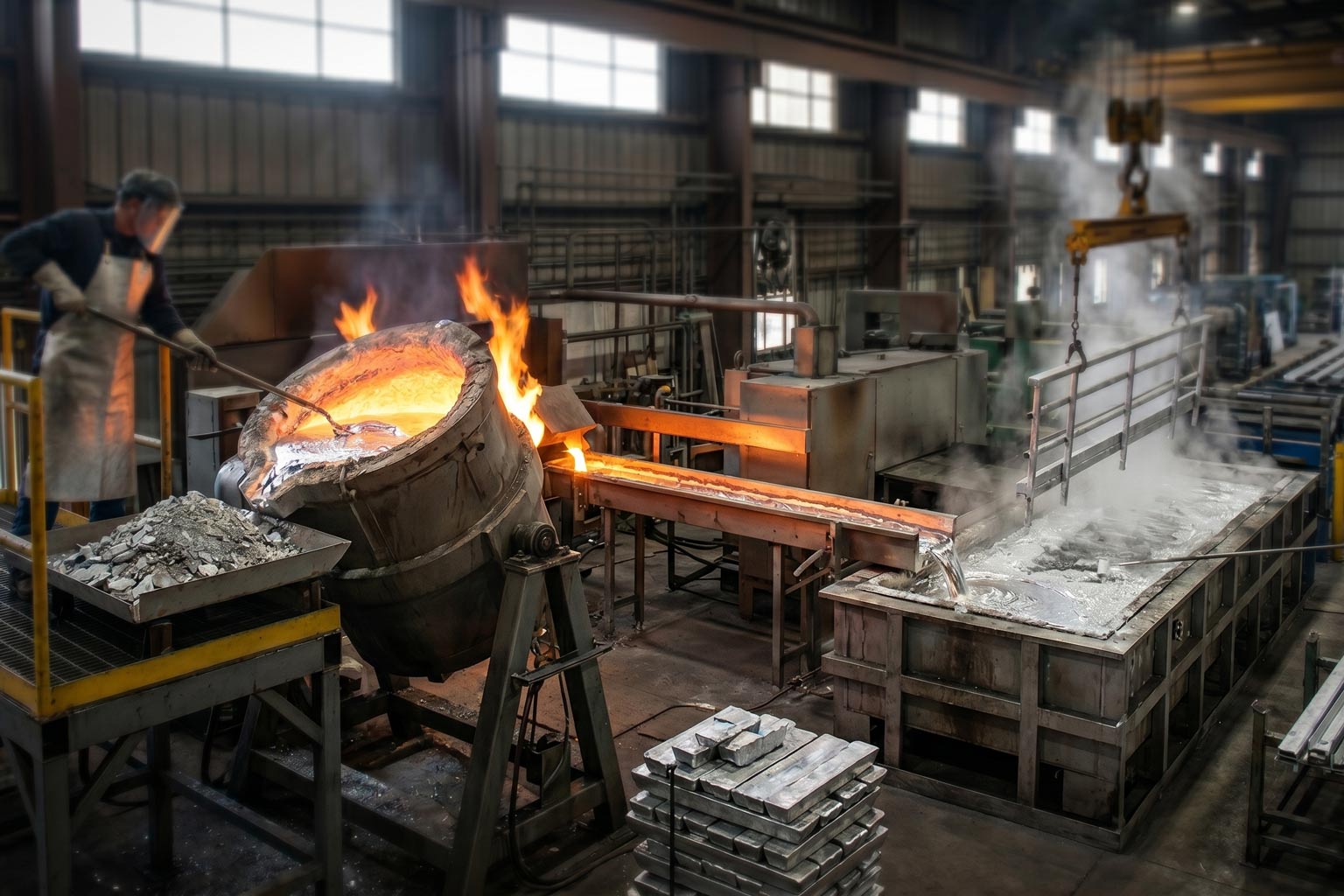
Sustainability is becoming a major factor in material selection across construction, infrastructure, and industrial projects. One of the advantages of hot dip galvanizing that often goes overlooked is how recyclable and reusable zinc is throughout its lifecycle.
At V&S Galvanizing, we regularly work with engineers, contractors, and fabricators who want to understand the environmental impact of their corrosion protection choices. Zinc stands out because it is not only effective for long-term protection, but it is also highly recyclable and continuously reused within the galvanizing process.
The American Galvanizers Association provides additional technical context on zinc recycling here.
Below, we break down how zinc recycling works and why it plays such an important role in sustainable galvanizing.
Zinc Is a Fully Recyclable Material
Zinc is a natural element that can be recycled indefinitely without losing its physical or chemical properties.
Unlike some materials that degrade after repeated use, zinc can be:
- Recovered
- Refined
- Reused
- Reintroduced into industrial processes
This makes zinc one of the most sustainable metals used in construction and infrastructure.
For galvanized steel, this means the protective coating itself contributes to a circular material lifecycle.
Recycling Within the Galvanizing Process
Hot dip galvanizing is already an efficient process in terms of material use. During production, nearly all zinc used in the process is either:
- Applied to steel as a coating
- Recovered for reuse
During galvanizing operations, small amounts of zinc form byproducts such as:
- Zinc ash on the surface of the bath
- Dross (zinc-iron alloy particles) that settle in the kettle
These materials are not waste. They are collected, processed, and recycled back into usable zinc products.
This internal recycling loop reduces material loss and supports efficient resource use.
Recycling Galvanized Steel at End of Life
Another major advantage of galvanizing is what happens at the end of a product’s life cycle.
When galvanized steel is recycled:
- The steel is melted and reused
- The zinc coating is separated during processing
- The zinc can be recovered and reused in future applications
This process allows both the steel and the zinc coating to remain part of the material supply chain.
Because of this, galvanized steel supports both durability during use and sustainability after use.
Environmental Benefits of Zinc Recycling
Zinc recycling provides several environmental advantages:
- Reduces the need for raw material extraction
- Conserves natural resources
- Minimizes industrial waste
- Supports circular material systems
- Reduces overall environmental footprint of steel infrastructure
In many cases, a significant portion of zinc used in galvanizing comes from recycled sources.
This contributes to lower environmental impact compared to materials that cannot be easily recovered.
Longevity and Sustainability Go Together
One of the most important sustainability benefits of galvanizing is durability.
Because hot dip galvanized coatings can last for decades without maintenance, they reduce:
- Replacement frequency
- Material consumption over time
- Maintenance costs and environmental impact
- Need for repainting or recoating
When long service life is combined with recyclability, galvanizing becomes a highly sustainable corrosion protection solution.
Zinc as Part of a Circular Economy
Zinc plays a key role in what is often referred to as a circular economy.
Instead of being used once and discarded, zinc:
- Protects steel during its service life
- Is recovered during recycling
- Is refined and reused
- Returns to the galvanizing process
This cycle can repeat indefinitely without loss of performance.
For infrastructure projects, this means materials continue delivering value well beyond their initial use.
Why This Matters for Your Project
For engineers, architects, and project owners, sustainability is no longer optional. Material choices must balance performance, cost, and environmental impact.
Hot dip galvanizing offers:
- Proven long-term corrosion protection
- Minimal maintenance requirements
- Full recyclability of both steel and zinc
- Reduced lifecycle environmental impact
At V&S Galvanizing, we help our customers understand how these factors apply to their specific projects, whether they are working on infrastructure, industrial applications, or structural steel systems.
Talk With Our Team About Sustainable Galvanizing
If you are evaluating corrosion protection options and want to understand the environmental impact of galvanizing, we are here to help.
We can walk through:
- Lifecycle expectations
- Material performance.
- Sustainability considerations
- Project-specific requirements
Visit our contact page to get in touch with our team.
Zinc recycling is a major advantage of hot dip galvanizing. From production to end-of-life recovery, zinc remains part of a continuous reuse cycle that supports both performance and sustainability. When combined with the long service life of galvanized coatings, this makes galvanizing one of the most efficient and environmentally responsible choices for protecting steel.
Frequently Asked Questions About Zinc Recycling
Is zinc used in galvanizing recyclable?
Yes. Zinc is fully recyclable and can be reused indefinitely without losing its protective properties.
What happens to zinc during the galvanizing process?
Most zinc is applied as a coating to steel. Any byproducts, such as ash or dross, are collected and recycled back into usable zinc materials.
Can galvanized steel be recycled?
Yes. Both the steel and the zinc coating can be recovered and reused when galvanized steel reaches the end of its service life.
Does recycled zinc perform differently than new zinc?
No. Recycled zinc maintains the same chemical and physical properties as newly mined zinc.
How does galvanizing support sustainability?
Galvanizing provides long service life, reduces maintenance needs, and uses recyclable materials, all of which lower environmental impact over time.
Is galvanizing more sustainable than painting?
In many cases, yes. Galvanizing typically lasts longer and requires less maintenance than paint systems, reducing material use and environmental impact over the lifecycle of the structure.
What are zinc ash and dross?
Zinc ash forms on the surface of the molten zinc bath, and dross settles at the bottom. Both are collected and recycled into usable zinc products.
Why is zinc considered part of a circular economy?
Zinc can be continuously reused without degradation, allowing it to move through multiple lifecycles while maintaining its performance.
