
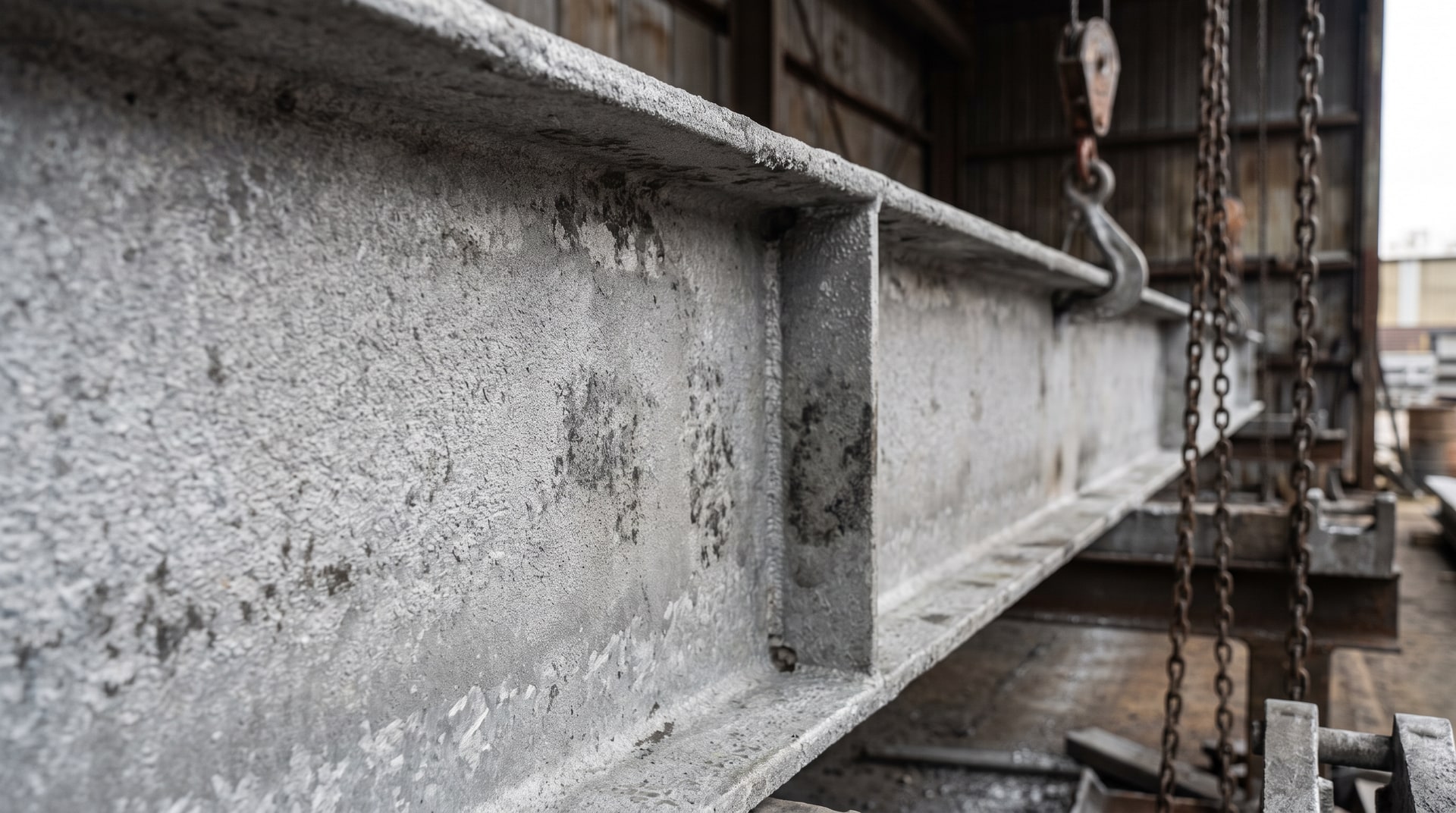
When a fabricated steel assembly comes out of a galvanizing kettle looking rougher than expected, or with a coating thickness that seems disproportionate to the piece, the first instinct is often to look at the process. Was the steel cleaned properly? Was bath temperature correct? Those are reasonable questions, but they frequently point to the wrong place. In a significant number of coating quality issues, the answer lives deeper: it lives in the chemistry of the steel itself, decided at the mill long before the fabricator ever cut the first piece.
Steel is not a single uniform material. It is an engineered alloy, and its elemental composition varies depending on the intended application, the manufacturing process, and the raw materials available at the time of production. Those compositional differences directly influence how the steel reacts with molten zinc during hot-dip galvanizing. Understanding that relationship is not just academic. It has practical consequences for coating appearance, thickness, adhesion, and long-term performance.
The American Galvanizers Association addresses this directly in their article on how metallurgy affects galvanizing. At V&S Galvanizing, we expand on that foundation to explain what is actually happening at the material level, how steel chemistry influences coating performance, and why this is often misunderstood in the field.
Iron Is the Starting Point, But Steel Is Something Different
Pure iron in its elemental form is a relatively soft, ductile metal. It bends without much resistance and has limited tensile strength on its own. That makes it unsuitable for most structural applications. What transforms iron into useful structural steel is the deliberate addition of other elements, each chosen to develop a specific mechanical property.
Carbon is the most foundational of these additions. Adding as little as 0.5% carbon by weight to iron can dramatically increase the metal's tensile strength. Steel commonly contains carbon in quantities up to 2% by weight. The tradeoff is real: as carbon content increases, so does hardness, but that same hardness brings increased brittleness and reduced weldability. Every elemental addition is a balancing act between competing mechanical demands.
Manganese is another key alloying element. Like carbon, it increases strength, but it also improves hot working properties during the steelmaking process and raises both hardenability and toughness. These characteristics make manganese particularly valuable in structural steels where the material needs to absorb energy without fracturing. The practical implication is that steels optimized for toughness will often have elevated manganese, which has its own relationship with the galvanizing reaction.
Why Steel Chemistry Varies in the First Place
Most commercial steel is produced from scrap iron rather than virgin ore. Scrap brings variability. Different scrap sources carry different residual elements, and while steelmakers work to control chemistry within defined ranges, the resulting compositions are not identical from heat to heat or mill to mill. This is not a quality failure on the part of the steelmaker. It reflects the inherent nature of scrap-based production and the practical tolerances of industrial metallurgy.
To compare steels with different elemental compositions in a systematic way, metallurgists use a formula called the carbon equivalent (CE). The version commonly referenced in galvanizing contexts is:
CE = C% + (Si%)/25 + (Mn%+Cr%)/16 + (Cr%+Ni%+Mo%)/20 + (V%)/1
This formula provides a single number that captures the combined influence of multiple alloying elements on the steel's behavior. It is widely used in welding assessments, but it also reflects how different chemistries will respond to thermal processes, including immersion in a molten zinc bath. Two steels that look identical on a mill certificate may have meaningfully different carbon equivalents, and that difference shows up in the galvanizing shop.
The Role of Silicon: Deoxidizer, Hardener, and Coating Disruptor
Silicon serves a critical function during steelmaking. When carbon is added to iron, oxygen in the surrounding environment reacts with the carbon and consumes it. To prevent this, silicon is introduced as a deoxidizing agent. This process, known as killing the steel, allows the carbon to remain in solution and contribute to the steel's final mechanical properties. Killed steel has tighter dimensional tolerances, fewer internal voids, and more uniform properties throughout the section.
The problem arises when silicon content moves outside a fairly narrow window relative to galvanizing. Silicon acts as a catalyst during the zinc-iron metallurgical reaction. When the steel is immersed in the molten zinc bath, a series of intermetallic alloy layers form at the steel surface. Silicon accelerates the growth of these layers at a rate that is difficult to control. The result is a coating that grows unusually thick, develops a rough or matte gray surface texture, and may be more brittle than a standard coating.
ASTM A385, the standard that governs steel selection for optimal galvanizing, identifies the acceptable silicon ranges precisely because of this behavior. Silicon content below 0.04% or between 0.15% and 0.22% will generally produce predictable, well-adhered coatings. Silicon content that falls in the range between 0.04% and 0.15%, often called the Sandelin range, produces the most reactive and problematic coatings. Values above 0.22% also tend to cause excessive coating growth. Specifying steel with silicon content that stays within the A385 limits is one of the most effective steps a fabricator or engineer can take to ensure coating consistency.
Phosphorus: An Impurity with Real Consequences
Phosphorus enters steel primarily as an impurity from raw materials rather than as an intentional addition. In modest amounts, it is not harmful and can actually improve both strength and corrosion resistance. Many steel specifications allow phosphorus content up to 0.04% for this reason.
Beyond that threshold, however, phosphorus begins to create problems. At elevated concentrations, it increases the tendency for steel to crack during welding and can negatively impact hot-forming operations during steelmaking. From a galvanizing standpoint, phosphorus behaves similarly to silicon: it acts as a catalyst for the zinc-iron alloy layer reaction, accelerating growth and producing coatings with rough surface texture and inconsistent thickness.
ASTM A385 caps acceptable phosphorus content at 0.04%. This is not an arbitrary number. It reflects the point at which phosphorus transitions from a manageable impurity to an active disruptor of the galvanizing reaction. When purchasing steel intended for galvanizing, reviewing the mill certificate for phosphorus content is worth the time, particularly for projects where coating appearance is a design requirement.
Synergistic Effects: When Silicon and Phosphorus Work Together
One of the more counterintuitive aspects of steel chemistry and galvanizing is that silicon and phosphorus do not simply add their effects together. They amplify each other. Even when both elements are present at levels that would individually produce acceptable coatings, their combined presence can trigger rapid growth of the zinc-iron alloy layers that form during galvanizing.
This happens because both elements function as catalysts in the zinc-iron metallurgical reaction. The reaction that forms the intermetallic alloy layers during galvanizing is temperature-dependent and diffusion-controlled under normal conditions. When catalysts are present, that diffusion process accelerates beyond what process parameters alone can compensate for. The outcome is a coating that is thicker than expected, rougher in appearance, and potentially more prone to flaking under impact.
For fabricators working with mixed steel lots or using material from multiple suppliers on a single project, this synergistic effect is a practical risk. Steel that passes individual element checks may still produce inconsistent coatings when combined elements push the overall reactivity above a threshold. It is one reason we recommend reviewing full mill certificates rather than relying on a single element value.
Carbon and Manganese: Less Problematic, But Still Worth Understanding
Compared to silicon and phosphorus, carbon and manganese have less dramatic effects on galvanizing quality, but they are not irrelevant. ASTM A385 recommends carbon content below 0.25% and manganese content below 1.3% for steel intended to be galvanized.
Carbon content primarily affects how the steel's surface responds to the cleaning steps that precede galvanizing. High-carbon steels can be more difficult to pickle effectively, and surface carbon deposits can interfere with the zinc-iron reaction if not fully removed. Manganese at elevated levels may contribute to a slightly more reactive surface, though the effect is much less pronounced than silicon or phosphorus. Both elements are worth noting when reviewing mill certifications, but for most structural steel in common use, they tend to fall within acceptable ranges without specific effort.
What matters more from a practical standpoint is understanding that no single element operates in isolation. The carbon equivalent formula exists precisely because the interactions between elements define behavior more accurately than any individual value. A steel with moderate carbon and moderate silicon may behave very differently at the galvanizing shop than a steel with low carbon and elevated silicon, even though both might carry similar tensile ratings.
What ASTM A385 Actually Requires and Why It Matters
ASTM A385 is the governing standard for steel selection in hot-dip galvanizing. It defines recommended elemental ranges specifically to minimize the chemistry-driven coating quality issues described above. The ranges it sets are:
| Element | Recommended Limit | Primary Reason for Limit |
|---|---|---|
| Carbon (C) | < 0.25% | Reduces surface cleaning difficulty and risk of residual carbon interference with zinc-iron reaction |
| Manganese (Mn) | < 1.3% | Limits contribution to elevated coating reactivity |
| Silicon (Si) | < 0.04% or between 0.15% and 0.22% | Avoids the Sandelin reactive range; prevents excessive zinc-iron alloy layer growth and rough coatings |
| Phosphorus (P) | < 0.04% | Prevents catalytic acceleration of zinc-iron reaction and rough, variable coating texture |
These limits exist because research and field experience have consistently shown that steel chemistry within these bounds produces galvanized coatings with predictable thickness, good adhesion, and acceptable surface appearance. Steel outside these ranges does not automatically produce defective coatings, but it does significantly increase the probability of coating variability that cannot be corrected through process adjustments alone.
A common misconception we encounter is that galvanizing process parameters can compensate for reactive steel chemistry. Bath temperature adjustments, immersion time changes, and withdrawal rate modifications can influence coating thickness to a degree, but they cannot fully offset the catalytic effect of excess silicon or phosphorus. When the steel chemistry is outside recommended ranges, the best process in the world will still produce a coating that is thicker, rougher, or less uniform than what the same process would yield with compliant steel.
Specifying ASTM A385-compliant steel at the design and procurement stage is the most reliable point of control available. By the time steel arrives at a hot-dip galvanizing facility, the chemistry is fixed and cannot be changed.
Practical Guidance for Engineers and Fabricators
Understanding the connection between steel chemistry and galvanizing quality translates into specific, actionable decisions at the design and procurement stage. The most important of these is requesting and reviewing mill test reports (MTRs) for any steel intended to be galvanized. An MTR documents the actual chemical composition of a given heat of steel, including carbon, manganese, silicon, and phosphorus content. Comparing those values against the ASTM A385 limits takes minutes and can prevent coating quality issues that are far more expensive to address after the fact.
For projects where appearance is critical, such as architectural exposed structural steel or galvanized components in public spaces, selecting steel with silicon content clearly outside the reactive Sandelin range is worth the additional specification effort. This often means explicitly calling out the A385 silicon limits in procurement documents rather than relying on general structural steel specifications that may not carry those restrictions.
When steel from multiple suppliers or multiple heats will be combined in a single fabricated assembly, confirming that all material meets consistent chemistry requirements prevents situations where one section of a weldment produces a visually different coating than an adjacent section. Customers and inspectors notice those differences even when both coatings are technically functional.
Finally, if a project involves steel that has already been procured and the MTR shows values outside recommended ranges, communicating that information to the galvanizing shop before the work begins allows the team to set appropriate expectations regarding coating thickness and appearance. It also enables any available process adjustments to be applied with realistic expectations about their effectiveness.
Work With a Team That Understands the Material, Not Just the Process
Galvanizing quality is determined by two variables working together: the galvanizing process and the steel being processed. Optimizing one while ignoring the other produces inconsistent results. At V&S Galvanizing, our team reviews mill certifications, identifies chemistry concerns before steel enters the shop, and communicates directly with fabricators and engineers when incoming material is likely to produce coating characteristics outside normal expectations. That communication happens early, when there is still time to make meaningful decisions.
If you are specifying galvanized steel for an upcoming project and have questions about steel selection, ASTM A385 requirements, or what to look for on a mill test report, we are glad to work through those details with you. Reach out through our contact page and one of our technical team members will respond directly.
Frequently Asked Questions About Steel Metallurgy and Galvanizing
What is the Sandelin range and why does it matter for galvanizing?
The Sandelin range refers to silicon content between approximately 0.04% and 0.15% in steel. Within this range, silicon acts as a particularly aggressive catalyst in the zinc-iron alloy reaction during galvanizing, producing coatings that are unusually thick, rough, and variable. ASTM A385 recommends keeping silicon either below 0.04% or between 0.15% and 0.22% to avoid this reactive zone.
Can the galvanizing process compensate for reactive steel chemistry?
Only to a limited degree. Bath temperature and immersion time can influence coating development, but they cannot neutralize the catalytic effect of excess silicon or phosphorus. When steel chemistry falls outside ASTM A385 limits, process adjustments may reduce the severity of coating variability but will not eliminate it. The most effective control point is steel selection before fabrication begins.
What does a mill test report tell me about galvanizing suitability?
A mill test report documents the actual chemical composition of a specific heat of steel, including carbon, manganese, silicon, and phosphorus percentages. Comparing those values against ASTM A385 limits tells you whether the steel is likely to produce a predictable galvanized coating or whether elevated reactivity should be expected. Reviewing MTRs before procurement is the most efficient way to catch chemistry concerns early.
Why do silicon and phosphorus cause worse coating problems together than separately?
Silicon and phosphorus act synergistically as catalysts in the zinc-iron metallurgical reaction. Even when each element is present at individually acceptable concentrations, their combined presence can accelerate intermetallic alloy layer growth beyond what either element would produce alone. This means a steel that passes individual element thresholds may still produce a reactive coating if both elements are present at the upper end of their acceptable ranges.
Does carbon content significantly affect galvanizing quality?
Carbon has a less direct effect on coating quality than silicon or phosphorus, but it is still relevant. High-carbon steels can be more difficult to clean effectively during the pickling stage, and surface carbon residues may interfere with the zinc-iron reaction if not fully removed. ASTM A385 recommends carbon content below 0.25% for steel intended to be galvanized.
What is the carbon equivalent formula and how is it used in galvanizing?
The carbon equivalent (CE) is a formula that combines multiple alloying element percentages into a single value to predict how a steel will behave during thermal processes. One commonly used version is: CE = C% + (Si%)/25 + (Mn%+Cr%)/16 + (Cr%+Ni%+Mo%)/20 + (V%)/1. In galvanizing, a higher CE generally indicates a more reactive steel that may produce thicker or less uniform coatings. It provides a more complete picture of expected behavior than any individual element value alone.
Is rough coating texture from reactive steel a structural defect?
Not necessarily. A rough or matte gray coating caused by elevated silicon or phosphorus is often thicker than a standard coating, which may actually provide extended corrosion protection in terms of zinc mass. However, it may exceed thickness tolerances for certain applications, and the coating can be more brittle and prone to flaking under mechanical stress. Whether it constitutes a defect depends on the project specification and the intended end use of the component.
What phosphorus level should I specify for steel going to galvanizing?
ASTM A385 recommends phosphorus content below 0.04% for steel intended to be hot-dip galvanized. Above this threshold, phosphorus increases the reactivity of the zinc-iron alloy reaction and can produce rough, variable coatings. Many general structural steel specifications already allow up to 0.04%, so this limit aligns with common practice, but it is worth confirming on the mill test report rather than assuming compliance.
