
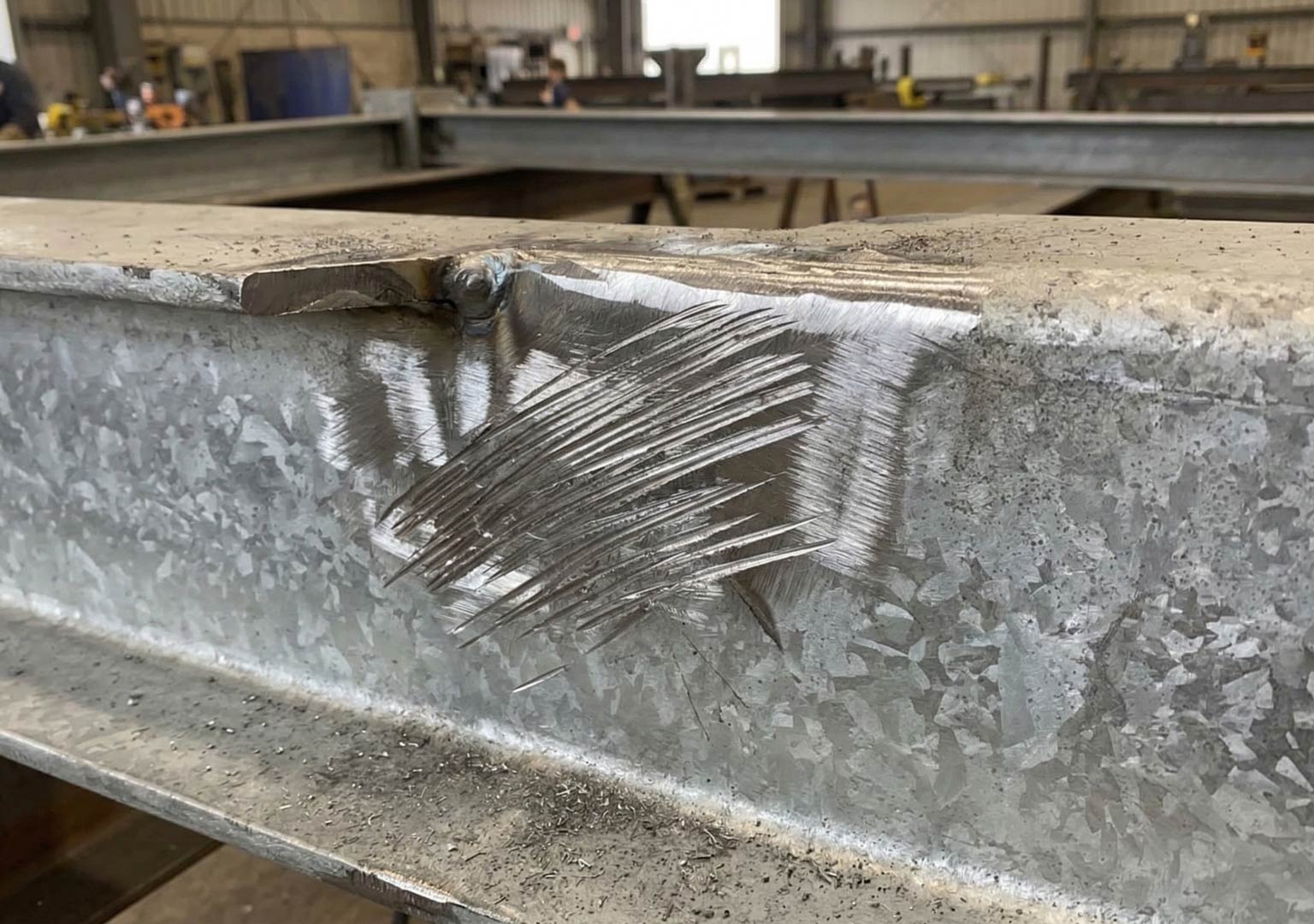
Grinding is a common fabrication and finishing operation in steel construction. After hot dip galvanizing, localized grinding may be performed to remove surface irregularities, smooth sharp projections, adjust fit up tolerances, or prepare an area for repair. When grind marks are visible on galvanized steel, questions often arise regarding coating integrity, specification compliance, and corrosion performance.
The Galvanize It article addressing grind marks on galvanized steel provides foundational guidance. Building on that technical framework, this article examines why grinding occurs, how it affects coating thickness, what inspection standards require, and how to determine whether repair is necessary.
Why Grinding Occurs After Galvanizing
Grinding may occur after galvanizing for several reasons:
- Removal of high spots or zinc runs
- Smoothing of weld areas
- Adjustment of connection tolerances
- Surface blending in architectural applications
- Preparation for localized repair
In some cases, minor grinding is performed at the galvanizing facility to remove excess zinc buildup at vent holes or edges. In other situations, grinding may occur in the field during erection or fabrication adjustments.
The key concern is whether grinding removes protective coating thickness below specification minimums.
How Grinding Affects Coating Thickness
Hot dip galvanized coatings are metallurgically bonded alloy layers formed during immersion. When grinding is performed, material is mechanically removed from the surface.
The impact depends on:
- Depth of grinding
- Area affected
- Original coating thickness
- Grinding technique
If grinding removes only the outer eta layer while leaving alloy layers intact and thickness above minimum requirements, corrosion protection may remain sufficient.
However, aggressive grinding can:
- Reduce coating thickness below ASTM minimums
- Expose bare steel
- Compromise cathodic protection
Thickness measurement is therefore essential when evaluating grind marks.
ASTM Acceptance Criteria
ASTM A123 focuses primarily on coating thickness and continuity rather than cosmetic appearance.
Visible grind marks alone do not constitute rejection unless:
- Coating thickness falls below specified minimum
- Bare steel is exposed beyond allowable repair limits
- Surface discontinuities compromise protection
Inspection should include magnetic thickness measurements in and around ground areas to confirm compliance.
If minimum average and single spot thickness values are maintained, grind marks may be acceptable.
When Is Repair Required
Repair becomes necessary when grinding has exposed steel or reduced coating thickness below specification requirements.
Approved repair methods typically include:
- Zinc rich paint meeting minimum zinc content requirements
- Thermal spray zinc application
- Zinc based solder under controlled conditions
Surface preparation prior to repair must remove debris and ensure proper adhesion.
Repair thickness should meet or exceed surrounding coating thickness.
Differentiating Cosmetic Versus Structural Impact
It is important to distinguish between:
- Cosmetic grind patterns
- Structural or protective compromise
Minor surface blending marks that do not penetrate deeply into the coating often have minimal performance impact.
Conversely, deep grinding that removes alloy layers may significantly reduce protection in that area.
Evaluation should be technical and measurement based, not appearance based.
Preventing Excessive Grinding
Preventive strategies include:
- Proper vent and drainage design to reduce zinc buildup
- Controlled withdrawal speeds during galvanizing
- Clear fabrication tolerances prior to immersion
- Avoiding unnecessary post galvanizing modifications
Early coordination during design and fabrication reduces the likelihood of field grinding.
If you have questions regarding grind marks, coating thickness evaluation, or potential repair requirements, please reach out via our contact page:
https://www.hotdipgalvanizing.com/contact
We can assist in determining whether observed grind marks affect compliance or long term performance.
Long Term Performance Considerations
When grinding reduces coating thickness but does not expose steel, zinc continues to provide sacrificial protection.
However, localized thin areas may corrode faster than surrounding regions if exposed to aggressive environments.
For critical infrastructure, conservative evaluation and repair may be appropriate.
Documentation of repaired areas supports long term inspection planning.
Grinding on galvanized steel does not automatically indicate a defect. The determining factors are coating thickness and continuity relative to ASTM requirements. Proper measurement, evaluation, and repair when necessary ensure continued corrosion protection and compliance. Appearance alone should not dictate acceptance or rejection.
If you would like us to review grind marks on your project or verify coating compliance, please contact us through our contact page.
Frequently Asked Questions About Grind Marks on Galvanized Steel
Are grind marks on galvanized steel a defect?
Not necessarily. Grind marks are only considered a defect if they reduce coating thickness below ASTM minimum requirements or expose bare steel beyond allowable repair limits. Cosmetic marks alone do not automatically indicate non compliance.
How can I tell if grinding removed too much coating?
The most reliable method is to measure coating thickness using a calibrated magnetic gauge in and around the ground area. If readings meet ASTM A123 minimum thickness requirements, the coating may remain compliant.
Does grinding remove the metallurgical bond?
Grinding removes material mechanically. If only the outer zinc layer is reduced and alloy layers remain intact above minimum thickness, the metallurgical bond still exists. Excessive grinding that exposes steel eliminates that protection.
Is repair always required after grinding?
Repair is required only if bare steel is exposed or if coating thickness falls below specification requirements. Minor surface blending may not require corrective action.
Can ground areas corrode faster than surrounding coating?
Yes. Thinner zinc areas may corrode at the same rate as surrounding coating but will reach depletion sooner due to reduced initial thickness.
What repair methods are approved for ground areas?
Approved methods generally include zinc rich paint, thermal spray zinc, or zinc solder, applied in accordance with ASTM repair provisions.
Should grind marks be documented during inspection?
Yes. Recording thickness readings and repair actions supports quality assurance and future maintenance planning.
