

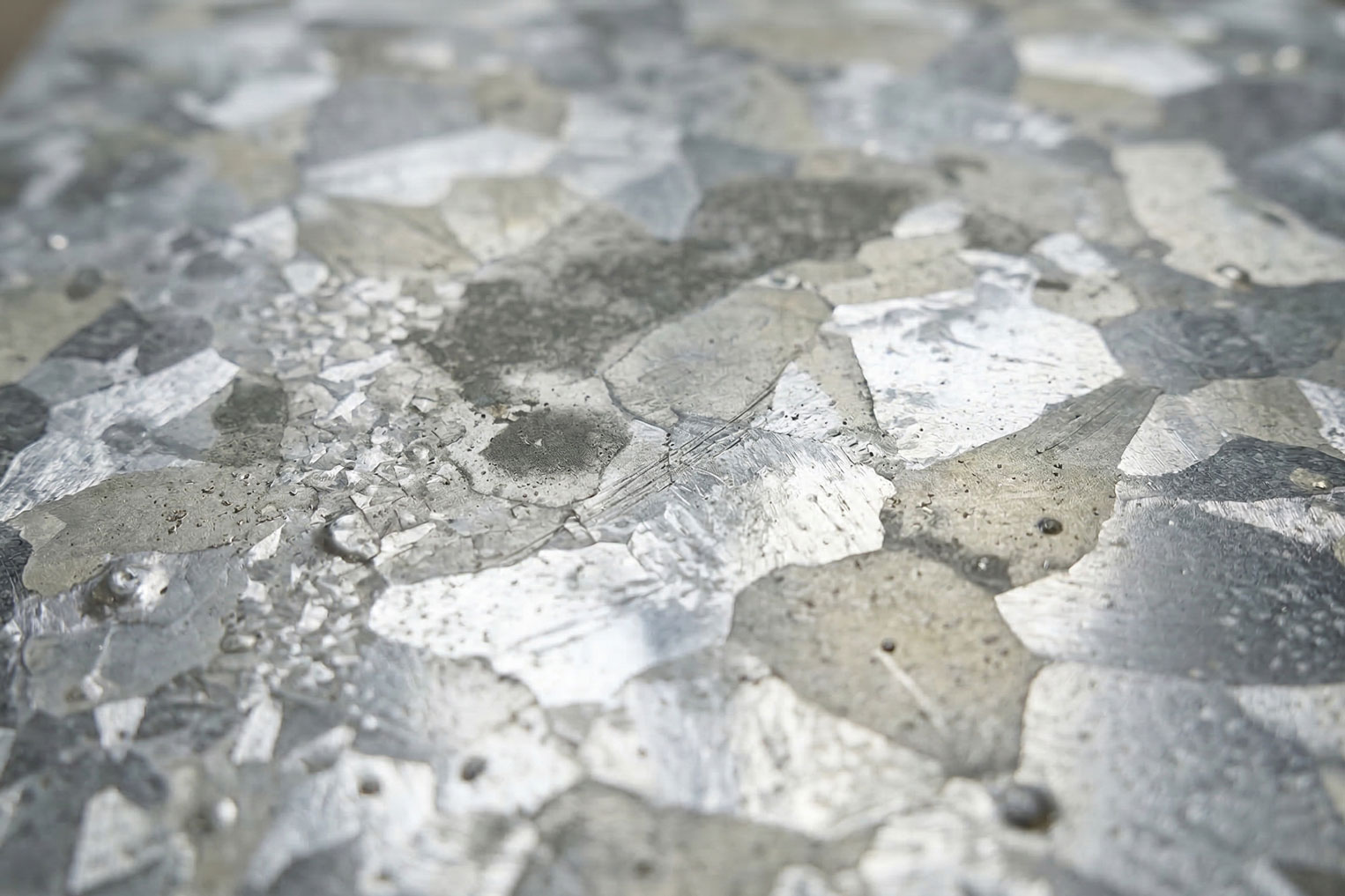
Hot dip galvanizing produces a durable, metallurgically bonded zinc coating designed for corrosion protection. While performance is governed by coating thickness and continuity, visual appearance often draws attention during inspection and project delivery. Differences in color, texture, and surface patterning are common and, in most cases, do not affect corrosion resistance.
The Galvanize It article discussing common appearance concerns on hot dip galvanized steel provides helpful foundational context. This expanded technical discussion examines the metallurgical causes of appearance variation, how to differentiate cosmetic conditions from performance issues, and how inspection standards address surface characteristics.
Why Appearance Varies on Galvanized Steel
Hot dip galvanizing is a chemical reaction between molten zinc and steel. Because coating growth depends on steel chemistry, surface condition, and immersion dynamics, visual variation is expected.
Appearance can be influenced by:
- Silicon and phosphorus content
- Steel thickness
- Cooling rate
- Bath chemistry
- Surface roughness
- Fabrication condition
Uniform color is not a specification requirement. Performance is determined by measurable coating thickness and continuity.
Common Appearance Variations
Color Differences
Freshly galvanized steel may range from bright silver to matte gray.
Color differences often result from:
- Steel reactivity
- Alloy layer thickness
- Cooling conditions
Darker or dull gray coatings typically indicate heavier alloy layer formation and are not indicative of inferior quality.
Over time, all galvanized surfaces weather to a uniform matte gray as zinc forms stable corrosion products.
Spangle or Pattern Variation
Spangle refers to crystalline patterns visible on some galvanized surfaces.
Spangle size depends on:
- Cooling rate
- Zinc chemistry
- Surface tension effects
Modern bath chemistries often reduce visible spangle. Absence of spangle does not indicate performance deficiency.
Rough or Textured Surfaces
Roughness may result from:
- Reactive steel chemistry
- Surface condition prior to galvanizing
- Localized heavy alloy growth
In some cases, thicker coatings may produce a slightly rougher texture.
Roughness alone does not indicate non compliance unless it interferes with intended function or coating continuity.
Runs, Drips, and Zinc Accumulation
During withdrawal from the zinc bath, excess zinc drains from the surface.
Minor runs or drips may occur, particularly on complex geometries.
ASTM standards permit minor surface irregularities provided:
- Coating thickness meets requirements
- No sharp protrusions create safety concerns
- Performance is not impaired
Excess zinc that interferes with fit up may require removal through approved methods.
Ash Inclusions and Surface Marks
Occasionally, small surface marks may appear due to:
- Floating ash particles
- Handling marks
- Minor surface irregularities
These conditions are typically cosmetic and do not compromise corrosion protection.
Inspection should focus on adhesion, coverage, and thickness rather than purely aesthetic criteria.
Discoloration After Quenching
Temporary color variation may occur due to:
- Cooling water chemistry
- Passivation treatments
- Early oxidation
Such discoloration is typically superficial and does not affect coating durability.
Weathering often normalizes appearance over time.
Distinguishing Cosmetic Conditions from Defects
True defects generally involve:
- Bare steel areas
- Peeling or delamination
- Severe flaking
- Incomplete coating coverage
Cosmetic variations, by contrast, include:
- Color differences
- Surface texture variation
- Minor zinc drips
- Pattern inconsistency
Inspection should be based on ASTM acceptance criteria, not subjective aesthetic preference.
Inspection Standards and Acceptance
ASTM A123 and related standards define acceptance criteria based on:
- Minimum coating thickness
- Coating continuity
- Adherence
The standards do not require uniform appearance or specific color characteristics.
Engineers and owners should align expectations with specification language prior to production to avoid misunderstandings at delivery.
Managing Client Expectations
Because galvanized coatings are formed through chemical reaction, aesthetic consistency cannot be guaranteed across different heats of steel.
For architectural applications where visual uniformity is critical, a duplex system may provide greater aesthetic control.
In structural applications, corrosion protection remains the governing priority.
If you have questions regarding coating appearance or inspection criteria for your project, please reach out through our contact page.
Early coordination helps ensure expectations align with specification requirements.
Hot dip galvanized steel commonly exhibits variation in color, texture, and surface pattern due to metallurgical and processing factors. These variations are typically cosmetic and do not impact corrosion protection when coating thickness and continuity meet ASTM requirements. Inspection should focus on measurable criteria rather than aesthetic uniformity. Understanding the distinction between cosmetic conditions and performance defects ensures proper evaluation of galvanized products.
Frequently Asked Questions About Galvanized Steel Appearance
Why does galvanized steel sometimes look dull gray instead of shiny?
Dull gray surfaces often result from heavier zinc iron alloy layer formation due to steel chemistry. This condition is normal and does not reduce corrosion protection.
Does surface roughness mean the coating is defective?
Not necessarily. Slight roughness may be caused by reactive steel chemistry or thicker alloy layers. As long as thickness and continuity meet ASTM standards, the coating is compliant.
What are zinc runs or drips, and are they acceptable?
Runs occur when excess molten zinc drains during withdrawal. Minor runs are acceptable if they do not create sharp projections or interfere with function.
Is spangle required for galvanized steel?
No. Spangle is a crystallization pattern that may or may not appear depending on cooling conditions and bath chemistry. It is not a performance indicator.
Can discoloration after galvanizing affect service life?
Temporary discoloration from quenching or early oxidation does not affect coating thickness or corrosion resistance.
How should inspectors evaluate appearance concerns?
Inspection should focus on measurable criteria such as thickness, continuity, and adhesion. Cosmetic differences alone are not grounds for rejection.
Can appearance be controlled for architectural projects?
Yes. A duplex system combining galvanizing and paint can improve aesthetic consistency while enhancing durability.
Do appearance variations weather over time?
Yes. As zinc forms stable corrosion products, most appearance variations blend into a uniform matte gray finish over time.
