

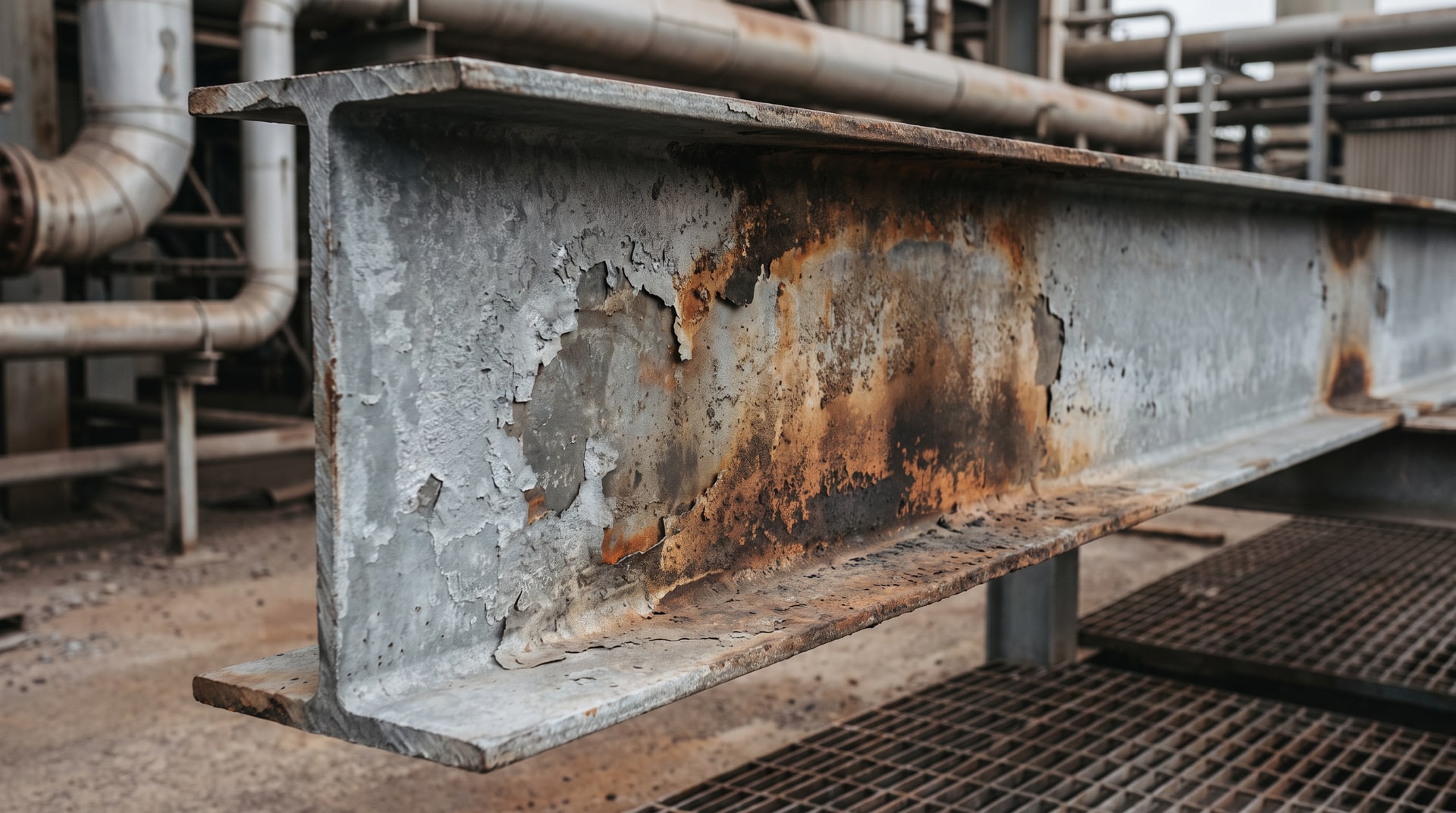
Temperature is one of those variables that tends to surface late in a project, often after galvanizing has already been specified. An engineer asks whether the coating will survive a process environment running above 300 degrees Fahrenheit. A fabricator wonders if steel destined for a cold storage facility or arctic installation presents any concerns. These are legitimate questions, and the answers are more nuanced than a simple yes or no. The galvanized coating's behavior under thermal stress depends on the specific temperatures involved, how long the exposure lasts, and which layers of the coating are actually doing the protective work.
The American Galvanizers Association addresses this directly in their article on galvanized steel's performance in extreme temperatures. At V&S Galvanizing, we expand on that foundation to explain what is actually happening at the material level, how temperature and exposure duration influence coating integrity, and why the distinction between coating appearance and actual corrosion protection is so frequently misunderstood in the field.
The Layered Structure That Makes Temperature Behavior Complex
To understand how heat affects a galvanized coating, you need to understand what the coating actually is. Hot-dip galvanizing doesn't simply apply a film of zinc to steel. The immersion process produces a metallurgically bonded series of zinc-iron alloy layers, each with a progressively higher iron content as you move inward toward the base steel. The outermost layer is free zinc, sometimes called the eta layer, sitting on top of layers where zinc and iron have diffused into one another during the galvanizing reaction itself.
Each of those layers has different mechanical and thermal properties. The inner alloy layers are harder and more tightly bonded to the steel substrate. The outer free zinc layer, while it provides sacrificial protection and gives galvanized steel its characteristic bright or matte appearance, is the most thermally vulnerable part of the system. That distinction matters enormously when evaluating how a coating behaves under heat.
The Recommended Service Temperature Limit and Why It Exists
The industry-accepted upper service temperature for conventional hot-dip galvanized coatings is 390 F (200 C). Below that threshold, the coating resists the primary failure mode associated with heat exposure: peeling of the outer free zinc layer. The galvanized surface may discolor or dull at elevated temperatures, but structural separation of the coating is not expected to occur.
Above 390 F, the thermal energy becomes sufficient to accelerate a specific metallurgical process involving zinc diffusion. The recommendation of 390 F isn't arbitrary; it reflects years of observed coating behavior and represents the point at which that diffusion process begins producing voids at a rate that compromises the outer layer's adhesion. For most structural applications, process environments, and architectural uses, staying below this threshold is straightforward. The situations where it becomes a genuine design question tend to involve industrial equipment, exhaust systems, heating enclosures, or steel in proximity to combustion sources.
What Peeling Actually Means: The Kirkendall Effect in Practice
The mechanism behind high-temperature peeling has a name: the Kirkendall Effect. It describes what happens when two dissimilar metals are in contact at elevated temperatures and their diffusion rates differ. In a galvanized coating, zinc atoms migrate outward from the free zinc layer into the zinc-iron alloy layers at a faster rate than iron atoms migrate in the opposite direction. This unequal diffusion creates a vacancy, essentially a void, at the interface between the free zinc layer and the underlying alloy.
As the exposure continues and temperature rises, those individual voids multiply and expand. Eventually they coalesce into a continuous gap, and the outer free zinc layer loses its mechanical connection to the alloy layers beneath it. The result is what looks like peeling or flaking of the galvanized surface. From an appearance standpoint, this can look alarming. The coating seems to be failing. But the metallurgical reality is more nuanced than the visual suggests.
At temperatures between 390 F (200 C) and 480 F (250 C), peeling of the free zinc layer can occur, but the zinc-iron alloy layers remain intact and bonded to the steel. Those alloy layers still provide meaningful corrosion protection, and how long that protection lasts depends primarily on how much coating thickness remains. The coating's appearance has changed, and the outer layer is gone, but the steel isn't unprotected. Above 480 F (250 C), the situation is more serious. At those temperatures, the alloy layers themselves can begin to crack and separate from the steel, which represents a genuine loss of corrosion protection rather than just a cosmetic change.
| Temperature Range | Expected Coating Behavior | Corrosion Protection Status |
|---|---|---|
| Below 390 F (200 C) | Coating resists peeling; no free zinc layer separation expected | Full protection maintained |
| 390 F to 480 F (200 C to 250 C) | Outer free zinc layer may peel due to Kirkendall Effect void formation | Zinc-iron alloy layers remain intact and continue to protect steel; degree of protection depends on remaining thickness |
| Above 480 F (250 C) | Accelerated peeling; zinc-iron alloy layers may crack and separate from steel substrate | Significant reduction or loss of corrosion protection |
| Above 1,000 F (fire exposure) | Outer free zinc layer destroyed; carbon deposits often present on surface | Alloy layers may remain intact beneath carbon layer; post-fire inspection and thickness measurement required |
Variables That Accelerate or Slow the Deterioration
The rate at which this diffusion-driven damage progresses isn't fixed. Several coating and process variables influence how quickly the Kirkendall Effect reaches the point of visible peeling or alloy layer damage.
Coating thickness plays a dual role. A thicker coating provides a longer diffusion path, which can slow the rate at which voids form at the critical interface. However, the relative thickness of the outer free zinc layer compared to the alloy layers also matters. A coating with a proportionally thicker free zinc layer has more material available for diffusion-driven migration, which can influence how quickly voids develop. The uniformity of the individual layers is also a factor; non-uniform layers may develop localized failure zones before the overall coating reaches the point of delamination.
Lead content in the zinc bath is another variable that has drawn attention from researchers. Some investigators found that coatings produced from zinc with very low lead content, below 0.001 percent Pb, showed significantly reduced peeling compared to coatings from higher-lead zinc. This is a bath chemistry consideration rather than something a project specifier would typically control directly, but it's relevant context for understanding why two visually similar coatings might respond differently under thermal stress.
Finally, both the peak temperature and the duration of exposure matter independently. Brief temperature excursions up to 300 C (572 F) have been handled without significant coating problems in some documented cases. An isolated thermal event is different from sustained operation above the service temperature limit. A part that briefly sees elevated heat during installation, welding in its vicinity, or a one-time process event is in a different situation than equipment running continuously at 250 C.
Mechanical Property Changes at Elevated Temperatures
Peeling is the primary coating concern, but there's a separate question about whether sustained heat exposure affects the mechanical properties of the steel itself. The answer, based on available data, is that the changes are real but minor. Samples heated to 750 F over periods ranging from two weeks to sixteen weeks showed a modest decrease in ultimate tensile strength and a slight increase in elongation. Yield strength remained essentially unchanged.
These are not changes that would alter the structural calculations for most applications. The reductions are small enough that the AGA characterizes them as insignificant for design purposes. That said, engineers specifying galvanized steel for high-temperature structural applications should be aware that prolonged exposure at the upper range of acceptable service temperatures is a different scenario than ambient use. The structural steel itself is generally more tolerant of elevated temperatures than the zinc coating is, which means coating performance, not steel performance, is usually the limiting factor in these decisions.
Fire Exposure and What the Coating Actually Does
A related question that comes up occasionally involves fire. Fires can easily exceed 1,000 F, well beyond any service temperature threshold for the galvanized coating. The expectation might be that the zinc coating is essentially destroyed in a fire event, and there's truth to that for the outer free zinc layer. However, field observations have found that fire damage to galvanized steel is often less severe than anticipated. Frequently, a layer of carbon deposits from the combustion coats the galvanized surface, and beneath that carbon layer, the underlying coating remains largely intact.
This isn't a guarantee, and fire-exposed galvanized steel should be inspected by qualified personnel to assess actual coating condition. But it does reflect the fact that the zinc-iron alloy layers, given their tighter metallurgical bond to the substrate, are more resilient than the outer free zinc layer that burns or peels away first. Coating thickness remaining after a fire event is the key variable for determining whether the steel still has adequate corrosion protection.
Galvanized Steel in Low-Temperature and Polar Environments
The high-temperature discussion gets most of the attention, but cold environments present a different and generally more favorable picture. Studies on the effect of low-temperature environments on hot-dip galvanized steel show minimal changes in coating behavior. The zinc-iron alloy layers don't become brittle in the way that some materials do under thermal contraction stress. The coating's bond to the steel remains stable.
Installations in polar environments, where temperatures can drop severely and remain low for extended periods, have used hot-dip galvanized steel for corrosion protection with documented service lives exceeding twenty years. The corrosion protection mechanism doesn't break down in cold environments the way it can in high heat. If anything, lower temperatures slow electrochemical corrosion rates, which can extend service life.
The one genuine concern in very cold environments applies to the base steel rather than the coating. Steel, particularly certain grades, can become brittle at very low temperatures, which affects impact resistance and ductility. This is a material selection consideration for the steel specification, not a galvanizing-specific limitation. For most structural applications in cold climates, properly specified steel with an appropriate hot-dip galvanized coating is a durable and technically sound choice. The coating itself isn't the weak link in those conditions.
What Discoloration and Surface Changes Tell You (And What They Don't)
One of the most common sources of confusion in the field involves the visual appearance of galvanized steel that has been exposed to heat. Peeling, discoloration, or a dull matte surface following heat exposure can look like coating failure. Inspectors and project owners sometimes interpret any visible surface change as evidence that the steel is no longer protected.
That interpretation isn't always accurate. The key distinction is between loss of the outer free zinc layer and loss of the zinc-iron alloy layers. The free zinc layer is responsible for much of the coating's bright, reflective appearance. Its loss changes how the coating looks, often dramatically. But appearance is not a reliable proxy for corrosion protection in this context. The alloy layers, which are visually less prominent, are doing significant protective work even after the free zinc peels away at elevated temperatures.
Proper assessment of coating condition after heat exposure requires coating thickness measurement, not just visual inspection. If the remaining coating thickness meets the requirements for the intended service environment, the steel continues to have meaningful protection despite the changed appearance. Thickness measurement tools appropriate for galvanized coatings provide the actual data needed to make that determination. A surface that looks damaged may be more protective than it appears; conversely, a surface that looks intact but has severely reduced thickness may not have the service life the project requires.
Work With a Team That Understands Coating Behavior Across the Full Range
Temperature performance is one of those areas where understanding the underlying metallurgy leads to better project decisions. The 390 F service temperature limit isn't just a rule to follow; it reflects a real physical threshold at which zinc diffusion begins undermining the outer coating layer. Knowing why that limit exists helps engineers make informed calls when projects push close to it, when brief excursions above it are expected, or when the question involves a polar installation rather than a hot process environment. At V&S Galvanizing, our team has worked through these specifications across a wide range of project types and service environments, and we take the technical side of these questions seriously.
If you're working through a project where temperature exposure is a factor in the corrosion protection specification, we're glad to work through it with you. Reach out through our contact page and we'll connect you with the right people on our team.
Frequently Asked Questions About Galvanized Steel in Extreme Temperatures
What is the maximum recommended service temperature for hot-dip galvanized steel?
The industry-recommended maximum service temperature for conventional hot-dip galvanized coatings is 390 F (200 C). Below this threshold, the coating resists peeling of the outer free zinc layer and maintains its corrosion protection without significant degradation.
If the zinc coating peels at high temperatures, does the steel lose all corrosion protection?
Not immediately. When peeling occurs at temperatures between 390 F (200 C) and 480 F (250 C), only the outer free zinc layer detaches. The zinc-iron alloy layers beneath it remain bonded to the steel and continue providing corrosion protection. How long that protection lasts depends on how much coating thickness remains. Above 480 F (250 C), the alloy layers themselves can crack and separate, which represents a more serious loss of protection.
What is the Kirkendall Effect and why does it matter for galvanized coatings?
The Kirkendall Effect describes unequal diffusion rates between two metals in contact at elevated temperatures. In a galvanized coating, zinc atoms migrate from the outer free zinc layer into the alloy layers faster than iron atoms move the other way. This creates voids at the free zinc-alloy interface that eventually coalesce into a gap, causing the outer layer to separate from the alloy layers beneath it. It is the primary mechanism behind high-temperature peeling of galvanized coatings.
Does lead content in the zinc bath affect how the coating performs at high temperatures?
Yes. Research has found that coatings produced from zinc with very low lead content, below 0.001 percent Pb, showed significantly reduced peeling under high-temperature conditions compared to coatings from higher-lead zinc baths. This is a bath chemistry variable that affects the behavior of the coating under thermal stress, though it isn't typically specified directly by project owners or engineers.
How does galvanized steel perform in polar or freezing cold environments?
Generally well. Studies on low-temperature exposure show minimal changes to the galvanized coating's behavior. Polar installations using HDG steel have maintained service lives exceeding twenty years. The coating itself doesn't become brittle or lose adhesion in cold environments. The more relevant concern in extreme cold is the brittle transition behavior of the base steel at very low temperatures, which is a steel grade selection issue rather than a galvanizing limitation.
Can galvanized steel survive fire exposure?
Fire temperatures can easily exceed 1,000 F, which is well above the coating's service limit. The outer free zinc layer will be damaged or destroyed. However, field observations have found that fire damage to galvanized steel is often less severe than expected. Carbon deposits from combustion frequently coat the surface, and the underlying alloy layers may remain largely intact beneath them. Any fire-exposed galvanized steel should be inspected and coating thickness measured to determine remaining protection before returning to service.
Does high-temperature exposure significantly change the mechanical properties of galvanized structural steel?
The changes are measurable but minor. Testing at 750 F over exposure periods of two to sixteen weeks showed a modest decrease in ultimate tensile strength and a slight increase in elongation. Yield strength was not significantly altered. These changes are generally considered insignificant for structural design purposes. Coating performance, rather than steel mechanical properties, is typically the limiting factor when evaluating galvanized steel for high-temperature service.
Should appearance changes after heat exposure trigger a coating replacement decision?
Not automatically. Visual changes like discoloration, dulling, or surface texture changes after heat exposure don't necessarily mean the steel has lost adequate corrosion protection. The outer free zinc layer affects the coating's appearance significantly, but the zinc-iron alloy layers beneath it continue to protect the steel even if the free zinc has partially or fully peeled. Coating thickness measurement is the correct method for assessing remaining protection after heat exposure, not visual inspection alone.
