

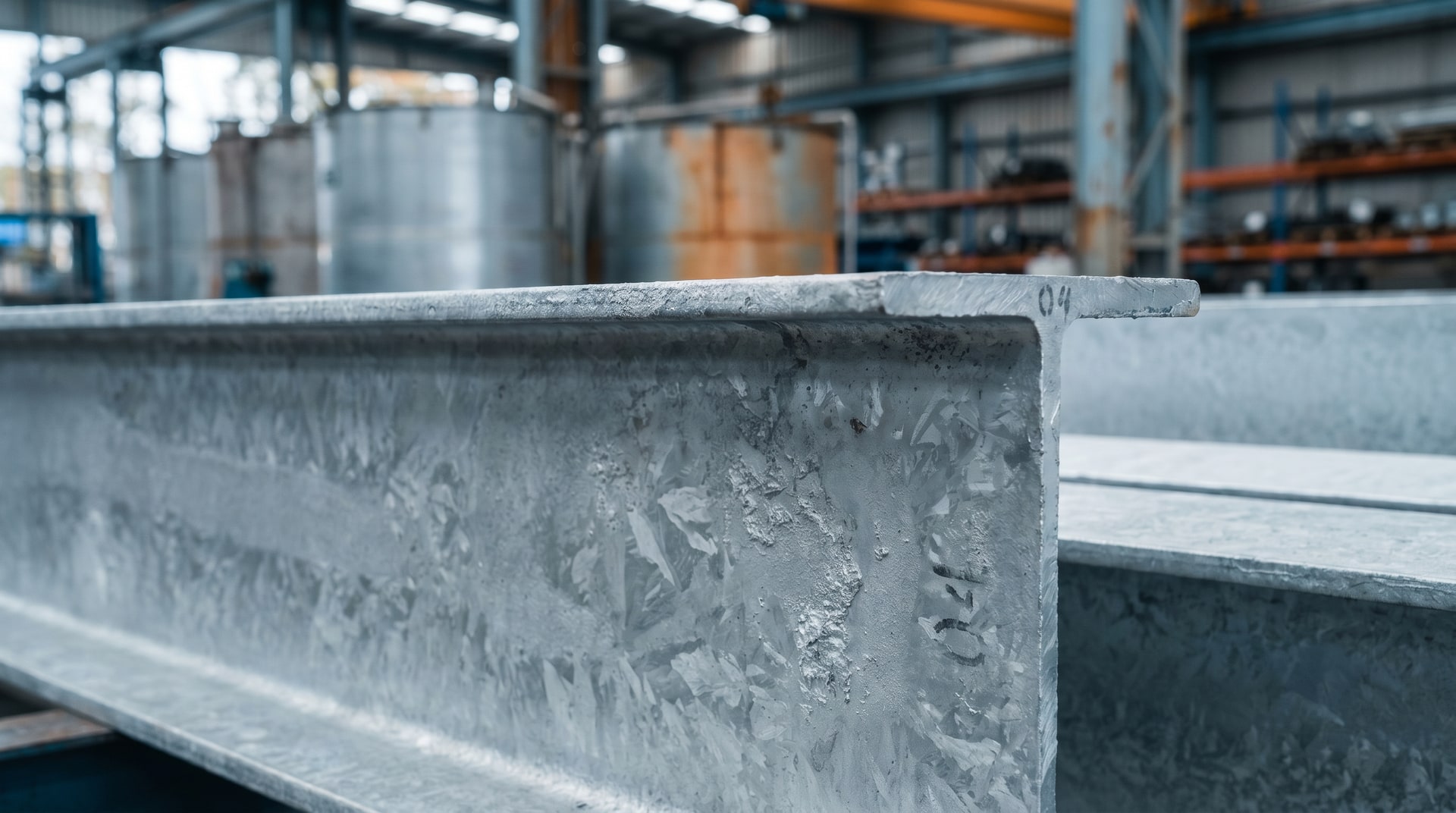
When a fabricated steel part comes out of the galvanizing kettle with a bumpy, textured surface, the instinct for many engineers and contractors is to flag it as a defect. The roughness looks uneven. It does not have the smooth, almost reflective appearance people often associate with freshly galvanized steel. On a jobsite or in a fabrication shop, that visual difference can trigger questions about quality, coating integrity, and whether the part needs to be rejected or reworked. In most cases, the concern is understandable but misplaced.
The reality is that a rough surface condition in hot-dip galvanizing is often a predictable outcome tied directly to how the steel was prepared or what the steel itself is made of, and it frequently signals a thicker, more protective zinc coating rather than a compromised one. The American Galvanizers Association addresses this directly in their article on rough surface condition in galvanized steel. At V&S Galvanizing, we expand on that foundation to explain what is actually happening at the material level, how steel chemistry and surface preparation influence the final coating texture, and why this outcome is often misunderstood in the field.
What a Rough Surface Condition Actually Looks Like
A rough surface condition is characterized by a textured, uneven coating distributed over the entire surface of the galvanized part. Unlike localized defects such as bare spots or drainage lumps at corners, rough surface conditions are consistent across the piece. The coating may appear almost granular or pebbly in texture, with visible surface variation that stands in contrast to the smoother matte or spangled finish more commonly expected.
This uniformity is actually an important diagnostic marker. Because the roughness appears across the whole product rather than in isolated areas, it tells an experienced inspector that the cause lies either in the base steel's chemistry or in how that surface was conditioned before galvanizing. A localized rough patch might point to something else entirely, but a globally rough coating narrows the field considerably.
It is worth noting that the coating in this condition is still metallurgically bonded zinc. The intermetallic zinc-iron alloy layers that form during the galvanizing reaction are present and intact. The rough appearance does not indicate contamination, incomplete coverage, or a failure of the galvanizing process itself.
The Role of Steel Chemistry in Surface Texture
Hot-dip galvanizing is fundamentally a metallurgical reaction between molten zinc and the iron in steel. The zinc does not simply coat the surface like paint. It reacts with the steel to form a layered structure of zinc-iron intermetallic compounds, topped by a layer of relatively pure zinc. The rate and character of that reaction are strongly influenced by the chemical composition of the steel.
Two elements in particular, silicon and phosphorus, are known to accelerate the galvanizing reaction significantly. When silicon content falls within certain reactive ranges, or when phosphorus levels are elevated, the zinc-iron alloy layers grow at a much faster rate and can develop in ways that produce a thicker, rougher, and often darker coating than what forms on more reactive-neutral steels. This is sometimes called the Sandelin effect, referring to the sensitivity of the galvanizing reaction to silicon content in specific concentration bands.
The consequence is straightforward: steels with reactive chemistries will produce galvanized coatings that look different from those produced on lower-silicon or lower-phosphorus steels, even when everything else in the process is identical. The galvanizer is not doing anything wrong. The steel's composition is driving the outcome. This is one of the primary reasons that steel chemistry is a consideration engineers and fabricators should factor in early during material specification, particularly when surface appearance is a project requirement.
At V&S Galvanizing, when we receive materials with reactive chemistry, the resulting coating may indeed be rougher and thicker. That thicker coating translates directly to extended corrosion protection, which in most structural applications is a net benefit rather than a liability.
How Mechanical Surface Preparation Contributes
Steel that arrives at a galvanizing facility with a heavily blasted surface introduces a different but related cause of rough surface conditions. Abrasive blasting, whether done by the fabricator prior to shipping or as part of a surface preparation step, leaves a pronounced surface profile on the steel. This profile consists of peaks and valleys at the microscopic level, and the amplitude of that profile can vary considerably depending on the blast media, pressure, and technique used.
When steel with a deep blast profile enters the galvanizing kettle, the molten zinc follows the contours of that profile as it reacts and solidifies. The result is a galvanized surface that mirrors the underlying surface texture of the steel, amplified by the zinc coating itself. The rougher the substrate, the rougher the finished zinc surface tends to be.
This is not a contamination issue or a sign that the steel was improperly handled. Blasting is a legitimate and often preferred method of removing mill scale, rust, and other surface oxides before galvanizing. In fact, mechanical cleaning can produce excellent adhesion because the increased surface area gives the zinc more material to react with. The tradeoff is that the visual result may look less uniform than steel that was cleaned chemically through pickling alone.
Fabricators and specifiers who require a smoother galvanized appearance should be aware of this relationship. If a component will be blasted prior to galvanizing, the resulting surface condition will typically be rougher than one that undergoes only acid pickling. This is not a quality failure, but it is a predictable and manageable variable if it is anticipated in the design and specification process.
Coating Thickness and Corrosion Performance
One of the more counterintuitive aspects of rough surface conditions is their relationship to corrosion performance. Because rough coatings are generally thicker than smooth ones, they often provide superior long-term protection against corrosion rather than reduced protection. The additional zinc mass means more material for the environment to consume before the underlying steel is exposed.
This is a meaningful point for structural and infrastructure applications where corrosion resistance over decades matters. In atmospheric exposure conditions, the rate at which zinc corrodes is relatively predictable based on environment type. A thicker coating directly extends the service life of the structure. A coating that looks rough and perhaps less aesthetically refined may actually be doing more protective work than a thinner, smoother coating on an equivalent piece.
This is not a universal argument for preferring rough coatings. Appearance still matters in certain contexts. But for hidden structural members, utility structures, agricultural equipment, transmission towers, and similar applications, the rough surface condition is not a concern from a performance standpoint. It is, if anything, a reassuring indicator that a generous amount of zinc was deposited.
When Rough Surface Conditions Lead to Rejection
Given that rough surface conditions generally enhance rather than impair corrosion protection, the question of when they are actually cause for rejection is an important one. The answer is narrower than many people assume.
Handrails represent one of the few applications where a rough galvanized surface condition is a legitimate basis for rejection. Handrails are functional components that people contact directly and repeatedly. A rough surface on a handrail can create safety concerns, including abrasion to skin and clothing, difficulty in gripping, and user discomfort. In those cases, the aesthetic and ergonomic requirements of the component take precedence over the corrosion performance benefit of the thicker coating.
For the vast majority of galvanized structural steel, rough surface condition does not constitute a rejection criterion under standard specifications. Inspectors and project managers who flag rough coating as a defect across all applications are applying a standard that the technical literature does not support. This is a common source of friction between galvanizers and specifiers, and it is one we encounter in practice. Understanding the distinction between a genuine defect and a predictable, performance-neutral or performance-positive outcome matters for project efficiency and for avoiding unnecessary rework costs.
Distinguishing Rough Surface Conditions from Other Coating Issues
It helps to be precise about what a rough surface condition is not. Other galvanizing appearance issues, such as flux inclusions, drainage spikes, bare spots, or excessive zinc runs, are distinct conditions with different causes and different implications for the coating. Conflating these with rough surface conditions leads to imprecise inspection calls and inappropriate responses.
Flux inclusions, for example, appear as dark spots or surface deposits and indicate incomplete fluxing or trapped flux salts during the galvanizing process. Bare spots indicate areas where the zinc-iron reaction did not occur and the steel is unprotected. These are genuine quality concerns. Rough surface condition, by contrast, involves full zinc coverage and a complete metallurgical bond. The coating is present and functional. Only the texture differs from what some observers expect.
A trained inspector working from a clear technical understanding of these distinctions will handle each condition appropriately. At V&S Galvanizing, our team documents surface conditions and communicates them clearly to project stakeholders so that inspection decisions are grounded in technical criteria rather than visual preference alone.
Implications for Design and Specification
Engineers and architects specifying hot-dip galvanizing for a project can take practical steps to anticipate and manage surface condition outcomes. If uniform, smooth appearance is a requirement across all galvanized components, that requirement should be documented in the specification and communicated to the galvanizer before fabrication begins. It may influence material selection, particularly regarding silicon and phosphorus content in the steel.
Reviewing mill certifications for steel chemistry before fabrication is a straightforward step that can prevent surprises at the galvanizing stage. If reactive steels are unavoidable for structural or cost reasons, the specification should acknowledge that surface texture may vary without implying a performance deficiency. Separating appearance standards from corrosion performance standards in the specification language helps avoid disputes during inspection.
Similarly, if blasting is being used as a preparation method, the surface profile amplitude should be discussed with the galvanizer. A profile that is appropriate for a paint system may produce a rougher galvanized result than intended. Coordination between the fabricator, the galvanizer, and the project engineer at the start of a project avoids most of the confusion that arises from rough surface conditions later on.
For components like handrails, where ergonomics and surface contact matter, specifying steel with chemistry that produces a smoother coating, or requesting post-galvanizing surface treatment, is a reasonable approach. The galvanizer can help identify what is achievable given the material and process constraints.
Work With a Team That Understands Coating Outcomes at the Source
A rough surface condition on hot-dip galvanized steel is not a failure. In the overwhelming majority of structural applications, it is a predictable result of steel chemistry or surface preparation, and it is accompanied by a thicker zinc coating that provides enhanced corrosion protection. The exceptions, such as handrail components, are specific and well-defined. For everything else, the rough texture is a material behavior rather than a process error.
Understanding the difference between a genuine defect and a performance-neutral surface variation saves projects time, money, and friction between stakeholders. It also leads to better decisions at the specification stage, where the real opportunity to control outcomes exists. We see these issues regularly across the range of work that comes through our facility, and our team is equipped to explain coating conditions clearly, document them accurately, and help project teams make informed decisions about acceptance criteria.
If you are working on a project that involves hot-dip galvanizing and have questions about surface conditions, coating expectations, or specification language, reach out through our contact page. We are glad to work through the specifics with you before fabrication begins.
Frequently Asked Questions About Rough Surface Condition in Hot-Dip Galvanizing
Does a rough surface condition mean the galvanized coating is defective?
No. A rough surface condition in hot-dip galvanizing is not a defect in most applications. It is typically caused by reactive steel chemistry or mechanical surface preparation such as abrasive blasting, and it usually indicates a thicker zinc coating rather than a compromised one. Full metallurgical bonding between the zinc and steel is still present.
What steel chemistry factors cause rough galvanized coatings?
Silicon and phosphorus content in the base steel are the primary chemical contributors to rough galvanized surfaces. When silicon falls within certain reactive concentration ranges, or when phosphorus is elevated, the zinc-iron reaction accelerates and produces thicker, rougher coating. This is a predictable material behavior, not a process error.
Does blasting steel before galvanizing always result in a rougher coating?
Abrasive blasting creates a surface profile with peaks and valleys. When the zinc coating forms over this profile, it follows those contours and the finished surface appears rougher than it would on steel prepared only by acid pickling. The roughness reflects the underlying steel texture. Deeper blast profiles generally produce more pronounced surface roughness in the galvanized finish.
Is a rough galvanized coating better or worse for corrosion protection?
In most cases, a rough galvanized coating provides better corrosion protection than a smooth one, because the rough condition is associated with a thicker overall zinc deposit. More zinc mass means a longer service life before the underlying steel is exposed to the environment. For structural, infrastructure, and industrial applications, the performance benefit outweighs any aesthetic concern.
When is rough surface condition actually a reason to reject galvanized steel?
Handrails are one of the few applications where rough surface condition is a legitimate basis for rejection. Because handrails are handled directly and repeatedly by people, a rough texture creates ergonomic and safety concerns. For most structural steel, rough surface condition does not meet the technical threshold for rejection under standard galvanizing specifications.
How can engineers prevent unwanted rough surface conditions on galvanized components?
The most effective step is reviewing mill certifications for silicon and phosphorus content before specifying steel for galvanized applications. Selecting steels with chemistry outside reactive ranges reduces the likelihood of rough coating. Additionally, communicating blast profile requirements to the galvanizer before fabrication helps align surface preparation practices with appearance expectations.
Can rough galvanized surfaces be smoothed after galvanizing?
Post-galvanizing surface treatment options exist but are limited and should be discussed with the galvanizer on a case-by-case basis. Mechanical finishing can alter the surface texture but may also reduce coating thickness, which affects corrosion performance. For components where smooth texture is required, addressing the cause through steel selection or preparation method is preferable to post-process correction.
How does rough surface condition differ from other galvanizing appearance issues like flux inclusions or bare spots?
Rough surface condition involves complete zinc coverage with a fully bonded coating. It is a textural variation. Flux inclusions are surface deposits from trapped flux salts that may indicate incomplete processing. Bare spots indicate areas with no zinc coverage at all, which leaves steel unprotected. These are distinct conditions with different causes and different inspection implications. Rough surface condition, unlike bare spots or flux inclusions, does not compromise the protective function of the coating.
