

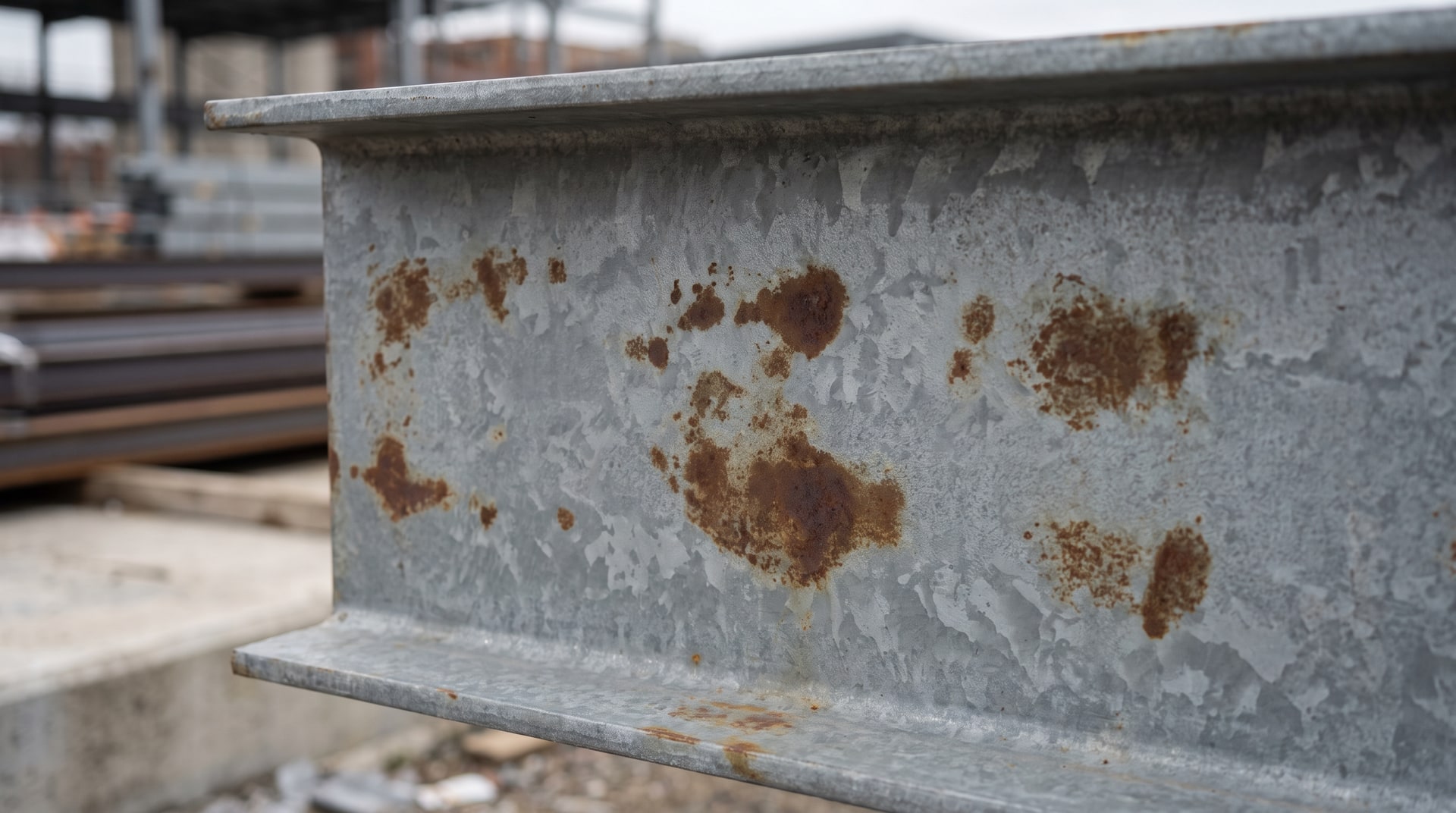
When a fabricator or inspector encounters brown discoloration on a freshly galvanized part, the immediate instinct is often alarm. Brown and rust are closely associated in most people's experience with steel, and the assumption that something has gone wrong is understandable. But brown staining on hot-dip galvanized coatings is a distinct phenomenon with its own mechanism, its own set of causes, and its own place in the relevant specifications. Understanding the difference between a cosmetic surface condition and an actual coating failure is not just reassuring, it is genuinely important for making sound decisions in the field.
The American Galvanizers Association addresses this directly in their article on brown staining on galvanized coatings. At V&S Galvanizing, we expand on that foundation to explain what is actually happening at the material level, how steel silicon content influences coating structure and susceptibility, and why this condition is so frequently misread in the field.
What Is Brown Staining and Where Does It Come From?
Brown staining is a surface discoloration that develops on hot-dip galvanized coatings when free iron within the zinc-iron alloy layers oxidizes. The galvanized coating is not a single uniform layer of zinc. It is a layered structure of intermetallic compounds that form during the galvanizing reaction, and those layers contain iron in varying concentrations. When that iron oxidizes, the surrounding zinc coating takes on a brown appearance rather than the familiar matte gray that most people associate with galvanized steel.
The key phrase here is "free iron in the intermetallic layers." This is iron that has not fully bonded into the zinc-iron compounds but is mobile enough to migrate toward the coating surface. Once it reaches the exterior and is exposed to oxygen and moisture, it oxidizes, producing the brown discoloration. This is not fundamentally different from the brown staining that occurs on porcelain, laundry, glassware, or dishes when iron is present and oxidizes in the same way. The chemistry is familiar; the context just happens to be a structural coating.
The Role of the Eta Layer in Preventing Staining
To understand why brown staining forms under some conditions and not others, it helps to look at what normally prevents it. The outermost layer of a hot-dip galvanized coating is called the eta layer. It is composed of nearly pure zinc, with minimal iron content, and it sits on top of the underlying zinc-iron alloy layers. When this layer is intact and sufficiently thick, it acts as a barrier. The free iron particles in the intermetallic layers beneath it simply cannot reach the surface.
Brown staining does not begin until the eta layer, or at least the portion of it surrounding the zeta layer directly beneath, has been consumed by corrosion or mechanically removed in the affected area. Only once that protective pure zinc zone is gone can the iron migrate to the surface and oxidize. This is why fresh galvanized coatings rarely show staining immediately after processing. The condition tends to emerge after some exposure, once surface zinc has begun converting to zinc oxide and zinc carbonate as part of normal patina development, or in areas where the eta layer was thinner to begin with.
How Steel Silicon Content Changes the Coating Structure
Not all galvanized coatings are structurally equivalent. The internal architecture of the zinc coating depends heavily on the chemistry of the steel being galvanized, and silicon content is the most consequential variable. Laboratory testing and field surveys have both confirmed that zinc coatings on high-silicon steels are significantly more susceptible to brown staining than coatings on low-silicon steels.
The reason comes down to how silicon affects the galvanizing reaction. When low-silicon steel is galvanized, the resulting coating has a relatively thick eta layer and a tightly compacted intermetallic structure. That compact structure makes it difficult for free iron particles to find a pathway through the zeta layer and reach the surface. The coating essentially immobilizes the iron before it can cause problems.
High-silicon steels behave differently. The zinc-iron reaction on these steels is more aggressive and less controlled. The eta layer that forms is relatively thin, and the zeta layer beneath it develops as small vertical columns spaced apart rather than a dense, continuous structure. Those gaps between the columns create pathways through which free iron particles can migrate upward toward the coating surface. Once they arrive at the exterior, oxidation follows, and the brown staining appears.
This is one of the reasons steel selection matters in galvanizing, not just for coating thickness outcomes but for surface appearance as well. Engineers specifying steel for galvanized assemblies should be aware that reactive steels, particularly those with elevated silicon or certain phosphorus levels, tend to produce coatings with different structural characteristics than conventional low-silicon steels. That does not mean they cannot be galvanized successfully, but it does mean the surface result may look different.
Distinguishing Brown Staining from Red Rust
This is where the practical stakes are highest. Brown staining and red rust can look similar at a glance, and confusing the two leads to very different (and sometimes costly) responses. The distinction matters because red rust means the base steel is actively corroding without zinc protection, while brown staining means the zinc is still present and still performing its protective function.
The most reliable way to tell them apart is with a coating thickness gauge. Red rust can only form where there is no zinc remaining at that specific point on the surface. If a magnetic or electromagnetic thickness gauge reads zero, or near-zero, at the discolored location, that is a strong indicator that the coating has been lost and base steel is exposed. If the gauge confirms zinc is present beneath the discolored area, the brown appearance is staining, not rust, and the base steel underneath is not corroding.
Visual inspection alone is not sufficient for this determination. The color of early-stage rust and iron oxide staining from galvanized coatings can be close enough to cause genuine confusion, especially under variable lighting conditions or when coatings are partially weathered. Using an instrument to verify zinc presence removes the ambiguity.
Does Brown Staining Affect Corrosion Protection?
This is the question that matters most to engineers and owners evaluating a galvanized product. The answer is clear: when brown staining is present without underlying coating loss, the corrosion performance of the galvanized steel is not affected. The zinc is still present. The electrochemical protection mechanism that makes hot-dip galvanizing so durable remains intact. The staining is a surface-level discoloration, not a sign of compromised protection.
The physical reasoning supports this conclusion. Brown staining requires that the iron has migrated to the coating surface and oxidized there. But the zinc beneath and around the stained area is still providing cathodic protection to the steel substrate. The iron that oxidized was free iron within the intermetallic layers, not iron from the base steel itself. The base steel is not involved in the reaction that produces the staining.
That said, the consumption of the eta layer in stained areas does represent a reduction in the outermost pure zinc zone at those locations. The coating as a whole retains its function, but the specific micro-areas where staining appears have already progressed further through the normal coating evolution process than surrounding areas. This is a nuance worth noting in long-term exposure assessments, but it does not change the fundamental acceptability of the condition.
Acceptability Under ASTM A123
ASTM A123 is the governing specification for hot-dip galvanized coatings on iron and steel products, and it is the standard most commonly cited by engineers and inspectors evaluating galvanized work. Brown staining is explicitly acceptable under ASTM A123. The basis for this is straightforward: because zinc is present beneath the stained areas, the coating has not failed. The specification recognizes that galvanized coatings applied to reactive steels can exhibit this characteristic without any compromise to the performance the specification is designed to ensure.
This is an important point to communicate on project submittals and inspection reports. An inspector encountering brown staining who is not familiar with this provision may flag it as a defect requiring remediation. In fact, the correct response is to confirm zinc presence with a thickness gauge and, if zinc is confirmed, document the staining as a non-rejectable condition. Requesting reprocessing or touch-up for brown staining that passes the zinc-presence test is not warranted under the specification and would be an unnecessary cost and schedule impact.
Minimizing Brown Staining in Practice
While brown staining is acceptable under the specification, there are situations where appearance matters enough to warrant proactive steps. Architectural applications, exposed structural elements in high-visibility settings, or projects where owners have specific aesthetic expectations may benefit from attention to steel selection and processing practices.
The most effective lever is specifying steel with silicon content that falls in the range known to produce more conventional coating structures. Steels with very low silicon content tend to galvanize with thick eta layers and compact intermetallic zones, both of which reduce the likelihood of brown staining developing later. This is not always possible given structural requirements, but when fabricators have flexibility in material selection, it is worth coordinating with the galvanizer early in the process.
Controlling post-galvanizing storage and handling conditions also helps. Staining develops once the eta layer has been consumed, so conditions that accelerate eta layer consumption, such as prolonged exposure to moisture before the coating has developed its protective patina, can move the timeline forward. Proper stacking, ventilation, and dry storage practices for freshly galvanized work reduce the opportunity for early staining to develop before the coating has stabilized.
For projects where our team at hot-dip galvanizing is involved early enough, we can advise on steel specifications and handling protocols that help manage this outcome from the outset.
Work With a Team That Reads the Coating, Not Just the Color
Brown staining is one of those conditions that looks more alarming than it is, which is exactly why it generates so many field questions and unnecessary disputes. A gray coating that turns brown in patches after installation is doing something recognizable to anyone who understands the intermetallic structure of a galvanized coating. It does not mean the steel is rusting. It does not mean the galvanizer made an error. It means free iron in the coating has migrated to the surface and oxidized, a process driven largely by the silicon chemistry of the base steel and the resulting structural differences in the zinc-iron alloy layers.
What matters is confirming zinc is present beneath the staining, which a coating thickness gauge resolves in seconds. If zinc is there, the steel is protected, the condition is specification-compliant, and no remediation is required. That clarity is what allows projects to move forward without unnecessary delays or costs tied to a misread surface condition.
If you have questions about a galvanized product showing brown staining, are evaluating steel specifications for an upcoming project, or need guidance on what a particular surface condition means for coating performance, our team is ready to help. Reach out through our contact page and we will work through it with you directly.
Frequently Asked Questions About Brown Staining on Galvanized Coatings
What causes brown staining on hot-dip galvanized steel?
Brown staining forms when free iron within the zinc-iron intermetallic layers of the galvanized coating migrates to the surface and oxidizes. This produces a brown discoloration on the coating surface. It occurs after the pure zinc eta layer at that location has been consumed by corrosion or removed, allowing the iron to reach the exterior and react with oxygen.
Is brown staining the same as red rust on galvanized steel?
No. Brown staining and red rust are distinct conditions. Red rust means the base steel is corroding because no zinc coating remains at that point. Brown staining occurs where zinc is still present beneath the surface discoloration. A coating thickness gauge can confirm which condition you are dealing with: zero zinc means rust risk; confirmed zinc means staining.
Does brown staining affect the corrosion protection of the galvanized coating?
No. When zinc is confirmed beneath the stained area, the corrosion protection of the galvanized steel is not affected. The base steel is not involved in the staining reaction. The zinc beneath and surrounding the stained zone continues to provide cathodic and barrier protection to the substrate.
Is brown staining acceptable under ASTM A123?
Yes. Brown staining is explicitly acceptable under ASTM A123 because zinc remains present beneath the stained areas. The coating has not failed. Inspectors should verify zinc presence with a thickness gauge and, once confirmed, document the condition as non-rejectable. Requiring rework or touch-up for brown staining that meets zinc-presence criteria is not supported by the specification.
Why are high-silicon steels more prone to brown staining after galvanizing?
High-silicon steels produce a more reactive galvanizing response that results in a thinner eta layer and a zeta layer made up of small, spaced vertical columns rather than a dense, continuous structure. Those gaps between the columns allow free iron particles to migrate through the intermetallic zone to the coating surface, where they oxidize and produce brown staining. Low-silicon steels produce a thicker eta layer and a more compact intermetallic structure that keeps the iron immobilized.
How can you tell brown staining from red rust without a thickness gauge?
Visual inspection alone is not reliable enough to distinguish the two, especially under variable lighting or when coatings are weathered. The color overlap between early-stage red rust and iron oxide staining from galvanized coatings is close enough to cause genuine confusion. Using an electromagnetic or magnetic coating thickness gauge to confirm zinc presence at the discolored area is the correct approach and removes the ambiguity entirely.
Can brown staining on galvanized steel be prevented or minimized?
The most effective preventive measure is specifying steel with low silicon content, which produces a thicker eta layer and more compact intermetallic structure during galvanizing. Proper post-galvanizing storage, including dry conditions and adequate ventilation, also helps by slowing eta layer consumption before the coating stabilizes. Coordinating steel selection with your galvanizer before fabrication begins provides the best opportunity to manage this outcome.
At what point in the coating's life does brown staining typically appear?
Brown staining does not form until the pure zinc eta layer, or the portion of it surrounding the zeta layer in the affected area, has been consumed. On reactive high-silicon steels with thinner eta layers, this threshold can be reached relatively early. On low-silicon steels with thick eta layers, it may take considerably longer, or the condition may not develop at all before the coating has completed its full service life.
