

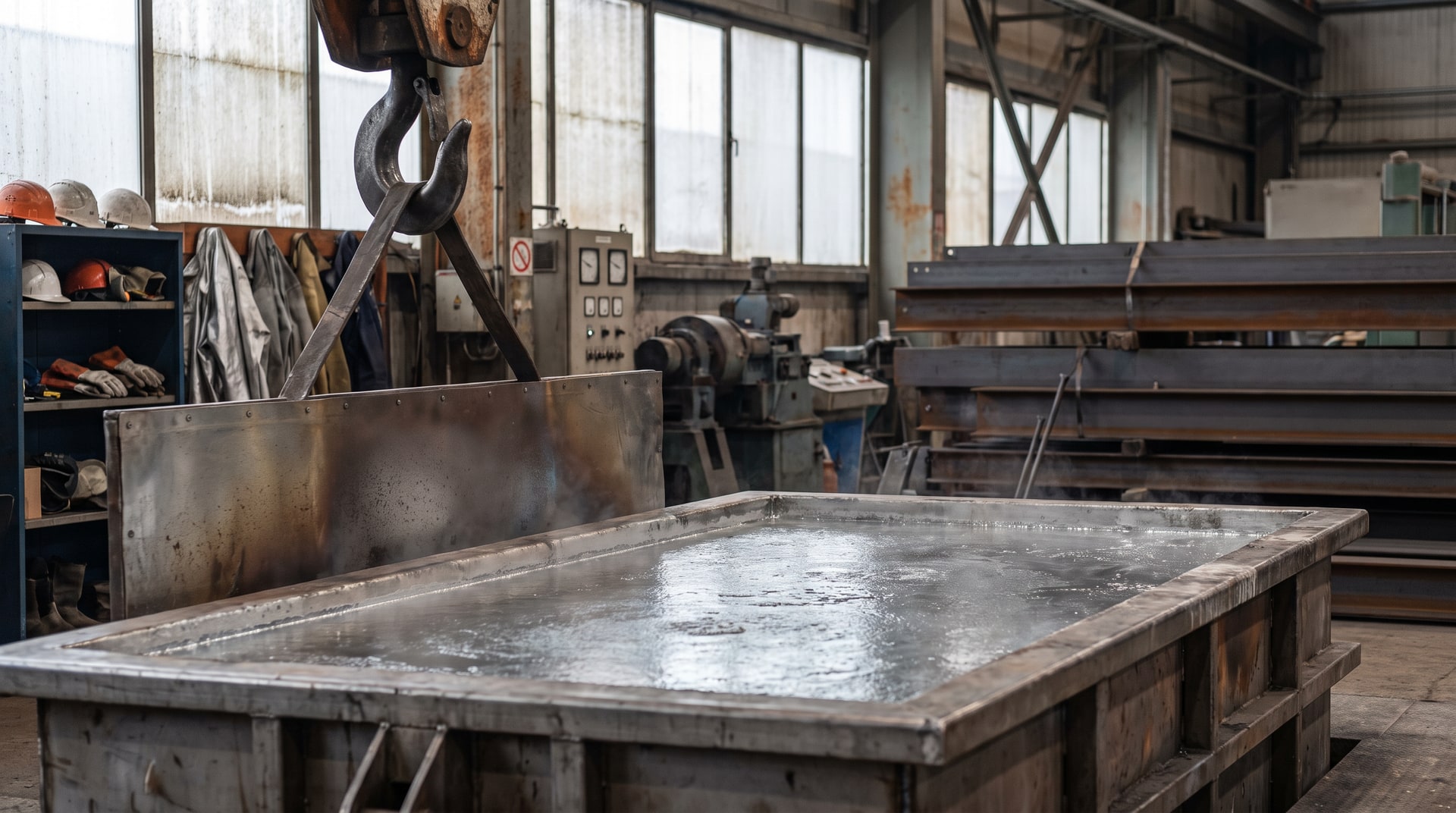
Replacing a galvanizing kettle is one of the most significant operational events in a hot-dip galvanizing facility. It is not a routine maintenance task in the ordinary sense. A kettle changeout involves draining thousands of gallons of molten zinc, removing and replacing the steel vessel itself, then reheating and refilling the new kettle before production can resume. The disruption is substantial, but what happens in the days and weeks immediately after that changeout is just as consequential as the replacement itself. How the zinc bath stabilizes, how the new kettle interacts with the melt, and how operations ramp back up all have direct consequences for coating quality, bath chemistry, and long-term kettle life.
The American Galvanizers Association addresses this directly in their article on after changing out a kettle. At V&S Galvanizing, we expand on that foundation to explain what is actually happening at the material level, how the startup period influences performance, and why this phase is often underestimated in the field.
Why the Post-Changeout Period Is Its Own Engineering Challenge
There is a tendency in production environments to treat a kettle changeout as a discrete event with a clear before and after. The kettle is replaced, zinc is added, temperatures come up, and production resumes. In practice, the process is far more nuanced. A new kettle introduces a steel vessel that has never been in contact with molten zinc. The interior walls of that vessel will begin reacting with the zinc melt immediately, and understanding what that reaction looks like, how fast it progresses, and when it stabilizes is essential for anyone responsible for coating quality or bath management.
The iron-zinc reaction that galvanizing depends on is the same one that will occur between the new kettle walls and the zinc bath. Steel is steel, whether it is the workpiece being coated or the vessel holding the zinc. What differentiates the two is surface area, exposure time, and operating temperature. A new kettle presents a large, clean steel surface to the melt all at once. This matters more than many operators initially appreciate.
How a New Kettle Affects Zinc Bath Chemistry
When a fresh steel kettle first contacts molten zinc, iron begins to dissolve into the bath. This is an unavoidable metallurgical reality. The rate at which iron dissolves depends on zinc temperature, bath composition, and the surface condition of the kettle steel. In the early stages after a changeout, iron pickup in the bath can be measurably higher than steady-state levels. This elevated iron content has downstream effects.
Iron in solution within a zinc bath is not inherently problematic up to a point. The bath naturally reaches an equilibrium where iron saturates out and settles as intermetallic compounds, commonly called dross, at the bottom of the kettle. Managing dross accumulation is a normal part of galvanizing operations. But during the post-changeout startup period, the rate of dross formation can be accelerated, and the composition of that dross may differ from what operators expect during routine production. Close attention to bath iron levels during this window is not optional; it directly affects how efficiently the bath runs and how consistently the coating forms on the work being processed.
Bath temperature management during this period is equally important. Running the zinc too hot accelerates iron dissolution from the kettle walls. Running it too cool risks incomplete wetting and adhesion problems with the work. Finding and holding the right operating temperature in the early weeks after a kettle changeout is a balancing act that experienced galvanizers approach deliberately, not by default.
The Role of Zinc Addition Practices During Startup
Filling a new kettle is not simply a matter of dropping in enough zinc to reach operating level. The sequence and rate of zinc additions affect both the thermal stress on the new vessel and the initial chemistry of the bath. Adding large quantities of cold zinc ingot too quickly to a kettle that is still coming up to temperature introduces significant thermal gradients. These gradients create mechanical stress in the kettle walls, which can accelerate fatigue cracking over the long term.
The preferred approach is to bring the kettle up in stages, allowing the steel to expand uniformly before the full zinc charge is added. This is as much about protecting the new kettle investment as it is about bath chemistry. A kettle is a capital asset with a finite service life. How it is treated during that first startup materially affects how long it will last before the next changeout becomes necessary.
Zinc additions also affect bath alloy balance. Many galvanizing baths operate with carefully controlled additions of bismuth, nickel, tin, or other elements to manage reactivity with certain steels, coating appearance, or dross behavior. When a large volume of fresh zinc is introduced, the dilution of any existing alloy additions needs to be accounted for and corrected before production begins in earnest.
Thermal Conditioning of the New Vessel
A new galvanizing kettle must be thermally conditioned before it can handle full production loads reliably. This is not a suggestion; it reflects the physical reality of how steel responds to thermal cycling at extreme temperatures. The kettle steel will expand and contract with temperature changes, and the welds, corners, and bottom of the vessel are the areas most vulnerable to stress concentration during those cycles.
Controlled heat-up protocols typically involve raising kettle temperature gradually over a period of hours or even days, rather than driving immediately to operating temperature. Some facilities use a prescribed ramp rate, expressed in degrees per hour, to minimize the temperature differential between the kettle wall and its interior. This kind of care during the initial conditioning phase pays dividends in kettle longevity. Rushing the startup to recover lost production time is one of the most common, and most costly, mistakes made after a kettle changeout.
Once the kettle reaches operating temperature and is filled to working depth, additional thermal conditioning occurs organically as production begins. The thermal mass of the zinc bath helps buffer temperature swings, but operators need to monitor temperature uniformity across the bath surface and at depth during early production runs. Hot spots or cold zones that would be unremarkable in a seasoned kettle can be more significant in a new one that has not yet fully equilibrated.
Dross Management in the Early Weeks
Dross is the primary waste product of the galvanizing process. It accumulates at the bottom of the kettle as iron-zinc intermetallic compounds settle out of solution. In a well-managed bath at steady state, dross builds gradually and is removed on a regular schedule. In the weeks following a kettle changeout, that picture changes.
Because the new kettle walls are contributing elevated iron to the bath during the initial period, dross formation rates are higher. Operators who stick to their normal dross removal schedule without accounting for this often find more accumulation than expected. Excess dross that is not removed in a timely manner can be disturbed during production and contaminate the coating surface, leading to rough or lumpy appearances that require remediation.
The composition of early dross also tends to differ from steady-state dross. Initial dross may contain higher concentrations of iron from kettle dissolution, which affects how it separates and settles. Experienced operators treat the first several dross pulls after a changeout as diagnostic, using them to assess how quickly the bath is stabilizing and whether any bath chemistry corrections are needed before ramping to full production volume.
Coating Quality Expectations During the Ramp-Up Period
One of the practical questions that comes up after a kettle changeout is whether coating quality during the ramp-up period is comparable to steady-state production. The honest answer is that it can be, but it requires more active monitoring than routine operations demand.
Bath chemistry variability during the post-changeout window means that flux performance, coating thickness, and surface finish can all show more variation than normal. Steel that would process predictably under steady conditions may behave differently if bath iron or temperature is outside its usual range. This is particularly relevant for reactive steels, which are already sensitive to bath chemistry under stable conditions. During a post-changeout startup, the margin for error narrows.
Our team at V&S Galvanizing treats the post-changeout period as a controlled transition, not a return to normal operations. That means more frequent bath sampling, closer monitoring of coating thickness on initial production runs, and heightened attention to surface quality on the first articles processed. The goal is to catch any deviations early rather than discover them in inspection or, worse, in the field.
For customers sending material through during this period, the coating produced is held to the same ASTM standards as any other production. The additional monitoring is our internal assurance mechanism, not a signal that quality expectations are relaxed.
Protecting the Kettle Investment Over the Long Term
A galvanizing kettle represents a significant capital investment, and the decisions made during and immediately after a changeout have a direct bearing on how long that asset lasts. Kettle life is affected by thermal cycling, iron dissolution from the internal surface, mechanical stress from work handling, and the chemistry of the zinc bath itself.
Proper startup procedures reduce the severity of early thermal cycling, which is one of the leading contributors to kettle fatigue. Managing bath temperature carefully during the initial weeks also reduces the rate of iron dissolution from the walls, which in turn reduces dross buildup and slows the gradual thinning of the kettle steel over time. These are not abstract concerns; they translate directly into years of additional service life for a vessel that is expensive to replace and whose replacement shuts down production entirely.
Bath chemistry also plays a role. Alloy additions that reduce iron dissolution from the kettle walls, or that modify dross formation behavior, are an active area of practice in well-run galvanizing facilities. Bismuth and tin additions, for example, have effects on how zinc wets steel that go beyond just coating appearance. Understanding how those alloy systems interact with a fresh kettle, versus a seasoned one, is part of the technical depth that distinguishes experienced galvanizers from facilities that treat the bath as a commodity input.
Work With a Team That Manages the Full Process Lifecycle
The details of what happens after a kettle changeout may not be visible to the customer, but they shape the quality of every coating produced in the weeks that follow. Controlled thermal startup, active bath chemistry monitoring, adjusted dross management, and careful attention to early production quality are not incidental practices. They are the difference between a facility that treats a kettle replacement as a disruption and one that treats it as an opportunity to reset bath conditions precisely and resume production with confidence.
At V&S Galvanizing, our operations team approaches kettle changeouts with the same engineering discipline we apply to the coating process itself. The investment in proper startup procedures protects both the kettle and the quality of the work we produce for our customers. If you have questions about our process controls, turnaround during a kettle transition, or how we manage coating quality during operational changes, we invite you to reach out through our contact page.
Frequently Asked Questions About Galvanizing Kettle Changeouts
Why does iron content in the zinc bath increase after a kettle changeout?
A new steel kettle presents a fresh, unpassivated surface to the molten zinc. The zinc begins dissolving iron from those walls immediately, which raises the bath's dissolved iron concentration above its normal steady-state level. Over time, this excess iron saturates out as dross and the bath stabilizes, but the transition period can last several weeks depending on bath temperature and alloy composition.
How does an elevated iron level in the bath affect coating quality?
Elevated iron can accelerate dross formation, which increases the risk of dross inclusions on coated surfaces if the bath is not managed carefully. It can also affect how the coating builds on reactive steels, potentially influencing coating thickness and surface morphology. Active bath monitoring during this period is the primary control mechanism.
What is the purpose of a controlled heat-up protocol for a new kettle?
Steel expands when heated, and heating too quickly creates large temperature differentials across the kettle wall that generate mechanical stress. A controlled, gradual heat-up allows the vessel to expand uniformly, reducing the risk of weld fatigue or cracking during the initial thermal cycle. This directly extends kettle service life.
Should zinc alloy additions be adjusted after a kettle changeout?
Yes. When a large volume of fresh zinc is added to fill a new kettle, any existing alloy additions, such as bismuth, nickel, or tin, are diluted. Bath alloy balance should be recalculated and corrected before production begins. This is particularly important for facilities that use alloy-controlled baths to manage reactivity or coating appearance on specific steel types.
Is dross removal more frequent after a kettle changeout?
It should be. The elevated iron dissolution rate from the new kettle walls means dross accumulates faster than it does during steady-state operations. Sticking to a normal dross removal schedule without accounting for this can lead to excess accumulation that contaminates coatings. Experienced operators treat the first several dross removals after a changeout as diagnostic checks rather than routine pulls.
Does coating quality during the post-changeout ramp-up meet ASTM standards?
Yes. Coatings produced during the startup period are held to the same ASTM standards as any other production. The additional monitoring during this phase is an internal quality assurance measure, not a sign that standards are relaxed. The goal is to identify any bath chemistry deviations before they affect customer material.
How does bath temperature management during startup affect long-term kettle life?
Running the bath too hot during the startup period accelerates iron dissolution from the new kettle walls, which increases dross formation and gradually thins the vessel steel over time. Holding temperature at the lower end of the acceptable operating range during the initial weeks reduces this dissolution rate and extends kettle service life without compromising coating quality on normal steel compositions.
What makes the post-changeout period particularly challenging for reactive steels?
Reactive steels, those with higher silicon or phosphorus content, are already sensitive to small changes in bath chemistry and temperature under stable conditions. During the post-changeout window, when bath iron and alloy balance may be shifting, the margin for predictable coating behavior on these steels narrows. Close monitoring and, where possible, processing reactive steels after the bath has stabilized reduces the risk of unusually thick or rough coatings.
