
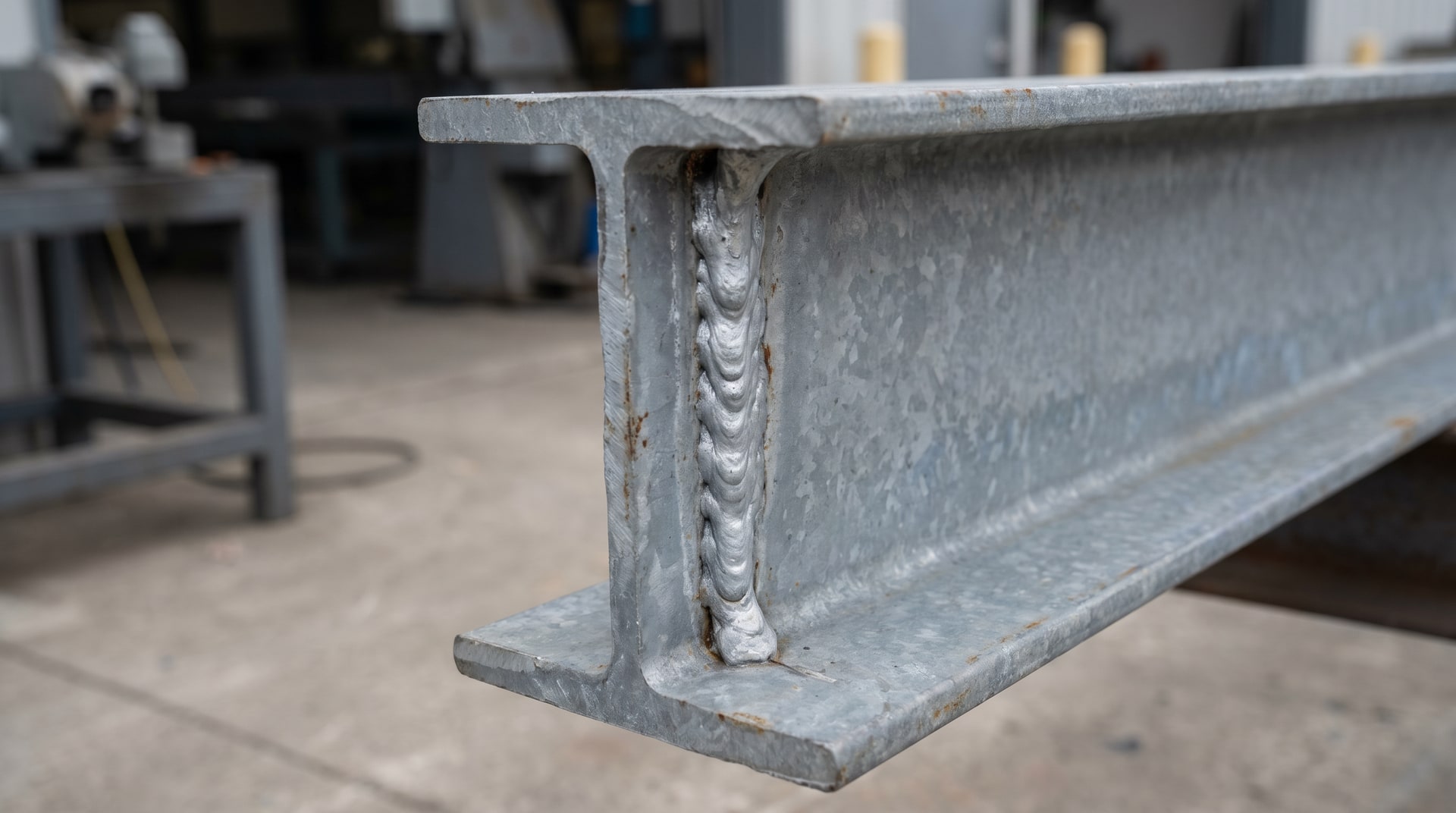
When steel comes out of a molten zinc bath, it enters a brief but critical transition: molten zinc is still clinging to the surface and draining as the part cools and the zinc solidifies. Under normal conditions, this produces an even, adherent coating. But when something disrupts that drainage or cooling process, zinc can freeze in place before it has fully leveled out. The result is a run: a localized, thickened ridge or deposit of zinc that stands proud of the surrounding coating.
Runs are one of the more visually obvious surface conditions you can encounter on freshly galvanized steel, and they tend to generate questions on the shop floor and at the inspection stage. Are they a defect? Do they need to be corrected? Do they affect performance? The answers depend on context, and understanding that context starts with understanding the physics behind why runs form in the first place.
The American Galvanizers Association addresses this directly in their article on runs in hot-dip galvanized steel. At V&S Galvanizing, we expand on that foundation to explain what is actually happening at the material level, how withdrawal rate and part geometry influence zinc behavior, and why runs are often misunderstood as rejectable conditions when they typically are not.
What a Run Actually Is
A run is a localized thick area of zinc on the surface of galvanized steel. The AGA defines it precisely in those terms: a concentration of zinc that has frozen on the surface during removal from the zinc bath. The operative word here is frozen. Zinc in the galvanizing bath is molten at roughly 450 degrees Celsius. When steel is withdrawn and exposed to ambient conditions, the zinc coating transitions from liquid to solid over a very short time. During that window, zinc is still behaving like a fluid: it flows under gravity, drains through holes and vents, and migrates toward low points.
If a portion of the zinc film becomes thermally stable before it has fully drained, it locks in place. That localized mass becomes what we call a run. The surrounding zinc may have drained cleanly or cooled more evenly, which is why runs are always localized rather than uniformly distributed across the surface. They tend to appear at edges, corners, the undersides of horizontal members, and at any location where zinc pooled momentarily before solidifying.
The Mechanism Behind Run Formation
To understand runs, it helps to think about the forces competing during withdrawal. Gravity is pulling the liquid zinc downward. Surface tension is holding the film against the steel. Viscosity determines how easily the zinc flows. As the part cools, viscosity increases rapidly and eventually the zinc transitions to solid. The outcome, whether the zinc drains cleanly or freezes mid-flow, depends on how these forces interact during that brief extraction window.
Several factors can tip the balance toward run formation. Thick or heavy sections retain heat longer, which means the zinc near the steel surface stays fluid longer on those sections than on thin flanges or edges nearby. Complex geometries with re-entrant angles, overlapping surfaces, or deep recesses can trap zinc and slow drainage. Parts with restricted drainage paths, such as closed sections or poorly positioned vent holes, give zinc fewer escape routes, so it accumulates. Even the withdrawal angle matters: a part lifted vertically drains differently than one lifted at an angle, and the orientation of the part in the bath determines which surfaces are the last to exit the zinc and therefore the most prone to excess zinc buildup.
The temperature of the zinc bath itself and the ambient conditions in the galvanizing plant play a supporting role as well. A bath running at the lower end of the operating range will produce a more viscous melt that drains less completely, increasing the probability that zinc freezes before it fully levels. Ambient air temperature and air movement across the part as it exits affect how quickly the zinc solidifies. None of these variables are unusual or indicative of a process problem. They are inherent to the physics of the operation.
How Runs Differ From Other Surface Conditions
Runs are sometimes confused with other surface irregularities in galvanizing, so it is worth distinguishing them. A run is specifically a frozen ridge or deposit of excess zinc caused by incomplete drainage during withdrawal. This is different from zinc ash, which is a surface oxidation product that appears as a dull gray powdery residue and is not a solidified liquid. It is also different from zinc drips, which are the small rounded droplets that sometimes form at the very tip of a part as zinc drains off the end point. Drips are a subset of the same withdrawal phenomenon, but they occur at drainage terminals rather than mid-surface.
Runs should also be distinguished from rough or uneven coating texture caused by reactive steel chemistry. When steel has elevated silicon or phosphorus content, the zinc-iron alloy layers that form during galvanizing can grow rapidly and unevenly, producing a thick, matte, or sometimes nodular coating. That is a steel chemistry issue, not a drainage issue. The visual result can superficially resemble runs, but the underlying cause and corrective approach are different.
When Runs Are Acceptable and When They Are Not
The AGA is clear on this point: runs are not cause for rejection unless they affect the intended use of the steel part. This is an important standard to internalize, because it shifts the evaluation from aesthetics to function. A run that is cosmetically visible but does not interfere with how the part performs is an acceptable condition. The galvanizing industry does not treat cosmetic perfection as the standard for acceptance.
The relevant question is whether the run causes a practical problem. Does it prevent a bolt from seating properly? Does it interfere with a bearing surface? Does it create a gap or point of contact that would compromise structural behavior? For most structural steel, the answers are no. A run on the web of a beam or on the back of a gusset plate has no functional consequence. It is excess zinc in a location where excess zinc does not matter.
Where runs do matter is in applications with tight dimensional tolerances or specific mating surface requirements. Machinery components, precision-fit assemblies, and parts that must seat flush against other surfaces are examples where a run that exceeds a critical dimension becomes a legitimate concern. In those cases, the run has crossed from cosmetic irregularity into functional interference.
Buffing as the Standard Corrective Approach
When a run is unavoidable and does interfere with the intended application, the AGA notes that it can be buffed. This is the standard field remedy, and it is appropriate because a run is simply an excess of zinc, not a defect in the underlying metallurgical bond. The zinc-iron alloy layers that form during galvanizing are still intact beneath the run. The coating is adherent and continuous. The run represents a surface geometry issue, not a coating quality issue.
Buffing removes the protruding zinc mechanically, typically with a hand grinder or abrasive tool, until the surface profile is acceptable for the intended application. Because the alloy layers beneath are usually undisturbed, the corrosion protection at that location is not meaningfully compromised by buffing a run down to the surrounding coating level. The galvanizing continues to provide barrier protection and cathodic protection to the steel underneath.
It is worth noting that buffing should be targeted. There is no reason to work the entire surface of a part when only one or two runs need to be addressed. Broad mechanical finishing of galvanized surfaces is generally unnecessary and can remove coating thickness from areas that did not need correction. The goal is to eliminate the specific dimensional interference, not to achieve a uniformly smooth surface.
Design and Fabrication Strategies That Reduce Runs
While runs cannot always be eliminated, the probability of encountering them can be reduced through thoughtful design and fabrication. The most effective approach is to ensure that parts are designed with drainage in mind. Vent holes and drainage holes positioned at the lowest points of hollow sections give zinc a clear path to exit, reducing the volume of zinc that must drain from the surface itself. Avoiding tight overlapping joints and pocket geometries reduces the places where zinc can accumulate before it has a chance to drain.
Part orientation during processing also matters. Galvanizers who are familiar with a given part geometry can sometimes adjust the angle of withdrawal to favor drainage toward a less critical area. This is a practical accommodation that experienced galvanizers make routinely, and it is one reason why communicating with your galvanizer about specific functional requirements before processing is valuable. If there is a surface that must be run-free for a mating or bearing application, knowing that in advance allows the process to be adjusted to favor drainage away from that surface.
Our team at V&S Galvanizing regularly works through these kinds of considerations with fabricators and engineers on the front end, before steel arrives for processing. Reviewing drawings and identifying potential drainage challenges early is far more effective than addressing runs after the fact. You can learn more about how we approach the full galvanizing process on our hot-dip galvanizing services page.
Runs in the Context of Coating Thickness Requirements
One technical nuance worth raising is the relationship between runs and coating thickness measurements. Galvanizing standards specify minimum average coating thicknesses, and inspectors measure thickness at multiple locations across a part. A run will produce an above-average reading at the location of the run. This is not a compliance problem: exceeding the minimum is not a defect in coating thickness terms. The concern runs raise in the context of inspection is whether they are concentrated enough to suggest uneven coverage elsewhere, or whether they are masking areas of borderline-thin coating by pulling up the average.
In practice, this is rarely an issue. Runs are localized deposits, and their presence does not systematically thin the coating elsewhere. However, it is a useful reminder that inspection readings taken directly on a run will not be representative of the surrounding coating thickness, and a thorough inspection should sample areas away from obvious runs to get a clear picture of the coating profile across the part.
Work With a Team That Understands the Difference Between Cosmetic and Functional
Runs are a normal part of the hot-dip galvanizing process, not evidence of a process failure. They form because of the physics of liquid zinc solidifying on complex geometry during withdrawal, and they are explicitly acknowledged by the galvanizing industry as acceptable surface conditions unless they interfere with the intended use of the part. The standard is functional, not cosmetic, and that distinction matters for anyone responsible for inspecting or accepting galvanized steel in the field.
Understanding runs, what they are, why they form, and when they actually require action, is part of working effectively with galvanized steel at every stage from design through inspection. When runs do need to be addressed, the correction is straightforward: targeted buffing restores the required geometry without compromising the corrosion protection the coating provides.
If you have questions about a specific part, a surface condition you are seeing on galvanized steel, or how fabrication geometry might affect your results, our team is glad to help. Reach out through our contact page and we will work through the details with you.
Frequently Asked Questions About Runs in Hot-Dip Galvanizing
Are runs on galvanized steel considered a rejectable defect?
No. Runs are not cause for rejection unless they affect the intended use of the steel part. The galvanizing industry evaluates runs on a functional basis: a run that does not interfere with the part's performance, fit, or application is an acceptable surface condition, even if it is visually prominent.
What causes runs to form during hot-dip galvanizing?
Runs form when molten zinc freezes on the steel surface before it has fully drained during withdrawal from the zinc bath. Contributing factors include complex part geometry, restricted drainage paths, heavy cross-sections that retain heat unevenly, and bath or ambient temperature conditions that affect how quickly the zinc solidifies.
How are runs corrected when they do interfere with an application?
Runs that interfere with the intended use can be buffed using a hand grinder or abrasive tool to remove the protruding zinc. Because runs are excess zinc deposited on top of the intact zinc-iron alloy layers, buffing does not compromise the underlying metallurgical bond or significantly reduce corrosion protection at that location.
Can runs be prevented through design or fabrication changes?
Run formation can be reduced by designing parts with adequate drainage holes positioned at low points, avoiding tight pocket geometries and overlapping surfaces, and communicating specific functional surface requirements to the galvanizer before processing. Withdrawal angle and part orientation can also be adjusted to favor drainage away from critical surfaces.
Do runs affect coating thickness compliance under ASTM standards?
Runs produce above-average thickness readings at their location, which does not create a compliance problem since exceeding the minimum is not a defect. However, inspectors should take thickness readings away from obvious runs to get a representative picture of the coating profile across the part, since a reading directly on a run reflects only that localized excess.
How do runs differ from other galvanizing surface conditions like zinc ash or rough coating from reactive steel?
A run is solidified excess zinc caused by incomplete drainage during withdrawal. Zinc ash is a surface oxidation product, typically powdery and non-adherent, with a different appearance and cause. Rough or nodular coating texture from reactive steel chemistry results from accelerated growth of zinc-iron alloy layers driven by elevated silicon or phosphorus in the base steel, not from drainage behavior during withdrawal.
Does buffing a run to restore a flat surface require any touch-up coating or repair afterward?
In most cases, buffing a run down to the surrounding coating level does not expose bare steel and does not require a repair coating. The zinc-iron alloy layers beneath the run remain intact. If buffing is aggressive enough to cut through to bare steel, that area would need to be addressed with an appropriate zinc-rich repair material, but targeted buffing of a run typically does not reach that point.
Why do some parts have more runs than others from the same galvanizing batch?
Runs are driven by part-specific factors: geometry, mass distribution, cross-section thickness, and the presence or absence of drainage features. Two parts processed in the same bath at the same time can have very different run outcomes if their geometries drain differently. A hollow section with no vent holes will almost always show more zinc accumulation than an open structural shape with clear drainage paths.
