

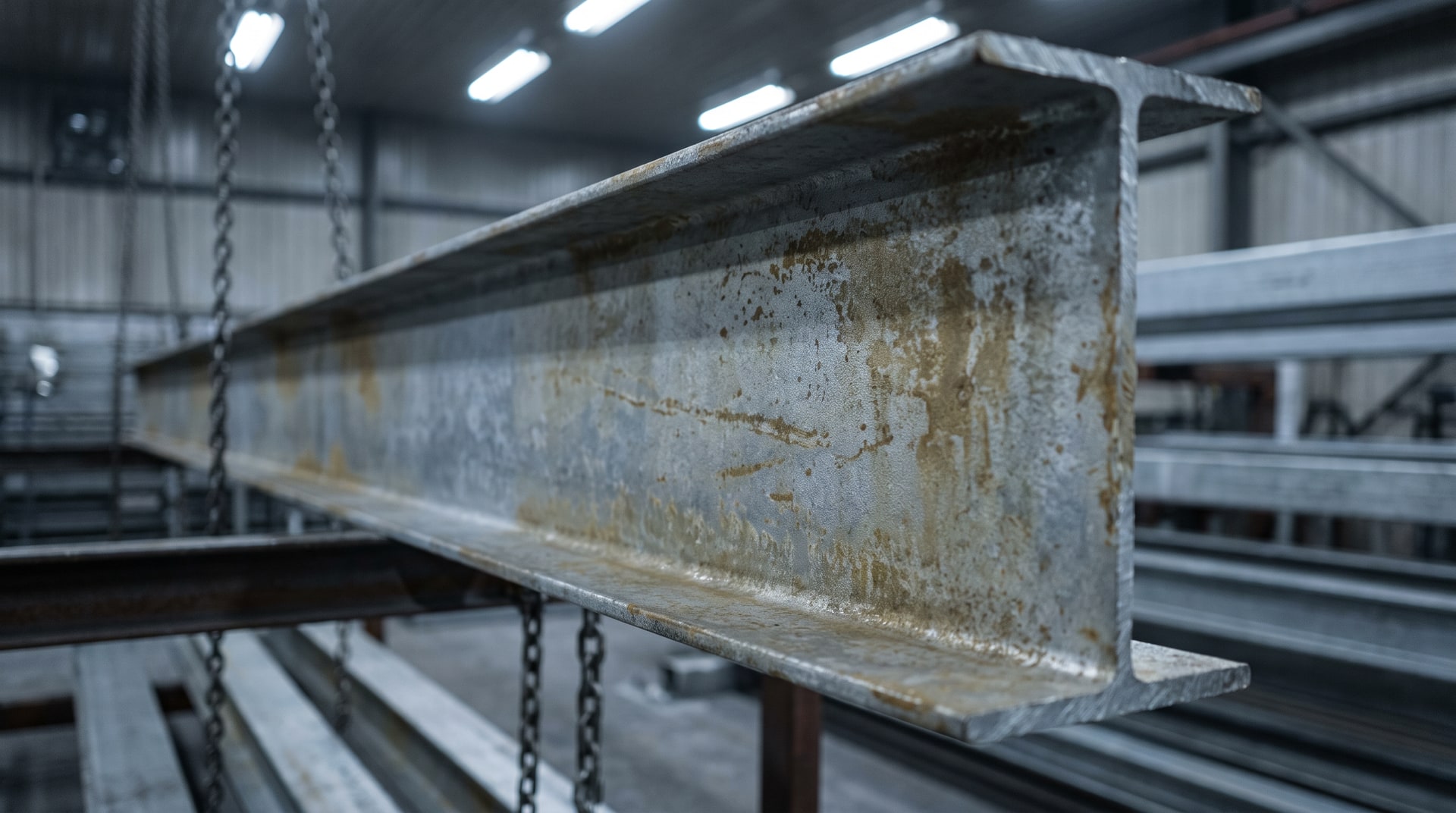
Few things stop a fabricator or project engineer in their tracks faster than pulling freshly galvanized steel out of a quench tank and finding the surface has turned a shade of yellow, brass, or even brown. The immediate assumption is that something went wrong during processing: the coating was contaminated, the bath chemistry was off, or the steel was somehow damaged. In most cases, none of that is true. What you are seeing is the visible color of a chromate conversion coating that was intentionally applied as part of the galvanizing process, and understanding what that means for your project requires a closer look at the chemistry behind it.
The American Galvanizers Association addresses this directly in their article on quench discoloration. At V&S Galvanizing, we expand on that foundation to explain what is actually happening at the material level, how quench bath chemistry and process variables influence the thickness and color of the chromate layer, and why this situation is consistently misread as a defect when it is almost always a cosmetic condition.
Why a Chromate Quench Is Used in the First Place
After steel is withdrawn from the molten zinc bath and begins to cool, the freshly galvanized surface is highly reactive. If moisture reaches that surface before the zinc has had time to develop its natural protective patina, a condition called wet storage stain can form. Wet storage stain is a white, powdery zinc oxide and zinc hydroxide buildup that occurs when zinc corrodes in the presence of trapped moisture without adequate airflow. It is unsightly and, in severe cases, can compromise coating thickness in localized areas.
To prevent this, galvanizers often submerge the freshly coated steel in a chromate passivation bath immediately after it exits the zinc kettle. This chromate quench deposits a very thin conversion coating directly onto the zinc surface. That coating chemically stabilizes the zinc, slowing its reactivity long enough for the steel to be stored, shipped, and eventually installed outdoors where natural weathering can take over. Once the zinc surface has weathered sufficiently, it forms a stable zinc carbonate patina on its own, and the chromate layer is no longer necessary.
What the Color Actually Represents
Chromate conversion coatings are not inherently colorless. The coating chemistry produces compounds including zinc chromates, iron chromates, and other dissolved minerals that have their own visible color. When the chromate layer is very thin, it transmits light in a way that makes it essentially transparent, and the zinc surface beneath appears as expected. When the coating builds up to a greater thickness, the accumulated color of those compounds becomes visible to the naked eye.
The color range is wider than most people expect. Depending on the specific bath chemistry and how thick the coating becomes, the surface can appear iridescent yellow, brass-toned, brown, olive-drab, or even black. These are not signs of contamination or a reaction gone wrong. They are simply the natural color of the chromate layer itself, made visible by its thickness. The underlying galvanized coating is intact and performing exactly as it should.
This is one of the most important distinctions to communicate clearly to project owners and inspectors: the galvanized coating has not been stained. A stain implies that a foreign material has permanently altered the zinc surface. What has actually happened is that an additional functional coating has been deposited on top of the zinc, and that coating happens to have a visible color at the thickness it was applied.
Does Discoloration Affect Corrosion Protection?
No. The color of the chromate layer has no bearing on the corrosion protection performance of the underlying galvanized coating. A thicker chromate layer, whether it appears yellow, brown, or any other color in between, provides the same fundamental protection against wet storage stain formation as a thin, clear one. The zinc coating beneath it is chemically unaffected, and once the chromate layer dissolves through weathering, the full protective capacity of the galvanized system is exactly what it would have been without any visible discoloration.
This matters because rejection decisions are sometimes made based purely on appearance. If a project specification calls for a uniform metallic gray finish, the discoloration is a legitimate concern from an aesthetic standpoint. But if the concern is structural or performance-based, the presence of chromate discoloration is not a failure condition. The long-term corrosion protection of the zinc coating is uncompromised.
How Process Variables Drive Coating Thickness and Color
The same factors that govern the galvanized coating itself also govern the chromate conversion coating. Temperature, immersion time, and bath chemistry all interact to determine how thick the chromate layer becomes and, by extension, whether its color becomes visible.
A quench bath that runs too warm, holds parts for too long, or has a pH that has drifted outside its optimal range can produce a thicker-than-intended chromate deposit. Each of those variables works against the goal of a thin, functional, and visually neutral coating. Galvanizers who monitor bath chemistry consistently, including pH, temperature, and dissolved mineral concentrations, are better positioned to dial in conditions that produce a clear or near-clear chromate layer. Avoiding a thick coating in the first place is the most direct way to prevent visible discoloration after chromate treatment.
For our team, this means that quench discoloration is as much a process control issue as it is a chemistry issue. The mechanics of the chromate bath are well understood, and systematic monitoring gives a galvanizer the ability to correlate specific conditions with the appearance outcomes they produce.
How Long Before the Color Disappears on Its Own
The chromate conversion coating is soluble. Exposure to moisture, humidity, and the natural elements gradually dissolves it from the zinc surface. In most cases, approximately six months of outdoor weathering is sufficient to remove any visible chromate color entirely. What remains afterward is the natural matte gray appearance that galvanized steel develops as its zinc patina matures.
For many structural applications, waiting six months for discoloration to resolve is entirely practical. The steel is installed, it weathers, and the color disappears on a timeline that causes no meaningful project impact. In those situations, no intervention is needed.
Where this becomes a problem is on projects where appearance is critical at time of installation, or where the steel moves into a subsequent finishing process quickly after galvanizing. Architectural applications, high-visibility structural elements, or any project involving powder coating or painting over galvanized steel may not have the flexibility to wait for natural weathering.
Mechanical Removal: When and How
If the discoloration needs to be removed before natural weathering can take care of it, mechanical removal is a well-documented option. ASTM D7803, the Standard Practice for Preparation of Zinc (Hot-Dip Galvanized) Coated Iron and Steel Product and Hardware Surfaces for Powder Coating, specifically requires that galvanized surfaces be free of chromates before powder coating is applied. Because of that requirement, the standard includes detailed procedures for chromate removal that can also be applied in situations where the goal is simply to restore uniform appearance.
ASTM D7803 identifies two primary mechanical methods. The first is surface grinding using power tools, addressed in section 5.1.3.1. Grinding is effective but must be approached carefully. The goal is to remove the chromate layer, not to grind through the zinc coating underneath. Overly aggressive grinding can thin the zinc in localized areas, which does affect corrosion performance. Operator control and technique matter significantly here.
The second option is abrasive sweep blasting, covered in section 5.1.3.3. This method involves rapid nozzle movement across the surface, consistent with SSPC SP 16 guidance. Sweep blasting, when done correctly, removes the chromate layer without cutting deeply into the zinc. The speed of nozzle travel is the critical variable: moving too slowly concentrates abrasive energy in one area and risks damaging the underlying coating.
Both methods require care and competence. For projects that are heading into a hot-dip galvanizing process followed immediately by powder coating or another duplex system, confirming the chromate removal protocol with the galvanizer in advance helps avoid schedule delays and ensures the surface preparation is appropriate for the topcoat system being applied.
Communicating Quench Discoloration to Owners and Inspectors
One of the recurring practical challenges with chromate discoloration is not the metallurgy but the conversation. When a project owner, architect, or inspector sees brown or yellowish steel that was expected to look a certain way, the immediate read is often that something failed. The burden of explanation falls on the galvanizer or the engineer of record, and having clear language ready makes that conversation significantly easier.
The most important point to anchor any explanation to is this: the discoloration is not in the zinc coating. It is on top of the zinc coating, in the form of a chromate layer that was intentionally applied to prevent wet storage stain. It will resolve with weathering. It does not affect service life. If the appearance timeline is a concern, there are established ASTM-referenced procedures for mechanical removal.
Specifications written before fabrication can also address this proactively. If a project has strict appearance requirements at time of delivery or at a particular milestone, the specification can note whether chromate treatment is acceptable and, if so, what appearance variation is within tolerance. That avoids a situation where the steel arrives on site in perfect functional condition but triggers a rejection based on color alone.
Work With a Team That Understands Process Chemistry and Appearance Standards
Quench discoloration is one of several galvanizing phenomena that sits at the intersection of process control, surface chemistry, and project communication. The outcome, whether a surface comes out clear or visibly colored after chromate treatment, is directly tied to how carefully the quench bath is monitored and adjusted. It is not random, and it is not a defect when understood in context.
At V&S Galvanizing, we take both the technical and the communication sides of this seriously. Our team understands what drives chromate coating thickness, what the color variations mean, and how to work with fabricators and project teams to set expectations before steel arrives at our facility. When mechanical removal is needed, we can walk through the appropriate ASTM procedures and coordinate with your team on timing relative to downstream finishing operations.
If you are working through a project where galvanized steel appearance is a specification concern, or if you have questions about how chromate passivation interacts with your planned finishing system, reach out through our contact page and we will work through the specifics with you.
Frequently Asked Questions About Quench Discoloration on Galvanized Steel
Is yellow or brown discoloration on galvanized steel a sign of coating failure?
No. Yellow, brown, brass, or olive-drab discoloration after chromate quench treatment is the visible color of the chromate conversion coating itself, not a defect in the zinc coating. The underlying galvanized coating is intact and provides full corrosion protection. The discoloration is purely cosmetic and does not affect service life.
What causes the chromate coating to become thick enough to show color?
The thickness of the chromate conversion coating is influenced by the temperature of the quench bath, the length of time the part is immersed, and the pH of the solution. When any of these variables drift outside their optimal range, the chromate layer can build up to a thickness where its color becomes visible. Consistent bath monitoring helps galvanizers prevent this.
How long does chromate discoloration take to disappear through weathering?
In most cases, approximately six months of outdoor weathering is sufficient to dissolve the chromate layer and restore the natural matte gray appearance of the galvanized steel. The chromate coating is soluble and breaks down through exposure to moisture and the elements over time.
What ASTM standard governs mechanical removal of chromate coatings from galvanized steel?
ASTM D7803, the Standard Practice for Preparation of Zinc (Hot-Dip Galvanized) Coated Iron and Steel Product and Hardware Surfaces for Powder Coating, provides procedures for chromate removal. It covers surface grinding with power tools (section 5.1.3.1) and abrasive sweep blasting per SSPC SP 16 (section 5.1.3.3).
Does a thicker chromate coating provide better protection against wet storage stain?
Not necessarily. A thin chromate conversion coating is sufficient to protect a freshly galvanized surface from wet storage stain until the zinc develops its own natural patina through weathering. A thicker coating provides no meaningful additional protection but does cause visible discoloration. Keeping the coating thin is preferable for both appearance and performance.
Why does chromate need to be removed before powder coating galvanized steel?
ASTM D7803 requires galvanized surfaces to be free of chromates prior to powder coating because the chromate layer can interfere with adhesion between the zinc surface and the powder coat. If chromate is present, the powder coat may not bond properly, compromising the performance of the duplex coating system.
Can the color of the chromate layer vary across a single piece of steel?
Yes. Because the chromate coating thickness depends on localized bath exposure, temperature gradients, and surface geometry, different areas of the same part can develop different thicknesses and therefore different visible colors. One section might appear clear while another appears yellow or brown. This variation is not structurally significant and does not indicate uneven zinc coverage underneath.
What is the difference between chromate discoloration and wet storage stain?
Chromate discoloration is the visible color of the intentionally applied chromate conversion coating, typically appearing as yellow, brown, or similar tones. Wet storage stain is a white or light gray powdery deposit that forms when zinc corrodes in the presence of trapped moisture without adequate airflow. The chromate treatment is applied specifically to prevent wet storage stain, so the two conditions are effectively the cause and the thing being prevented.
