

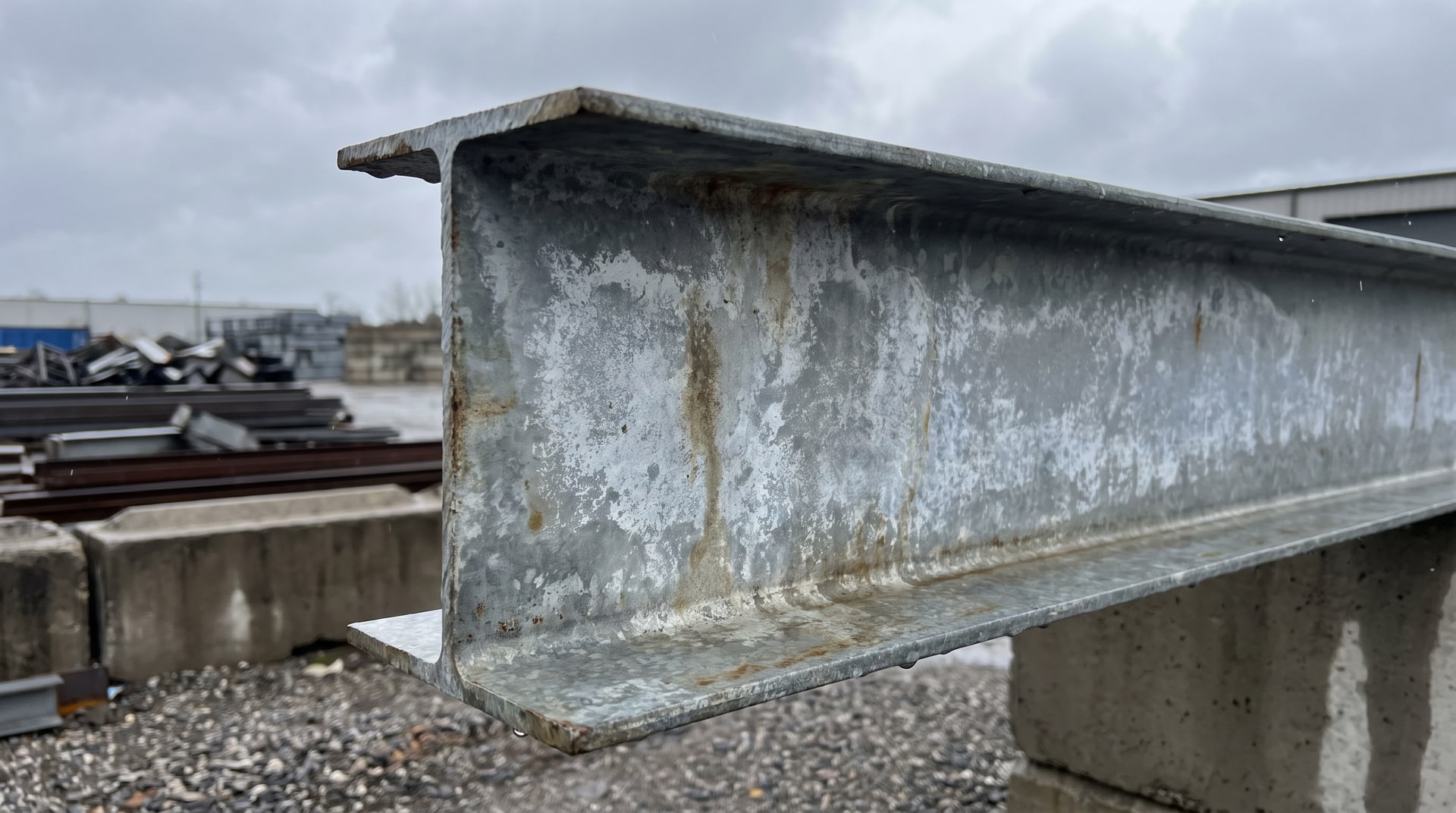
Acid rain is not a uniform threat. It varies by geography, season, proximity to industrial activity, and even the prevailing wind direction on a given week. For engineers and fabricators specifying corrosion protection on steel structures that will spend decades outdoors, these variables matter far more than most people realize. A structure built in a mid-Atlantic industrial corridor faces a fundamentally different atmospheric chemistry than one installed in a rural mountain region, even if both are exposed to rain year-round.
The question that follows is a practical one: how does a hot-dip galvanized coating actually hold up when the rain falling on it is acidic? The answer is more nuanced than a simple pass-or-fail, and the underlying chemistry is worth understanding properly.
The American Galvanizers Association addresses this directly in their article on acid rain conditions and galvanized steel. At V&S Galvanizing, we expand on that foundation to explain what is actually happening at the material level, how atmospheric pH influences zinc coating performance, and why this is often misunderstood in the field.
Understanding pH and Why It Matters for Zinc
The pH scale measures the degree of acidity or alkalinity in a solution. The neutral midpoint sits at 7.0. Values below 7.0 are acidic; values above are alkaline. Critically, pH describes the intensity of the condition, not the total quantity of acidic material present. A small volume of low-pH water can be significantly more corrosive than a large volume of mildly acidic water, which is why duration of surface wetness becomes such an important variable.
Rainwater across the United States ranges from roughly pH 3.0 at the acidic extreme to pH 8.5 on the alkaline end, depending on meteorological conditions and the geographical region where it falls. That range spans several orders of magnitude in terms of hydrogen ion concentration, since pH is a logarithmic scale. Rain at pH 4.0 is ten times more acidic than rain at pH 5.0, and a hundred times more acidic than rain at pH 6.0.
Zinc, the protective layer in hot-dip galvanizing, performs well across a relatively broad pH range under most environmental conditions. However, at the lower end of the acid rain spectrum, particularly where pH values approach or drop below 4.0, the behavior of the zinc surface changes in ways that design teams should factor into their long-term corrosion planning.
Where Acid Rain Comes From and Why Location Changes Everything
Acid rain forms when chemical pollutants, primarily carbon monoxide from vehicle exhaust and industrial emissions, combine with atmospheric moisture. Fertilizers and pesticides contribute additional precursor chemicals. Wind currents then distribute the resulting acidic compounds over wide geographic areas, which is why acid rain is not simply a local urban problem but one that affects regions far removed from the original emission source.
Major cities tend to record the highest acid rain concentrations due to the volume of vehicle traffic and industrial activity. The National Center for Atmospheric Studies has compiled mapping data showing how pH levels in rainfall vary across the United States. The variation is not random. It follows patterns tied to prevailing wind direction, proximity to industrial corridors, and regional topography.
This geographic dimension is practically significant for specifiers. A highway bridge in a heavily industrialized region of the northeast may be exposed to precipitation that is measurably more corrosive than a bridge of identical design built in the rural southwest. Both structures might carry the same specification on paper, but the real-world performance environment is different enough to warrant different expectations about long-term coating life.
| pH Value | Classification | Notes |
|---|---|---|
| 3.0 | Strongly Acidic | Lower extreme of reported rainwater pH; aggressive toward zinc coatings |
| 4.0 - 5.0 | Moderately to Strongly Acidic | Common in heavy industrial and urban areas; elevated zinc corrosion rates expected |
| 5.0 - 6.5 | Mildly Acidic | Zinc patina formation may be slowed; moderate impact on coating longevity |
| 7.0 | Neutral | Midpoint of the pH scale; neither acidic nor alkaline |
| 7.0 - 8.5 | Mildly to Moderately Alkaline | Upper range of reported rainwater pH; favorable for zinc patina development |
The Mechanism of Zinc Corrosion in Low-pH Environments
Hot-dip galvanizing protects steel through two distinct mechanisms: a physical barrier of zinc alloy layers bonded metallurgically to the steel substrate, and cathodic protection that sacrifices zinc preferentially if bare steel is exposed. In most outdoor environments, the zinc surface also develops a zinc carbonate patina over time, sometimes called the zinc patina or white rust layer, that substantially slows further corrosion. This patina is the galvanized coating's long-term armor.
The problem with strongly acidic conditions is that they interfere with patina formation and, at sufficient intensity, actively dissolve the zinc surface. Zinc reacts with acids more readily than it does with neutral or mildly alkaline solutions. In acid rain environments, particularly where pH drops below 5.0 and surfaces remain wet for extended periods, the zinc consumption rate increases compared to what would be expected in cleaner atmospheric conditions.
The rate at which this occurs is not purely a function of pH alone. Several factors interact simultaneously. Surface wetness duration is significant because corrosion is an electrochemical process that requires a liquid medium. A surface that dries quickly after rain exposure undergoes less total zinc loss than one that remains wet for hours due to shading, low air circulation, or design geometry that traps moisture. Temperature plays a role as well, since reaction rates generally increase with heat.
The Variables That Determine Real-World Severity
Research has confirmed that estimating where acid rain effects will be most severe requires looking at a combination of factors rather than any single measurement. Wind direction and velocity affect how frequently a structure surface is exposed to precipitation and how quickly it dries afterward. A windward face on an elevated structure may experience more frequent wetting events but also faster drying. A sheltered cavity or connection detail may accumulate moisture with much less opportunity for evaporation.
Surface orientation matters for similar reasons. Vertical surfaces shed water more efficiently than horizontal ones. Horizontal ledges, upward-facing channels, and areas where water pools even temporarily are disproportionately affected in corrosive atmospheric environments. This is not unique to acid rain conditions, but the effect becomes more consequential when the water chemistry is more aggressive.
Average temperature in the region affects both corrosion kinetics and the moisture cycle. In warmer climates, faster evaporation can partially offset the effect of more frequent rain exposure. In colder climates, freeze-thaw cycling introduces a different kind of physical stress on coating surfaces. None of these factors operates in isolation, which is why the AGA research framing is careful to emphasize estimation rather than certainty when it comes to predicting acid rain impact on galvanized coatings.
What We Know and What Remains Uncertain
It is worth being direct about the limits of current knowledge here. As the AGA source article notes, the question of how galvanized coatings perform under acid rain conditions does not have a single definitive answer. This is not a gap in galvanizing technology so much as it is a reflection of how complex atmospheric corrosion science genuinely is.
The honest position for engineers to take is one of informed estimation. We know that galvanizing provides substantial corrosion protection across a wide pH range. We know that more acidic conditions accelerate zinc consumption. We know that geometric and microclimatic factors can amplify or dampen that effect at the local level. What we cannot do is produce a precise, universal life prediction that applies equally to every galvanized structure exposed to acid rain, because the environment itself is not uniform.
What this means in practice is that design teams specifying hot-dip galvanizing for structures in regions with known acid rain exposure should treat coating thickness as a lever they can adjust. Greater zinc thickness translates to more material available to sacrifice before the underlying steel is at risk. For structures in severely acidic atmospheric zones, or those with design features that encourage moisture retention, specifying heavier coating thicknesses is a reasonable engineering response.
How Acid Rain Fits Into the Broader Corrosivity Classification System
Atmospheric corrosivity is typically classified in tiers based on measured corrosion rates, with industrial and coastal environments generally representing the most aggressive categories. Acid rain is one contributor to what makes an urban or industrial atmosphere corrosive, alongside chlorides, sulfur dioxide, and particulate matter. These pollutants often coexist in the same geographic areas.
For hot-dip galvanized steel deployed in these environments, the combined effect of multiple corrosive agents is additive in ways that are difficult to model precisely. This reinforces the importance of not evaluating acid rain as an isolated variable. A structure near a coastal industrial zone may be dealing with both acid rain and chloride exposure simultaneously, which creates a more aggressive environment than either alone.
That said, zinc remains one of the most cost-effective and proven corrosion protection systems available for steel in outdoor service, including environments with elevated acid rain exposure. The key is matching the specification to the actual environmental demand rather than applying a one-size-fits-all standard regardless of location or geometry.
Practical Guidance for Specifiers and Fabricators
When a project involves structures that will be exposed to acid rain conditions, several practical considerations follow from the underlying science. First, geography informs the baseline expectation. Using available data on regional precipitation pH, teams can identify whether a project site falls in a zone of moderate or elevated acid rain activity, which should influence coating thickness decisions and expected service life estimates.
Second, geometry and drainage design are engineering controls that reduce acid rain exposure at the component level. Details that promote drainage and minimize pooling reduce the duration of surface wetness, which is one of the key variables determining how aggressively a coating is attacked. Specifying weep holes, avoiding horizontal ledges where water can collect, and designing connections to minimize crevices all contribute to better long-term coating performance regardless of the atmospheric chemistry.
Third, inspection intervals and maintenance planning should reflect the environment. Galvanized structures in known acid rain zones may warrant earlier first inspection to establish actual corrosion rate data for that specific microenvironment. The zinc patina condition observed at first inspection provides meaningful information about how aggressively the local atmosphere is consuming the coating.
Finally, it is worth keeping in mind that many factors influencing acid rain severity, including wind patterns and the location of industrial emitters, can shift over the service life of a long-lived structure. A structure designed for a 50-year service life may experience very different atmospheric chemistry in its later decades than it did at installation, particularly as regional industry evolves or emissions regulations change.
Work With a Team That Understands What Your Coating Is Up Against
Selecting the right corrosion protection system for steel in acid rain environments requires more than reading a spec sheet. It requires understanding how atmospheric chemistry, geometric exposure, coating thickness, and local climate interact over time. Hot-dip galvanizing remains one of the most durable and well-understood protective systems available for structural steel, and when specified correctly for the environment it will serve, it performs accordingly.
At V&S Galvanizing, our team works with engineers, fabricators, and project managers to align coating specifications with actual environmental demands. If your project involves structures exposed to aggressive atmospheric conditions, including areas with documented acid rain activity, we can help you think through the right approach from both a technical and a practical standpoint. Reach out to our team through our contact page to start that conversation.
Frequently Asked Questions About Galvanizing in Acid Rain Conditions
How does acid rain affect the zinc coating on galvanized steel?
Acidic precipitation accelerates zinc consumption by interfering with the formation of the protective zinc carbonate patina and by directly reacting with the zinc surface. The lower the pH of the rain, the more aggressively it attacks the coating. Extended surface wetness compounds this effect because corrosion requires a liquid medium to proceed.
What pH range is considered harmful to hot-dip galvanized coatings?
Zinc performs well across a broad pH range, but corrosion rates increase noticeably as pH drops below 5.0. Rainwater can range from pH 3.0 to 8.5 depending on location and atmospheric conditions. At the acidic extreme of that range, zinc consumption is significantly more aggressive than under neutral or mildly alkaline conditions.
Does coating thickness make a meaningful difference in acid rain environments?
Yes. Greater zinc thickness provides more sacrificial material before the underlying steel is exposed. For structures in regions with documented acid rain exposure or design geometries that trap moisture, specifying heavier coating thicknesses is a sound engineering response that extends service life proportionally.
Why does surface wetness duration matter as much as pH?
Corrosion is an electrochemical process that requires a conductive liquid at the surface. A surface that dries quickly after rain exposure loses less zinc than one that remains wet for extended periods. Geometry features like horizontal ledges, trapped joints, and shaded areas significantly extend wetness duration and therefore experience disproportionately higher corrosion rates in acidic environments.
Can I predict galvanized coating life accurately in an acid rain zone?
Not with high precision, because too many interacting variables affect the actual corrosion rate at any specific location. Geographic acid rain data provides a useful baseline, but wind direction, surface orientation, temperature, microclimate, and local pollution sources all modulate the real-world result. Informed estimation is the practical approach, with early inspection intervals to establish site-specific corrosion rate data.
Are some regions of the United States significantly worse for acid rain than others?
Yes. Data compiled by the National Center for Atmospheric Studies shows meaningful geographic variation in precipitation pH across the United States. Major industrial cities and regions downwind of heavy industrial corridors tend to have the most acidic rainfall. This geographic variation should directly inform coating specification decisions for structures in those areas.
Does acid rain affect galvanized steel differently depending on structural orientation?
Yes. Vertical surfaces shed water more efficiently and dry faster, reducing total wetness duration. Horizontal and upward-facing surfaces accumulate water and dry more slowly, increasing exposure time. Design features that promote drainage and minimize water retention are an effective way to reduce acid rain impact at the component level without changing the coating specification.
Is hot-dip galvanizing still a sound choice for structures in acid rain environments?
Yes, when the specification accounts for the environment. Zinc is highly effective at protecting steel across a wide range of atmospheric conditions, including those affected by acid rain. The key is matching coating thickness and design details to the actual corrosivity of the environment rather than applying a generic specification regardless of location or exposure geometry.
