

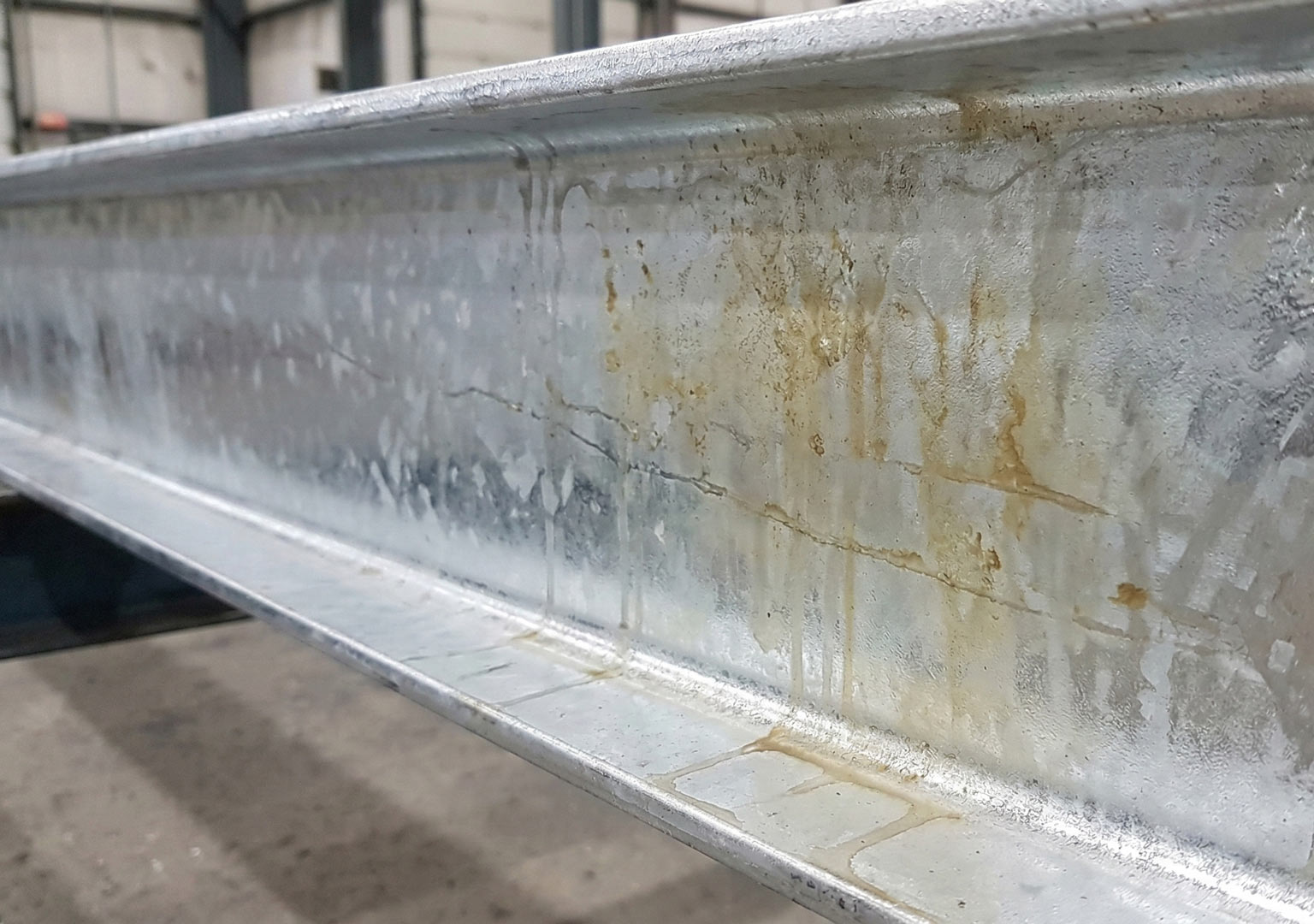
Hot dip galvanizing concludes with withdrawal from molten zinc, followed by cooling. Many galvanizing operations include a quenching step immediately after immersion. Quenching rapidly cools the steel and may include a chemical solution designed to slow early surface oxidation.
Occasionally, discoloration may appear on galvanized steel after quenching. This visual variation often prompts concern among engineers, inspectors, or owners unfamiliar with the phenomenon. However, quench discoloration is generally an appearance related issue rather than a performance deficiency.
The Galvanize It article discussing quench discoloration can be reviewed here: https://galvanizeit.org/knowledgebase/article/quench-discoloration
Expanding on that discussion, this article explores why discoloration occurs, what it means for coating performance, and how it should be evaluated.
What Happens During Quenching
After removal from the molten zinc bath, steel is extremely hot. If left to air cool, zinc reacts rapidly with oxygen and moisture. Controlled quenching serves several purposes:
- Rapid cooling of the steel
- Reduction of excessive oxide formation
- Minimization of handling temperature
- Preparation for transport
Quench tanks may contain water or water with small concentrations of passivation chemicals. These chemicals can reduce the formation of wet storage stain and slow initial oxidation.
Surface interaction between hot zinc and quench solution may result in visible color variations.
What Quench Discoloration Looks Like
Quench discoloration typically appears as:
- Iridescent staining
- Light brown or yellow surface tint
- Uneven color patterns
- Slight rainbow or mottled effect
The discoloration affects only the surface appearance. It does not indicate coating thinning, peeling, or adhesion problems.
Thickness and metallurgical bonding remain unchanged.
Why Discoloration Occurs
Several factors influence quench related appearance changes:
- Chemical concentration in quench bath
- Cooling rate
- Bath contamination
- Water chemistry
- Steel surface chemistry
Minor variations in quench conditions can produce noticeable but harmless visual differences.
In many cases, the discoloration fades over time as the zinc surface weathers and forms stable corrosion products.
Performance Impact
Quench discoloration does not reduce corrosion protection.
The zinc iron alloy layers formed during immersion remain intact. The surface tint does not indicate coating failure, porosity, or lack of adhesion.
ASTM A123 focuses on coating thickness and continuity, not uniform color. As long as coating thickness requirements are met, discoloration alone is not grounds for rejection.
Understanding this distinction prevents unnecessary field disputes.
Inspection Considerations
When evaluating galvanized steel showing quench discoloration, inspectors should:
- Verify coating thickness compliance
- Confirm coating continuity
- Ensure no exposed steel is present
If these criteria are met, appearance variations are considered acceptable under specification guidelines.
Surface discoloration is a cosmetic condition and should be assessed separately from structural performance criteria.
Long Term Weathering Behavior
As galvanized steel is exposed to atmospheric conditions, it naturally develops a matte gray patina composed of stable zinc corrosion products.
Over time, quench related staining typically becomes less noticeable as the surface weathers uniformly.
Because zinc corrosion behavior is predictable, long term performance is not affected by temporary surface color variation.
Coordinating Appearance Expectations
Clear communication ensures that cosmetic conditions are properly understood before installation.
Quench discoloration is a surface appearance variation that may occur after cooling galvanized steel. It does not affect coating thickness, adhesion, or corrosion protection. Proper inspection should focus on measurable performance criteria rather than cosmetic variation.
For projects where visual uniformity is critical, such as architectural installations, early discussion about appearance expectations is beneficial.
We work closely with engineers, architects, and contractors to align specification requirements with realistic galvanizing outcomes. If you have questions about coating appearance or performance expectations, please reach out via our contact page.
Frequently Asked Questions About Quench Discoloration
Does quench discoloration mean the coating is defective?
No. Discoloration is a cosmetic surface condition and does not affect coating thickness or corrosion protection.
Will the discoloration fade over time?
In many cases, yes. As the zinc surface weathers and develops a stable patina, color variations often become less noticeable.
Can quench discoloration be removed?
It may diminish naturally with weathering. Removal is generally unnecessary since performance is not affected.
Is discoloration grounds for rejection under ASTM A123?
No. ASTM A123 focuses on coating thickness and continuity, not color uniformity.
Does quenching change coating thickness?
No. The metallurgical coating is formed during immersion in molten zinc. Quenching only cools the material.
Should appearance expectations be discussed before galvanizing?
Yes. If architectural uniformity is critical, early coordination helps align expectations with normal galvanizing characteristics.
