

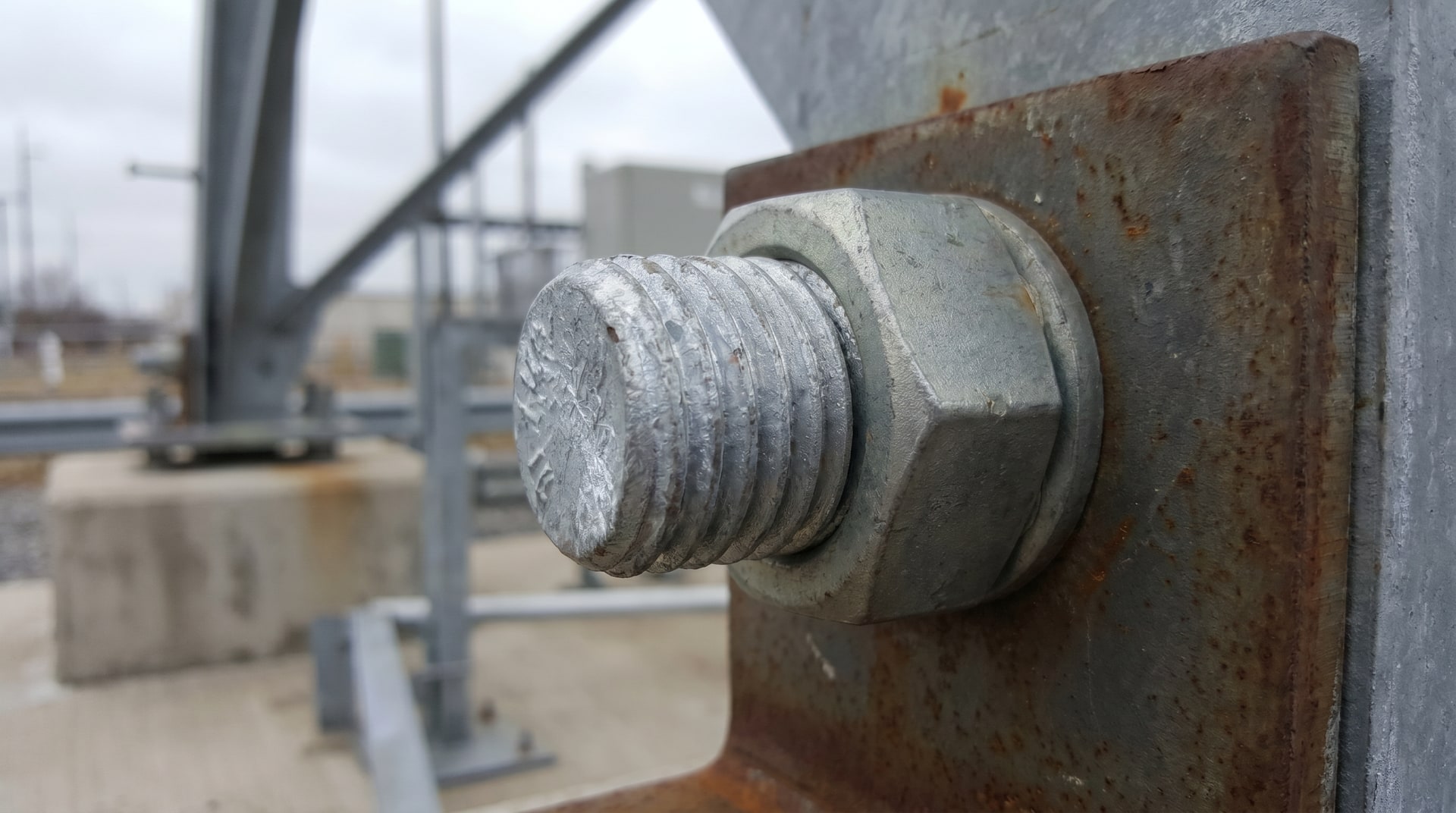
In the field, zinc-coated steel shows up in many forms. A fabricator might specify hot-dip galvanized structural bolts, only to find that the supplier ships mechanically galvanized nuts. A contractor assembles painted steel framing members alongside hot-dip galvanized connectors. An engineer reviewing a corrosion report sees two zinc-coated components that have degraded at noticeably different rates and wonders whether the contact between them caused accelerated attack on the faster-degrading piece. These are not hypothetical concerns. They come up regularly on real projects, and when they do, the instinct to invoke "galvanic corrosion" as an explanation is understandable but often incorrect.
The American Galvanizers Association addresses this directly in their article on whether there is concern about galvanic corrosion when different types of zinc-coated steel are in contact. At V&S Galvanizing, we expand on that foundation to explain what is actually happening at the material level, how coating thickness influences performance, and why this is often misunderstood in the field.
The Electrochemical Basis for Why This Is Not a Galvanic Problem
Galvanic corrosion occurs when two metals with meaningfully different electrochemical potentials are in electrical contact in the presence of an electrolyte. The more active (anodic) metal sacrifices itself to protect the more noble (cathodic) metal. The greater the potential difference, the more aggressive the corrosion of the anodic member. This is a well-documented electrochemical mechanism, and it is the reason that connecting bare steel directly to copper in a wet environment will cause the steel to corrode rapidly.
The critical point with zinc-coated steel is that the active metal in the system is always zinc, regardless of how that zinc was applied. Whether a coating was produced through hot-dip galvanizing, mechanical galvanizing, electroplating, zinc-rich paint, or thermal spray, the resulting surface is zinc. The electrochemical potential of zinc does not change based on application method. Two zinc surfaces in contact with each other sit at essentially the same position on the galvanic series, which means there is no meaningful potential difference to drive accelerated corrosion of one over the other.
This is not a technicality. It is the fundamental reason why pairing, say, a hot-dip galvanized bolt with a mechanically galvanized nut does not create the kind of electrochemical imbalance that triggers dissimilar metals corrosion. The concern simply does not apply in the same way it would if you were joining zinc to copper, or steel to stainless steel in a marine environment.
What Determines Which Component Corrodes First
Just because galvanic acceleration is not the mechanism does not mean all zinc-coated components in a mixed assembly perform equally. They do not. The factor that governs service life is coating thickness, and this is where the real engineering conversation begins.
Zinc protects steel through two mechanisms. First, it provides a physical barrier between the steel substrate and the surrounding environment. Second, zinc is anodic relative to steel, so even at a scratch or a cut edge where bare steel is exposed, the zinc nearby will sacrificially corrode to protect the underlying steel. Both mechanisms depend on having zinc present. When the zinc is consumed, the steel is exposed and active corrosion of the substrate begins.
The rate at which zinc is consumed depends primarily on the environment (atmospheric conditions, moisture, industrial pollutants, coastal salt exposure) and on how much zinc was present to begin with. Thicker coatings take longer to consume. It is genuinely that direct: service life is proportional to zinc thickness. This relationship is well established and forms the basis of how coating specifications are written for different exposure classes.
When two zinc-coated components with different coating thicknesses are assembled together, they will deplete their zinc at roughly similar rates per unit of surface area (assuming similar local environments), but the thinner-coated component will exhaust its zinc first. Once that component's zinc is gone, the steel substrate underneath begins corroding while the thicker-coated component may still be in service with zinc remaining. The failure of the assembly often initiates at the thinner component, not because of any electrochemical interaction between the two, but simply because it ran out of protective zinc sooner.
How Coating Thickness Varies Across Application Methods
This is where knowing the differences between zinc coating processes becomes practically important. Not all zinc coatings are applied at the same thickness, and the process used often reflects an underlying design intent about expected service life and exposure severity.
Hot-dip galvanizing, the process we perform at V&S, typically produces the heaviest zinc coatings of the commonly used methods. Structural steel galvanized per ASTM A123 routinely achieves coating thicknesses well above what electroplating or mechanical galvanizing delivers on fasteners. Hot-dip galvanized fasteners processed under ASTM A153 are also specified with meaningful zinc thicknesses, though the exact class depends on the fastener type and configuration.
Mechanical galvanizing, which is a common choice for fasteners, involves tumbling parts with zinc powder and glass beads to mechanically peen the zinc onto the surface. The resulting coatings are generally thinner than hot-dip, though they can be specified to varying thicknesses. Electroplated zinc coatings, often seen on hardware and lighter fasteners, are typically the thinnest of the common options and are generally more suited to interior or mild exposure conditions.
None of this creates a galvanic problem when these coatings contact each other. But it does mean that an assembly pairing hot-dip galvanized structural members with thin electroplated hardware is likely to see the hardware's zinc fail first, potentially well before the structural members show any meaningful degradation. Understanding that dynamic matters when specifying components and planning maintenance intervals.
Common Field Scenarios Where This Misunderstanding Creates Problems
One of the most common places this confusion surfaces is in fastener selection. A project specifies hot-dip galvanized connections, and the fastener procurement brings in mechanically galvanized nuts and bolts because they are readily available and technically zinc-coated. The connection goes together, and years later the fasteners show rust while the surrounding structural members are still performing well. The instinct is often to ask what went wrong with the contact between the two zinc surfaces. The actual answer is simpler: the fasteners had less zinc to begin with, and in a marine or industrial atmosphere they depleted it faster.
A related scenario occurs with mixed assemblies where pre-fabricated components from different supply chains are joined on site. One supplier used hot-dip galvanizing; another used a zinc-rich primer system. The primer system may have an equivalent zinc content by weight, but the distribution and film thickness are different, and the effective barrier performance may not match that of a hot-dip coating. Again, not a galvanic interaction between the zinc surfaces, but a mismatch in the amount of protection available at each location.
Recognizing the actual mechanism matters because it points toward the correct solution. If the problem were galvanic corrosion between the two zinc surfaces, the fix would involve isolating them or selecting a different material. But since the problem is simply a thickness mismatch, the fix is straightforward: specify consistent or compatible coating thicknesses for all components in the assembly, with the thinnest coating still meeting the minimum service life requirement for the intended exposure.
The Role of Environment in Accelerating the Thinner Coating's Depletion
Coating thickness is the primary variable, but environment is the multiplier. The same assembly that performs acceptably for decades in a dry inland atmosphere might show early corrosion initiation at the thin-coated component within a few years in a coastal or industrial setting. This is because zinc consumption rates are not constant across environments. Marine atmospheres with salt spray, industrial zones with sulfur dioxide or acid deposition, and persistently wet conditions all accelerate zinc depletion relative to dry, rural settings.
When specifying mixed-coating assemblies for aggressive environments, the margin between the thicker and thinner coatings in the assembly becomes more consequential. A thin coating that might outlast its intended service life in a moderate environment may be completely inadequate in a severe one. This is not unique to mixed assemblies, but the failure tends to be more visible when one component is significantly better protected than another, because the contrast between a still-intact coating and a corroding substrate is stark.
This is why we always encourage engineers and specifiers to think about the weakest link in the zinc protection chain when designing for a specific service environment. The thinnest coating in the assembly sets the effective maintenance interval for the whole connection.
Why Zinc-to-Zinc Contact Is Not Treated Like Other Dissimilar Metal Pairings
The AGA publishes guidance on hot-dip galvanized steel in contact with dissimilar metals, and that guidance covers a range of real concerns. Galvanized steel in contact with copper or brass plumbing fittings in a wet system is a legitimate galvanic issue. Galvanized steel directly connected to weathering steel in a moisture-retaining joint can create conditions where the galvanic protection is consumed faster than intended. These are real engineering constraints that need to be managed.
Zinc-to-zinc contact, even when the zinc was applied by different methods, does not belong in that category. The electrochemical potential of zinc is effectively the same regardless of how it was deposited. Hot-dip galvanizing does produce an alloy layer structure at the steel interface, with iron-zinc intermetallic phases beneath a relatively pure outer zinc layer, but the surface that contacts the adjacent component is still zinc. Mechanical galvanizing produces a surface that is also zinc. The potential difference between these two surfaces is negligible for practical purposes, and it does not produce a meaningful galvanic driving force.
This matters for design decisions because it means engineers and fabricators do not need to introduce isolation materials, sealants, or non-conductive barriers at zinc-to-zinc contacts the way they might at copper-to-steel or stainless-to-carbon steel joints. The concern at zinc-to-zinc interfaces is strictly about maintaining adequate coating thickness at every point in the assembly, not about managing electrochemical incompatibility.
Specifying for Consistent Performance Across a Mixed Assembly
The practical takeaway from all of this is that specification consistency matters more than coating-method uniformity. Using the same application process throughout an assembly eliminates coating thickness variability and simplifies the design assumption. But where mixed processes are unavoidable or economically justified, the key is ensuring that every zinc coating in the assembly is specified to a thickness appropriate for the intended service environment and lifespan.
For structural steel processed through hot-dip galvanizing, ASTM A123 provides a clear framework for minimum coating thicknesses by material category. For fasteners, ASTM A153 and ASTM F2329 (for mechanically deposited coatings) provide similar guidance. When these are used together, specifying the appropriate class under each standard for the exposure condition gives the best chance of consistent service life across the assembly. If one component is specified to a higher class than necessary and another to the minimum, the assembly will perform to the minimum. That is not a failure of the coating process; it is a specification decision that can be made intentionally or inadvertently.
Where questions arise about what coating thickness is appropriate for a given exposure class, or about the compatibility of different zinc-coated components in a specific design, that is exactly the kind of question our team works through with engineers and fabricators before the project goes to fabrication. Addressing it early is far simpler than evaluating premature corrosion in the field.
Work With a Team That Understands the Full Picture
Galvanic corrosion between different zinc-coated steels is not a real concern in the way the term is typically used, because all zinc coatings sit at the same electrochemical potential regardless of how they were applied. What is a real concern is the mismatch in coating thickness that can exist when different application processes are used without attention to how the resulting thicknesses compare. The component with the thinnest zinc will always be the first to lose its protection, and in an aggressive environment, that failure can arrive well before the rest of the assembly shows any sign of degradation. Specifying for consistent service life across all zinc-coated components in an assembly, rather than simply specifying zinc coating without regard to process or thickness, is the practical way to manage this.
Our team at V&S Galvanizing works directly with engineers, fabricators, and contractors to help them make informed decisions about coating specifications, process compatibility, and performance expectations for their specific environments. If you have questions about a project involving mixed zinc coatings or want to discuss the right specification for your application, reach out through our contact page and we will work through it with you.
Frequently Asked Questions About Galvanic Corrosion Between Zinc-Coated Steels
Does pairing a hot-dip galvanized bolt with a mechanically galvanized nut cause galvanic corrosion?
No. Both surfaces are zinc, and zinc has essentially the same electrochemical potential regardless of how it was applied. There is no meaningful potential difference between the two surfaces to drive galvanic corrosion. The concern in mixed-process fastener assemblies is coating thickness, not electrochemical incompatibility.
If there is no galvanic corrosion risk, why does one component in a mixed assembly sometimes corrode before the other?
Because different zinc coating processes produce different coating thicknesses. The component with the thinner zinc coating depletes its protective zinc faster and exposes the steel substrate sooner. This is a thickness mismatch issue, not a galvanic reaction between the two zinc surfaces.
How does coating thickness relate to service life for zinc-coated steel?
Service life is directly proportional to coating thickness. A thicker zinc coating contains more zinc to be consumed before the steel substrate is exposed. In a given environment, doubling the coating thickness approximately doubles the time before corrosion of the underlying steel begins.
Is electroplated zinc on a fastener compatible with hot-dip galvanized structural steel?
From a galvanic standpoint, yes. There is no dissimilar-metals reaction between electroplated zinc and hot-dip galvanized zinc. However, electroplated zinc coatings are typically much thinner than hot-dip coatings, so in outdoor or aggressive exposure conditions the electroplated component will likely lose its zinc protection significantly earlier than the hot-dip galvanized member.
What should a specifier do when mixing zinc coating processes within a single assembly?
Verify that every zinc-coated component in the assembly is specified to a coating thickness appropriate for the intended service environment and design life. Use the applicable ASTM standard for each process (such as A123 for structural hot-dip galvanizing and A153 or F2329 for fasteners) and select the appropriate class for the exposure condition. The thinnest coating in the assembly sets the effective service life for the connection.
Does the iron-zinc alloy layer structure produced by hot-dip galvanizing change the electrochemical behavior at a zinc-to-zinc contact point?
No. The iron-zinc intermetallic phases in hot-dip galvanized coatings are internal to the coating structure. The surface that contacts an adjacent zinc-coated component is still zinc, and its electrochemical potential is the same as that of mechanically deposited or electroplated zinc surfaces.
Does environment affect how quickly the thinner coating fails in a mixed assembly?
Yes, significantly. Zinc depletion rates increase in marine, industrial, and persistently wet environments. A coating thickness that provides adequate service life in a dry inland atmosphere may be insufficient in coastal or chemically aggressive conditions. Specifying for the actual service environment, not a generic assumption, is essential when designing mixed-coating assemblies for long service life.
Should isolation materials or sealants be used at zinc-to-zinc contact interfaces in a structure?
Not for galvanic protection purposes. Since zinc-to-zinc contact does not create a galvanic corrosion risk, isolation hardware is not required at these interfaces. If sealants are used, it is typically to prevent moisture ingress into a crevice or lap joint, which is a separate maintenance consideration unrelated to the electrochemical compatibility of the two zinc surfaces.
