

Magnesium chloride has become one of the most commonly used deicing chemicals across North America. As its use has increased, so have questions about how it interacts with galvanized steel, especially in transportation, infrastructure, and equipment applications where exposure is unavoidable.
The American Galvanizers Association addresses this directly in their article on magnesium chloride and galvanized steel. At V&S Galvanizing, we expand on that foundation to explain what is actually happening at the coating level, how chloride exposure influences corrosion rates, and why the real-world performance is often misunderstood in the field.
Why Magnesium Chloride Gets So Much Attention
Magnesium chloride is not inherently more aggressive simply because of its name. The concern comes from how it behaves once applied.
Unlike traditional rock salt, magnesium chloride is hygroscopic. It attracts and retains moisture from the air, which means surfaces exposed to it can remain wet for extended periods of time. That extended wetness is the real driver of corrosion.
Corrosion of zinc, like any metal, requires an electrolyte. By keeping surfaces continuously damp, magnesium chloride effectively increases the amount of time corrosion reactions can occur.
What Happens at the Zinc Surface
When galvanized steel is exposed to the atmosphere, it naturally forms a stable zinc carbonate patina that slows corrosion. This patina is what allows galvanized coatings to perform for decades in typical outdoor environments.
Chloride exposure interferes with that process.
Instead of allowing the patina to fully stabilize, chlorides:
- Disrupt the formation of protective zinc carbonate
- Promote the formation of more soluble zinc compounds
- Keep the surface in a more active corrosion state
This does not mean the coating fails immediately. It means the corrosion rate increases relative to a clean atmospheric environment.
Why Moisture Retention Is More Important Than Chemistry Alone
It is easy to assume that magnesium chloride is more corrosive than other deicing chemicals, but the more accurate explanation is that it creates conditions that allow corrosion to continue longer.
The key difference is duration of wetness.
If a galvanized surface is exposed to:
- Intermittent moisture that dries quickly, corrosion slows
- Persistent moisture that does not evaporate, corrosion continues
Magnesium chloride extends the second condition, which is why it can accelerate zinc consumption over time.
Comparing Magnesium Chloride to Other Deicing Salts
From a purely chemical standpoint, chlorides behave similarly. Sodium chloride, calcium chloride, and magnesium chloride all introduce chloride ions that can participate in corrosion reactions.
The difference is performance in the environment.
Magnesium chloride tends to:
- Stay active at lower temperatures
- Retain moisture longer
- Re-wet surfaces even after partial drying
This makes it more persistent, not necessarily more chemically aggressive on a per-exposure basis, but more impactful over time due to longer exposure cycles.
What This Means for Galvanized Steel Performance
Galvanized steel is not incompatible with magnesium chloride. It continues to provide corrosion protection, but the expected service life must be evaluated in the context of increased exposure severity.
In chloride-heavy environments:
- Zinc is consumed at a faster rate
- The protective patina forms more slowly or is repeatedly disrupted
- Maintenance expectations may need to be adjusted
The system still works, but it operates under more demanding conditions.
Where This Shows Up in Real Applications
The effects of magnesium chloride are most noticeable in environments where exposure is frequent and cumulative.
This includes:
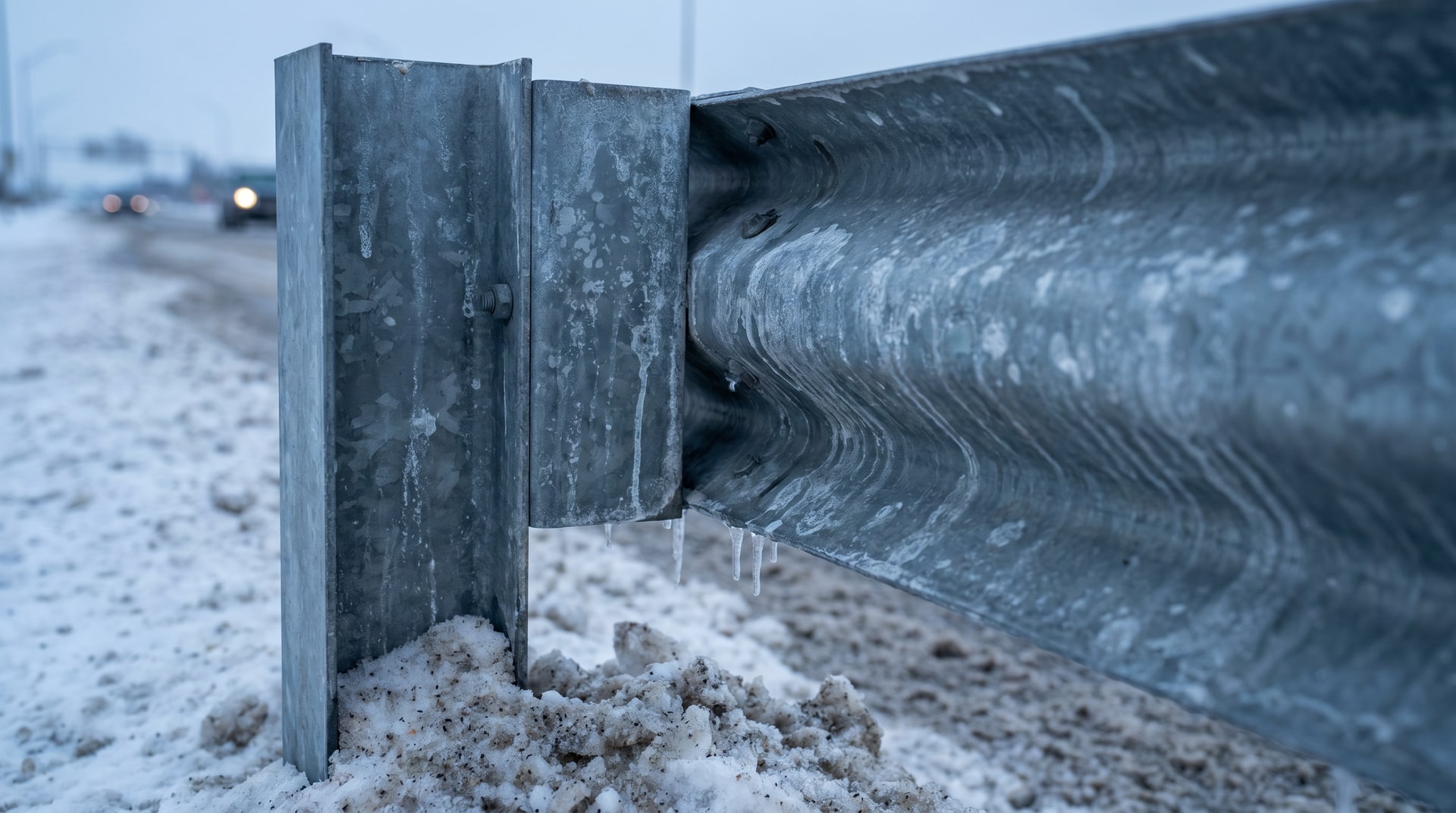
- Bridge components and guardrails
- Utility structures near roadways
- Truck frames and equipment
- Industrial facilities with winter operations
In these cases, the question is not whether corrosion will occur, but how quickly the zinc coating will be consumed relative to the required service life.
Design and Material Strategy Still Matter
Even in aggressive chloride environments, performance can be significantly improved through design and specification.
Allowing for proper drainage, avoiding areas where solution can collect, and ensuring airflow all help reduce time of wetness. Coating thickness also becomes more important, as it directly determines how long the zinc layer will last under increased corrosion rates.
This is where galvanizing becomes a predictable system. By understanding the environment, the coating can be specified to match the expected exposure.
Why Galvanizing Is Still Widely Used in Deicing Environments
Despite the presence of magnesium chloride, hot dip galvanizing remains one of the most commonly used corrosion protection systems in transportation infrastructure.
This is because:
- It provides sacrificial protection even when damaged
- It performs consistently across large surface areas
- Its service life can be estimated based on known corrosion rates
The key is not avoiding chloride exposure. It is designing for it.
Work With a Team That Understands Exposure Conditions
Magnesium chloride does not change the fundamentals of how galvanizing works. It changes the environment the coating must perform in. Understanding that distinction is what allows engineers and project teams to make informed decisions.
At V&S Galvanizing, we help customers evaluate real-world exposure conditions, align coating thickness with expected service life, and ensure galvanized steel performs as intended in demanding environments.
Magnesium chloride does not inherently destroy galvanized steel, but it creates conditions that increase corrosion rates by extending moisture exposure and disrupting protective patina formation. The zinc coating continues to provide protection, but its lifespan must be evaluated based on the severity of the environment and frequency of exposure. When properly specified and designed, galvanized steel remains a reliable solution even in chloride-heavy applications. If you need help evaluating how deicing chemicals will impact your project or want to align coating performance with environmental exposure, reach out to our team through our contact page.
Frequently Asked Questions About Magnesium Chloride and Galvanized Steel
Does magnesium chloride damage galvanized steel?
It does not immediately damage it, but it can increase corrosion rates over time by keeping surfaces wet and disrupting the protective patina.
Is magnesium chloride worse than salt?
It is not necessarily more chemically aggressive, but it remains active longer due to moisture retention, which can increase overall exposure.
Can galvanized steel be used around deicing chemicals?
Yes. It is widely used in these environments, but coating thickness and design should account for increased corrosion rates.
Why does moisture matter so much?
Corrosion requires an electrolyte. Magnesium chloride keeps surfaces wet longer, allowing corrosion reactions to continue.
Does the zinc coating still protect the steel?
Yes. The coating continues to provide sacrificial protection even in chloride environments.
How can corrosion be reduced in these conditions?
Improving drainage, reducing moisture retention, and specifying adequate coating thickness all help extend service life.
Should thicker coatings be used in these environments?
Yes. Increased coating thickness provides more zinc to be consumed over time, extending lifespan.
Is maintenance required in chloride environments?
It may be, depending on exposure levels and service life expectations.
