

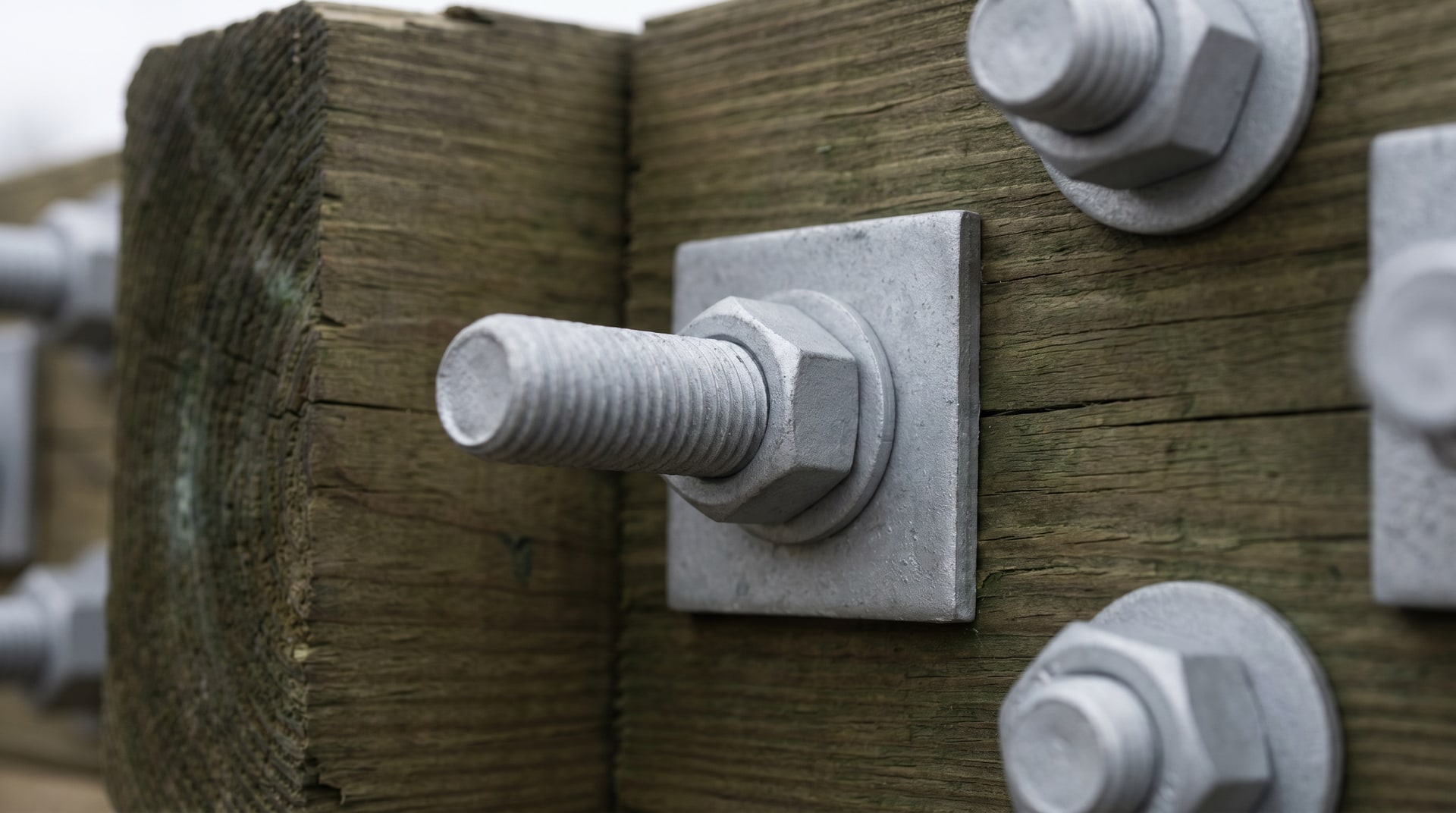
Pressure-treated wood is widely used in construction for its resistance to decay, insects, and moisture exposure. However, the preservatives used to treat wood can create a more aggressive corrosion environment for metal components that come into contact with it. This raises an important question for builders, engineers, and contractors: how well does hot dip galvanized steel perform when used with treated wood?
The American Galvanizers Association provides technical background on this topic here.
At V&S Galvanizing, we regularly help customers evaluate material compatibility in real-world environments. Below, we break down how treated wood affects galvanized steel, what risks to consider, and how to ensure long-term performance.
Why Treated Wood Can Increase Corrosion Risk
Modern pressure-treated wood uses chemical preservatives to improve durability. Many of these preservatives contain copper-based compounds, which can influence corrosion behavior when in contact with metals.
Common preservatives include:
- Alkaline Copper Quaternary (ACQ)
- Copper Azole (CA)
- Micronized Copper systems
These treatments increase the copper content in the wood. When moisture is present, the wood can act as an electrolyte, creating conditions for galvanic or accelerated corrosion.
This is especially important for metal components that remain in constant contact with the wood.
How Galvanized Steel Performs with Treated Wood
Hot dip galvanized steel provides a thick zinc coating that protects the underlying steel through both barrier protection and sacrificial corrosion.
When in contact with treated wood:
- The zinc coating acts as the sacrificial layer
- Corrosion may occur at a controlled rate depending on conditions
- Thicker coatings provide longer protection
Compared to thin plated coatings, hot dip galvanizing offers significantly improved durability in these environments.
This is why galvanized fasteners, connectors, and hardware are commonly specified for treated lumber applications.
The Role of Moisture
Moisture is a critical factor in corrosion when steel is in contact with treated wood.
Corrosion is more likely when:
- The wood remains wet or damp for extended periods
- There is limited airflow for drying
- The structure is exposed to outdoor weather conditions
In dry conditions, corrosion risk is significantly reduced because the electrolyte required for corrosion reactions is limited.
Proper design that promotes drainage and drying can extend the life of galvanized components.
Coating Thickness Matters
Not all galvanized coatings perform equally.
Hot dip galvanizing produces a thicker, more durable zinc coating compared to electroplated zinc finishes.
This matters because:
- Thicker coatings contain more zinc for sacrificial protection
- Coating life is directly related to zinc thickness
- Thin coatings may degrade quickly in treated wood environments
For structural applications, specifying hot dip galvanized coatings in accordance with ASTM standards is critical.
Fasteners and Hardware Considerations
Fasteners and connectors are often the most vulnerable components when used with treated wood.
Best practices include:
- Using hot dip galvanized fasteners instead of electroplated alternatives
- Matching all hardware materials to avoid mixed metal corrosion
- Ensuring coating thickness meets specification requirements
Using incompatible fasteners can lead to premature failure even if the primary structure remains intact.
When More Protection May Be Needed
In highly aggressive environments, additional considerations may be necessary.
These may include:
- Constant moisture exposure
- Marine environments
- Ground contact applications
- High copper preservative concentrations
In these cases, engineers may evaluate additional protection strategies depending on project requirements.
Design and Installation Best Practices
To improve performance when using galvanized steel with treated wood:
- Promote drainage to prevent standing water
- Allow airflow to encourage drying
- Avoid trapping moisture between materials
- Select appropriate fasteners and connectors
- Follow specification requirements for coating thickness
These design decisions can significantly impact long-term durability.
Work With a Team That Understands Real-World Conditions
Material compatibility decisions are not one-size-fits-all. Environmental exposure, wood treatment type, and structural design all influence corrosion performance.
At V&S Galvanizing, we help customers evaluate how galvanized steel will perform in their specific application, including contact with treated wood.
If you have questions about material selection, coating thickness, or performance expectations, visit our contact page to connect with our team:.
Hot dip galvanized steel performs well in contact with treated wood when properly specified and used in appropriate conditions. The zinc coating provides sacrificial protection, but corrosion rates depend on moisture exposure, preservative chemistry, and coating thickness. With proper design and material selection, galvanized steel can deliver long-term performance in treated wood applications.
Frequently Asked Questions About Galvanized Steel and Treated Wood
Can galvanized steel be used with pressure-treated wood?
Yes. Hot dip galvanized steel is commonly used with pressure-treated wood and provides better corrosion resistance than thinner plated coatings. It is widely specified for fasteners, connectors, and structural hardware.
Why does treated wood cause corrosion in metal?
Treated wood contains preservatives, often copper-based, that can increase corrosion when moisture is present. The wood can act as an electrolyte, accelerating corrosion reactions.
Is hot dip galvanizing better than electroplating for treated wood?
Yes. Hot dip galvanizing produces a thicker zinc coating, which provides longer-lasting protection compared to thin electroplated coatings.
Does moisture affect corrosion with treated wood?
Yes. Moisture is required for corrosion to occur. Wet or damp conditions increase corrosion risk, while dry conditions reduce it.
What type of fasteners should be used with treated wood?
Hot dip galvanized fasteners that meet appropriate ASTM standards are recommended. Using incompatible or lightly coated fasteners can lead to premature failure.
Can galvanized steel corrode in treated wood?
Yes, over time. The zinc coating will gradually corrode, especially in wet conditions, but it protects the underlying steel by sacrificing itself.
Does coating thickness impact performance?
Yes. Thicker zinc coatings provide more sacrificial protection and result in longer service life in treated wood environments.
When should additional protection be considered?
Additional protection may be needed in high-moisture environments, marine conditions, or applications with constant exposure to treated wood chemicals.
