

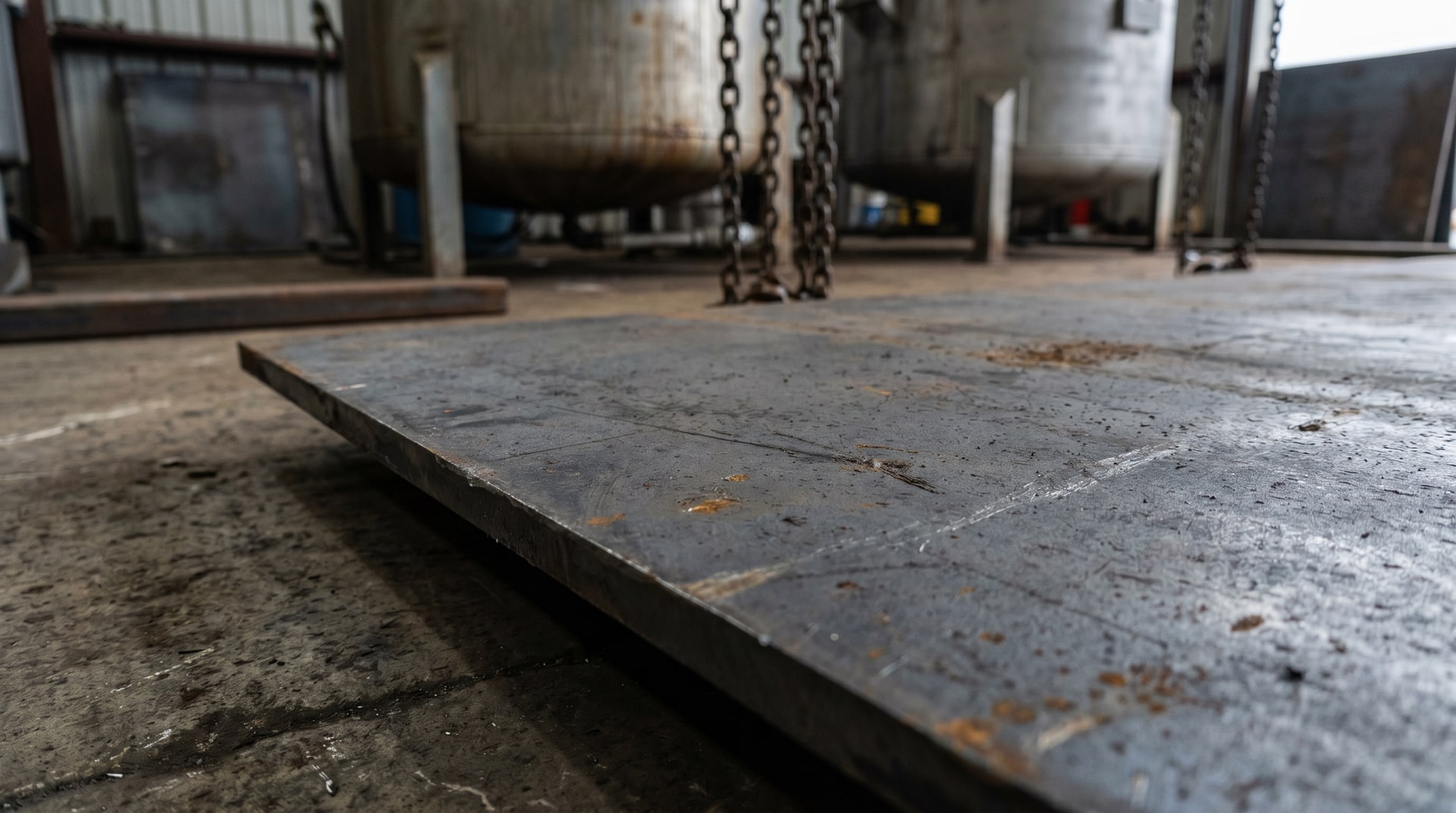
AR400 steel has earned a firm place in applications where surfaces take a beating. Mining equipment, dump truck liners, bucket teeth, conveyor components, and crusher housings all rely on its exceptional resistance to wear. That reputation for toughness makes it a natural candidate for environments that also demand corrosion protection, and so the question comes up regularly in engineering and fabrication circles: can AR400 be hot-dip galvanized?
It is an understandable question. If a steel component is going to sit outdoors, handle abrasive material, and cycle through wet-dry exposure for years, the instinct is to want both wear resistance and a robust zinc coating. The logic seems straightforward on its face. The reality, however, is considerably more complicated, and the consequences of proceeding without fully understanding the metallurgy can be serious.
The American Galvanizers Association addresses this directly in their article on whether abrasion-resistant AR400 steel can be hot-dip galvanized. At V&S Galvanizing, we expand on that foundation to explain what is actually happening at the material level, how the grain structure of high-hardness steels influences their response to chemical processing, and why the risks involved are so frequently underestimated in the field.
What Makes AR400 Different From Structural Steel
To understand why galvanizing AR400 is risky, you first need to understand what makes it AR400 in the first place. Abrasion-resistant steels like AR400 are produced through a quench-and-temper process that results in a martensitic microstructure. That martensite is what gives the material its hardness, rated at approximately 400 Brinell, and its high tensile strength, which falls in the range of 180,000 to 200,000 psi.
Standard structural steels used in galvanized fabrication, such as ASTM A36 or A572, typically have tensile strengths in the range of 58,000 to 80,000 psi and hardness values well below 200 Brinell. The difference is not just a matter of degree. It reflects a fundamentally different grain structure at the microstructural level.
In a martensitic steel like AR400, the grain structure is extremely fine and densely packed. That fine grain structure is precisely what enables the material to resist deformation and surface abrasion under load. But that same tightly packed microstructure creates a vulnerability when the steel is subjected to the chemical cleaning steps that are a standard, unavoidable part of the hot-dip galvanizing process.
The Mechanism Behind Hydrogen Embrittlement in High-Hardness Steels
Hot-dip galvanizing is not simply a matter of dipping steel into molten zinc. Before any steel reaches the kettle, it goes through a series of surface preparation steps designed to remove mill scale, oxides, oils, and other contaminants. That preparation typically involves degreasing, pickling in hydrochloric acid, and fluxing. The acid pickling step is where the problem begins for high-strength, high-hardness steels.
When steel is immersed in hydrochloric acid, the acid reacts with iron oxides on the surface, but it also generates nascent atomic hydrogen as a byproduct of that reaction. In lower-strength structural steels with larger grain structures and more open lattice arrangements, most of that atomic hydrogen escapes to the atmosphere relatively quickly. The grain boundaries and interstitial spaces are large enough that hydrogen diffuses out without causing significant damage.
In AR400, the story is different. The fine martensitic grain structure provides a large number of trap sites, including grain boundaries, dislocations, and carbide interfaces, where atomic hydrogen can become lodged. Once trapped, hydrogen does not simply dissipate. It accumulates at areas of stress concentration within the microstructure. Over time, or under applied mechanical load, that trapped hydrogen reduces the cohesive strength of the grain boundaries. Cracks can initiate and propagate at stress levels far below what the steel would otherwise be expected to withstand. The material becomes brittle in a way that is not visible to the naked eye and may not manifest until the component is placed in service and loaded.
This is what hydrogen embrittlement means in a practical engineering context. It is not a surface defect. It is a subsurface degradation of mechanical integrity that the zinc coating will not reveal and that visual inspection will not catch.
Why the Tensile Strength Range Matters
The susceptibility of steel to hydrogen embrittlement is closely correlated with tensile strength. This is not a coincidence. Higher tensile strength generally reflects a more constrained microstructure with a greater density of hydrogen trap sites and a reduced capacity for plastic deformation that might otherwise allow hydrogen to redistribute harmlessly.
The galvanizing industry and related standards have long recognized that steels with tensile strengths above approximately 150,000 psi carry elevated risk for hydrogen embrittlement when subjected to acid cleaning. AR400, with its tensile strength of 180,000 to 200,000 psi, sits well above that threshold. The hardness of 400 Brinell reinforces that concern. These are not marginal values sitting just above a cutoff point. They represent a steel chemistry and heat treatment that has been specifically engineered to push hardness and strength to an extreme, and those same extremes make the material genuinely vulnerable during chemical processing.
It is also worth noting that the risk does not vanish simply because a fabricator requests shorter pickling times or reduced acid concentrations. While process modifications can reduce the degree of hydrogen uptake, they cannot eliminate it entirely in a steel of this hardness, and they may compromise the surface preparation quality needed for a properly adherent galvanized coating.
How Brittleness Manifests After Galvanizing
One of the challenging aspects of hydrogen embrittlement is that it does not always announce itself immediately. A galvanized AR400 component may come out of the kettle looking perfectly normal. The zinc coating may be continuous, well-adhered, and visually acceptable. The part may even pass handling and shipping without incident.
The brittleness tends to reveal itself under load, particularly under tensile stress, impact, or dynamic loading conditions. These are precisely the conditions that AR400 components are typically designed to handle, which makes the failure mode especially concerning. A bucket tooth, a wear plate mounting bracket, or a structural attachment on mining equipment that has been compromised by hydrogen embrittlement may fail suddenly and without the ductile deformation that would normally serve as a warning sign.
Delayed fracture is another documented phenomenon in hydrogen-embrittled high-strength steels. Even after the component has been galvanized and placed in service, hydrogen can continue to migrate toward regions of stress concentration over days or weeks, eventually triggering crack initiation at a threshold that would not have caused failure in an undamaged material. This delayed nature makes root cause analysis difficult if failure is not immediately traced back to the galvanizing process.
The Distinction Between AR400 and More Galvanizing-Compatible Steels
Not all hard or wear-resistant steels present the same level of risk. The concern with AR400 is specific to the combination of its tensile strength, hardness, and martensitic microstructure. Standard carbon steels and even many low-alloy structural steels, despite having some susceptibility to hydrogen uptake, have enough capacity for hydrogen diffusion and redistribution that galvanizing proceeds without meaningful embrittlement risk under normal processing conditions.
The AR designation, as applied to steels like AR400, AR450, or AR500, signals that the material has been heat-treated specifically for hardness. Each step up in the AR rating represents higher hardness and higher tensile strength, which in turn represents greater risk during acid pickling. If AR400 is already considered a substantial concern, steels with even higher hardness ratings amplify that concern proportionally.
This matters for fabricators who work with a range of steel grades and may not always distinguish between the wear plate they are attaching and the structural members it is being welded to. A fabricated assembly that mixes AR400 with conventional structural steel creates a situation where the AR400 portions carry all of the embrittlement risk even as the overall assembly appears to be standard fabrication.
What the Galvanizing Process Cannot Change About the Underlying Metallurgy
There is a persistent belief in some fabrication environments that experienced galvanizers can simply adjust their process to accommodate problem steels. To some extent, process adjustments can make a difference for steels that are borderline candidates. Reduced acid immersion times, inhibited acid solutions that slow the reaction rate, and baking treatments after galvanizing to drive out absorbed hydrogen are all techniques that have been applied in various contexts to mitigate embrittlement risk.
For AR400, however, these adjustments address symptoms rather than the underlying metallurgical reality. The fine grain structure and the density of hydrogen trap sites are intrinsic to what makes the steel what it is. A baking treatment after galvanizing, sometimes specified for high-strength fasteners to allow hydrogen to diffuse out before load is applied, requires time and temperature that may be impractical for large fabricated components and is not guaranteed to be fully effective when hydrogen has been absorbed deeply into a martensitic structure.
Our team at V&S Galvanizing takes the position that galvanizing AR400 represents a substantial risk that no process modification can reliably eliminate. The AGA's guidance is consistent with that position, and it reflects the broader consensus among galvanizing engineers who understand what happens at the grain level during acid cleaning.
Practical Implications for Designers and Fabricators
If you are designing or fabricating an assembly that requires both abrasion resistance and corrosion protection, the answer is not to push ahead with galvanizing AR400 and hope for the best. There are more defensible paths forward that preserve the intent of the design without introducing the risk of in-service failure.
One approach is to design the assembly so that the structural members carrying primary loads are standard galvanizing-compatible steel, while AR400 wear surfaces are attached in a way that allows them to be replaced without compromising the galvanized structure. This separates the corrosion protection function from the wear resistance function and avoids putting AR400 through the galvanizing process at all.
Another consideration is whether the corrosion protection requirement for the AR400 surface can be met through an alternative coating system. Thermal spray zinc coatings, zinc-rich paints, or other cold-applied coatings do not require acid pickling and therefore do not expose the steel to the hydrogen uptake mechanism that makes galvanizing hazardous for this material. These alternatives will not deliver the same long-term corrosion performance as a properly applied hot-dip galvanized coating, but they represent a viable option when the substrate material rules out galvanizing.
It is also worth raising this question early in the design process rather than at the fabrication stage. Discovering that a completed weldment incorporates AR400 plate after the assembly is already at the galvanizing plant puts everyone in a difficult position. The galvanizer is being asked to accept liability for a process with known risks; the fabricator may face delays or redesign costs; and the end user may ultimately receive a component whose structural integrity has been compromised. Addressing steel grade selection before fabrication begins avoids all of that.
Work With a Team That Asks the Right Questions Before the Steel Hits the Kettle
The decision to galvanize any component should begin with a clear understanding of what steel you are working with. For most structural fabrication, that conversation is straightforward. For assemblies involving high-strength, high-hardness steels like AR400, it requires a more careful evaluation of what the galvanizing process will actually do to the material, not just what it will do to the surface.
At V&S Galvanizing, we treat that evaluation as a core part of our responsibility to the fabricators and engineers who work with us. Understanding the hydrogen embrittlement risk in AR400 is not an obscure metallurgical footnote. It is directly relevant to whether the finished component will perform as designed or fail under conditions it was built to handle. Getting that answer right before the work begins is what separates a galvanizer who understands the process from one who simply runs parts through it.
If you are working with an assembly that includes abrasion-resistant steel grades and need to think through your corrosion protection options, reach out to us through our contact page. We are glad to work through the material specifics with your team and help you find an approach that holds up in service.
Frequently Asked Questions About Galvanizing AR400 and Abrasion-Resistant Steels
Why is AR400 steel particularly susceptible to hydrogen embrittlement during galvanizing?
AR400 has a tensile strength of 180,000 to 200,000 psi and a hardness of approximately 400 Brinell, both of which are associated with a fine martensitic grain structure. That fine grain structure contains a high density of sites where atomic hydrogen, generated during acid pickling, becomes trapped. The accumulated hydrogen reduces the cohesive strength of grain boundaries and can cause brittle fracture under loading conditions that the unaffected steel would normally handle without issue.
Can extended baking after galvanizing eliminate the hydrogen embrittlement risk in AR400?
Baking treatments are used in some contexts, particularly for high-strength fasteners, to drive absorbed hydrogen out of the steel after galvanizing. However, for AR400 with its martensitic microstructure and tensile strength well above 150,000 psi, baking cannot be relied upon to fully eliminate the risk. Hydrogen trap sites in fine-grained martensitic steels are more difficult to clear than in lower-strength materials, and there is no process guarantee that embrittlement has been fully reversed.
Is the embrittlement risk the same for AR450 and AR500 steels as it is for AR400?
The risk increases with hardness and tensile strength. AR450 and AR500 represent higher hardness ratings than AR400, which means their microstructures are even more constrained and their capacity for hydrogen diffusion is further reduced. If AR400 already represents substantial risk, higher AR grades should be treated as carrying even greater concern when galvanizing is being considered.
What is the difference between hydrogen embrittlement and liquid metal embrittlement in galvanizing?
Hydrogen embrittlement results from atomic hydrogen absorbed into the steel's grain structure during acid pickling, before the steel ever reaches the zinc kettle. Liquid metal embrittlement is a separate phenomenon that can occur when molten zinc penetrates grain boundaries under tensile stress during immersion in the galvanizing bath. Both are concerns for high-strength steels, but they arise from different stages of the process and through different mechanisms.
If only part of a fabricated assembly is AR400, does the entire assembly carry embrittlement risk?
Yes, at least with respect to the AR400 components within the assembly. When a mixed assembly goes through acid pickling, every piece of steel is exposed to the same cleaning chemistry. The AR400 portions will absorb hydrogen in proportion to their grain structure and hardness, regardless of what the other steel in the assembly looks like. The structural members made from standard steel may galvanize without issue while the AR400 components are simultaneously being compromised.
Are there alternative corrosion protection methods that do not carry this risk for AR400?
Coating systems that do not require acid cleaning avoid the hydrogen uptake mechanism entirely. Thermal spray zinc coatings and zinc-rich primer systems are two options that can provide meaningful corrosion protection for AR400 without the embrittlement risk associated with hot-dip galvanizing. These alternatives do not replicate the long-term performance of a hot-dip galvanized coating, but they are viable when the substrate steel rules out the galvanizing process.
At what tensile strength does hydrogen embrittlement become a serious concern during galvanizing?
The galvanizing industry generally treats steels with tensile strengths above approximately 150,000 psi as carrying elevated embrittlement risk during acid pickling. AR400, with a tensile strength of 180,000 to 200,000 psi, sits clearly above that threshold. This is not a borderline case. The combination of tensile strength and hardness in AR400 places it firmly in the range where hydrogen embrittlement is a documented and substantial concern.
How can fabricators avoid this problem before steel reaches the galvanizing plant?
The most effective approach is to identify all steel grades in an assembly during the design phase and flag any abrasion-resistant or high-hardness steels before fabrication is complete. Redesigning the assembly so that AR400 wear components can be attached separately from the galvanized structural frame, or specifying alternative coatings for AR400 surfaces from the start, is far less disruptive than discovering the issue after a weldment has already been completed and delivered to the galvanizer.
