
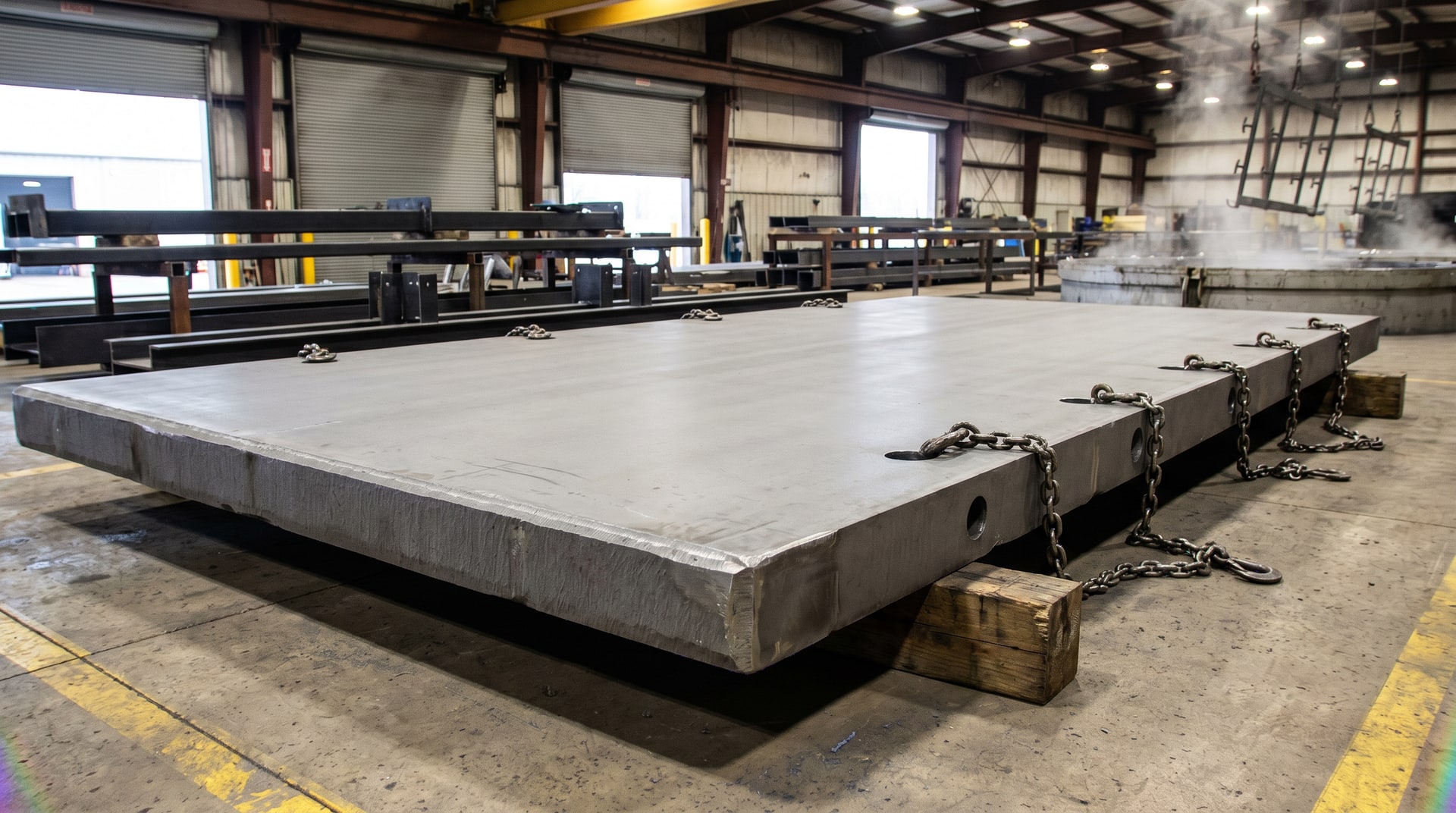
Not all steels are created equal when it comes to galvanizing. While most structural carbon steels respond predictably to the process, higher strength and specialty steels such as AR400 and T-1 introduce a different set of considerations. These materials are designed for hardness, abrasion resistance, and high strength, which means they behave differently when exposed to the temperatures and chemistry of hot dip galvanizing.
The American Galvanizers Association addresses this topic directly here:
https://galvanizeit.org/knowledgebase/article/ar400-steel-and-t-1-steel
At V&S Galvanizing, we work with engineers and fabricators to evaluate whether these materials are suitable for galvanizing and, more importantly, whether galvanizing is the right corrosion protection system for the application.
Why AR400 and T-1 Steel Are Different From Standard Structural Steel
AR400 and T-1 are not typical mild steels. They are engineered through controlled alloying and heat treatment processes to achieve specific mechanical properties.
AR400 is an abrasion-resistant steel designed to withstand wear and impact. Its hardness is achieved through controlled chemistry and quenching processes.
T-1 steel, often referred to as a quenched and tempered alloy steel, is designed for high strength and structural performance under demanding loads.
These properties are valuable in service, but they also mean the material has already undergone significant thermal and metallurgical conditioning before it ever reaches the galvanizer.
What Happens When These Steels Enter the Galvanizing Process
Hot dip galvanizing involves immersing steel into molten zinc at approximately 840 to 850 degrees Fahrenheit. For standard structural steels, this temperature does not meaningfully alter mechanical properties. For quenched and tempered steels, however, the situation requires closer attention.
The concern is not that galvanizing will automatically damage the steel. The concern is that reheating these materials can interact with their prior heat treatment.
If the galvanizing temperature approaches or exceeds the original tempering temperature of the steel, it can:
- Reduce hardness
- Alter strength characteristics
- Change the material’s mechanical profile
This is highly dependent on the specific grade, heat treatment history, and intended performance requirements.
The Real Risk: Mechanical Property Changes, Not Coating Issues
One of the biggest misconceptions is that AR400 or T-1 steels are difficult to coat. In reality, the galvanizing process can still produce a viable zinc coating on these materials.
The primary concern is not coating adhesion or coverage. It is whether the underlying steel maintains its required mechanical properties after exposure to galvanizing temperatures.
In applications where hardness and strength are critical to performance, even small changes can matter.
Why Abrasion-Resistant Steel Creates a Unique Tradeoff
AR400 is specifically designed to resist wear through hardness. When that hardness is reduced, even slightly, its performance in abrasive environments can change.
This creates a practical tradeoff:
- Galvanizing provides excellent corrosion protection
- The material may lose some of its abrasion resistance depending on exposure
In some applications, corrosion is the dominant concern. In others, wear resistance is non-negotiable. Understanding which factor drives the design is essential.
When Galvanizing May Still Be Appropriate
Despite these considerations, there are situations where galvanizing AR400 or T-1 steel is still a viable option.
This typically occurs when:
- The application is not critically dependent on maximum hardness
- Corrosion protection is a higher priority than wear resistance
- The material’s heat treatment can tolerate the galvanizing temperature
In these cases, galvanizing can extend service life by protecting against corrosion without significantly compromising performance.
When Alternative Protection Should Be Considered
There are also scenarios where galvanizing may not be the best solution.
If the application relies heavily on:
- Maintained hardness
- Precise mechanical properties
- Tight performance tolerances
Then alternative corrosion protection systems may be more appropriate.
This is not a limitation of galvanizing. It is a matter of aligning the protection system with the material’s intended function.
Why Early Evaluation Matters More Than Anything Else
The biggest mistakes with AR400 and T-1 steels do not happen in the galvanizing plant. They happen earlier, when material selection and coating decisions are made without full consideration of how they interact.
Reviewing the following early in the process makes a significant difference:
- Steel grade and heat treatment specifications
- Required mechanical properties in service
- Environmental exposure conditions
- Acceptable tradeoffs between corrosion resistance and hardness
This allows project teams to make informed decisions rather than reactive ones.
How This Impacts Real-World Projects
In practice, these decisions show up in industries like mining, transportation, heavy equipment, and infrastructure. These are environments where both corrosion and wear are real concerns.
There is no one-size-fits-all answer. The right solution depends on which failure mode is more critical over the lifecycle of the component.
That is why this conversation is not about whether AR400 or T-1 can be galvanized. It is about whether they should be galvanized for your specific application.
Work With a Team That Understands Material Behavior
High-strength and specialty steels require a more thoughtful approach to galvanizing. The interaction between heat treatment, mechanical performance, and corrosion protection is not something that should be assumed.
At V&S Galvanizing, we work with engineers, fabricators, and project teams to evaluate material selection, understand performance priorities, and determine whether galvanizing aligns with the application.
AR400 and T-1 steels can be hot dip galvanized, but the decision to do so should be based on how the galvanizing process interacts with the material’s heat treatment and mechanical requirements. While the zinc coating can still provide effective corrosion protection, the potential for changes in hardness or strength must be considered in the context of the application. If you are evaluating whether galvanizing is the right solution for high-strength or abrasion-resistant steel in your project, reach out to our team through our contact page.
Frequently Asked Questions About Galvanizing AR400 and T-1 Steel
Can AR400 steel be galvanized?
Yes, but the impact on hardness and abrasion resistance should be evaluated before proceeding.
Can T-1 steel be hot dip galvanized?
It can be, but care must be taken to ensure the galvanizing temperature does not negatively affect its heat-treated properties.
Does galvanizing damage high-strength steel?
Not inherently, but it can alter mechanical properties if the steel’s tempering temperature is close to galvanizing temperatures.
Is coating adhesion a problem on these steels?
No. Coating formation is generally not the issue. The concern is material performance after heating.
When should galvanizing be avoided for these materials?
When the application depends heavily on maintaining specific hardness or strength levels.
What is the main risk with galvanizing AR400?
Potential reduction in hardness, which can impact abrasion resistance.
How do you decide if galvanizing is appropriate?
By evaluating the balance between corrosion protection needs and mechanical performance requirements.
Should this be reviewed before fabrication?
Yes. Early evaluation is critical to avoid unintended performance changes.
