

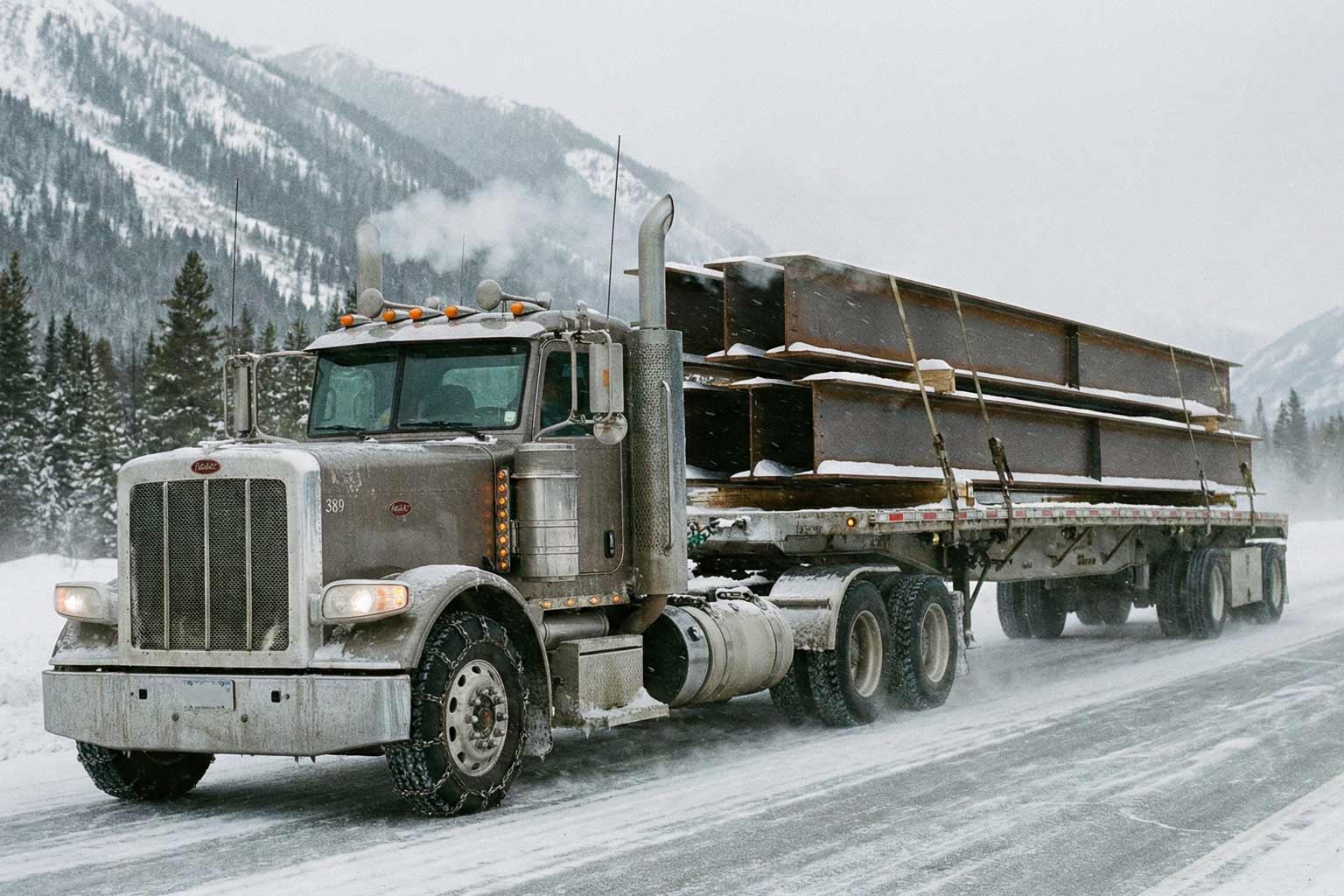
The Winter Transportation Challenge
Hot-dip galvanized steel transportation from galvanizing facilities to fabrication shops, distribution centers, or construction sites occurs year-round regardless of weather conditions. However, winter months throughout northern regions of North America introduce unique challenges as frigid temperatures, precipitation events, and road maintenance practices converge to create aggressive conditions for transported galvanized products. The combination of moisture from rain, snow, fog, and condensation with deicing salts and chemicals applied to roadways creates concentrated chloride solutions that contact galvanized surfaces during transit, potentially initiating rapid wet storage stain formation—visible white to dark gray corrosion products that compromise aesthetic appearance while raising concerns about coating integrity and long-term performance.
Understanding the mechanisms by which winter transportation exposure generates wet storage stain, implementing effective protective measures during shipping, and applying appropriate remediation procedures upon delivery enables stakeholders throughout the supply chain to maintain galvanized product quality, prevent unnecessary aesthetic concerns, and ensure optimal coating performance despite unavoidable seasonal exposure challenges.
Winter Environmental Factors
Multiple meteorological and operational factors during winter months create conditions conducive to wet storage stain development:
Moisture Sources
Precipitation Events:
Winter weather systems produce diverse moisture exposure:
Rain and Freezing Rain:
- Direct wetting of exposed galvanized surfaces
- Water pooling in recessed areas or between stacked articles
- Ice formation creating localized moisture concentration upon thawing
Snow Accumulation:
- Dry snow initially benign but melts during temperature fluctuations
- Wet snow immediately introduces moisture
- Plowed or blown snow from roadways depositing on transported cargo
- Snow melt creating standing water on horizontal surfaces
Fog and Mist:
Dense fog produces continuous moisture deposition:
- Saturates exposed surfaces with fine water droplets
- Penetrates protective coverings through small openings
- Maintains sustained wetness without obvious precipitation
Condensation:
Temperature cycling generates condensation:
Diurnal Cycling: Daytime warming followed by nighttime cooling creates dew point conditions where atmospheric moisture condenses on steel surfaces
Microclimate Formation: Protective tarps or wraps create temperature differentials between covered interior spaces and external atmosphere, producing condensation on internal surfaces despite absence of external precipitation
Temperature Effects
Below Freezing Conditions:
Temperatures below 32°F (0°C) create:
Ice Formation: Water freezing on galvanized surfaces concentrates dissolved salts in unfrozen liquid fraction, increasing chloride concentration in residual moisture
Repeated Freeze-Thaw Cycles: Daily temperature oscillations around freezing point create alternating wet and icy conditions accelerating corrosion processes
Extended Cold Storage: Articles remaining cold-soaked absorb atmospheric moisture rapidly upon warming, generating condensation
Temperature Inversions:
Atmospheric conditions trapping cold air near ground level with warmer air above create persistent fog and condensation conditions during winter months.
Deicing Salt Exposure: Chemistry and Distribution
Winter road maintenance throughout northern states and Canadian provinces involves extensive application of deicing chemicals creating aggressive chloride exposure for transported galvanized materials:
Deicing Chemical Types
Sodium Chloride (NaCl) - Rock Salt:
Application: Most common and economical deicing agent
- Application rates: 100-400 pounds per lane-mile per event
- Millions of tons applied annually across North America
Characteristics:
- Effective to approximately 15-20°F (-9 to -7°C)
- Creates chloride-rich brine solutions
- Highly corrosive to metals in presence of moisture
Magnesium Chloride (MgCl₂):
Application: Increasingly common alternative or supplement to rock salt
- Applied as pre-wetted solid or liquid brine
- Lower effective temperature: 5°F (-15°C)
Characteristics:
- More expensive than sodium chloride
- Enhanced ice penetration
- Very hygroscopic (attracts atmospheric moisture)
- Highly corrosive due to sustained moisture presence
Calcium Chloride (CaCl₂):
Application: Premium deicing agent for extreme conditions
- Effective to -25°F (-32°C)
- Used for severe weather events
Characteristics:
- Most expensive common deicer
- Extremely hygroscopic creating persistent moisture
- Very aggressive corrosive environment
Liquid Brines:
Many agencies apply liquid brine solutions (23% salt concentration typical) preventatively before storms:
- Pre-treatment prevents ice bond to pavement
- Remains on road surface longer than dry salt
- Creates immediate highly concentrated chloride solution
Salt Distribution on Roadways
Direct Application:
Deicing materials deposited directly on road surfaces:
- Solid materials distributed by spreader trucks
- Liquid brines sprayed from tanker equipment
- Concentrated along travel lanes with lighter coverage on shoulders
Spray and Splash:
Moving traffic generates:
- Salt spray: Atomized saltwater aerosol from tire contact with wet, salted pavement
- Splash: Larger water droplets and slush thrown from tire treads
- Distribution height: Spray reaches 6-10 feet above pavement; splash 3-6 feet typical
Airborne Transport:
Wind and vehicle-generated turbulence:
- Disperse dry salt particles into air
- Carry salt spray beyond immediate roadway
- Deposit salt on vehicles and cargo throughout traffic stream
Accumulation Zones:
Salt concentration varies by location:
- Heavy traffic lanes: Maximum salt distribution from repeated vehicle passage
- Behind slow vehicles: Salt spray accumulation on following loads
- Exposed cargo areas: Splash zone receives direct salt deposition
- Covered but unsealed cargo: Salt infiltration through tarp gaps and openings
Accelerated Wet Storage Stain Formation Mechanism
The combination of chloride salts with moisture creates aggressive conditions dramatically accelerating wet storage stain compared to normal atmospheric exposure:
Standard Wet Storage Stain Chemistry
Under typical conditions without salt contamination, wet storage stain develops when:
Moisture Presence: Rain, condensation, or high humidity creates water film on galvanized surface
Limited Air Circulation: Stacked or closely spaced articles prevent drying, maintaining persistent wetness
Zinc Corrosion: Zinc reacts with water and dissolved carbon dioxide forming corrosion products:
Zn + H₂O + CO₂ → Zn(OH)₂ + ZnCO₃ (zinc hydroxides and carbonates)
These white to light gray corrosion products accumulate as voluminous deposits appearing as powdery white rust.
Typical Development Timeline: Weeks to months of sustained wet storage conditions in mild environments
Salt-Accelerated Mechanism
Deicing salt contamination dramatically alters corrosion kinetics:
Chloride Effects:
Electrolyte Enhancement: Dissolved salts (NaCl, MgCl₂, CaCl₂) dramatically increase solution conductivity:
- Pure water: Very low conductivity
- Salt solution: 100-1000× higher conductivity
- Enhanced ionic current supports rapid electrochemical reactions
Passive Film Disruption: Chloride ions penetrate and disrupt protective zinc patina layers normally limiting corrosion rates:
- Chlorides enhance zinc solubility
- Prevent stable protective film formation
- Enable sustained rapid zinc dissolution
pH Reduction: Deicing salts create slightly acidic conditions (pH 6-7) versus typical rainwater (pH 5.5-6.5) or pure water (pH 7), enhancing zinc dissolution rates.
Hygroscopic Moisture Attraction: Magnesium chloride and calcium chloride are extremely hygroscopic, attracting atmospheric moisture even in relatively dry conditions:
- Deposited salt continuously absorbs moisture from air
- Creates persistent wet surface conditions
- Sustains corrosion despite absence of rain or snow
- Particularly aggressive during temperature cycling through dew point
Corrosion Product Formation:
Salt-contaminated environments produce different corrosion products:
Zn + Cl⁻ + H₂O → ZnCl₂ + Zn(OH)Cl (zinc chlorides and hydroxychlorides)
Appearance:
- Dark gray to black deposits (zinc chlorides)
- White voluminous powder (zinc hydroxychlorides)
- Mixed dark and white appearance common
- More dramatic visual impact than standard wet storage stain
Accelerated Timeline: Wet storage stain can develop within hours to days in salt-contaminated wet conditions versus weeks to months for salt-free exposure.
Plastic Wrap Aggravation
Protective plastic wrapping or shrink film intended to shield cargo from moisture can paradoxically worsen wet storage stain when salt contamination exists:
Mechanism:
Moisture Trapping: Plastic barriers prevent air circulation and trap moisture inside wrap:
- Condensation forms on internal surfaces
- Water cannot evaporate or drain effectively
- Sustained wetness maintained throughout transport
Salt Concentration: If salt deposits penetrate wrap before sealing or enters through gaps:
- Trapped moisture dissolves salt creating concentrated brine
- No dilution from rain or washing
- Chloride concentration can exceed seawater levels
Temperature Effects: Plastic wrap creates greenhouse effect with solar heating:
- Internal temperature elevation accelerates corrosion kinetics
- Temperature cycling creates continuous condensation
- Wet/warm conditions optimize corrosion rates
Result: Severe wet storage stain formation possible within single day of transport if salt contamination exists beneath plastic protection.
Zinc Performance with Dry Salt
An important distinction exists between zinc exposure to wet salt versus dry salt:
Dry Salt Storage Applications
Hot-dip galvanized steel demonstrates excellent performance in dry salt storage facilities:
- Road salt storage buildings
- Bulk salt storage structures
- Agricultural fertilizer storage
- Chemical storage (dry conditions)
Success Factors:
Absence of Moisture: Dry salt cannot dissolve or form electrolyte solution:
- No electrochemical corrosion possible without liquid water
- Salt remains chemically inert solid
- Galvanized coating remains stable indefinitely
Documentation: Numerous galvanized salt storage facilities demonstrate 50-75+ year service life with minimal coating loss, confirming excellent dry salt compatibility.
Transport Context
During winter transport:
Dry Salt Deposition: Initial salt contact may involve dry solid particles deposited on galvanized surfaces from roadway spray and airborne transport.
No Immediate Concern: Dry salt presents minimal corrosion risk during brief transport durations (hours to days) provided moisture exposure remains minimal.
Problem Initiation: Corrosion issues arise when moisture (rain, snow, condensation, fog) dissolves deposited dry salt creating aggressive chloride solution.
Critical Distinction: The combination of salt plus moisture creates aggressive condition. Either factor alone—dry salt or salt-free moisture—produces much slower wet storage stain development.
Transportation Protection Strategies
Preventing or minimizing wet storage stain during winter transportation requires systematic protective measures:
Tarping and Physical Protection
Heavy-Duty Tarpaulins:
Material Selection:
- Polyethylene or vinyl-coated fabric
- Minimum 10-12 oz/sq yd weight for durability
- UV-resistant for extended service life
- Waterproof construction
Coverage Strategy:
Complete Enclosure:
- Tarps should completely cover load from front to rear
- Extend below load platform edges preventing splash from below
- Secure front edge preventing wind entry and billowing
- Overlap sections with weathertight seals
Securing Methods:
- Bungee cords or ratchet straps maintaining tension
- Multiple attachment points preventing loosening
- Regular inspection during transport verifying maintained coverage
Benefits:
Salt Exclusion: Primary benefit is preventing road salt spray and splash from contacting galvanized surfaces:
- Blocks direct liquid splash from tires
- Deflects airborne salt aerosol
- Prevents dry salt particle deposition
Moisture Reduction: Tarps reduce but do not eliminate moisture exposure:
- Block direct rain and snow
- Reduce fog/mist penetration
- Limited condensation prevention
Limitations:
Condensation Potential: Tarps create enclosed microclimate enabling condensation:
- Temperature differentials between covered cargo and external air
- Moisture trapped inside tarp
- Internal surfaces may become wet despite external dryness
Incomplete Sealing: Practical tarping rarely achieves perfect environmental isolation:
- Gaps at edges and securing points
- Billowing during highway travel creates pumping action
- Moisture and some salt can penetrate despite coverage
Recommendations for Tarp Use
Always Use in Winter: Despite condensation concerns, tarping provides net benefit in winter transport:
Without Tarp:
- Direct exposure to concentrated road salt spray
- Immediate salt contamination
- High wet storage stain risk when moisture combines with salt
With Tarp:
- Salt exposure largely prevented
- Any condensation occurs with minimal or no salt present
- Lower overall wet storage stain risk
Conclusion: Tarping substantially reduces net risk despite potential condensation because it prevents the critical salt contamination factor.
Load Configuration Optimization
Elevated Stacking:
Platform Arrangement:
- Elevate galvanized articles on dunnage or blocking
- Maintain 6-12 inch minimum clearance above truck bed
- Reduces splash zone exposure from roadway
Air Circulation:
Spacing Between Articles:
- Separate stacked pieces with spacers (wood strips, plastic separators)
- Maintain air gaps enabling drainage and drying
- Prevents moisture trapping between surfaces
Orientation:
Drainage Consideration:
- Orient articles allowing water drainage rather than pooling
- Avoid horizontal cup-like configurations trapping moisture
- Position holes and channels for gravity drainage
Transport Timing and Routing
Weather-Aware Scheduling:
Monitoring:
- Track weather forecasts for transport routes
- Identify precipitation events and temperature patterns
- Consider delaying shipment during severe winter storms when feasible
Route Selection:
- Prioritize routes with lower salt application intensity when options exist
- Interstate highways receive heavy salt treatment; secondary roads may be untreated or lightly treated (though slower travel)
Transit Duration Minimization:
Direct Routing: Minimize total exposure time through efficient logistics:
- Direct routes versus circuitous paths
- Consolidated shipments reducing handling
- Expedited delivery when practical
Seasonal Considerations: Winter transport unavoidable for many projects; accept that some salt exposure likely occurs. Focus on minimizing exposure and implementing prompt remediation upon delivery.
Receiving and Inspection Protocols
Systematic procedures upon cargo delivery minimize wet storage stain consequences:
Immediate Visual Inspection
Upon Arrival Assessment:
Inspection Points:
- Overall cargo condition
- Tarp integrity and coverage quality
- Visible moisture presence
- Salt residue evidence (white crusty deposits, salt crystals visible)
- Wet storage stain appearance (white powdery areas, dark gray zones)
Documentation:
- Photograph cargo condition upon receipt
- Note visible wet storage stain extent
- Record weather conditions during transport period
- Document delivery timing relative to storm events
Damage Reporting:
If extensive wet storage stain is apparent:
- Document condition before unloading
- Photograph for records
- Notify supplier/carrier of condition
- Determine responsibility for remediation costs
Salt Removal and Remediation Procedures
Prompt action upon delivery prevents extended salt exposure and continued wet storage stain development:
Salt Removal by Rinsing
Objective: Remove deposited road salt before extended storage or installation, eliminating chloride source for continued corrosion.
Method: Fresh Water Rinsing
Procedure:
- Initial Rinse: Apply clean fresh water thoroughly wetting all surfaces
- Use pressure washer (below 1,450 PSI to prevent coating damage)
- Garden hose with spray nozzle acceptable
- Cover all surfaces including underside and recessed areas
- Duration: 2-5 minutes thoroughly flushing surfaces
- Second Rinse: Allow 15-30 minutes drainage after first rinse
- Apply second fresh water rinse identical to first
- Ensures complete salt removal from surface pores and crevices
Critical Requirements:
Fresh Water Only:
- Use clean municipal water or well water
- Do NOT use seawater or brackish water (introduces additional salt)
- Avoid recycling rinse water (concentrates removed salts)
No Water Baths: Immersion or recirculating water baths accumulate salt in solution:
- First articles leave salt in bath
- Subsequent articles contact salt-contaminated water
- Ineffective salt removal
- Potential for salt concentration increase
Pressure Limitation: Excessive pressure (>1,450 PSI) can damage zinc coating:
- Erosion of zinc surface
- Coating thickness reduction
- Potential for coating removal on edges
Complete Coverage: Ensure all surfaces receive rinsing:
- Both visible and hidden surfaces
- Internal hollow sections if accessible
- Connection points and crevices
- Stacked articles separated for access
Drying After Rinsing
Critical Step: Salt removal rinsing leaves articles wet. Immediate drying prevents further wet storage stain development.
Drying Methods:
Air Separation and Drainage:
- Separate stacked articles using spacers
- Stand articles on edge enabling gravity drainage
- Arrange in well-ventilated area
- Outdoor drying acceptable in dry weather; indoor preferred in winter
Time Requirements:
- Warm, dry weather: 2-4 hours adequate
- Cool, humid conditions: 8-24 hours may be necessary
- Complete drying essential before covering or enclosed storage
Verification:
- Visual inspection confirming no standing water
- Touch verification of surface dryness
- Check internal surfaces and recesses
Wet Storage Stain Appearance Management
Functional Impact Assessment
Critical Understanding:
Light to moderate wet storage stain does NOT compromise coating corrosion protection or structural performance:
Coating Integrity Maintained:
- Wet storage stain is surface phenomenon
- Zinc coating thickness largely unaffected (consumption typically <1-5 micrometers)
- Remaining coating provides full protective capacity
- Structural properties and mechanical behavior unchanged
Testing Evidence: Salt spray testing and field exposure studies confirm that galvanized steel with wet storage stain performs equivalently to unstained galvanizing in long-term service.
Aesthetic Considerations
Initial Appearance:
Wet storage stain creates cosmetic concerns:
- White powdery deposits
- Dark gray or black blotches
- Non-uniform, blotchy appearance
- Contrast with bright, clean galvanizing
Appearance Evolution:
All galvanized steel naturally weathers to uniform matte gray patina through atmospheric exposure:
Weathering Timeline:
- Indoor installations: Minimal weathering; appearance remains relatively stable
- Outdoor exposure, moderate climate: 6-12 months to uniform patina
- Outdoor exposure, aggressive atmosphere: 3-6 months to uniform patina
Uniformity Development:
Articles with wet storage stain and unstained galvanizing in same structure converge toward identical appearance:
- Unstained bright galvanizing weathers to gray
- Wet storage stain white deposits consolidate and gray
- Dark areas lighten with patina formation
- Final appearance: Uniform matte gray regardless of initial condition
Field Evidence:
Highway guardrail example (documented in technical literature):
- Section with wet storage stain installed adjacent to bright, clean section
- Initial appearance: Obvious contrast
- After 3.5 months outdoor exposure: Both sections identical uniform gray
- Long-term: No appearance difference detectable
Implication for Project Management:
For outdoor installations:
- Wet storage stain aesthetic concern is temporary
- Natural weathering resolves appearance issues within months
- Functional performance unaffected throughout
- Expensive manual cleaning may be unnecessary for routine applications
Indoor or Appearance-Critical Applications:
Where appearance must be maintained:
- Architecturally Exposed Structural Steel (AESS) with high aesthetic standards
- Interior installations without weathering opportunity
- Showcase or feature elements
Wet storage stain removal may be warranted for immediate aesthetic satisfaction.
Wet Storage Stain Cleaning Procedures
When appearance requirements mandate wet storage stain removal:
Cleaning Agent Selection
Commercial Wet Storage Stain Cleaners:
Specialty products formulated specifically for wet storage stain:
- Proprietary blends of acids, chelating agents, and surfactants
- Optimized pH and chemistry for zinc corrosion product dissolution
- Minimal impact on underlying zinc coating
Examples:
- Products from multiple suppliers (consult AGA resources for current listings)
- Typically supplied as concentrates diluted with water per manufacturer instructions
Alternative Cleaning Agents:
Dilute Acids:
- Phosphoric acid solutions (5-10% concentration)
- Citric acid solutions
- Effectiveness varies by corrosion product type
Caution: Excessive acid concentration or extended exposure can attack zinc coating itself. Follow manufacturer guidance strictly.
Cleaning Procedure
Process Steps:
- Surface Preparation: Remove loose deposits and rinse with water removing loose debris and surface salt
- Cleaning Solution Application: Apply cleaning agent per manufacturer instructions:
- Brush application with stiff nylon bristle brush most common
- Work solution into affected areas
- Scrubbing action assists corrosion product removal
- Dwell Time: Allow solution contact for specified duration (typically 5-15 minutes)
- Chemical action dissolves zinc corrosion products
- Avoid excessive dwell time preventing zinc coating attack
- Agitation: Scrub with stiff nylon brush during dwell period
- Mechanical action aids corrosion product detachment
- Avoid metal brushes damaging coating
- Rinsing: Thoroughly rinse with clean water removing all cleaning agent and dissolved products:
- Complete rinsing prevents continued chemical action
- Multiple rinses ensuring complete removal
- Drying: Dry articles completely preventing new wet storage stain formation
- Inspection: Assess cleaning effectiveness:
- Repeat process if residual staining remains
- Accept minor remaining discoloration that will weather naturally
Safety Precautions:
- Personal protective equipment (chemical-resistant gloves, eye protection)
- Adequate ventilation when using acid-based cleaners
- Proper chemical storage and disposal per regulations
- Review Safety Data Sheets (SDS) for specific products
Storage After Transport
Even after salt removal and drying, proper storage prevents wet storage stain recurrence:
Storage Location Selection
Indoor Storage Preferred:
- Protected from precipitation
- Controlled environment reduces condensation
- Extended storage feasible without deterioration
Outdoor Storage Requirements:
When indoor storage unavailable:
Elevated Platforms:
- Store on dunnage or racks above ground level
- Prevents ground moisture contact
- Facilitates air circulation and drainage
Slope and Drainage:
- Storage area with positive drainage
- Avoids standing water accumulation around stored material
- Slight slope on stored articles promotes water runoff
Covering Considerations:
Breathable Covers:
- Fabrics allowing moisture vapor escape
- Prevents condensation accumulation
- Protects from direct precipitation
Avoid Impermeable Wrapping:
- Plastic sheeting without ventilation traps moisture
- Creates ideal wet storage stain conditions
- Use only with proper ventilation provisions
Stacking and Separation
Spacer Use:
Separate stacked articles with:
- Wood strips (1x2 or 2x2 lumber)
- Plastic spacers
- Rubber blocks
Benefits:
- Air circulation between layers
- Prevents moisture trapping
- Facilitates drying after precipitation
Spacing Patterns:
- Spacers every 2-4 feet along length
- Multiple spacer layers for tall stacks
- Consistent positioning preventing article contact
Communication and Responsibility
Clear stakeholder communication prevents disputes and ensures proper handling:
Procurement Documentation
Purchase Orders and Contracts:
Specify transportation requirements:
- "Galvanized material shall be transported with protective tarping during winter months"
- "Supplier responsible for delivering material free from extensive wet storage stain"
- "Material shall be rinsed to remove road salt upon delivery"
Responsibility Allocation:
Define who bears costs for:
- Protective tarping during transport
- Salt removal upon delivery
- Wet storage stain cleaning if required
- Material replacement if unacceptable condition
Carrier Instructions
Shipping Documentation:
Provide explicit handling instructions:
- "Protect galvanized cargo with tarpaulins during winter transport"
- "Minimize exposure to road salt spray"
- "Deliver during dry weather when possible"
Freight Inspections:
Include condition assessment requirements:
- Carrier documents cargo condition at pickup
- Photographs taken at origin and destination
- Damage claims process established
Economic Impact Analysis
Understanding costs associated with winter transport challenges:
Salt Removal Cost
Labor and Water:
Typical cost for pressure washing galvanized cargo:
- Labor: 0.5-2 hours at $50-75/hour = $25-150
- Water: Minimal cost ($1-5)
- Equipment: Pressure washer rental or owned equipment ($0-50 per day)
Total per load: $25-200 depending on cargo size and contamination extent
Wet Storage Stain Cleaning Cost
If aesthetic cleaning required:
- Cleaning agent: $50-150 per job depending on area
- Labor: 2-8 hours at $50-75/hour = $100-600
- Equipment: Brushes, spray bottles, PPE ($25-50)
Total per load: $175-800 for extensive manual cleaning
Avoidance Value:
Implementing effective protection (tarping, prompt rinsing) costing $50-100 per load prevents potential $200-1000 cleaning expenses—clear positive return.
Risk of Material Rejection
Severe Wet Storage Stain:
If customer rejects material due to appearance:
- Return freight costs
- Re-galvanizing costs (if deemed necessary, though rarely required)
- Project delays
- Relationship damage
Potential Costs: $1,000-10,000+ depending on cargo value and circumstances
Risk Management:
Proactive protection and remediation ($100-300 per load) provides valuable insurance against rejection risk.
Best Practices Summary
For Galvanizers/Suppliers
Pre-Shipment:
- Ensure adequate drying time after galvanizing before winter shipment
- Provide tarping or specify tarping requirement for carrier
- Schedule shipments avoiding severe weather when possible
Documentation:
- Photograph cargo before loading
- Note weather conditions during shipment
- Provide handling instructions to carrier
Upon Complaint:
- Assess reported wet storage stain severity
- Verify protection measures were implemented
- Work collaboratively on remediation
For Carriers
Winter Transport Protocol:
- Use heavy-duty tarps for all galvanized cargo in winter
- Secure tarps preventing loosening or billowing
- Inspect and maintain tarp integrity during multi-day transits
- Document cargo condition at pickup and delivery
Route Optimization:
- Choose routes minimizing salt exposure when practical
- Avoid unnecessary delays extending exposure duration
For Receivers
Immediate Actions:
- Inspect upon delivery, document condition
- Rinse to remove road salt within 24 hours of delivery
- Separate and dry articles completely
- Store properly preventing continued exposure
Long-Term Perspective:
- Recognize light/moderate wet storage stain as cosmetic issue
- Plan for natural weathering resolution in outdoor applications
- Reserve expensive cleaning for truly appearance-critical applications
Winter transportation of hot-dip galvanized steel throughout North America's northern regions introduces unique challenges as the combination of deicing salts applied to roadways (sodium chloride, magnesium chloride, calcium chloride at 100-400 pounds per lane-mile) and winter precipitation creates aggressive conditions for wet storage stain formation. Road salt spray and splash from vehicle traffic deposits concentrated chloride solutions on transported cargo, while the hygroscopic nature of calcium and magnesium chlorides continuously attracts atmospheric moisture creating persistent wetness even without rain or snow, enabling rapid development of white to dark gray zinc corrosion products within hours to days versus weeks to months in salt-free conditions. Effective winter transport protection requires systematic tarping using heavy-duty waterproof materials completely covering loads and secured to prevent billowing, despite potential condensation concerns, because tarps primarily exclude the critical salt contamination factor that drives aggressive wet storage stain formation. Upon delivery, prompt remediation through dual fresh water rinsing thoroughly removing deposited salts followed by complete article separation and drying in well-ventilated areas prevents continued corrosion and subsequent wet storage stain development, with pressure washing limited to 1,450 PSI maximum preventing coating damage. Light to moderate wet storage stain developed during transit does not compromise coating corrosion protection or structural performance, consuming typically less than 1-5 micrometers of coating thickness while maintaining full protective capacity, and naturally resolves through atmospheric weathering within 3-12 months as both stained and unstained galvanizing converge toward identical uniform matte gray appearance in outdoor installations. Aesthetic cleaning using commercial wet storage stain removers or dilute acid solutions (phosphoric acid, citric acid) applied with stiff nylon brushes provides immediate appearance improvement when required for architecturally exposed applications or interior installations, though natural weathering resolution often proves adequate for routine outdoor structures justifying acceptance of temporary cosmetic concerns. Best practices demand clear stakeholder communication establishing tarping requirements, salt removal responsibilities, and cost allocation for remediation; proactive winter transport protection through tarping and prompt post-delivery rinsing costing $50-300 per load provides valuable insurance against potential $200-1,000+ cleaning expenses or catastrophic material rejection risks; and recognition that hot-dip galvanized steel's inherent corrosion resistance ensures excellent long-term performance despite temporary wet storage stain aesthetic impacts from unavoidable winter transport exposure. Visit the original AGA article to read more about Winter Transport of HDG Steel.
