

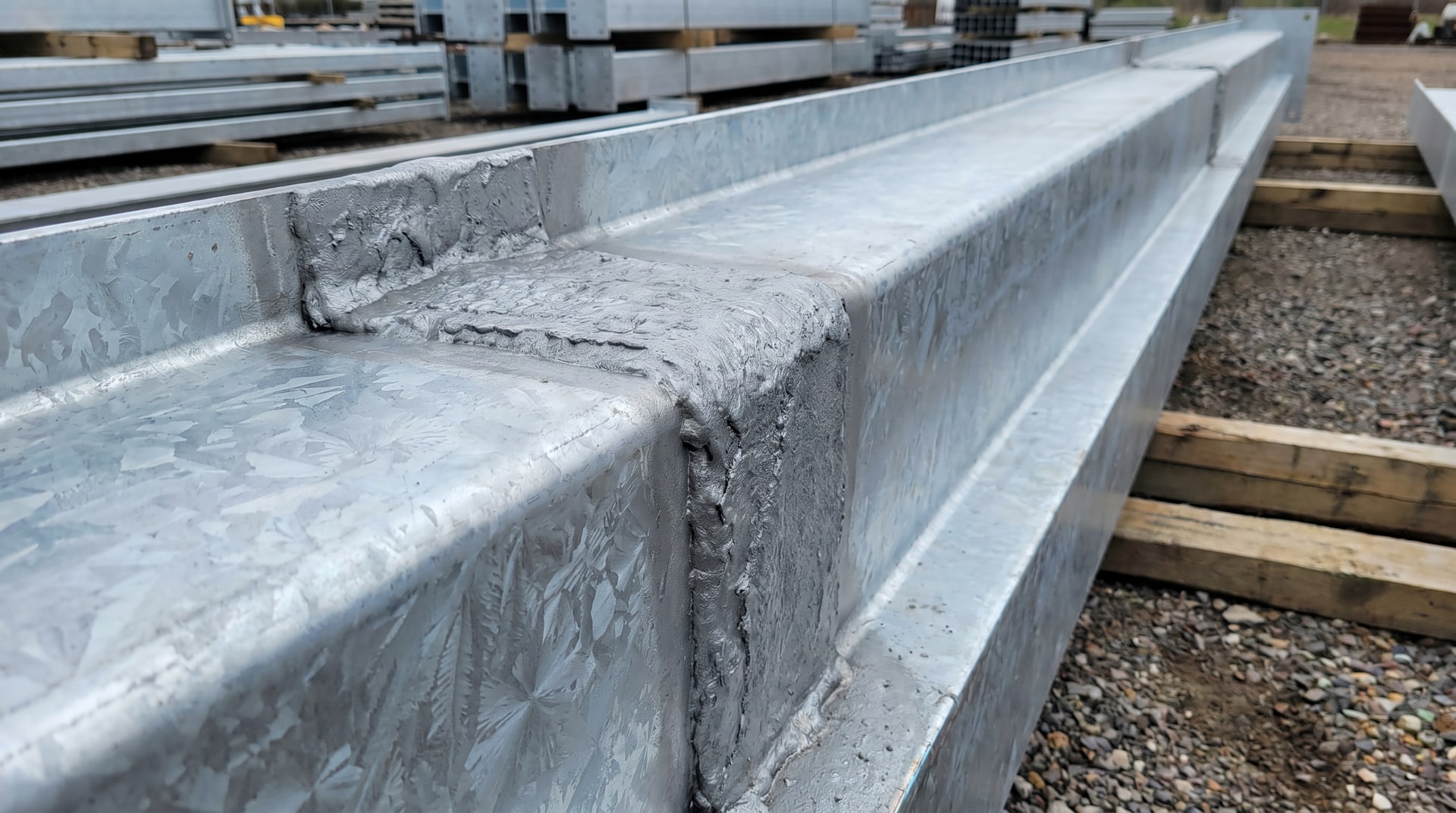
Progressive dip galvanizing is often used for large or complex fabrications that exceed standard kettle dimensions. While this process allows full coating coverage on oversized components, it can introduce unique appearance characteristics—especially in overlapped or layered areas of steel.
One of the most common observations in these situations is a rough surface finish where steel members overlap. At V&S Galvanizing, we regularly help customers understand why this occurs and how it relates to fabrication design rather than coating failure. The American Galvanizers Association provides technical background on this topic, which we expand on here to clarify causes, expectations, and best practices.
What Is Progressive Dip Galvanizing?
Progressive dipping is a method used to galvanize large steel components in stages.
Instead of immersing the entire piece at once:
- Sections are dipped sequentially
- The component is repositioned between immersions
- Overlapping immersion zones are created
This allows full galvanizing coverage even when the part exceeds kettle size.
Why Overlapped Areas Behave Differently
During progressive dipping, certain areas of the steel may be immersed more than once. These overlapping zones experience different thermal and chemical conditions compared to single-dip areas.
In overlapped regions:
- The steel may be reheated during subsequent dips
- Zinc layers may grow further
- Surface reactions may continue longer
These factors can lead to localized differences in coating thickness and texture.
Causes of Rough Surface Formation
Rough surfaces in overlapped areas are typically the result of coating growth and reaction behavior rather than defects.
Common contributing factors include:
Extended Reaction Time
Repeated immersion allows the zinc-iron alloy layers to grow thicker, which can create a more textured or rough surface.
Steel Chemistry
Reactive steels (especially those containing silicon or phosphorus) can amplify coating growth in these areas, increasing roughness.
Overlapping Fabrication Design
Tight overlaps or layered steel sections can:
- Restrict zinc flow
- Trap heat during immersion
- Create uneven coating buildup
These conditions contribute to localized surface irregularities.
Appearance vs Performance
Rough surfaces in overlapped areas often raise concerns during inspection, but it is important to separate appearance from performance.
In most cases:
- The coating remains fully bonded
- Thickness may meet or exceed specifications
- Corrosion protection is not reduced
The roughness is typically a visual and tactile characteristic rather than a functional issue.
When Roughness May Require Attention
Although rough surfaces are often acceptable, evaluation is important when:
- The roughness interferes with assembly or fit
- Coating buildup affects tolerances
- The surface condition is inconsistent with specification requirements
Inspection should focus on measurable criteria such as coating thickness and adhesion rather than appearance alone.
Design Considerations to Reduce Roughness
While some variation is inherent to progressive dipping, fabrication design can help minimize roughness in overlapped areas.
Best practices include:
- Minimizing tight overlaps where possible
- Providing proper venting and drainage
- Avoiding configurations that trap heat or zinc
- Coordinating design with the galvanizer early in the project
These steps help improve coating consistency.
Importance of Early Coordination
Progressive dip projects benefit significantly from early collaboration.
Working with a galvanizer during the design phase allows teams to:
- Identify areas that may be dipped multiple times
- Adjust fabrication details where possible
- Set expectations for appearance and finish
At V&S Galvanizing, we work closely with customers to ensure large or complex fabrications are optimized for the galvanizing process.
Work With a Team That Understands Complex Fabrications
Progressive dip galvanizing enables large-scale projects to benefit from the durability of hot dip galvanizing, but it requires an understanding of how the process affects coating development.
Rough surfaces in overlapped areas during progressive dip galvanizing are typically caused by extended reaction time, steel chemistry, and fabrication design. These conditions can lead to thicker and more textured coatings in localized areas. While the appearance may vary, performance is usually not affected as long as coating requirements are met. Proper design and early coordination help minimize these effects and ensure consistent results.
At V&S Galvanizing, we help customers evaluate fabrication designs, anticipate coating outcomes, and ensure performance expectations are met across all areas of a project.
If you have questions about progressive dipping, overlapped areas, or coating appearance, reach out to our team through our contact page.
Frequently Asked Questions About Rough Surfaces in Progressive Dip Galvanizing
Why do overlapped areas look rough after galvanizing?
Overlapped areas may be immersed multiple times during progressive dipping, which allows the zinc coating to grow thicker and develop a rougher texture.
Is a rough galvanized surface a defect?
Not necessarily. Roughness is often a normal result of coating growth and does not indicate a performance issue if specifications are met.
Does progressive dipping affect coating thickness?
Yes. Areas that are dipped multiple times can develop thicker coatings due to extended reaction time.
Can steel chemistry influence roughness?
Yes. Reactive steels can produce thicker, more textured coatings, especially in overlapped areas.
Should rough surfaces be repaired?
Only if they interfere with function, assembly, or fail to meet specification requirements.
Can roughness be prevented completely?
No, but it can be minimized through proper design, fabrication practices, and early coordination with the galvanizer.
Does roughness reduce corrosion protection?
No. Rough areas often have thicker coatings, which can provide equal or greater corrosion protection.
When should overlapped areas be reviewed during design?
Overlapped areas should be reviewed early in the design phase to identify potential coating variation and optimize fabrication details.
