

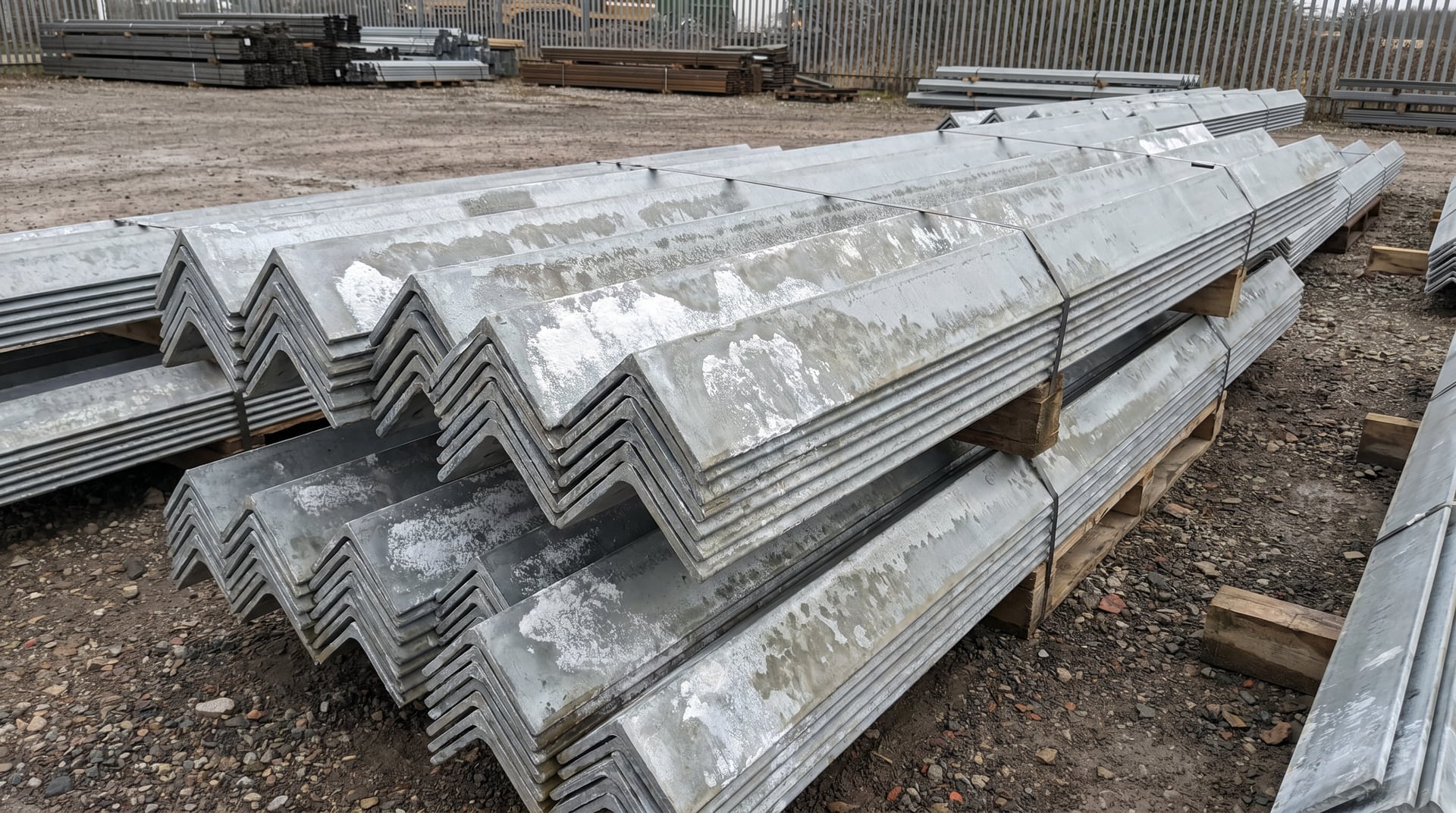
When freshly galvanized steel arrives on a jobsite covered in a chalky white or gray powder, the reaction is often alarm. Fabricators and contractors who have not encountered wet storage stain before sometimes assume the zinc coating has failed, or that the galvanizing was done improperly. In reality, what they are seeing is a well-understood corrosion product that forms under specific storage and shipping conditions. Its appearance can range from superficial haze to heavy buildup, and understanding the difference matters considerably for how you respond to it.
Wet storage stain is not a rare or exotic phenomenon. It shows up regularly on stacked and bundled galvanized products like sheets, plates, angles, bars, and pipe, particularly when those items are packed tightly and exposed to moisture without adequate airflow. The mechanism is straightforward, but it is frequently misdiagnosed or mischaracterized in the field, leading either to unnecessary concern or to the opposite problem: dismissing coating damage that actually warrants corrective action.
The American Galvanizers Association addresses this directly in their article on wet storage stain. At V&S Galvanizing, we expand on that foundation to explain what is actually happening at the material level, how moisture and ventilation influence zinc coating behavior, and why this condition is often misunderstood in the field.
What Wet Storage Stain Actually Is
Zinc is a reactive metal. When freshly galvanized steel is exposed to the atmosphere under normal conditions, the outer zinc surface begins to oxidize and carbonate. Over time, this produces a stable, tightly adhering layer of zinc corrosion products, primarily zinc carbonate, that serves as additional protection for the underlying zinc. This patina is what gives weathered galvanized steel its characteristically dull gray appearance, and it is a sign the coating is performing exactly as intended.
The problem arises before that protective patina has a chance to form. Newly galvanized steel has a bright, reactive zinc surface. When that surface is kept wet, particularly in a confined environment with poor air circulation, the zinc reacts aggressively with water and oxygen. The result is a bulky, loosely adherent deposit of zinc hydroxide and zinc oxide, the white or gray powder we call wet storage stain. Unlike the protective zinc carbonate patina that forms under normal atmospheric exposure, this deposit does not provide meaningful corrosion protection. It is a sign that zinc is being consumed faster than it can stabilize.
The critical distinction is between a mature galvanized surface and a fresh one. Weathered zinc surfaces that have already developed their normal protective layer are seldom attacked by the same conditions that produce wet storage stain. The vulnerability is essentially a characteristic of the early post-galvanizing period, before the zinc has had time to passivate through normal atmospheric exposure.
How Stacking and Bundling Create the Conditions for Stain
The physics of this problem are easy to visualize. When galvanized sheets, plates, or structural sections are stacked face-to-face or bundled tightly together, the contact points and the narrow gaps between surfaces create a microenvironment that is fundamentally different from open-air exposure. Moisture, whether from rain, condensation, or humidity, can penetrate those gaps and become trapped. Because airflow is blocked, the moisture cannot evaporate at anything close to a normal rate.
That standing water against a reactive zinc surface is exactly the scenario that accelerates zinc corrosion. The longer the moisture is retained and the less air movement there is, the more aggressively the zinc reacts. This is why wet storage stain is associated specifically with stacked and bundled items. A single galvanized beam stored upright in the open air is unlikely to develop any stain at all. The same beam in a tight stack, shipped in a sealed container, or stored on wet ground can develop significant deposits within days.
Temperature cycling also contributes. As ambient temperature drops overnight, condensation forms on cooler metal surfaces, including the interior faces of a tight stack. That condensation has nowhere to go, so it sits in contact with the zinc through the following day. If this cycle repeats over multiple days or weeks, the cumulative effect on the coating can be significant.
Assessing Severity: Light, Medium, and Heavy Stain
Not all wet storage stain is equally consequential. The source material distinguishes three levels of severity, and how you respond to staining depends heavily on which category you are dealing with.
Light stain is by far the most common outcome. It presents as a thin white haze or powdery deposit that does not penetrate meaningfully into the zinc coating. In the vast majority of cases, light wet storage stain does not reduce the expected service life of the product. The underlying zinc is intact, the stain is primarily surface-level, and once the steel is placed in service and exposed to normal atmospheric conditions, the zinc surface will stabilize and perform as expected. Light stain can often be brushed off or will weather away naturally.
Medium stain represents a more serious condition. The deposit is thicker and more consolidated, and the zinc beneath may show signs of thinning or pitting. This level of stain warrants closer inspection and, in some cases, intervention before the steel is put into service.
Heavy stain is the most damaging category. At this level, the zinc has been substantially consumed in the affected areas. The protective value of the coating is compromised, and if left untreated, the steel substrate may be vulnerable to corrosion well ahead of its expected service life. Heavy wet storage stain may require stripping and regalvanizing the affected material, which is a significant and costly outcome. This is why proper storage practice is not merely a best practice recommendation but a practical economic concern.
Storage and Handling Practices That Prevent Stain Formation
Prevention comes down to two things: keeping the zinc surface dry and ensuring adequate airflow. Every specific storage recommendation traces back to one or both of these principles.
Newly galvanized articles should be stored under cover in dry, well-ventilated areas whenever possible. If indoor storage is not available and outdoor stacking is unavoidable, the steel should be raised off the ground and oriented to maximize drainage. Inclining stacked material so that water runs off rather than pooling makes a meaningful difference. Storing galvanized steel on wet soil or decaying vegetation should be avoided entirely, both because of the moisture contact and because organic decomposition can produce acidic conditions that are chemically aggressive to zinc.
Separation is the other key tool. By placing strip spacers between stacked sections, you restore the airflow and drainage that tight stacking eliminates. Even a small gap between surfaces allows moisture to escape rather than remain trapped. Spacers also prevent the surface-to-surface contact that can concentrate moisture at specific points and produce localized heavy staining even when the surrounding surfaces are relatively dry.
Choosing the Right Spacer Material for Shipping
Spacers used during shipping deserve particular attention because the material choice can itself become a source of corrosion. Resinous wood should not be used as spacer or packing material. The resins in certain wood species can initiate corrosion on the zinc surface through chemical interaction, which compounds the problem rather than solving it.
Poplar and spruce have been used successfully as spacer materials. Both should be dry and untreated. Preservative-treated lumber and wood treated with fire retardant chemicals are not appropriate for contact with galvanized steel during storage or shipping. The chemicals in those treatments can react with zinc and accelerate localized corrosion.
There is also a regulatory consideration for cross-border shipping within North America. Untreated wood cannot be transported across the United States and Canada border, which means that for international shipments, alternative spacer materials may be required. This is worth planning for at the logistics stage rather than discovering at the point of entry.
Passivation Agents and Their Role in Prevention
Beyond physical storage practices, passivation treatments offer a chemical approach to preventing wet storage stain. Passivation agents, when applied to freshly galvanized steel immediately after galvanizing, create a temporary barrier that slows the initial reactivity of the zinc surface. This buys time during storage and shipping before the zinc can develop its own natural protective patina.
Chromates have historically been used for this purpose and are effective at preventing wet storage stain. Other options include clear coats and oils, which work by physically blocking moisture access to the zinc surface rather than chemically modifying it. Each approach has tradeoffs in terms of durability, cost, and compatibility with downstream coating systems, and the right choice depends on the application and the expected storage duration.
One important clarification: passivation is a supplement to proper storage, not a substitute for it. Even passivated galvanized steel should be stored in dry, well-ventilated conditions and handled with the same attention to moisture and airflow. Passivation treatments are not indefinitely effective, and extended exposure to the conditions that produce wet storage stain can eventually overwhelm the protection they provide.
The Special Case of Cooling Towers and High-pH Water
Wet storage stain has a close relative that appears in service conditions rather than storage: white rust on unpassivated cooling towers. When cooling tower systems operate with water at a pH level above 8.2 or 8.3, the alkaline conditions can attack unpassivated zinc surfaces in a way that produces deposits similar to wet storage stain. This is not a storage problem, but the chemistry has parallels, and it is worth understanding separately from the general storage stain discussion.
If chromate quenching is not possible for a cooling tower application, the recommended approach is phosphate treatment combined with operating the tower at a pH no higher than 7.8 for a period of several months. This allows the zinc surface to develop its own stable patina under less aggressive conditions. Once that passivation layer is established, the tower can return to normal operating pH levels. The underlying principle, giving the zinc surface time to stabilize before exposing it to more demanding conditions, is the same logic that applies to storage stain prevention in the field.
What to Do When You Find Stain on Received Material
When wet storage stain is discovered on received galvanized material, the first step is to assess severity honestly rather than reactively. Light stain on material that is otherwise dimensionally intact and shows no signs of through-coating pitting is, in the majority of cases, not a cause for rejection or rework. The galvanized steel will continue to perform within its expected service life once in service, and the visible deposits will weather normally.
For medium or heavy stain, a closer inspection of coating thickness and surface condition is warranted. If the zinc layer has been substantially consumed in affected areas, the remaining thickness may fall below what is appropriate for the intended service environment. At that point, the conversation shifts from appearance to performance, and the options range from repair of affected areas to stripping and regalvanizing. Catching this early, during receiving inspection rather than after installation, is clearly preferable.
Documenting storage and shipping conditions when stain is discovered also helps identify where in the supply chain the problem originated. That information is useful for preventing recurrence and for any discussions with suppliers or galvanizing contractors about responsibility for the affected material.
Work With a Team That Understands the Full Life of a Galvanized Part
Wet storage stain is one of those conditions that sits at the intersection of galvanizing process, logistics, and field practice. Getting it right requires understanding not just what the white powder is, but what it tells you about what happened to the zinc surface between the galvanizing kettle and the jobsite. Light stain is almost always manageable. Heavy stain is preventable. The difference between the two usually comes down to storage decisions made in the hours and days after galvanizing.
At V&S Galvanizing, we take the post-process handling of galvanized steel seriously, because what happens after the part leaves the zinc bath is part of the quality story. If you have questions about wet storage stain on material you have received, want to discuss passivation options, or need guidance on storage and shipping practices for an upcoming project, reach out to us through our contact page. Our team is glad to help you work through the specifics.
Frequently Asked Questions About Wet Storage Stain
Is light wet storage stain cause for rejection of galvanized material?
In the vast majority of cases, no. Light wet storage stain is a surface deposit of zinc corrosion products that does not meaningfully reduce the expected service life of the coating. The underlying zinc is intact, and the material will perform normally once in service. Rejection is typically warranted only when stain is classified as medium to heavy and coating thickness measurements confirm that the zinc has been substantially consumed in affected areas.
What exactly is the white powder that forms on galvanized steel during storage?
The white or gray deposit is a bulky accumulation of zinc hydroxide and zinc oxide, formed when a reactive, newly galvanized zinc surface is kept wet in a low-airflow environment. Unlike the stable zinc carbonate patina that develops under normal atmospheric exposure, this deposit is loosely adherent and does not provide meaningful corrosion protection. It is essentially an accelerated, uncontrolled version of the early-stage zinc corrosion process.
Why are stacked and bundled products more susceptible than individual pieces?
Tight stacking creates enclosed microenvironments between adjacent surfaces where moisture becomes trapped and airflow is restricted. The combination of standing water and minimal evaporation is precisely the condition that accelerates zinc corrosion. A single piece stored in open air allows moisture to drain and evaporate quickly, so the zinc surface stays relatively dry. In a dense stack, the same moisture can remain in contact with zinc surfaces for hours or days.
Can passivation treatments fully prevent wet storage stain?
Passivation treatments, including chromates, clear coats, and oils, significantly reduce the risk of wet storage stain by slowing the initial reactivity of the zinc surface or physically blocking moisture. However, they are not a substitute for proper storage practices. Extended exposure to moisture with poor ventilation can eventually overcome the protection a passivation treatment provides, so correct storage conditions remain necessary even for passivated material.
What wood species are appropriate for use as spacers or packing with galvanized steel?
Poplar and spruce have been used successfully. The key requirements are that the wood be dry and untreated, meaning no preservative chemicals and no fire retardant treatments, since those chemicals can react with zinc and initiate corrosion. Resinous wood should be avoided entirely, as the resins themselves can start corrosion on the zinc surface. Note also that untreated wood cannot be transported across the United States and Canada border, so alternative spacer materials may be required for international shipments.
At what point does wet storage stain require stripping and regalvanizing?
Heavy wet storage stain, where the zinc coating has been substantially consumed and coating thickness measurements show significant deficiency in affected areas, may require stripping and regalvanizing. Medium stain warrants careful inspection and may require localized repair or touch-up depending on the extent of zinc loss. The decision should be based on a combination of visual assessment and coating thickness measurement, not visual appearance alone.
Why should galvanized steel not be stored on wet soil or decaying vegetation?
Wet soil provides direct, sustained moisture contact with the zinc surface, which promotes the same accelerated corrosion that occurs in tight stacks. Decaying vegetation adds an additional concern: organic decomposition produces acidic conditions that are chemically aggressive to zinc. Keeping galvanized steel elevated and away from both moisture sources and biologically active organic material significantly reduces the risk of surface degradation during storage.
What is the connection between wet storage stain and white rust on cooling towers?
Both involve accelerated corrosion of unpassivated zinc surfaces in the presence of moisture, but the context differs. Wet storage stain occurs during storage or shipping of newly galvanized items, while white rust on cooling towers is a service condition triggered by operating water with a pH above 8.2 or 8.3. The recommended response for cooling towers where chromate quenching is not possible is phosphate treatment and operating at a pH no higher than 7.8 for several months, allowing the zinc to develop a stable protective patina before returning to normal operating levels.
