

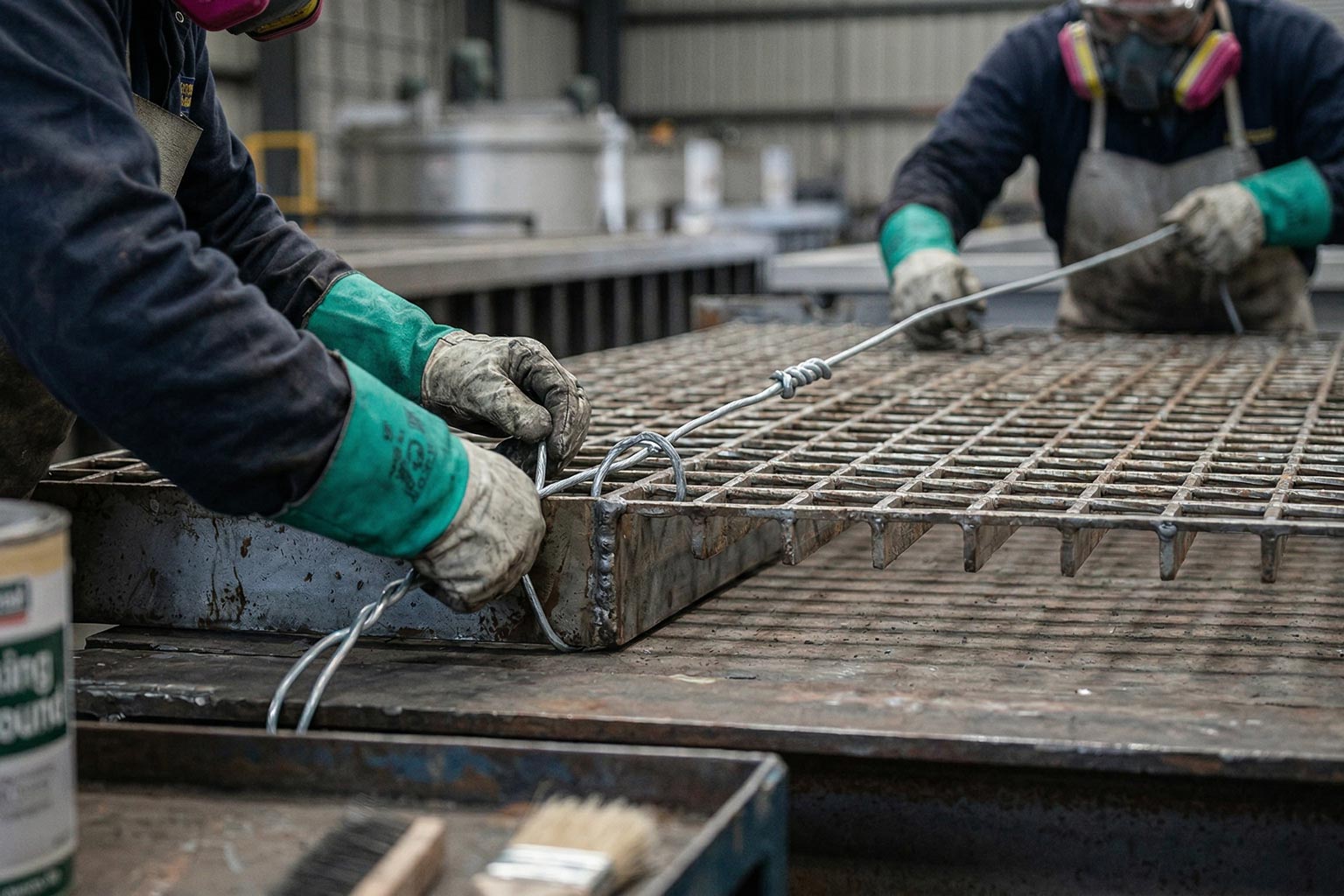
Hot dip galvanizing provides long-term corrosion protection for structural steel through a metallurgically bonded zinc coating. In some situations, however, steel components that were previously galvanized may need to be processed again. Fabrication changes, coating damage, specification changes, or incorrect processing can lead engineers or fabricators to consider stripping the original coating and re-galvanizing the steel.
The American Galvanizers Association discusses this topic in the following technical resource: https://galvanizeit.org/knowledgebase/article/stripping-and-re-dipping-galvanized-steel
Building on that information, this article explains how stripping and re-galvanizing works, when it is appropriate to reprocess galvanized components, and how engineers and fabricators should evaluate whether re-galvanizing is the best solution.
Why Steel May Need to Be Re-Galvanized
Although hot dip galvanized coatings are designed for decades of corrosion protection, certain situations may require reprocessing.
Common scenarios include:
- Fabrication modifications after galvanizing
- Incorrect coating thickness or processing errors
- Extensive coating damage during construction
- Project specification changes
- Surface contamination that prevented proper coating formation
In these cases, removing the original coating and re-processing the steel through the galvanizing process can restore corrosion protection.
How Galvanized Coatings Are Removed
Removing an existing zinc coating typically involves chemical stripping.
The most common method uses controlled acid solutions that dissolve the zinc coating without significantly affecting the base steel.
The stripping process generally involves:
- Immersion in acid stripping solution
- Dissolution of the zinc coating
- Rinsing and surface cleaning
- Inspection of the bare steel surface
Once the original coating is removed, the steel is essentially returned to a condition similar to uncoated steel prior to galvanizing.
Preparing Steel for Re-Galvanizing
After stripping, the steel component must undergo the same preparation steps required for standard hot dip galvanizing.
Proper surface preparation is essential for achieving a new metallurgical bond between zinc and steel.
Typical preparation steps include:
- Surface condition evaluation
- Removal of contaminants or fabrication residues
- Acid pickling to remove mill scale and oxides
- Flux application to promote coating adhesion
These steps prepare the steel for immersion in molten zinc.
Re-Galvanizing the Steel
Once preparation is complete, the steel component can be processed through the galvanizing kettle again.
During immersion, molten zinc reacts with the steel surface to form the same protective zinc-iron alloy layers that develop during the original galvanizing process.
The resulting coating provides:
- Metallurgical bonding to the steel
- Uniform coverage of exposed surfaces
- Long-term corrosion protection
In many cases, the new coating performs the same as a freshly galvanized component.
Engineering Considerations Before Reprocessing
While re-galvanizing is possible for many components, engineers should evaluate several factors before choosing this approach.
Important considerations include:
- Structural design and tolerances
- Steel chemistry and coating reactivity
- Fabrication complexity
- Potential distortion during reheating
Repeated thermal cycles during galvanizing can affect certain fabrications, particularly thin or asymmetrical assemblies.
Early coordination helps determine whether re-galvanizing is appropriate.
When Localized Repair May Be Better
In some cases, localized coating repair may be sufficient instead of full reprocessing.
Repair methods may be used when:
- Damage is limited to small areas
- Structural geometry prevents re-immersion
- Field repairs are more practical
Repair methods must follow recognized standards and should restore adequate corrosion protection to exposed steel.
Inspection After Re-Galvanizing
After re-processing, the new coating should be inspected to confirm compliance with applicable standards.
Inspection typically evaluates:
- Coating thickness
- Adhesion of the coating
- Surface coverage and continuity
Meeting specification requirements ensures that the re-galvanized component provides the intended corrosion protection.
Working With a Galvanizing Partner
Stripping and re-galvanizing steel components requires careful process control and evaluation of the fabrication design.
At V&S, our hot dip galvanizing services include evaluating whether stripping and re-galvanizing is appropriate for a component, reviewing fabrication geometry, and coordinating the preparation process required before re-processing.
If you need technical guidance on whether a component can be re-galvanized or how to address coating damage or specification changes, please reach out through our contact page.
Early evaluation helps determine the most effective approach for restoring corrosion protection.
Stripping and re-galvanizing can restore corrosion protection when galvanized coatings must be removed due to damage, fabrication changes, or specification requirements. By chemically removing the existing coating and re-processing the steel through the galvanizing process, a new zinc coating can be formed that provides long-term durability. Proper evaluation of fabrication design and coating condition helps determine whether re-galvanizing is the most appropriate solution.
Frequently Asked Questions About Stripping and Re-Galvanizing Steel
Can galvanized steel be re-galvanized?
Yes. In many cases, galvanized steel can be stripped of its existing coating and re-processed through the galvanizing process to apply a new zinc coating.
How is the original galvanized coating removed?
The coating is typically removed using controlled acid stripping solutions that dissolve zinc while leaving the base steel largely unaffected.
Does re-galvanizing weaken the steel?
The galvanizing process involves heating the steel, but for most structural steels the process does not significantly affect mechanical properties when proper fabrication practices are followed.
When should steel be re-galvanized instead of repaired?
Re-galvanizing may be appropriate when coating damage is extensive, when fabrication changes require new coating coverage, or when project specifications require a complete coating replacement.
Can all galvanized parts be re-galvanized?
Not always. Fabrication design, steel chemistry, and component size may influence whether re-galvanizing is feasible.
Will the new coating perform like the original galvanizing?
In many cases the new coating will provide similar corrosion protection if proper preparation and processing procedures are followed.
Does stripping damage the steel surface?
When controlled properly, the stripping process removes the zinc coating without significantly affecting the steel substrate.
Should galvanizers evaluate parts before re-processing?
Yes. Reviewing fabrication geometry and coating condition helps determine whether stripping and re-galvanizing is the best approach.
