
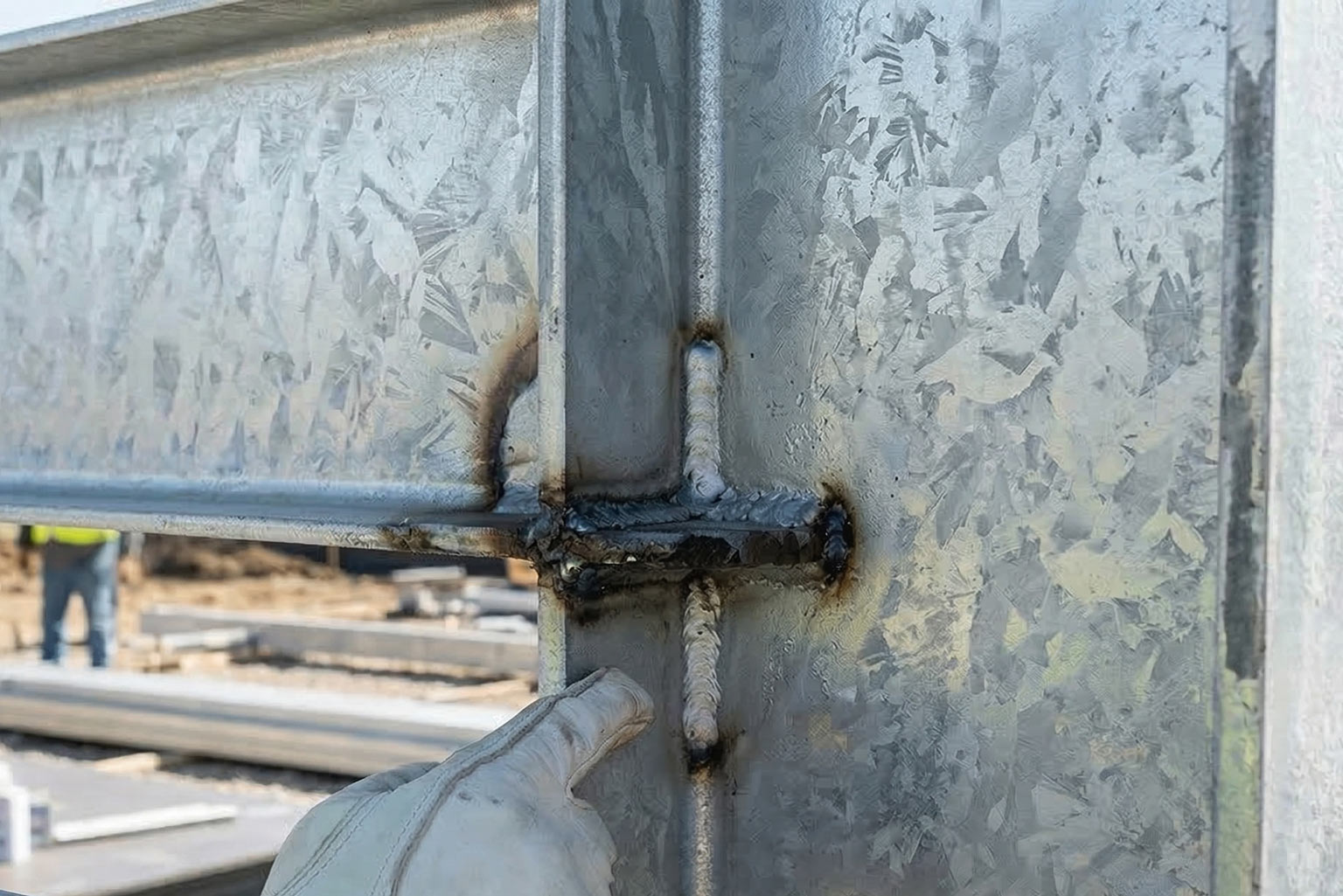
Welding on galvanized steel, whether performed before or after galvanizing, introduces localized areas where the zinc coating may be damaged or removed. In structural fabrication, it is common to perform field welds or complete minor shop weld corrections after galvanizing. When this occurs, the exposed steel must be repaired to restore corrosion protection.
Determining how much repair is acceptable is not subjective. ASTM standards define maximum allowable touch up areas and outline approved repair methods. The American Galvanizers Association provides a clear technical explanation of these limits in its knowledgebase article on maximum allowable touch up area for welded galvanized steel, available here.
This article expands on that foundation by clarifying how repair limits are calculated, how inspection is performed, and how engineers should interpret compliance when evaluating welded galvanized assemblies.
Why Touch Up Limits Exist
Hot dip galvanizing provides uniform corrosion protection through metallurgically bonded zinc iron alloy layers. Large areas of repair using brush or spray applied zinc materials do not provide the same durability as a full immersion coating.
Repair area limits are established to ensure:
- The majority of the surface remains immersion coated
- Corrosion performance remains predictable
- Structural durability is not compromised
- Repair materials are used appropriately
Touch up is intended for localized damage, not widespread coating replacement.
ASTM Repair Area Limitations
ASTM A123 defines maximum allowable repair areas for galvanized steel.
In general terms:
- Repair areas must be limited in size relative to the total surface area of the piece
- No single repair area may exceed a specified square inch limit
- The total repaired area must remain below a defined percentage of the total surface area
Exact limits should always be confirmed in the current ASTM edition applicable to the project.
These limits apply whether damage results from:
- Welding after galvanizing
- Handling damage
- Localized grinding
- Small uncoated areas
Repair beyond allowable limits may require stripping and re galvanizing rather than localized touch up.
Causes of Coating Damage at Welds
Welding introduces high localized temperatures that exceed the melting point of zinc.
As a result:
- Zinc coating is vaporized in the weld zone
- Adjacent coating may be burned back
- Heat affected zones require evaluation
Proper weld repair involves:
- Cleaning the exposed area
- Removing weld slag
- Preparing the surface
- Applying an approved zinc rich repair system
Repair must restore corrosion protection equivalent to the surrounding coating thickness within allowed limits.
Approved Repair Methods
ASTM standards recognize several repair methods, including:
Zinc Rich Paint
High zinc content coatings applied by brush or spray.
Thermal Spray Zinc
Molten zinc mechanically bonded to prepared steel surfaces.
Zinc Based Solders
Low melting zinc alloy materials applied to damaged areas.
Each method has minimum thickness requirements that must meet or exceed specified repair thickness standards.
Repair coatings must provide adequate sacrificial protection and adhesion.
Thickness Requirements for Repair Areas
Repair materials are typically required to meet or exceed the minimum thickness specified for the surrounding galvanized coating.
Inspection of repair areas includes:
- Thickness measurement
- Visual confirmation of coverage
- Adhesion verification
Repair thickness should not be thinner than the required galvanized coating minimum.
Inspection and Documentation
When welded galvanized assemblies are inspected, evaluators should verify:
- Total repair area remains within allowable limits
- Individual repair spots comply with size restrictions
- Repair thickness meets specification
- No exposed steel remains
Documentation of repair location and method may be required on critical infrastructure projects.
If repair exceeds allowable limits, corrective action may include stripping and reprocessing.
When Stripping and Re Galvanizing Is Required
If:
- Repair areas exceed maximum allowable percentage
- Individual damaged areas exceed permitted size
- Widespread coating failure is observed
The component may need to be chemically stripped and re galvanized.
Localized repair cannot substitute for full immersion coating when damage exceeds specification limits.
Design and Fabrication Best Practices
To minimize post galvanizing repair:
- Complete welding prior to galvanizing when possible
- Design connections to reduce field welding
- Avoid excessive grinding after galvanizing
- Coordinate welding procedures in advance
Preventative planning reduces the need for touch up and preserves full coating integrity.
If you would like assistance reviewing weld repair compliance, evaluating repair area limits, or coordinating reprocessing decisions, please reach out through our contact page.
Early consultation helps maintain specification compliance and long term durability.
Repair of welded galvanized steel is a controlled and limited practice governed by ASTM standards. Maximum allowable touch up areas are defined to ensure that localized zinc rich repair does not replace full immersion protection beyond acceptable thresholds. Understanding repair size limits, thickness requirements, and inspection procedures allows engineers and inspectors to evaluate welded galvanized assemblies with confidence and consistency.
Frequently Asked Questions About Maximum Allowable Touch Up Areas
How much galvanized coating can be repaired after welding?
ASTM A123 defines maximum allowable repair areas as both a percentage of total surface area and a limit on individual damaged areas. The exact limits should be verified in the applicable edition of the standard.
Can large damaged areas be repaired with zinc rich paint?
No. Repair materials are intended for localized damage only. If damage exceeds allowable limits, stripping and re galvanizing may be required.
Does repair coating need to match the original thickness?
Yes. Approved repair methods must provide minimum thickness equivalent to or greater than the required galvanized coating thickness.
What causes zinc damage near welds?
Welding temperatures exceed the melting point of zinc, causing localized coating loss and heat affected areas that must be repaired.
Are repaired areas as durable as hot dip galvanizing?
Localized repair provides sacrificial protection, but full immersion galvanizing offers more robust metallurgical bonding. Repair is acceptable only within defined limits.
How is repair area measured during inspection?
Inspectors evaluate both individual damaged spots and cumulative repaired surface area relative to the total piece surface area.
Can thermal spray zinc be used for larger repairs?
Thermal spray zinc is an approved method but remains subject to maximum allowable repair area limitations.
When must a part be re galvanized instead of repaired?
If damage exceeds allowable percentage or individual area limits defined by ASTM, stripping and re galvanizing may be required.
