

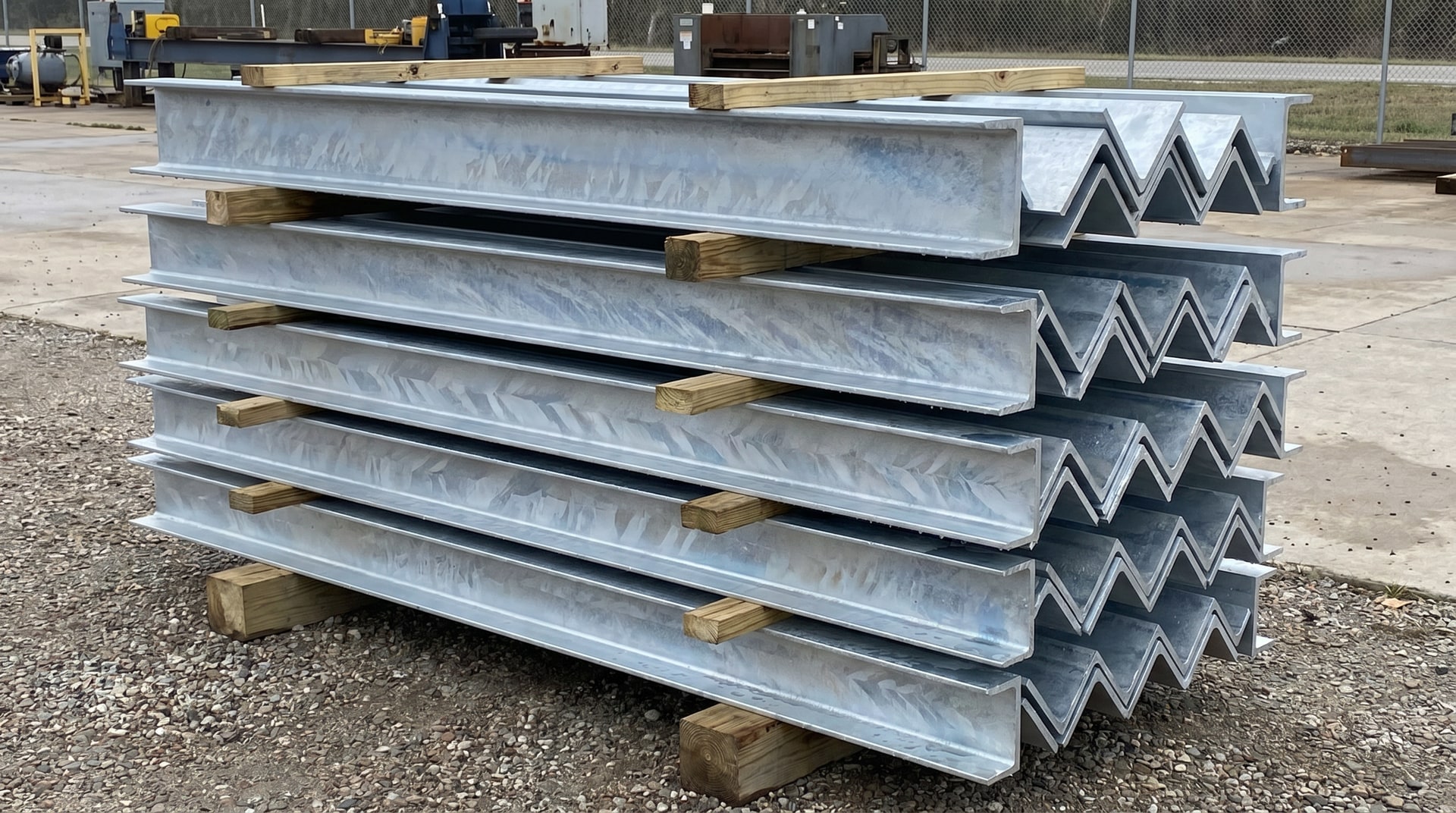
Wet storage stain, often referred to as white rust, is one of the most common appearance concerns with newly galvanized steel. While it can look alarming, it is typically a surface condition that develops under specific storage and environmental conditions rather than a failure of the galvanizing process itself.
At V&S Galvanizing, we frequently help customers understand how wet storage stain forms and, more importantly, how to prevent it. The American Galvanizers Association provides additional technical background here.
This article expands on those recommendations to give you practical, real-world guidance for preventing wet storage stain before it becomes an issue.
What Is Wet Storage Stain?
Wet storage stain is a white or grayish corrosion product that forms on the surface of freshly galvanized steel.
It typically occurs when:
- Moisture is trapped between tightly stacked or nested parts
- Airflow is restricted
- Surfaces remain wet for extended periods
Under these conditions, zinc reacts rapidly with water and oxygen, forming zinc hydroxide rather than the more stable protective zinc patina.
Why It Happens on New Galvanized Steel
Freshly galvanized steel has not yet developed its natural protective patina. This patina normally forms when zinc is exposed to air and cycles between wet and dry conditions.
When moisture is trapped without exposure to carbon dioxide in the air:
- The protective patina cannot form properly
- Zinc reacts more aggressively
- White corrosion products develop
This is why wet storage stain is most commonly seen shortly after galvanizing.
The Role of Airflow and Drying
Air circulation is one of the most important factors in preventing wet storage stain.
When galvanized steel is allowed to:
- Drain properly after processing
- Dry quickly
- Remain exposed to circulating air
The protective patina forms naturally and reduces the risk of white rust.
Restricted airflow creates the opposite condition and increases the likelihood of stain formation.
Proper Storage Practices
Preventing wet storage stain starts with how galvanized materials are stored.
Best practices include:
- Store materials at an angle to allow water to drain
- Use spacers between stacked components
- Avoid tight nesting of parts
- Keep materials off the ground
- Store under cover when possible while still allowing airflow
These steps help prevent moisture from being trapped between surfaces.
Handling During Transport and Delivery
Transportation conditions can also contribute to wet storage stain.
Risk increases when:
- Materials are tightly packed without ventilation
- Products are exposed to rain and then wrapped or covered
- Condensation forms during temperature changes
Whenever possible:
- Allow materials to dry before covering
- Avoid sealing wet materials in plastic or shrink wrap
- Ensure airflow during transport
Even short periods of trapped moisture can lead to visible staining.
Outdoor Storage Considerations
When storing galvanized steel outdoors:
- Elevate materials off the ground
- Position materials to allow drainage
- Avoid low-lying areas where water collects
- Ensure air can circulate freely
Covering materials may help reduce direct rainfall, but covers should not trap moisture.
Is Wet Storage Stain a Performance Issue?
In most cases, wet storage stain is primarily an appearance concern.
Light to moderate staining:
- Does not typically affect coating performance
- Does not indicate coating failure
- May naturally stabilize over time
However, heavy or prolonged exposure can consume zinc more rapidly and should be evaluated.
What to Do If Wet Storage Stain Occurs
If wet storage stain develops:
- Allow the material to dry and be exposed to air
- Light staining may weather naturally over time
- In some cases, gentle cleaning may be used if appearance is a concern
The key is to correct the storage condition that caused the issue to prevent further development.
Why Prevention Is the Best Approach
Wet storage stain is almost entirely preventable with proper handling and storage.
The most important factors are:
- Avoiding trapped moisture
- Promoting airflow
- Allowing surfaces to dry
When these conditions are met, galvanized steel will naturally develop its protective patina and perform as intended.
Proper storage and handling are critical to preventing wet storage stain on galvanized steel. By allowing airflow, avoiding trapped moisture, and promoting drainage, the zinc coating can develop its natural protective layer. While wet storage stain is usually a cosmetic issue, preventing it helps maintain both appearance and long-term coating performance.
Work With a Team That Helps You Get It Right the First Time
Wet storage stain is one of the most avoidable issues in galvanizing, yet it still shows up on job sites due to storage and handling gaps. A small adjustment in how materials are stacked, transported, or stored can eliminate the issue entirely.
At V&S Galvanizing, we work with fabricators, contractors, and project teams to make sure galvanized steel is handled correctly after it leaves the kettle. If you have questions about storage practices, jobsite handling, or how to prevent issues like wet storage stain, our team is here to help.
Proper storage and handling are critical to preventing wet storage stain on galvanized steel. By allowing airflow, avoiding trapped moisture, and promoting drainage, the zinc coating can develop its natural protective layer. While wet storage stain is usually a cosmetic issue, preventing it helps maintain both appearance and long-term coating performance.
Frequently Asked Questions About Wet Storage Stain
What causes wet storage stain on galvanized steel?
Wet storage stain occurs when moisture is trapped between galvanized surfaces without adequate airflow. This prevents the formation of a stable protective patina and leads to rapid zinc reaction.
Is wet storage stain the same as rust?
No. Wet storage stain is a zinc corrosion product, not iron rust. It forms on the zinc coating and does not immediately indicate failure of the underlying steel.
Can wet storage stain damage galvanized coatings?
Light to moderate staining usually does not affect performance. However, severe or prolonged exposure can consume zinc more quickly and should be evaluated.
How can wet storage stain be prevented?
Proper storage practices such as allowing airflow, spacing materials, promoting drainage, and avoiding trapped moisture are the most effective ways to prevent wet storage stain.
Should wet galvanized steel be covered during storage?
It can be covered to protect from rain, but covers should allow ventilation. Sealing wet materials without airflow can increase the risk of wet storage stain.
Does wet storage stain go away over time?
In many cases, light staining will weather and stabilize as the zinc surface forms a natural protective patina.
Can wet storage stain be cleaned?
Yes, in some cases. Light cleaning methods may improve appearance, but it is more important to correct storage conditions to prevent recurrence.
When is wet storage stain a concern?
It becomes a concern when staining is heavy, widespread, or persistent, as this may indicate accelerated zinc consumption.
