

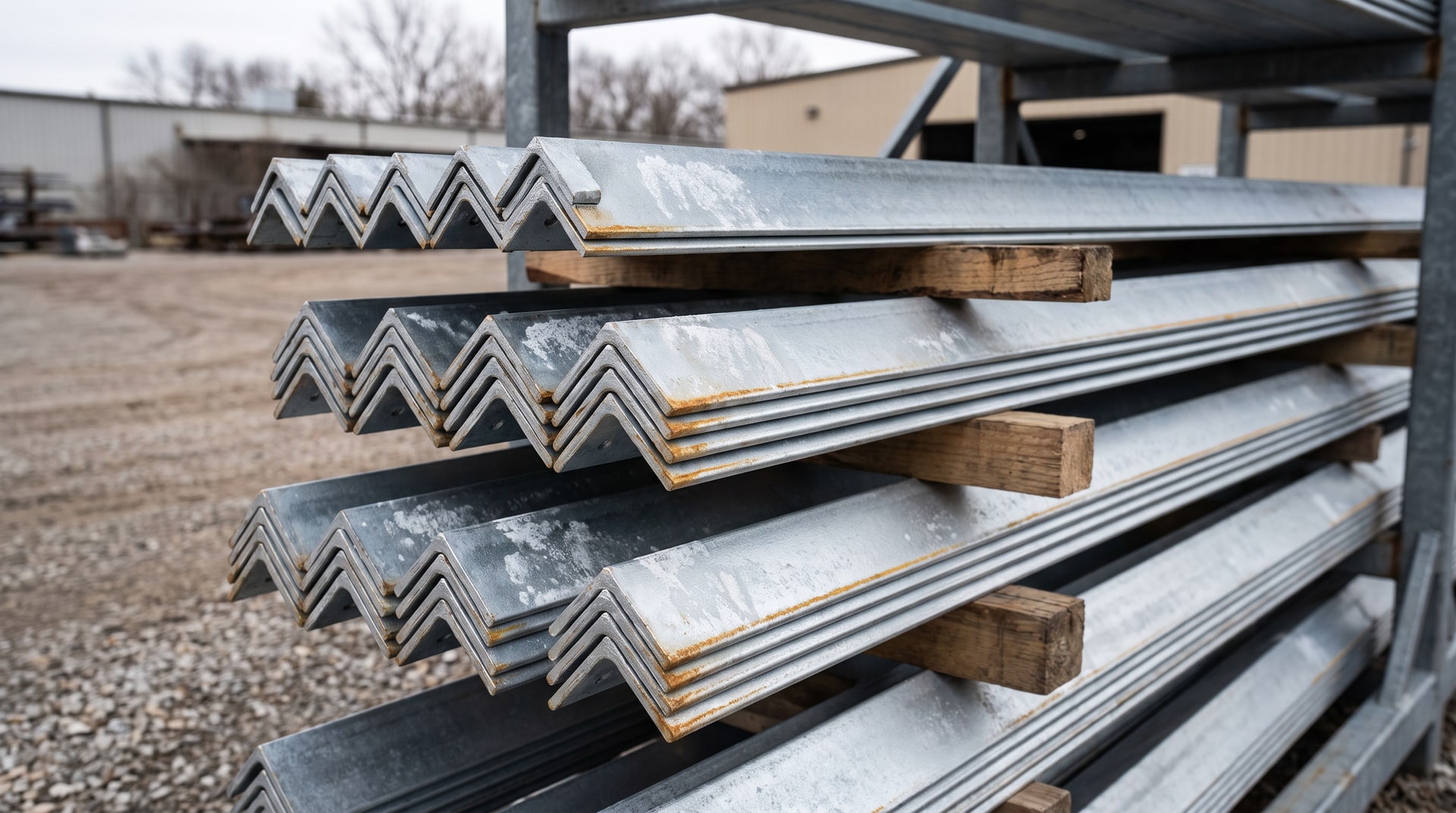
When galvanized steel comes out of the kettle, it looks exactly as it should: bright, metallic, and uniformly coated. But between the galvanizing plant and the job site, something can go wrong that has nothing to do with the quality of the coating itself. Moisture gets trapped between tightly stacked pieces. Air circulation drops to near zero. The zinc surface, still chemically reactive in its freshly formed state, begins to react with water in a way that produces a bulky, white or gray powdery deposit. That deposit is wet storage stain, and while it is often alarming to contractors and inspectors who encounter it for the first time, it is far more manageable than it appears.
The American Galvanizers Association addresses this directly in their article on how to prevent wet storage stain. At V&S Galvanizing, we expand on that foundation to explain what is actually happening at the material level, how storage and handling conditions influence zinc surface behavior, and why wet storage stain is frequently misidentified or misunderstood in the field.
What Is Actually Happening at the Zinc Surface
Freshly galvanized steel carries a zinc coating that is chemically reactive. Under normal atmospheric exposure, that reactivity is precisely what makes galvanizing such an effective long-term corrosion protection system. Zinc reacts with oxygen and carbon dioxide in the air to gradually form a stable, tightly adherent zinc carbonate patina. That patina is the gray matte finish most people associate with aged galvanized steel in service, and it is extraordinarily protective.
The problem is that this stabilization process takes time and requires open air contact. When newly galvanized pieces are stacked tightly together, moisture that collects between the surfaces cannot evaporate. Oxygen and carbon dioxide, which are needed to form the protective carbonate layer, cannot reach the zinc. Instead, the zinc reacts with the stagnant water to form zinc hydroxide and zinc oxide compounds. These are the white, voluminous deposits that define wet storage stain. Unlike the zinc carbonate patina that would form under open-air exposure, zinc hydroxide is not protective. It is porous, loosely adherent, and consumes the underlying zinc coating at a rate far greater than normal atmospheric weathering.
This is the central misconception we encounter most often: wet storage stain looks worse than it is in most cases, but in severe or prolonged situations it can actually consume enough zinc to become a genuine performance concern. The distinction matters because it determines whether material needs to be cleaned and inspected or rejected outright.
Why Newly Galvanized Steel Is Especially Vulnerable
The vulnerability window is specific to the period immediately after galvanizing, before the zinc coating has had adequate open-air exposure to develop its protective carbonate layer. Once that patina is established, the surface is far more resistant to the kind of localized moisture attack that produces wet storage stain. The coating is essentially still curing in a chemical sense, and the conditions under which it cures matter.
This is why galvanizing facilities, shipping companies, and contractors all share responsibility in this outcome. The galvanizer controls what happens inside the plant, but once material leaves the facility it enters a chain of custody where improper stacking, unventilated transport, or outdoor storage on wet ground can undo good handling practices. Understanding this shared responsibility is important when wet storage stain is discovered and questions arise about origin and accountability.
Storage Conditions That Create the Problem
Tightly nested or bundled pieces are the most common culprit. When flat plates, angle iron, channel, or tube sections are stacked face-to-face with no separation, the contact surfaces become isolated environments. Rain, condensation from temperature swings, or residual moisture from the galvanizing process itself can pool in these gaps. Without air movement, moisture cannot escape and zinc cannot stabilize.
Ground contact compounds the problem. Storing galvanized steel directly on wet soil introduces persistent moisture from below and can also introduce contaminants. Decaying vegetation is particularly problematic because it releases organic acids and holds moisture against the zinc surface over an extended period. Even on a dry day, material resting on a bed of mulch or decomposing grass can sustain localized wet conditions beneath the stack for days.
Outdoor storage without elevation or inclination prevents drainage. When rain falls on a flat-stacked bundle, water has nowhere to go except inward. Angling the stack or raising it from the ground changes this dynamic significantly, allowing gravity to move water away from the surfaces rather than trapping it between them.
How Spacers Work and Why Spacer Material Matters
Strip spacers are the most direct and reliable mechanical intervention for preventing wet storage stain. By introducing a gap between stacked pieces, spacers allow air to circulate across the zinc surface, permit moisture to drain rather than pool, and give the zinc the oxygen and carbon dioxide exposure it needs to begin forming a stable patina. This is not a complicated concept, but the execution details matter considerably.
The AGA guidance is specific about spacer materials, and we think it deserves more attention than it typically receives. Resinous woods should never be used. The resins that naturally occur in certain wood species, or that are applied as preservative or fire-retardant treatments, can initiate localized corrosion on the zinc surface. The chemistry here is straightforward: certain organic compounds in resinous wood and chemical treatments create conditions at the zinc interface that accelerate corrosion rather than simply providing mechanical separation.
Poplar and spruce have been used successfully as spacer materials because they are relatively low in natural resins and are typically available without treatment. The wood should be dry. Wet wood introduces the very moisture the spacer is meant to prevent and can also leach tannins and other compounds onto the zinc surface. It is also worth noting that untreated wood cannot be transported across the United States-Canada border due to agricultural import regulations, which affects how cross-border shipments of galvanized material must be handled and what spacer alternatives may need to be used.
The same spacer logic applies during shipping. If there is any reasonable likelihood of condensation during transit, whether due to temperature differentials, humidity changes, or extended transport times, spacers should be in place before the load leaves the galvanizing facility. Once moisture is trapped inside a bundled shipment, there is often no opportunity to intervene until the material arrives at its destination, potentially days or weeks later.
The Role of Ventilation and Site Selection
Adequate air flow is not just a passive background condition. It is an active requirement for zinc surface stabilization. Newly galvanized articles should be stored in dry, well-ventilated areas, ideally under cover. The combination of cover and ventilation addresses the two primary moisture sources: precipitation from above and humidity from the surrounding environment.
When indoor or covered storage is not available, and outdoor stacking becomes unavoidable, the approach should be systematic. Raise the material from the ground using dunnage or blocking that keeps the lowest surfaces clear of soil moisture. Orient the stack with an incline that promotes drainage in the direction of gravity. Use spacers throughout the stack, not just at the bottom layer. The goal is to ensure that every surface in the stack has a path for moisture to escape and air to reach it.
Humid, low-wind environments increase risk. In regions or seasons where nighttime condensation is common, even material stored under a simple open-sided shelter will benefit from careful stacking practices. The shelter reduces direct precipitation, but condensation forms when warm humid air contacts cooler steel surfaces, and that mechanism operates regardless of whether it is raining.
Passivation Agents as a Supplemental Strategy
Beyond physical storage and handling practices, passivation agents offer a chemical approach to wet storage stain prevention. These are applied to galvanized articles immediately after galvanizing while the zinc surface is still reactive, and they work by temporarily suppressing the surface reactivity that would otherwise allow zinc hydroxide formation in the presence of trapped moisture.
Chromates are the most established passivation chemistry for this application. They create a thin conversion coating on the zinc surface that significantly reduces the rate of reaction with water during the early curing window. Clear coat systems and oils have also been used with comparable effect. Each of these approaches introduces some trade-offs. Chromates raise handling and disposal considerations. Clear coats change the appearance of the surface and must be compatible with any topcoats if the galvanized component is part of a duplex coating system. Oils can affect adhesion of paints or other subsequently applied coatings and require removal if welding or further fabrication is planned after delivery.
A critical point from the AGA guidance that is often overlooked in practice: passivation agents do not replace proper storage. They reduce risk during the vulnerable early period, but they are not a license to bundle material tightly, store it on wet ground, or skip spacers during shipping. The two approaches are complementary, and relying on passivation alone while ignoring storage conditions will still produce wet storage stain in severe enough conditions.
Identifying Wet Storage Stain and Evaluating Its Severity
The appearance of wet storage stain ranges from faint gray haziness to heavy, chalky white deposits that obscure the underlying zinc surface. The texture is typically powdery or loosely adherent, and in severe cases the deposit can be several millimeters thick. The pattern on the steel usually follows the contact geometry: uniform across large flat faces where pieces rested together, concentrated along edges or in corners where moisture pooled.
Distinguishing light surface staining from corrosion that has genuinely compromised coating integrity requires removing the deposit and measuring the remaining zinc. Light wet storage stain, cleaned away, typically reveals intact zinc beneath with no significant loss. Heavy or prolonged wet storage stain can consume enough zinc to reduce coating thickness below the levels required by the governing specification, which then becomes a structural and warranty concern. Where coating thickness is in question after cleaning, a calibrated magnetic thickness gauge measurement against the applicable ASTM standard is the appropriate next step. This is a determination that should be made through inspection rather than visual judgment alone.
We also see wet storage stain confused with the natural patination process. Gray, mottled, or slightly uneven surface color on galvanized steel that has been exposed to outdoor air for weeks or months is normal weathering, not damage. The difference is the nature and adherence of the deposit, its location relative to stacking patterns, and whether it wipes away as a powder or is part of the surface itself.
Work With a Team That Understands the Full Handling Chain
Wet storage stain is preventable with a combination of the right storage environment, proper stacking practices, appropriate spacer materials, and where warranted, the use of passivation agents. The underlying mechanism is well understood: freshly galvanized zinc needs open air contact to stabilize, and any condition that denies it that contact while introducing moisture creates the conditions for zinc hydroxide formation. Preventing that outcome is not complicated, but it requires discipline across the entire handling chain from the galvanizing facility through transport to the storage yard.
At V&S Galvanizing, we take stacking, spacing, and handling seriously because we understand what happens to zinc when those details are neglected. If you are working on a project where storage conditions, transport logistics, or passivation requirements are a concern, our team is available to help you think through the right approach before material ships. Reach out through our contact page and let us know what you are working with.
Frequently Asked Questions About Wet Storage Stain on Galvanized Steel
Does wet storage stain mean the galvanized coating has failed?
Not necessarily. Light wet storage stain is a surface condition, not a coating failure. Once the deposit is cleaned away, the underlying zinc is often intact. Whether the coating has been compromised depends on how long the staining was present and how severe the moisture exposure was. Remaining coating thickness should be measured against the applicable specification to confirm performance is not affected.
Can wet storage stain form during transport, not just during storage?
Yes. Enclosed trailers and containers can accumulate significant condensation, especially when loads move through temperature zones. Freshly galvanized steel shipped without spacers in these conditions is just as vulnerable as material stacked outdoors on wet ground. Spacers should be used anytime condensation during transit is a realistic possibility.
Why can resinous wood not be used as a spacer material?
Natural resins in certain wood species, as well as chemical preservatives and fire-retardant treatments applied to lumber, can initiate localized corrosion on the zinc surface. The chemical interaction at the contact interface creates corrosion conditions rather than simply providing physical separation. Dry, untreated poplar or spruce are the preferred alternatives.
Do passivation treatments like chromates or clear coats eliminate the need for proper stacking?
No. Passivation agents reduce the surface reactivity of freshly galvanized zinc during its vulnerable early period, but they do not fully substitute for adequate air circulation and moisture drainage. The AGA guidance is explicit that proper storage practices remain necessary even when passivation agents are applied.
How should wet storage stain be cleaned from galvanized steel before painting or further coating?
Light deposits can often be removed with a stiff bristle brush. More substantial staining may require a dilute solution of appropriate cleaning agents compatible with zinc. The surface must be fully cleaned and dried before any topcoat application. If the galvanized component will be part of a paint or powder coat system, compatibility of any cleaning residue with the topcoat adhesion chemistry should be confirmed before proceeding.
Is galvanized steel stored on decaying vegetation significantly more at risk?
Yes. Decaying organic matter holds moisture against the zinc surface over an extended period and also releases organic acids that can accelerate zinc corrosion. The AGA guidance specifically calls out wet soil and decaying vegetation as conditions to avoid. Ground contact of any kind increases risk, but vegetative contact is particularly problematic.
What wood species are acceptable for use as spacers during galvanized steel shipping?
Poplar and spruce have been used with good results. Both are relatively low in natural resins and are generally available without preservative or fire-retardant treatment. Wood used as spacers must be dry and untreated. Note that untreated wood cannot be transported across the United States-Canada border, which requires alternative spacer materials or approaches for cross-border shipments.
At what point does wet storage stain become a specification concern rather than just an appearance issue?
When wet storage stain is severe enough or has persisted long enough to consume zinc at a rate that reduces coating thickness below the minimum required by the applicable ASTM specification, it transitions from an appearance issue to a performance and compliance concern. The threshold is not visual. It requires measurement with a calibrated magnetic thickness gauge. If measured values fall below specification minimums after cleaning, the coating may need touch-up or the material may need to be regalvanized depending on the degree of loss.
