

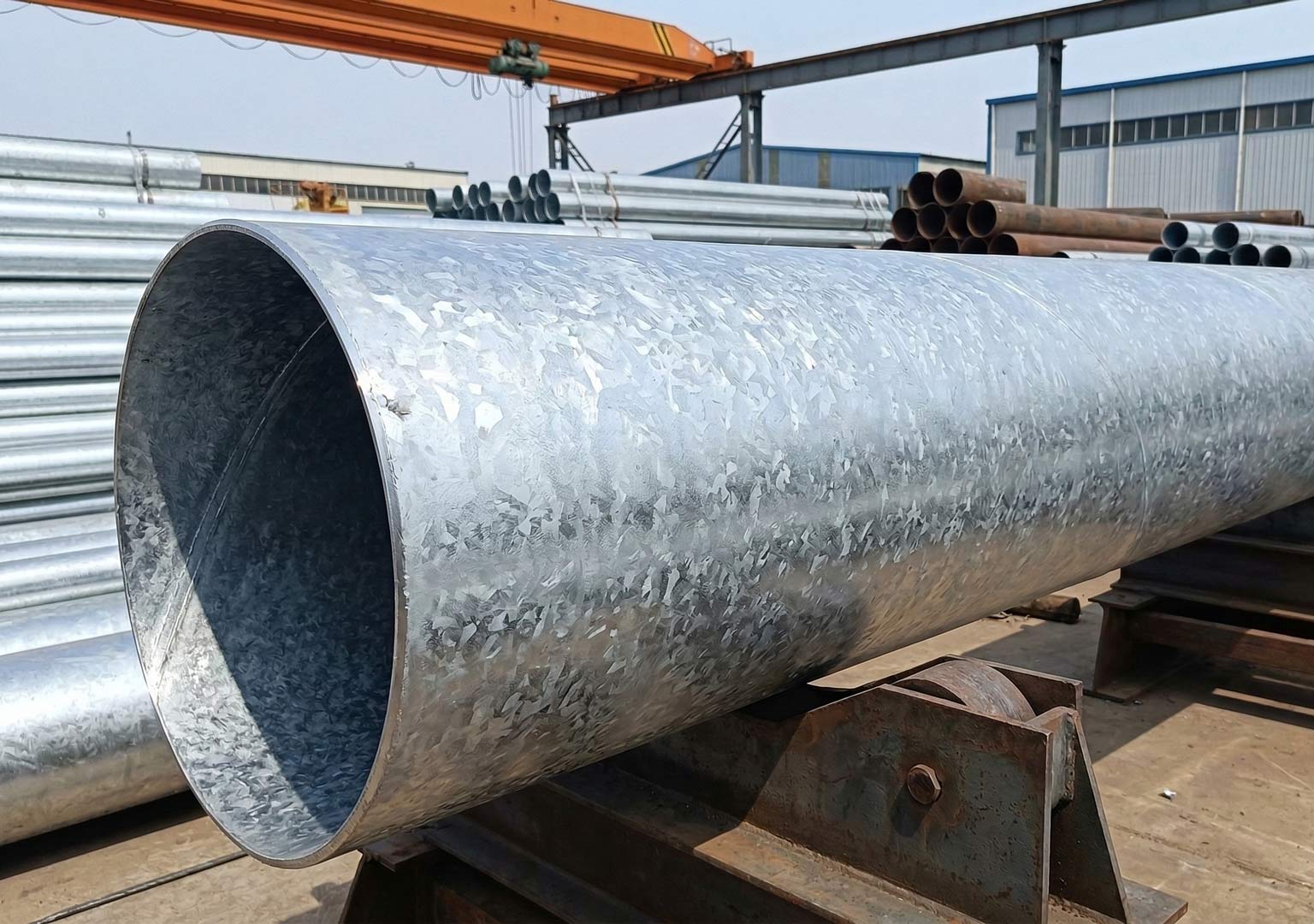
ASTM A53 is a widely specified standard covering seamless and welded black and hot dipped zinc coated steel pipe intended for mechanical and pressure applications. When galvanizing is required for corrosion protection, it is important to understand how ASTM A53 interacts with galvanizing standards and what requirements govern coating thickness, inspection, and compliance.
The Galvanize It article addressing galvanizing according to ASTM A53 provides foundational background. Expanding on that discussion, this article examines how ASTM A53 defines galvanized pipe, how it differs from ASTM A123, what coating requirements apply, and how engineers should coordinate specifications.
Overview of ASTM A53
ASTM A53 covers carbon steel pipe in three primary types:
- Type F, furnace butt welded
- Type E, electric resistance welded
- Type S, seamless
It applies to both black pipe and hot dipped zinc coated pipe.
ASTM A53 is primarily a pipe manufacturing specification, not exclusively a galvanizing specification. When pipe is supplied galvanized under ASTM A53, coating requirements are defined within the standard.
Understanding that distinction is critical. ASTM A53 governs pipe properties and testing, while galvanizing process details and coating criteria may align with separate standards.
Galvanizing Requirements Within ASTM A53
For pipe furnished as hot dipped zinc coated, ASTM A53 specifies minimum coating requirements.
Historically, galvanized pipe under ASTM A53 has required:
- Continuous zinc coating
- Defined coating weight expressed in ounces per square foot
- Adherence to coating uniformity testing
Because pipe is often galvanized during manufacturing at the mill rather than after fabrication, the coating process differs from structural galvanizing performed under ASTM A123.
Engineers must confirm which coating standard applies to the project.
ASTM A53 Versus ASTM A123
A common source of confusion involves applying ASTM A123 requirements to ASTM A53 pipe.
Key differences include:
ASTM A53
- Covers steel pipe manufacturing
- Includes galvanizing requirements within pipe production
- Often applies to mill galvanized pipe
ASTM A123
- Covers hot dip galvanizing of fabricated steel products
- Applies after fabrication
- Specifies coating thickness by steel thickness category
When fabricated pipe assemblies are galvanized after cutting, welding, or forming, ASTM A123 may become applicable.
Specification clarity prevents inspection disputes.
Coating Thickness and Weight Considerations
ASTM A53 traditionally specifies coating in terms of weight per unit area.
ASTM A123 specifies coating in terms of thickness measured in mils or microns.
While coating weight and thickness are related, they are not interchangeable without conversion.
Engineers should verify:
- Which standard governs
- Whether coating weight or thickness applies
- How inspection will be conducted
For fabricated assemblies containing pipe and structural components, dual standards may apply.
Welded Pipe Considerations
Electric resistance welded pipe contains a weld seam that may behave differently during galvanizing.
Seam condition influences:
- Coating uniformity
- Alloy layer formation
- Appearance variation
When pipe is galvanized after fabrication, weld seams must be clean and free of slag or spatter to ensure coating continuity.
Inspection should confirm full coverage along seam areas.
Threaded and Coupled Pipe
Galvanized pipe used for mechanical systems may be threaded.
Threading can remove some zinc coating from exterior threads.
Standards often require:
- Recoating of cut threads
- Use of zinc rich repair materials
- Protective sealants compatible with application
Engineers should confirm post threading protection requirements when specifying galvanized pipe.
Pressure and Mechanical Applications
ASTM A53 pipe is commonly used for:
- Water conveyance
- Fire protection systems
- Structural columns
- Mechanical piping
When galvanizing is specified for corrosion protection, environmental exposure classification should be evaluated.
Exterior atmospheric exposure differs significantly from interior dry mechanical environments.
Service life expectations should reflect exposure conditions.
Specification Coordination for Projects
To avoid ambiguity, project specifications should clearly state:
- ASTM A53 for pipe material
- Applicable galvanizing requirement
- Coating weight or thickness criteria
- Inspection method
If fabricated assemblies include pipe welded to structural shapes, designers should clarify whether ASTM A123 governs the entire assembly.
We routinely review specifications that involve pipe and structural components to ensure coating standards are aligned. If you would like assistance evaluating ASTM coordination or coating requirements for your project, please reach out via our contact page.
Early clarification avoids compliance disputes during inspection.
ASTM A53 governs steel pipe manufacturing, including galvanized pipe supplied from the mill. However, when pipe is fabricated or galvanized after manufacturing, ASTM A123 or related standards may apply. Understanding the distinction between pipe manufacturing standards and galvanizing standards ensures accurate specification, inspection compliance, and predictable corrosion protection performance.
Frequently Asked Questions About Galvanizing According to ASTM A53
Does ASTM A53 include galvanizing requirements?
Yes. ASTM A53 includes provisions for hot dipped zinc coated pipe. However, it is primarily a pipe manufacturing specification, not a standalone galvanizing process specification.
Is ASTM A123 the same as ASTM A53?
No. ASTM A53 covers steel pipe manufacturing. ASTM A123 governs hot dip galvanizing of fabricated steel products. They apply to different stages of production.
How is coating measured under ASTM A53?
Coating is typically specified in terms of weight per unit area. Inspection methods may differ from those used under ASTM A123, which specifies thickness.
Can A53 pipe be galvanized after fabrication?
Yes. If pipe is cut, welded, or assembled before galvanizing, ASTM A123 may apply to the finished assembly rather than ASTM A53 mill galvanizing provisions.
What happens when pipe is threaded after galvanizing?
Threading may remove zinc coating from exterior threads. Recoating or repair methods are often required to maintain corrosion protection.
Should specifications reference both ASTM A53 and ASTM A123?
It depends on project scope. If pipe is mill galvanized and not further fabricated, ASTM A53 may be sufficient. If fabrication occurs prior to galvanizing, ASTM A123 may also apply.
Does galvanized A53 pipe perform the same as structurally galvanized components?
Performance depends on coating thickness and environment. Both provide corrosion protection when coating requirements are met, but thickness criteria and inspection methods may differ.
