

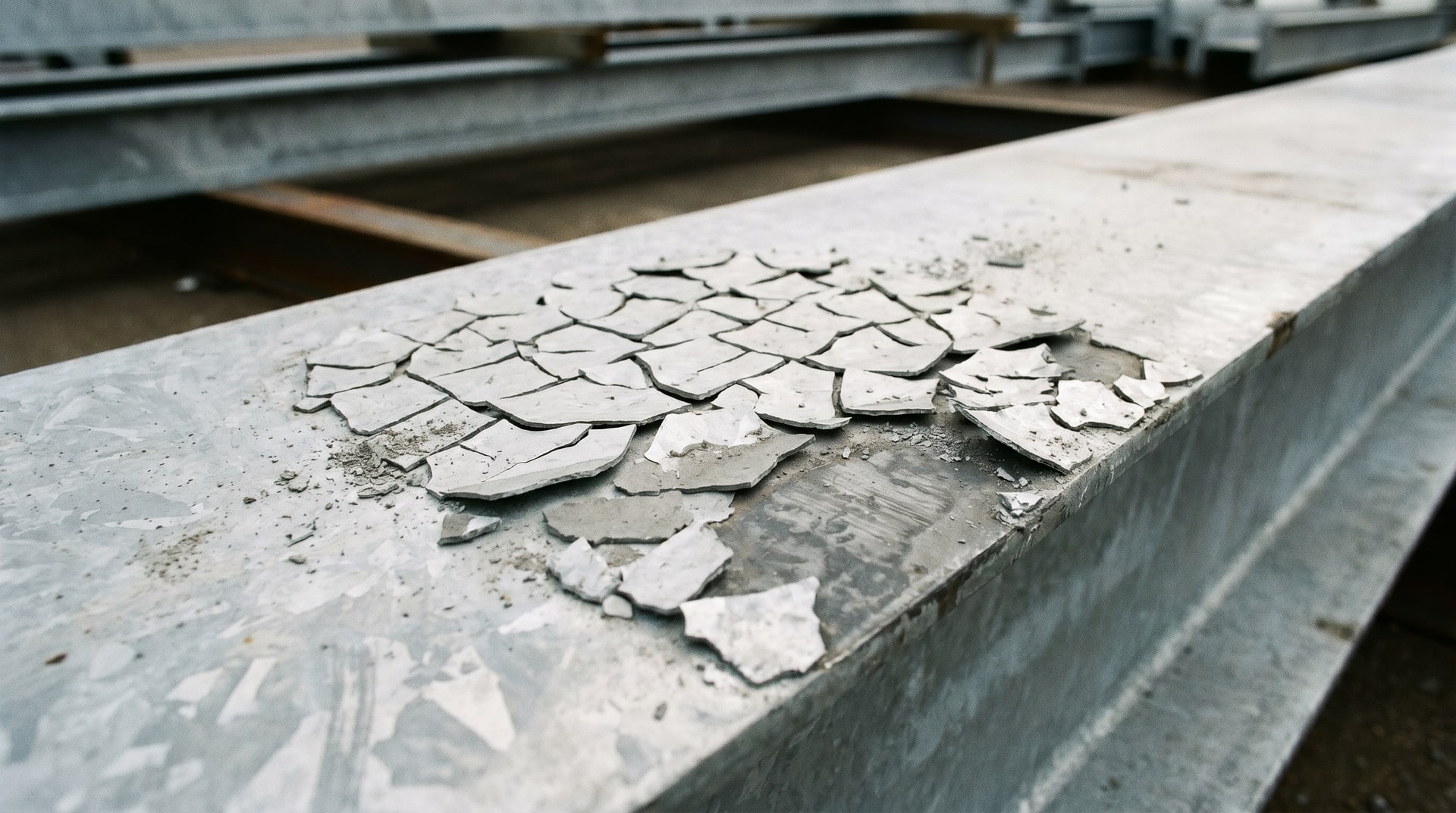
Flaking on galvanized steel is often confused with other surface conditions, but it represents a specific type of coating behavior that should be evaluated carefully. Unlike normal appearance variations, flaking may indicate localized issues with coating adhesion or mechanical stress on the zinc layer.
At V&S Galvanizing, we work with customers to distinguish between acceptable surface conditions and situations that require further review. The American Galvanizers Association provides technical background on flaking, which we expand on here to explain what causes it, how to assess it, and what actions may be necessary.
What Is Flaking in Galvanized Coatings?
Flaking refers to small sections of the zinc coating lifting or breaking away from the surface. It may appear as:
- Thin layers separating from the coating
- Small fragments detaching from edges or surfaces
- Localized areas of coating loss
Flaking is different from general appearance variation because it involves physical separation of the coating.
How Galvanized Coatings Normally Behave
Hot dip galvanizing creates a metallurgically bonded coating made up of zinc-iron alloy layers.
These layers:
- Are strongly adhered to the steel
- Provide durable corrosion protection
- Typically do not separate under normal conditions
When properly formed, the coating behaves as part of the steel rather than a separate layer.
Common Causes of Flaking
Flaking can occur due to several factors, often related to material properties or mechanical conditions.
Steel Chemistry and Coating Reactivity
Highly reactive steels can produce thicker zinc-iron alloy layers. These coatings may be:
- Harder and more brittle
- Less tolerant of mechanical stress
- More prone to flaking under impact or deformation
This is one of the most common causes of flaking.
Mechanical Damage
Flaking may occur after galvanizing due to:
- Impact during handling or transport
- Abrasion from contact with other materials
- Improper stacking or storage
In these cases, the coating is physically damaged rather than failing during processing.
Bending or Forming After Galvanizing
If galvanized steel is bent or formed after coating:
- The outer coating layers may not accommodate the deformation
- Stress can cause cracking or flaking
- Thicker coatings are more susceptible
Designing components to be formed before galvanizing helps prevent this issue.
Sharp Edges and Corners
Edges often receive thicker coatings due to the galvanizing process.
These thicker areas may:
- Be more brittle
- Be more susceptible to chipping or flaking under stress
Proper handling reduces the risk of damage in these areas.
Flaking vs Peeling
Flaking and peeling are often confused but are not the same.
- Flaking typically involves small, localized areas and may be related to brittleness or mechanical damage
- Peeling involves a broader loss of adhesion between coating and steel
Understanding the difference helps determine the appropriate response.
How Flaking Is Evaluated
Evaluation should focus on:
- Size and distribution of flaked areas
- Whether bare steel is exposed
- Location relative to structural or functional importance
- Compliance with ASTM specifications
Not all flaking requires corrective action, but it must be assessed properly.
When Flaking Requires Repair
Repair may be necessary when:
- Bare steel is exposed
- The affected area exceeds acceptable limits
- The environment is corrosive
- Project specifications require full coating continuity
Localized flaking can often be addressed with approved repair methods.
Repair Methods for Flaked Areas
When repair is required, methods may include:
- Cleaning and preparing the affected area
- Applying zinc-rich coatings
- Using thermal spray zinc where appropriate
Repairs should follow ASTM A780 guidelines to restore corrosion protection.
Preventing Flaking
Many flaking issues can be reduced through proper planning and handling.
Best practices include:
- Selecting appropriate steel chemistry when possible
- Avoiding post-galvanizing deformation
- Handling materials carefully during transport
- Protecting edges and corners
Early coordination helps reduce the likelihood of flaking.
Work With a Team That Helps You Evaluate Coating Conditions
Flaking is not a typical condition but can occur under certain circumstances. Understanding the cause helps determine whether it is a localized issue or something that requires broader attention.
Flaking on galvanized steel is typically caused by steel chemistry, coating brittleness, or mechanical damage. While small, localized areas may not impact overall performance, exposed steel or widespread flaking should be addressed. Proper evaluation ensures that coating protection is maintained and long-term durability is not compromised.
At V&S Galvanizing, we help customers evaluate coating conditions, identify root causes, and determine the appropriate next steps based on standards and real-world performance expectations.
If you have questions about flaking, coating integrity, or inspection results, reach out to our team through our contact page.
Frequently Asked Questions About Flaking on Galvanized Steel
Is flaking normal on galvanized steel?
No. Flaking is not considered a normal condition and should be evaluated to determine the cause and severity.
What causes flaking of galvanized coatings?
Common causes include brittle coatings from reactive steel, mechanical damage, or deformation after galvanizing.
Does flaking mean the coating has failed?
Not always. Small, localized flaking may not affect overall performance, but exposed steel should be evaluated and repaired if necessary.
How is flaking different from peeling?
Flaking is typically localized and related to brittleness or damage, while peeling indicates a broader adhesion failure.
Can flaking be repaired?
Yes. Localized areas can be repaired using zinc-rich coatings or other approved methods following ASTM guidelines.
Does steel chemistry influence flaking?
Yes. Highly reactive steels can produce thicker, more brittle coatings that are more prone to flaking.
Should flaked areas be inspected?
Yes. Inspection should determine whether the condition is acceptable or requires repair.
How can flaking be prevented?
Proper material selection, avoiding post-galvanizing deformation, and careful handling can help prevent flaking.
