

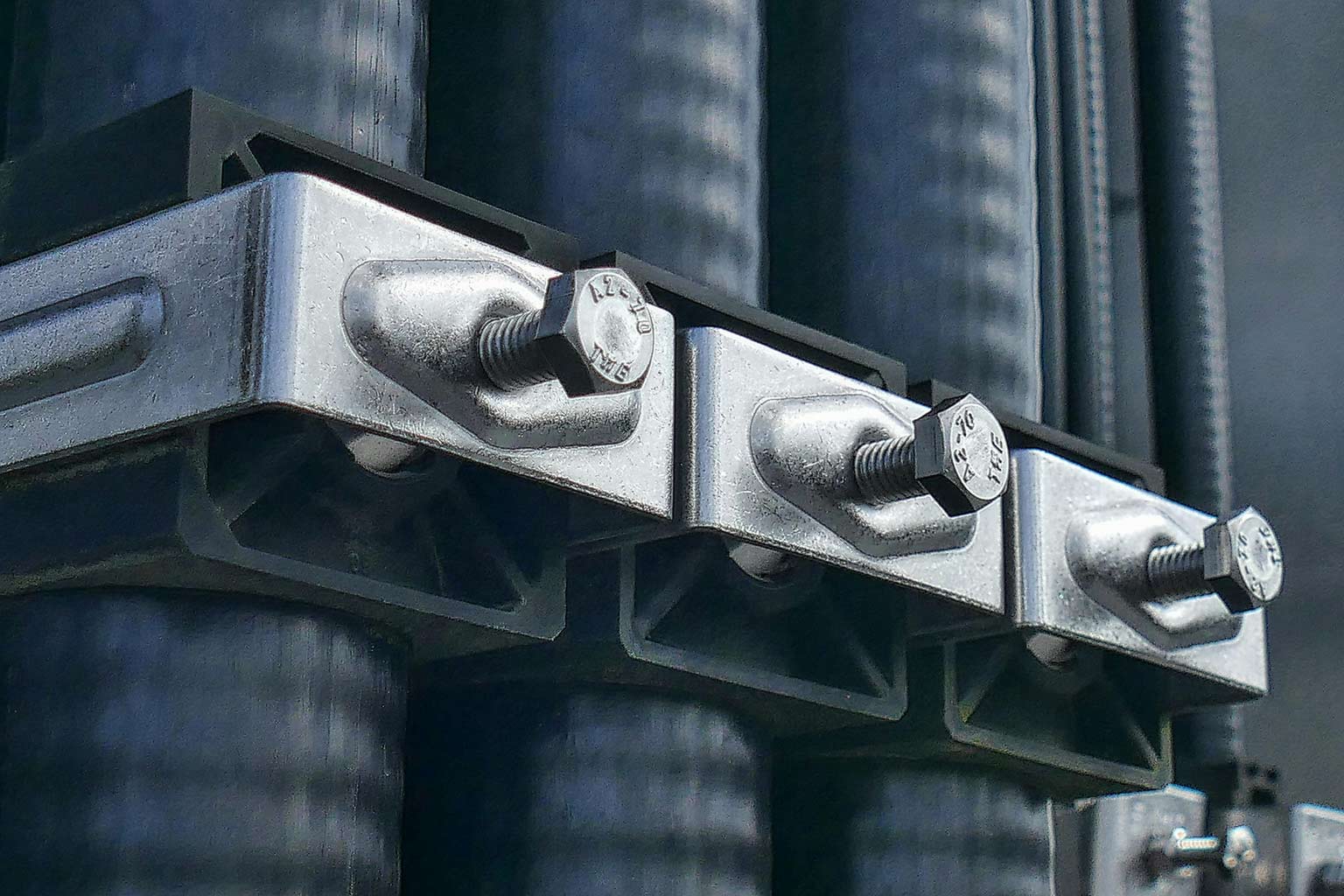
Two Standards for Centrifuged Hardware
ASTM A153 and ASTM F2329 both govern hot-dip galvanizing of hardware items requiring centrifuging after zinc immersion to remove excess molten zinc and prevent coating defects. While ASTM A153, "Standard Specification for Zinc Coating (Hot-Dip) on Iron and Steel Hardware," represents the traditional established standard dating to 1924 with straightforward requirements suitable for most hardware applications, ASTM F2329, "Standard Specification for Zinc Coating, Hot-Dip, Requirements for Application to Carbon and Alloy Steel Bolts, Screws, Washers, Nuts and Special Threaded Fasteners," provides enhanced quality control protocols specifically developed for critical fastener applications where dimensional control, mechanical property preservation, and coating uniformity demand rigorous verification.
Galvanizing to ASTM A153 generally meets or exceeds ASTM F2329 requirements because F2329 references A153 methodology for many test procedures. However, F2329 imposes additional requirements including mandatory adhesion testing, more complex sampling protocols differentiating batch versus production lots, specific provisions for high-strength bolts, bath temperature documentation, and optional post-treatment specifications. Understanding these differences enables galvanizers to assess facility capability for F2329 compliance and guides customers in selecting appropriate specifications balancing quality assurance needs against inspection complexity and cost.
Scope and Coverage Differences
ASTM A153 Scope
Covered Items:
- Bolts, nuts, washers, screws, threaded rods
- Nails, spikes
- Rivets
- General hardware items
- Small fabricated assemblies
Coating Method: Centrifuging after galvanizing required for items where excess zinc creates dimensional or functional issues.
ASTM F2329 Scope
Covered Items:
- Bolts, screws, washers, nuts
- Special threaded fasteners
- Anchor rods and long threaded items (>5 feet)
Exclusions:
- Nails (use ASTM A153)
- Rivets (use ASTM A153)
- Non-threaded hardware
Target Applications:
Engineered structural connections requiring:
- Precise dimensional control
- Verified mechanical properties
- Critical safety applications (bridges, high-rise buildings, heavy equipment)
Sampling Protocol Complexity
The most significant difference between specifications lies in sampling methodology:
ASTM A153 Sampling
Simple Approach:
Single lot type with straightforward sample size table:
Lot Size (pieces) Test Articles
≤3 All
4-500 3
501-1,200 5
1,201-3,200 8
3,201-10,000 13
>10,000 20
Testing:
- Coating thickness measurement
- Visual inspection for appearance
- Adhesion testing only if concerns arise
ASTM F2329 Sampling: Batch Lots
Definition:
Identical parts cleaned, pickled, fluxed, and galvanized together in single basket.
Sample Size (Excerpt from Table 1):
Lot Size Coating Thickness Adhesion Appearance
1-150 3 3 3
151-500 5 5 5
501-1,200 8 8 8
1,201-3,200 13 13 13
3,201-10,000 20 20 20
>10,000 32 32 32
Key Differences from A153:
Fewer samples for coating thickness at small lot sizes (3 vs. 3 for 4-500 piece lots)
Mandatory adhesion testing on every batch lot using stout knife test per A153 Annex methodology
Coating thickness testing frequency: Required only once every five batch lots (Note C of Table 1), though adhesion and appearance tested every batch
Zero defects acceptance: Unlike A153 allowing one-grade-below minimums, F2329 requires all test articles pass—no exceptions
ASTM F2329 Sampling: Production Lots
Definition:
Batches from same manufacturing lot processed continuously through cleaning, pickling, fluxing, galvanizing, and centrifuging without significant process parameter changes.
Two Process Types:
Detection Process: Quality verification after galvanizing—identifies defects for lot acceptance/rejection decisions
Prevention Process: In-process quality controls prevent defects—less frequent sampling based on demonstrated process capability
Sample Size Reference:
F2329 defers to ASTM F1470 Table 3 establishing sample sizes based on lot size with different sample quantities for detection versus prevention protocols:
Example - 500 piece lot:
- Detection: 11 samples (coating thickness), 11 (appearance), 3 (adhesion)
- Prevention: 5 samples (coating thickness), 5 (appearance), 2 (adhesion)
Qualification for Prevention Process:
Galvanizer must demonstrate consistent process control through documented quality history, enabling reduced sampling while maintaining quality assurance.
Coating Thickness Requirements
General Comparison
ASTM A153 coating requirements meet or exceed F2329 for most hardware categories. However, critical exceptions exist:
Exception 1: Small Fasteners and Nuts ≤3/8" Diameter
Item ASTM A153 ASTM F2329
Individual specimen minimum 1.4 mils 1.5 mils
All specimens average 1.7 mils 1.8 mils
Significance:
0.1 mil difference represents ~7% increase—challenging for small threaded items where coating thickness control proves difficult.
Exception 2: Washers <3/16" Thickness
Item ASTM A153 ASTM F2329
Individual specimen minimum 1.4 mils 1.5 mils
All specimens average 1.7 mils 1.8 mils
Exception 3: Grade A394 High-Strength Bolts
ASTM F2329 Supplementary Requirement S1:
Significantly higher coating requirements than A153:
Requirement ASTM A153 (Class C) ASTM F2329 SR1
All specimens average 2.1 mils 2.8 mils
Individual specimen 1.7 mils 2.5 mils
Rationale:
A394 bolts used in structural steel connections require enhanced corrosion protection. F2329 acknowledges this through explicit higher minimums.
Challenge:
33% increase in minimum coating thickness difficult to achieve consistently without:
- Process optimization
- Extended immersion times
- Potential dimensional tolerance impacts
Long Article Requirements (>5 Feet)
ASTM F2329 Provision:
For anchor rods or threaded articles exceeding 5 feet length:
- Measure coating thickness at both ends and middle
- Similar to ASTM A123 multi-specimen protocol
- Ensures coating uniformity over extended length
ASTM A153: No specific length-based measurement requirements
Adhesion Testing Mandates
ASTM A153 Approach
Testing Trigger: Adhesion testing performed only when:
- Visual evidence suggests poor adhesion
- Coating appearance abnormal
- Customer specifically requests testing
Method: Stout knife test per A153 Annex A1
ASTM F2329 Requirement
Mandatory Testing:
Every batch lot requires adhesion testing per Table 1 sample quantities:
- Cannot skip even with perfect appearance
- Stout knife test per A153 Annex A1 methodology
- Zero defects acceptance
Stout Knife Test Procedure:
- Apply edge of heavy knife blade at coating-substrate interface
- Attempt to peel or lift coating from base metal
- Coating should not peel, flake, or separate
- Minor coating removal at knife edge acceptable if cohesive failure within coating (not interfacial failure)
Impact:
Requires additional time, trained personnel, and documentation for every batch—substantial inspection burden compared to A153.
Hydrogen Embrittlement Prevention and Testing
Both specifications address hydrogen embrittlement—catastrophic cracking failure mechanism in high-strength steel from hydrogen absorption during pickling:
Prevention Methods (Both Specs)
Option 1: Baking Heat treatment after acid pickling, before galvanizing:
- Temperature: 375-450°F
- Duration: 4-24 hours depending on steel strength
- Drives absorbed hydrogen from steel
Option 2: Abrasive Blast + Flash Pickle Mechanical blast cleaning followed by brief (<2 minute) acid exposure:
- Minimizes hydrogen absorption
- Suitable when baking equipment unavailable
Testing Methodology Difference
ASTM A153:
If embrittlement testing required, conduct per ASTM A143 Paragraph 9 methods:
- Incremental loading test
- Sustained load test
- C-ring test
ASTM F2329:
Testing per ASTM F606 "Wedge Test":
- Hardened wedge positioned under bolt head
- Bolt tensioned to specified load
- Held for specified duration (typically 200 hours)
- Failure indicates embrittlement
Difference Impact:
F606 wedge test more stringent and realistic for threaded fastener geometry compared to A143 methods designed for general structural shapes.
Bath Temperature Documentation
ASTM A153
No specific bath temperature recording or documentation requirements.
ASTM F2329 Requirements
Paragraph 7.2.1.2:
When galvanizing bath temperature exceeds fastener stress-relief or tempering temperatures:
- Purchaser must arrange mechanical property testing after galvanizing
- Galvanizer must communicate bath temperature to customer
Typical galvanizing temperature: 820-860°F
Concern:
Some heat-treated fasteners have tempering temperatures <850°F. Prolonged exposure to molten zinc could alter mechanical properties through:
- Over-tempering reducing strength
- Metallurgical changes affecting toughness
Practical Requirement:
Best Practice: Record and document bath temperature for all F2329 galvanizing batches even if not explicitly required by customer—provides liability protection and enables mechanical property correlation if issues arise.
Customer Specification Option:
Customer may specify maximum bath temperature (e.g., "galvanize at 820-840°F maximum") requiring galvanizer maintain lower operating range.
Quenching and Post-Treatment Options
ASTM A153
No quenching or post-treatment requirements specified—galvanizer uses standard practice (typically air cooling).
ASTM F2329 Requirements
Paragraph 5.3.1 - Quenching:
All parts shall be quenched in water after centrifuging unless customer specifies air cooling.
Purpose:
- Rapid cooling prevents thick zinc oxide formation
- Maintains brighter appearance
- Reduces handling time to next operation
Galvanizer Consideration:
Facility must have water quench tank if certifying to F2329—not all galvanizing plants include quench tanks in standard centrifuged hardware processing.
Paragraph 5.5.1 - Post-Treatments:
Customer may request optional post-treatments:
Chromate Passivation:
- Reduces wet storage stain (white rust formation)
- Extends pre-installation storage duration
- Yellow-green tint appearance
Phosphate Treatment:
- Prepares surface for subsequent painting
- Gray matte appearance
- Improves paint adhesion
Galvanizer Capability Assessment:
Not all hardware galvanizing facilities maintain chromate or phosphate post-treatment capabilities—pre-contract verification essential.
Lubrication Provisions
ASTM A153
No lubrication requirements or provisions.
ASTM F2329 Paragraph 5.5.2
Customer may request lubrication application to nuts, bolts, or screws to:
- Reduce thread friction during assembly
- Improve torque-tension relationship consistency
- Prevent galling of zinc-on-zinc threaded interfaces
Common Lubricants:
- Wax-based thread lubricants
- Oil-based compounds
- Specialized anti-galling formulations
Galvanizer Consideration:
In-house lubrication capability uncommon at many galvanizing facilities. Options:
- Subcontract to specialized lubricant applicator (additional cost, lead time)
- Customer arranges post-delivery lubrication
- Specify alternative lubricant-free assembly procedures
Documentation and Certification Requirements
ASTM A153
Minimal Documentation:
Standard certification stating:
- Material galvanized per ASTM A153
- Lot identification
- Date of galvanizing
Typical: Single-page certification letter
ASTM F2329 Requirements
Comprehensive Documentation:
Mandatory Information:
- Detailed lot identification and traceability
- Bath temperature (average for production lot)
- Coating thickness test results
- Adhesion test results
- Visual inspection results
- Post-treatment type (if applicable)
- Lubrication type (if applicable)
Optional Customer Requirements:
- Dimensional inspection results (customer provides gauges/tools)
- Mechanical property test results (if post-galvanizing testing performed)
- Process parameter logs (time, temperature, solution concentrations)
Documentation Burden:
Substantially increased compared to A153—requires robust quality management system and personnel training.
Practical Implementation Considerations
Galvanizer Capability Assessment
Before accepting F2329 orders, galvanizers should verify:
Equipment:
- Water quench tank
- Chromate/phosphate post-treatment capability (if offering this service)
- Temperature recording equipment for bath monitoring
Quality Control Resources:
- Trained inspection personnel understanding complex sampling protocols
- Coating thickness gauges with frequent calibration
- Adhesion testing tools and procedure knowledge
- Documentation systems handling increased record requirements
Process Control:
- Demonstrated bath temperature stability (particularly for heat-treated fasteners)
- Coating thickness consistency meeting tighter tolerances
- Adhesion reliability across all batches
Cost Implications
F2329 compliance increases galvanizing costs through:
- Additional inspection labor (adhesion testing, increased documentation)
- Potential rework from zero-defects requirement (vs. A153's grade-below allowance)
- Bath temperature monitoring and documentation
- Optional post-treatment costs
- Quality system development and maintenance
Typical premium: 10-25% above A153 pricing depending on lot size and optional requirements
When to Specify F2329 vs. A153
ASTM F2329 Appropriate For:
- Structural connections in critical applications (bridges, high-rises)
- High-strength fasteners (Grade 8, A490, A394)
- Applications requiring documented quality assurance
- Projects with rigorous inspection requirements
- Situations demanding dimensional precision
ASTM A153 Sufficient For:
- General construction hardware
- Non-critical fastener applications
- Standard commercial and industrial projects
- Cost-sensitive applications
- Situations where simplified procurement and inspection preferred
ASTM F2329 provides enhanced quality assurance for hot-dip galvanized hardware and fasteners through mandatory adhesion testing on every batch lot, more complex sampling protocols distinguishing batch lots from production lots with detection versus prevention process options enabling sample size reduction for galvanizers demonstrating process capability, higher coating thickness minimums for small fasteners under 3/8 inch diameter (1.5 mils vs. 1.4 mils) and substantially increased requirements for A394 high-strength bolts (2.8 mils average vs. 2.1 mils), and mandatory water quenching with optional chromate or phosphate post-treatments requiring specialized equipment. While galvanizing to ASTM A153 generally meets F2329 requirements because F2329 references A153 test methods and most coating minimums align between specifications, critical differences in small fastener thickness requirements, mandatory adhesion verification with zero-defects acceptance criteria, bath temperature documentation obligations, and comprehensive certification requirements substantially increase inspection complexity and cost compared to A153's straightforward approach. Galvanizers must assess facility capability including water quench tank availability, post-treatment processing capability, temperature monitoring equipment, trained quality control personnel, and robust documentation systems before accepting F2329 orders, while customers should specify F2329 only when critical structural applications, high-strength fasteners, or rigorous quality documentation genuinely justify the 10-25% cost premium over A153. For general construction hardware in non-critical applications, ASTM A153 continues providing adequate quality assurance with simplified procurement, reduced inspection burden, and lower costs, while F2329 serves engineered structural connections where enhanced verification, dimensional control, and documented process compliance provide essential risk mitigation despite additional complexity. To read the original AGA resource article, click the link.
