
The Repair Size Specification Challenge
Hot-dip galvanizing produces exceptionally uniform, complete coating coverage across steel article surfaces through the immersion process. However, minor coating discontinuities occasionally occur from various mechanisms: surface contamination preventing zinc adhesion, drainage patterns creating thin areas that expose substrate, handling damage after withdrawal from the zinc bath, or unavoidable geometric factors in complex fabrications. These coating defects—ranging from small bare spots to larger uncoated areas—require evaluation against acceptance criteria determining whether articles can be repaired and accepted or must be stripped and re-galvanized.
ASTM A123, "Standard Specification for Zinc (Hot-Dip Galvanized) Coatings on Iron and Steel Products," establishes quantitative criteria defining maximum allowable repair area at the galvanizing facility. However, prior to 2017 revision, specification language created interpretation ambiguities generating disputes among galvanizers, inspectors, and customers regarding acceptable repair limits. The 2017 ASTM A123 revision substantially clarified repair size requirements through enhanced written criteria, mathematical examples, and visual illustrations, providing unambiguous guidance for repair acceptability determination while explicitly establishing unlimited field repair provisions for articles after facility departure.
Historical Context and 2017 Revision
Pre-2017 Ambiguities
Earlier ASTM A123 versions contained repair size provisions lacking sufficient specificity:
Interpretation Challenges:
Dimensional Criteria Vagueness: General statements about "small areas" or "limited size" without precise dimensional definitions enabled subjective interpretation varying among inspectors and facilities.
Percentage Calculation Confusion: The 0.5% surface area criterion existed but lacked clarity regarding:
- Whether to calculate based on total surface area or accessible surface area
- How to measure surface area for complex geometries
- Whether multiple small bare spots aggregate toward the limit
Weight-Based Limit Misunderstanding: The 36 square inches per ton provision frequently misapplied or overlooked, with uncertainty about:
- When weight-based versus percentage-based criteria govern
- Whether limits are additive or alternatives
Visual Representation Absence: No illustrative figures or worked examples demonstrating acceptable versus rejectable configurations
These ambiguities generated:
- Inconsistent acceptance decisions across facilities
- Inspector-to-inspector variation in interpretation
- Customer disputes over rejection determinations
- Unnecessary re-galvanizing of acceptable articles
- Inappropriate acceptance of articles exceeding true limits
2017 Clarification Objectives
ASTM A123 revision addressed ambiguities through:
Explicit Dimensional Language: Precise written criteria stating allowable dimensions
Mathematical Formulation: Clear equations for calculating percentage and weight-based limits
Visual Illustrations: Diagrams depicting acceptable and rejectable repair configurations
Worked Examples: Specific calculation examples demonstrating proper criteria application
Field Repair Provision: Explicit statement that size limits apply only at galvanizing facility, not for field repairs post-delivery
The Three Mandatory Criteria
ASTM A123 Paragraph 6.2 establishes three distinct criteria that ALL must be satisfied simultaneously for repair acceptability at the galvanizing facility:
Criterion 1: Dimensional Limit
ASTM A123 Paragraph 6.2.1 Language:
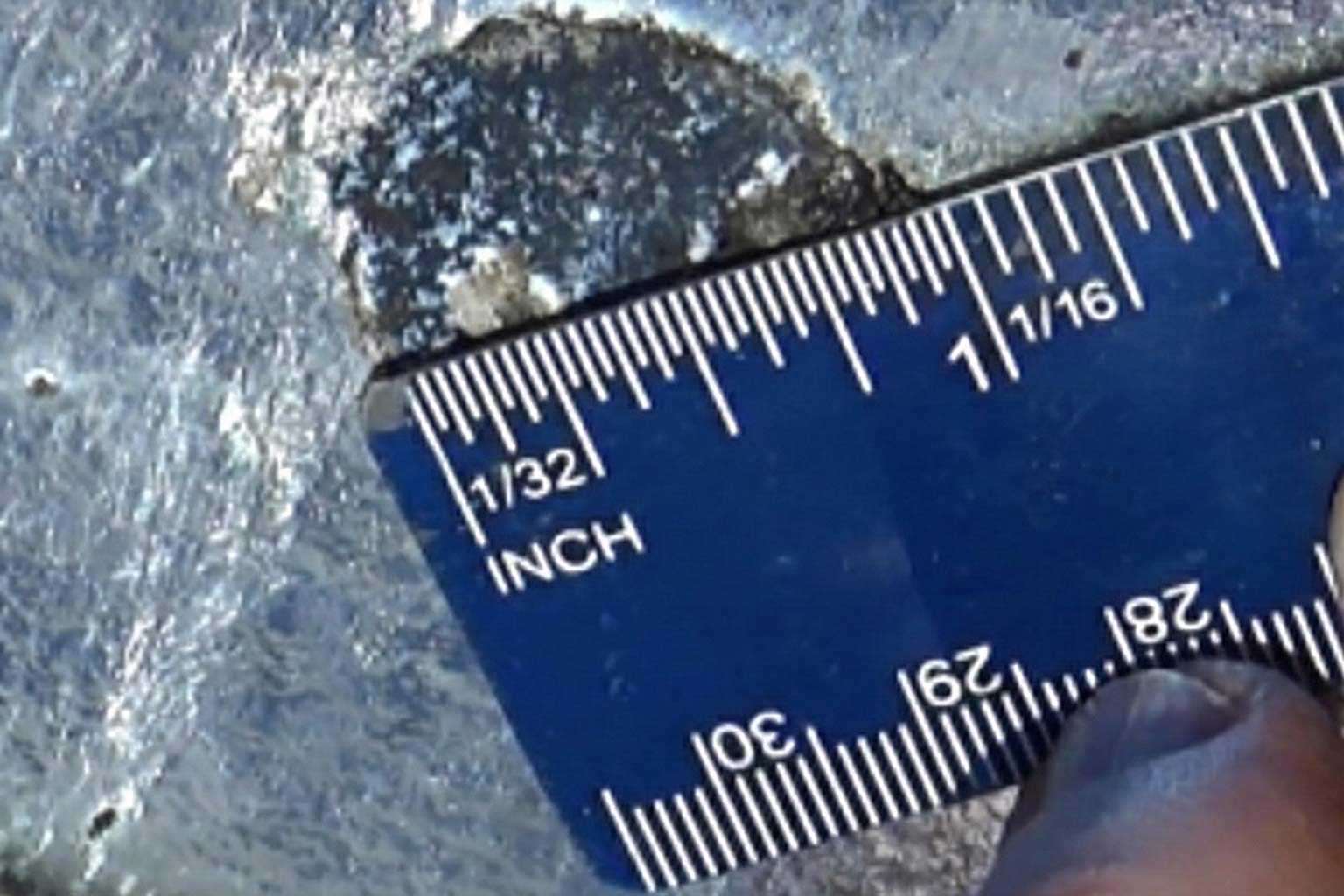
"Each uncoated area subject to renovation shall be limited in size. The length and width of the uncoated area shall be allowed to exceed 1 in. [25 mm] in only one of the two dimensions."
Interpretation:
For each individual bare spot or uncoated area:
Measurement Approach:
- Identify the longest dimension of the uncoated area: Length (L)
- Identify the dimension perpendicular to the longest: Width (W)
- Determine which dimension exceeds 1 inch (25 mm)
Acceptable Configurations:
Case 1: Both dimensions ≤ 1 inch
- L ≤ 1 inch AND W ≤ 1 inch
- Result: Acceptable under dimensional criterion
Example: Bare spot measuring 0.75 inch × 0.5 inch
- Both dimensions below 1 inch threshold
- Dimensional criterion satisfied
Case 2: One dimension > 1 inch, other dimension ≤ 1 inch
- L > 1 inch AND W ≤ 1 inch (or vice versa)
- Result: Acceptable under dimensional criterion
Example: Bare spot measuring 6 inches × 0.75 inch
- Length exceeds 1 inch (6 inches)
- Width remains below 1 inch (0.75 inch)
- Only one dimension exceeds threshold
- Dimensional criterion satisfied
Rejectable Configuration:
Case 3: Both dimensions > 1 inch
- L > 1 inch AND W > 1 inch
- Result: Rejectable - fails dimensional criterion
Example: Bare spot measuring 2 inches × 1.5 inches
- Both length and width exceed 1 inch threshold
- Exceeds dimensional limit regardless of total area
- Immediate rejection - cannot be repaired at facility
Criterion 2: Percentage of Surface Area Limit
ASTM A123 Paragraph 6.2.2 Language (Partial):
"The total of the uncoated areas subject to renovation by one of the methods in A780 on each steel article shall not exceed ½ of 1% of the accessible surface area to be hot-dip galvanized on that steel article."
Mathematical Expression:
Total bare area ≤ 0.005 × Accessible surface area
Or: Total bare area ≤ 0.5% × Accessible surface area
Calculation Methodology:
Step 1: Calculate Total Bare Area
Sum the areas of all uncoated spots on the article:
Total Bare Area = Area₁ + Area₂ + Area₃ + ... + Areaₙ
Where each individual area is calculated from its dimensions: Area = Length × Width
Step 2: Determine Accessible Surface Area
Calculate or obtain the total surface area of the article that was intended to be hot-dip galvanized:
Simple Geometries:
- Flat plates: 2 × (Length × Width) for both sides
- Beams, channels, angles: Sum of all exposed surface areas
- Round tubes: π × Diameter × Length (both interior and exterior)
- Rectangular hollow sections: Perimeter × Length (all four sides)
Complex Geometries:
- Consult engineering drawings for surface area specifications
- Use CAD software surface area calculations
- Apply geometric formulas for component surfaces
"Accessible" Clarification: The term "accessible surface area" excludes:
- Interior surfaces of blind or sealed hollow sections without venting
- Surfaces that cannot physically receive coating due to geometric constraints
- Areas explicitly not intended for galvanizing (masked regions)
Step 3: Calculate Maximum Allowable Repair
Maximum Allowable Repair (Criterion 2) = 0.005 × Accessible Surface Area
Step 4: Compare and Evaluate
If: Total Bare Area ≤ Maximum Allowable Repair (Criterion 2) Then: Percentage criterion SATISFIED
If: Total Bare Area > Maximum Allowable Repair (Criterion 2) Then: Percentage criterion FAILED → Article rejectable
Criterion 3: Weight-Based Area Limit
ASTM A123 Paragraph 6.2.2 Language (Continued):
"The total of the uncoated areas subject to renovation by one of the methods of A780 shall also not exceed 36 in.² per short ton [256 cm² per metric ton] of piece weight."
Mathematical Expression:
Total bare area ≤ 36 in² × (Article weight in short tons)
Or metric units: Total bare area ≤ 256 cm² × (Article weight in metric tons)
Calculation Methodology:
Step 1: Determine Article Weight
From Documentation:
- Engineering drawings typically specify piece weight
- Fabrication shop records document weight
- Mill certifications may include weight data
By Weighing:
- Scale measurement of completed article
- Most accurate method for complex fabrications
By Calculation: For simple shapes with known dimensions and material:
Weight (lbs) = Volume (in³) × Material Density (lbs/in³)
Steel density ≈ 0.283 lbs/in³
Step 2: Convert to Appropriate Units
Short Tons (US standard): Weight in tons = Weight in pounds ÷ 2,000
Metric Tons: Weight in metric tons = Weight in kilograms ÷ 1,000
Step 3: Calculate Maximum Allowable Repair
US Units: Maximum Allowable Repair (Criterion 3) = 36 in² × Weight in short tons
Metric Units: Maximum Allowable Repair (Criterion 3) = 256 cm² × Weight in metric tons
Step 4: Compare and Evaluate
If: Total Bare Area ≤ Maximum Allowable Repair (Criterion 3) Then: Weight-based criterion SATISFIED
If: Total Bare Area > Maximum Allowable Repair (Criterion 3) Then: Weight-based criterion FAILED → Article rejectable
The "Whichever is Less" Requirement
Critical Understanding:
Criteria 2 and 3 are not independent alternatives—the article must satisfy BOTH the percentage-based limit AND the weight-based limit.
Effective Maximum Allowable Repair:
Maximum Allowable = MINIMUM of:
- 0.005 × Accessible Surface Area (Criterion 2)
- 36 in² × Weight in tons (Criterion 3)
Practical Implication:
The more restrictive criterion governs. For any given article, calculate both limits and apply the smaller value.
Comprehensive Acceptance Determination Process
To determine if an article with bare areas can be repaired at the galvanizing facility:
Step-by-Step Evaluation
Step 1: Individual Spot Dimensional Check
For each bare spot, verify:
- Does the spot exceed 1 inch in BOTH dimensions?
- If YES: Article immediately rejectable (fails Criterion 1)
- If NO: Continue to Step 2
Step 2: Calculate Total Bare Area
Sum all individual bare spot areas: Total Bare Area = Σ(Length × Width) for all spots
Step 3: Calculate Percentage-Based Limit
- Determine accessible surface area of article
- Calculate: 0.005 × Accessible Surface Area
- This is Maximum Allowable per Criterion 2
Step 4: Calculate Weight-Based Limit
- Determine article weight in tons
- Calculate: 36 in² × Weight in tons
- This is Maximum Allowable per Criterion 3
Step 5: Determine Governing Limit
Effective Maximum = SMALLER of Criterion 2 and Criterion 3 results
Step 6: Compare and Decide
If: Total Bare Area ≤ Effective Maximum Then: All criteria satisfied → Article acceptable for repair per ASTM A780
If: Total Bare Area > Effective Maximum Then: Criteria exceeded → Article rejectable, must be stripped and re-galvanized
Worked Examples
Example 1: Small Plate with Multiple Bare Spots
Article Description: Steel plate: 5 inches × 5 inches × 0.5 inches thick Material: Steel (0.283 lbs/in³ density)
Defects: Two bare spots, each measuring 0.5 inch × 0.5 inch
Evaluation:
Criterion 1 - Dimensional Check:
Bare Spot #1: L = 0.5 inch, W = 0.5 inch
- Neither dimension exceeds 1 inch ✓
Bare Spot #2: L = 0.5 inch, W = 0.5 inch
- Neither dimension exceeds 1 inch ✓
Result: Criterion 1 SATISFIED
Criterion 2 - Percentage Limit:
Total Bare Area: = (0.5 × 0.5) + (0.5 × 0.5) = 0.25 + 0.25 = 0.5 in²
Accessible Surface Area: Two flat surfaces: 2 × (5 × 5) = 50 in² Four edges: 2 × (5 × 0.5) + 2 × (5 × 0.5) = 5 + 5 = 10 in² Total = 50 + 10 = 60 in²
Maximum Allowable (Criterion 2): = 0.005 × 60 = 0.3 in²
Comparison: Total Bare Area (0.5 in²) > Maximum Allowable (0.3 in²)
Result: Criterion 2 FAILED ✗
Criterion 3 - Weight-Based Limit:
Article Weight: Volume = 5 × 5 × 0.5 = 12.5 in³ Weight = 12.5 × 0.283 = 3.54 lbs = 3.54 ÷ 2,000 = 0.00177 tons
Maximum Allowable (Criterion 3): = 36 × 0.00177 = 0.064 in²
Comparison: Total Bare Area (0.5 in²) > Maximum Allowable (0.064 in²)
Result: Criterion 3 FAILED ✗
Final Decision:
Article REJECTABLE - fails both Criteria 2 and 3
Despite small individual spot dimensions satisfying Criterion 1, the total bare area (0.5 in²) exceeds both allowable limits (0.3 in² for percentage, 0.064 in² for weight-based).
Action Required: Strip and re-galvanize
Key Insight: Small, lightweight articles have very restrictive repair limits. Two small 0.25 in² bare spots exceed allowable repair area for this 3.5-pound plate.
Example 2: Structural Beam with Single Large Bare Spot
Article Description: W8×15 beam (common designation), 10 feet long Weight: 150 lbs/10 ft = 150 lbs
Defect: One bare spot measuring 40 inches × 1 inch
Evaluation:
Criterion 1 - Dimensional Check:
L = 40 inches, W = 1 inch
- Length exceeds 1 inch (40 inches)
- Width equals 1 inch (does not exceed)
- Only ONE dimension exceeds 1 inch ✓
Result: Criterion 1 SATISFIED
Criterion 2 - Percentage Limit:
Total Bare Area: = 40 × 1 = 40 in²
Accessible Surface Area: Per engineering reference for W8×15:
- Flanges: 2 sides × (2 flanges × 5.27" width × 120" length) ≈ 2,530 in²
- Web: 2 sides × (7.5" depth × 120" length) ≈ 1,800 in²
- Approximate total ≈ 4,300 in² (simplified; actual slightly higher)
Or from engineering drawing specification: 10,000 in² (as stated in source example - using this value)
Maximum Allowable (Criterion 2): = 0.005 × 10,000 = 50 in²
Comparison: Total Bare Area (40 in²) < Maximum Allowable (50 in²)
Result: Criterion 2 SATISFIED ✓
Criterion 3 - Weight-Based Limit:
Article Weight: 150 lbs ÷ 2,000 = 0.075 tons
Maximum Allowable (Criterion 3): = 36 × 0.075 = 2.7 in²
Comparison: Total Bare Area (40 in²) > Maximum Allowable (2.7 in²)
Result: Criterion 3 FAILED ✗
Final Decision:
Article REJECTABLE - fails Criterion 3 despite satisfying Criteria 1 and 2
The 40 in² bare area is acceptably sized (Criterion 1) and represents less than 0.5% of surface area (Criterion 2 = 40/10,000 = 0.4%), BUT exceeds the weight-based limit dramatically (40 in² vs. 2.7 in² allowable).
Action Required: Strip and re-galvanize
Key Insight: The weight-based criterion (36 in²/ton) often governs for beams and structural shapes, which have large surface areas relative to weight. Even though percentage-based calculation allowed 50 in² repair, the governing weight-based limit restricts repair to only 2.7 in².
Example 3: Heavy Fabricated Tank
Article Description: Rectangular steel tank: 48" × 48" × 72" tall, 1/4" wall thickness Weight: 2,500 lbs
Defect: Multiple small bare spots totaling 15 in² combined area Largest individual spot: 0.75 inch × 1.25 inch
Evaluation:
Criterion 1 - Dimensional Check:
Largest spot: L = 1.25 inch, W = 0.75 inch
- Length exceeds 1 inch (1.25 inch)
- Width below 1 inch (0.75 inch)
- Only ONE dimension exceeds 1 inch ✓
Assuming other spots are smaller, all satisfy Criterion 1
Result: Criterion 1 SATISFIED
Criterion 2 - Percentage Limit:
Total Bare Area: 15 in² (given)
Accessible Surface Area: Four sides: 4 × (48 × 72) = 13,824 in² Bottom: 48 × 48 = 2,304 in² Top (if open): 0 in² (or 2,304 if present) Using closed tank: Total ≈ 16,128 in²
Maximum Allowable (Criterion 2): = 0.005 × 16,128 = 80.6 in²
Comparison: Total Bare Area (15 in²) < Maximum Allowable (80.6 in²)
Result: Criterion 2 SATISFIED ✓
Criterion 3 - Weight-Based Limit:
Article Weight: 2,500 lbs ÷ 2,000 = 1.25 tons
Maximum Allowable (Criterion 3): = 36 × 1.25 = 45 in²
Comparison: Total Bare Area (15 in²) < Maximum Allowable (45 in²)
Result: Criterion 3 SATISFIED ✓
Final Decision:
Article ACCEPTABLE for repair - satisfies all three criteria
The 15 in² total bare area:
- Contains no individual spots exceeding 1 inch in both dimensions (Criterion 1 ✓)
- Represents only 0.09% of surface area, well below 0.5% limit (Criterion 2 ✓)
- Falls below 45 in² weight-based limit (Criterion 3 ✓)
Action Allowed: Repair per ASTM A780 and accept
Key Insight: Large, heavy articles with substantial surface area often have generous repair allowances. This 2,500-lb tank can accommodate 15 in² of repairs, whereas the 150-lb beam could only accept 2.7 in².
Field Repair Provisions: Unlimited Size
ASTM A123 Paragraph 6.2.2 Final Statement
"Once the parts have left the galvanizing facility there shall be no limit on the size of the area subject to renovation."
Interpretation:
At Galvanizing Facility: All three criteria (dimensional, percentage, weight-based) strictly apply. Articles exceeding limits must be stripped and re-galvanized before shipment.
After Facility Departure: Once articles are accepted and shipped from the galvanizing facility:
- NO maximum repair size applies
- Damage from transportation, handling, installation, or service can be repaired regardless of extent
- Field welding burn-off areas of any size can be touched up
- In-service damage can be repaired without size restrictions
Rationale:
Practical Reality: Field conditions often cause coating damage:
- Rough handling during construction
- Installation equipment contact
- Field welding operations
- In-service mechanical damage
Rejecting and returning articles for re-galvanizing becomes impractical and economically unjustifiable after installation begins.
Functional Priority: The primary concern is corrosion protection. Properly executed field repairs using ASTM A780 methods provide adequate protection regardless of size.
Economic Efficiency: Field repair costs typically represent small fraction of re-galvanizing, disassembly, transportation, and project delay costs.
Field Repair Best Practices
While no size limit applies, field repairs should:
Use ASTM A780 Compliant Materials:
- Zinc-rich paints
- Zinc-based solders
- Zinc-spray metallizing
Achieve Adequate Thickness: Repair coating thickness should meet or exceed primary specification minimums (typically 3.0-5.0 mils)
Proper Surface Preparation: Remove contaminants, rust, and loose coating ensuring adequate adhesion
Documentation: Record field repair locations and methods for maintenance history
Practical Implementation Guidance
Information Requirements
To evaluate repair acceptability, galvanizers need:
Dimensional Measurements:
- Length and width of each bare spot
- Use calipers, rulers, or measuring tape
- Document measurements for records
Surface Area Data:
- Total surface area of article
- From engineering drawings, CAD models, or calculation
- Request from customer if unavailable
Weight Information:
- Article weight in pounds or kilograms
- From drawings, fabrication records, or actual weighing
- Convert to tons for calculation
Calculation Tools and Resources
AGA Provides:
- Surface area calculation tools for standard shapes
- Weight calculation utilities for common structural sections
- Technical support for complex geometry evaluation
Engineering References:
- AISC Steel Construction Manual (structural shapes)
- Geometric formula handbooks
- CAD software surface area analysis tools
Common Calculation Shortcuts
For Beams, Channels, Angles: Standard structural sections have published properties including:
- Weight per linear foot
- Surface area per linear foot
- Multiply by length for total values
For Plates: Surface Area = 2 × (Length × Width) + Perimeter × Thickness Weight = Volume × Density = (L × W × t) × 0.283 lbs/in³
For Tubes and Pipes: Surface Area = π × D × L (exterior) + π × d × L (interior, if coated) Weight = π/4 × (D² - d²) × L × 0.283 lbs/in³
Common Misunderstandings and Errors
Error 1: "Either/Or" Interpretation
Misconception: "The article must meet the 0.5% limit OR the 36 in²/ton limit"
Reality: The article must meet BOTH limits. The more restrictive governs.
Impact: Accepting articles that satisfy percentage but fail weight-based limit (or vice versa) constitutes non-conformance.
Error 2: Ignoring Dimensional Limit
Misconception: "As long as total area is small, individual spot size doesn't matter"
Reality: Even a single 0.1 in² bare spot fails acceptance if it measures 2 inches × 0.05 inch (both dimensions don't need to exceed 1 inch, just one dimension in each direction).
Wait, let me reconsider. The spec says "shall be allowed to exceed 1 in. in only one of the two dimensions". This means one dimension CAN exceed 1 inch, but not both. So a 2 inch × 0.05 inch spot is acceptable dimensionally because only ONE dimension (length = 2") exceeds 1 inch.
A 2 inch × 1.5 inch spot would be rejectable because BOTH dimensions exceed 1 inch.
Impact: Large spots exceeding 1 inch in both dimensions must be rejected regardless of small total area.
Error 3: Including Non-Accessible Surfaces
Misconception: "Calculate percentage using total theoretical surface area including sealed internal surfaces"
Reality: Use only "accessible surface area to be hot-dip galvanized" - excludes blind internals without venting.
Impact: Overestimating allowable repair area by including surfaces that were never intended for coating.
Error 4: Applying Plant Limits to Field Repairs
Misconception: "Field repairs must also meet the 36 in²/ton and 0.5% limits"
Reality: Field repairs after facility departure have NO size limit per ASTM A123 explicit statement.
Impact: Unnecessary rejection of repairable field damage or excessive re-work when simple field touch-up would suffice.
Economic and Quality Implications
Cost of Rejection and Re-Galvanizing
When articles exceed repair limits:
Direct Costs:
- Chemical stripping: $0.50-2.00/lb
- Re-galvanizing: $0.40-1.50/lb (repeat charges)
- Additional handling and processing: $100-500 per article
- Schedule delays: Cost of project postponement
Typical Total: $500-5,000+ per rejected article depending on size
Opportunity Cost: Production capacity consumed by re-work rather than new orders
Cost of Appropriate Repair
For articles meeting repair limits:
Repair Costs:
- Zinc-rich paint: $0.10-1.00 per in² repaired
- 15 in² repair: $1.50-15 total material and labor
- Inspection and documentation: $25-50
Total: $25-75 typical for repairs within limits
Economic Motivation: Proper understanding and application of repair limits prevents unnecessary $1,000+ rejection costs while ensuring specification compliance.
Inspector Training and Consistency
Standardized Evaluation Process
Quality control personnel should:
Use Checklists: Systematic evaluation form ensuring all three criteria checked
Document Calculations: Record surface area, weight, calculations for each article
Photographic Evidence: Document bare spots showing scale reference for dimension verification
Peer Review: Complex or borderline cases reviewed by multiple inspectors or engineering staff
Calibration and Tools
Measurement Equipment:
- Calibrated rulers, calipers, measuring tapes
- Coating thickness gauges for undamaged areas
- Scales for weight verification
Reference Materials:
- Laminated ASTM A123 criteria summaries
- Pre-calculated limits for common article types
- Quick-reference charts and nomographs
Customer Communication
Pre-Galvanizing Discussion
Clarify Expectations:
- Review repair size limits with customer during quoting
- Explain three-criteria evaluation
- Discuss potential rejection scenarios for complex fabrications
Design Collaboration: For articles approaching repair limits:
- Optimize fabrication reducing bare spot potential
- Improve venting and drainage
- Consider surface preparation enhancements
Rejection Notification
When articles exceed limits:
Prompt Communication: Notify customer immediately upon determination
Clear Explanation:
- Which criterion failed
- Measured values versus allowable limits
- Photographic documentation
- Options for resolution
Collaborative Solutions:
- Re-galvanizing procedures and costs
- Schedule impacts
- Prevention strategies for future lots
Specification References and Integration
Related ASTM Standards
ASTM A780: "Standard Practice for Repair of Damaged and Uncoated Areas of Hot-Dip Galvanized Coatings"
- Specifies repair materials and methods
- Does NOT establish maximum repair size (size limits are in A123)
- Referenced by A123 for repair procedures
ASTM A153: "Standard Specification for Zinc Coating (Hot-Dip) on Iron and Steel Hardware"
- Similar repair provisions for hardware and fasteners
- Paragraph 4.5 establishes 0.5% and 1 inch limits analogous to A123
ASTM A767: "Standard Specification for Zinc-Coated (Galvanized) Steel Bars for Concrete Reinforcement"
- Paragraph 9.1 addresses repair for reinforcing bar
Project Specifications
Engineers specifying galvanized steel should reference:
"Hot-dip galvanizing shall conform to ASTM A123. Maximum allowable repair size at galvanizing facility shall be per ASTM A123 Paragraph 6.2. Field repairs after delivery shall be per ASTM A780 with no size limitation."
ASTM A123 establishes three mandatory criteria that must ALL be satisfied simultaneously for coating repair acceptability at the galvanizing facility: individual bare spots must not exceed 1 inch (25 mm) in BOTH dimensions (length and width), total bare area must not exceed 0.5% (one-half of one percent) of the article's accessible surface area intended for galvanizing, and total bare area must not exceed 36 square inches per short ton (256 cm² per metric ton) of article weight, with the more restrictive of the percentage-based or weight-based limits governing. The 2017 ASTM A123 revision clarified these requirements through explicit mathematical formulations, worked examples, and visual illustrations eliminating previous interpretation ambiguities that generated inconsistent acceptance decisions across facilities and inspectors. Proper evaluation requires systematic calculation of all three limits: measuring each bare spot's dimensions verifying neither length nor width simultaneously exceed 1 inch, calculating total bare area by summing all individual spot areas, determining accessible surface area from engineering drawings or geometric calculations, computing 0.5% of surface area as percentage-based limit, determining article weight in tons, calculating 36 times weight in tons as weight-based limit, and comparing total bare area against the smaller of the two calculated limits. Field repairs after articles leave the galvanizing facility face NO size restrictions per explicit ASTM A123 Paragraph 6.2.2 language stating "once the parts have left the galvanizing facility there shall be no limit on the size of the area subject to renovation," recognizing that transportation damage, installation impacts, and field welding create practical repair needs where re-galvanizing proves economically unjustifiable. Common misunderstandings include erroneously treating percentage and weight criteria as alternatives rather than concurrent requirements both requiring satisfaction, neglecting the critical dimensional check allowing rejection of large spots exceeding 1 inch in both dimensions regardless of small total area, and inappropriately applying facility repair size limits to field repairs when unlimited repair is explicitly permitted post-delivery. The weight-based criterion (36 in²/ton) frequently governs for structural shapes and beams having large surface area relative to weight, while percentage-based criterion (0.5% of surface area) often governs for plate and sheet products, with small lightweight articles having very restrictive repair limits where even small bare spots may exceed allowable thresholds. Understanding and properly applying these comprehensive repair size criteria prevents unnecessary article rejection costing $500-5,000+ for stripping and re-galvanizing while ensuring specification compliance and maintaining coating quality standards protecting long-term corrosion performance. For more information, visit the original AGA resource article.
