

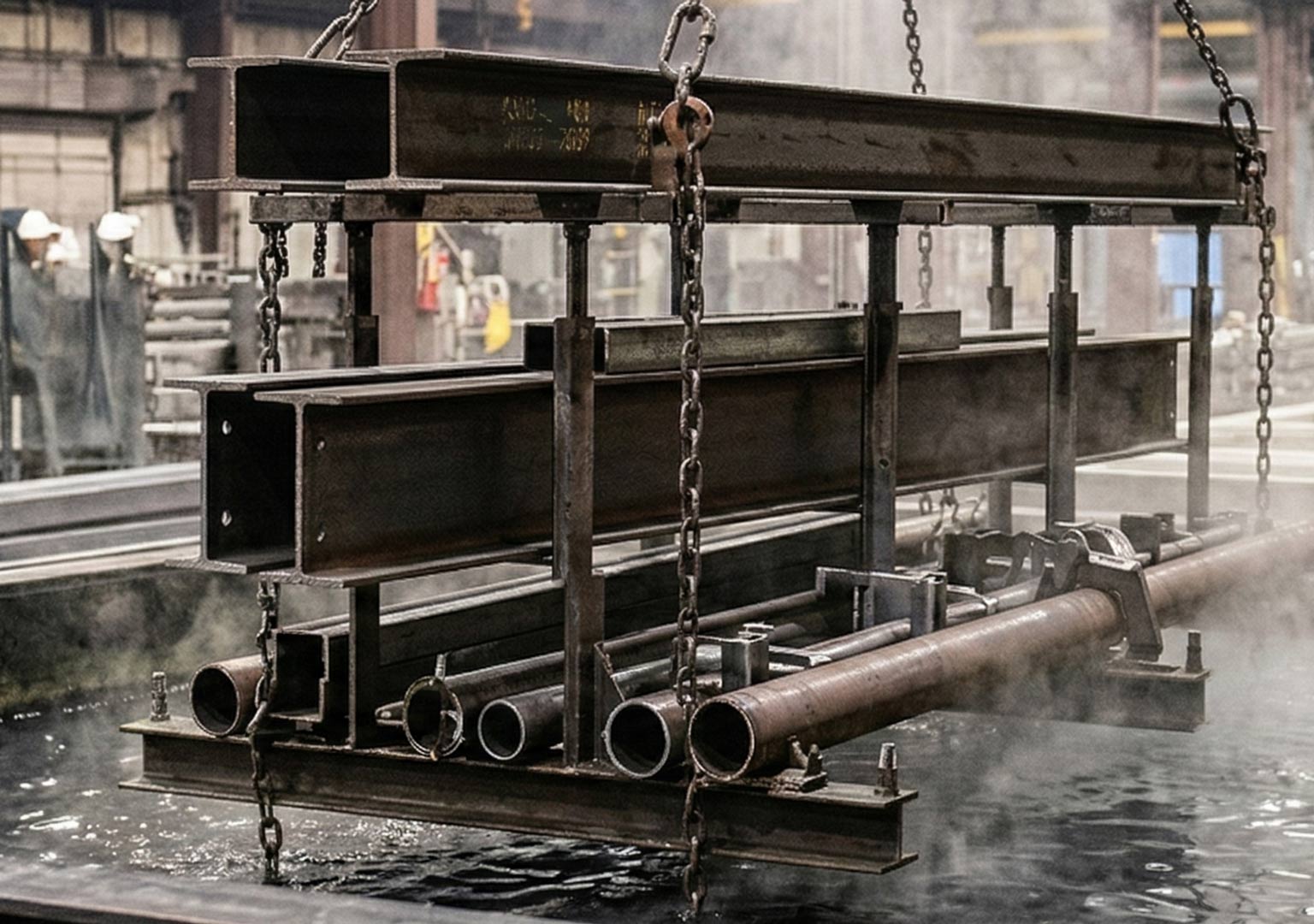
Pickling is an essential chemical step in the hot dip galvanizing process. By removing mill scale and oxides, it activates the steel surface and enables metallurgical bonding with zinc. Proper pickling ensures uniform coating thickness, strong adhesion, and long term corrosion protection. Fabrication quality directly influences pickling effectiveness, reinforcing the importance of coordinated preparation between fabricator and galvanizer.
Because pickling directly affects coating performance, engineers and fabricators must understand both its purpose and its limitations. The Galvanize It article on pickling steel provides a foundational overview of this stage in the galvanizing process.
Building on that technical foundation, this article explains how pickling integrates into the full preparation cycle, what it removes, what it does not remove, and how it ultimately influences coating integrity and long term durability.
What Pickling Accomplishes
During steel production, hot rolling forms a tightly adhered oxide layer known as mill scale. Additionally, exposure to moisture and air can create surface rust and oxidation.
Pickling removes:
- Mill scale
- Surface rust
- Iron oxides
Hydrochloric acid is commonly used because it effectively dissolves iron oxides while preserving the base steel when properly controlled.
The purpose of pickling is not cosmetic cleaning. It is metallurgical preparation. Zinc can only form alloy layers where clean iron is exposed. Any oxide barrier prevents proper bonding.
Where Pickling Fits in the Galvanizing Process
At our facility, pickling is part of a structured preparation sequence designed to ensure optimal coating formation.
Surface Preparation Assessment
We analyze incoming steel to determine surface condition and confirm readiness for chemical processing.
Caustic Cleaning
An alkaline cleaning solution removes oil, grease, organic residues, and water based paint. This step prepares the surface for acid treatment but does not remove mill scale.
Rinse and Quality Check
Water rinsing removes alkaline residues and prepares the steel for pickling.
Pickling Treatment
Hydrochloric acid dissolves mill scale and rust, exposing reactive steel required for zinc bonding.
Secondary Rinse
Acid residues are removed to prevent contamination of the next stage.
Flux Application
A zinc ammonium chloride flux prevents oxidation prior to immersion and promotes uniform coating formation.
Only after these steps is the steel immersed in molten zinc to form the galvanized coating.
Pickling is therefore a critical activation stage within a larger preparation system.
Why Mill Scale Must Be Removed
Mill scale forms under high temperature rolling conditions and adheres tightly to steel. It cannot be removed through alkaline cleaning or simple mechanical brushing.
If mill scale remains:
- Zinc cannot contact the underlying steel
- Bare areas may appear after galvanizing
- Coating continuity may be compromised
Pickling dissolves this oxide layer chemically, allowing full metallurgical reaction during immersion.
What Pickling Does Not Remove
Pickling is highly effective at removing oxides but does not eliminate all surface contaminants.
It does not remove:
- Weld slag
- Heavy weld spatter
- Silicone sealants
- Certain inorganic coatings
These contaminants must be removed during fabrication.
Proper fabrication preparation ensures pickling can function effectively.
Influence on Coating Thickness and Adhesion
Hot dip galvanizing produces alloy layers through diffusion between zinc and iron. If the steel surface is not properly activated through pickling:
- Alloy layer formation may be incomplete
- Coating thickness may vary
- Adhesion may be compromised
Successful pickling ensures uniform alloy development and consistent coating thickness in accordance with ASTM requirements.
Because galvanizing is a chemical metallurgical process, surface condition directly controls final performance.
Inspection Implications
Although pickling occurs before immersion and is not visible afterward, its effectiveness is reflected in the final coating.
Indicators of successful pickling include:
- Uniform coating coverage
- Absence of bare spots
- Proper alloy layer development
- Compliance with minimum thickness standards
If fabrication surface issues exist, they often become visible during final inspection as uncoated areas.
Fabrication Coordination Is Critical
Pickling performance depends not only on acid chemistry but also on incoming steel condition.
Best fabrication practices include:
- Complete removal of weld slag
- Avoidance of excessive weld spatter
- Elimination of silicone based sealants
- Minimization of heavy oil contamination
Early communication between fabricator and galvanizer improves coating outcomes and reduces rework.
Pickling is a foundational step in the hot dip galvanizing process. By removing mill scale and oxides, it enables metallurgical bonding between zinc and steel. Its effectiveness determines coating adhesion, thickness consistency, and long term corrosion performance. Coordinated fabrication practices ensure that pickling can perform as intended, supporting reliable and durable galvanized coatings.
If you would like guidance on surface preparation requirements or have questions about fabrication compatibility with hot dip galvanizing, please reach out via our contact page.
Frequently Asked Questions About Pickling Steel for Galvanizing
What is pickling in the galvanizing process?
Pickling is a chemical cleaning stage that uses hydrochloric acid to dissolve mill scale, rust, and surface oxides. This exposes clean steel so molten zinc can form metallurgically bonded alloy layers during galvanizing.
Why is mill scale removal necessary before galvanizing?
Mill scale is an oxide layer formed during hot rolling. It prevents zinc from contacting the steel substrate. If not removed, uncoated areas and coating discontinuities may occur.
Does pickling remove weld slag and spatter?
No. Pickling removes iron oxides but does not dissolve weld slag or heavy spatter. Mechanical removal during fabrication is required to prevent coating defects.
Can improper pickling affect coating adhesion?
Yes. If oxides remain on the surface, zinc cannot bond properly. This may lead to incomplete alloy layer formation and localized coating issues.
Why is hydrochloric acid commonly used for pickling?
Hydrochloric acid effectively dissolves iron oxides while minimizing excessive hydrogen absorption and preserving base steel integrity when properly controlled.
Is pickling visible after galvanizing?
No. Pickling occurs prior to immersion. Its effectiveness is demonstrated by uniform coating coverage and compliance with ASTM thickness requirements.
Does pickling change steel properties?
No. Pickling removes surface oxides only. It does not alter the mechanical properties of the steel when properly controlled.
How does fabrication quality influence pickling effectiveness?
Fabrication contaminants such as weld slag, silicone sealants, and heavy residues can interfere with chemical cleaning. Proper pre delivery preparation improves coating results.
