

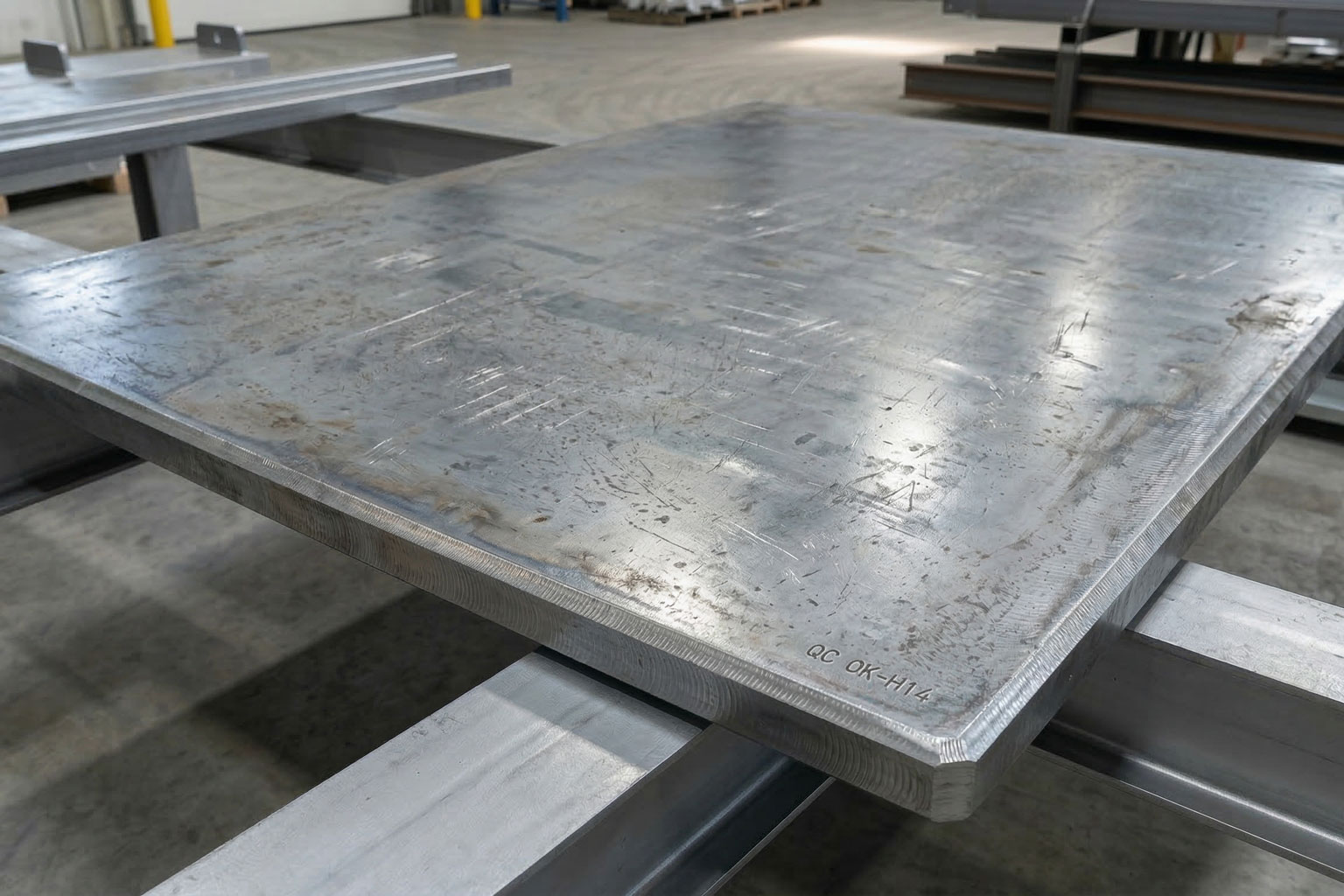
Machined steel plate presents unique considerations during hot dip galvanizing. Unlike hot rolled structural shapes that retain mill scale and surface texture, machined surfaces are smooth, uniform, and free from heavy oxide layers. While this precision finish is beneficial for dimensional control, it can influence coating growth characteristics during galvanizing.
The Galvanize It article addressing minimum coating thickness requirements on machined plate provides foundational guidance. Building on that discussion, this article examines how surface finish affects zinc alloy layer development, why machined plate may produce thinner coatings, and how engineers can ensure compliance with ASTM thickness requirements.
Surface Finish and Coating Growth
Hot dip galvanizing forms zinc iron alloy layers through diffusion between molten zinc and the steel substrate.
Coating thickness is influenced by:
- Steel chemistry
- Steel thickness
- Surface condition
- Immersion time
- Bath chemistry
Machined plate surfaces are typically smoother than rolled steel. The absence of mill scale and surface roughness can reduce reactive surface area, which may result in coating thickness closer to minimum specification limits.
Smooth surfaces do not prevent galvanizing, but they may reduce the degree of accelerated alloy growth seen on rougher or more reactive substrates.
ASTM Thickness Requirements
ASTM A123 defines minimum coating thickness based on steel thickness categories.
For thicker plate materials, the standard requires higher minimum coating thickness values compared to thin sections.
When plate has been machined on one or both faces, inspectors must measure thickness in accordance with ASTM sampling procedures.
If coating thickness meets or exceeds minimum requirements, the product is compliant regardless of surface appearance or comparison to other steel types.
Acceptance must be based on measured data, not expectations derived from non machined material.
Influence of Steel Chemistry
Steel chemistry remains a dominant factor in coating growth.
Elements such as silicon and phosphorus influence reactivity. Machined plate produced from aluminum killed or low silicon steel may exhibit slower alloy layer development.
The combination of:
- Smooth surface finish
- Low reactive chemistry
Can result in coating thickness at or slightly above minimum thresholds.
Understanding both surface and chemistry effects helps interpret inspection results accurately.
Machining After Galvanizing
In some applications, steel plate is galvanized first and then machined.
Machining after galvanizing removes zinc locally and exposes bare steel.
When post galvanizing machining is required:
- A repair method compliant with ASTM standards must be applied
- Zinc rich repair materials or approved metallizing methods may be used
- Repair thickness must meet minimum repair requirements
Engineers should clearly define whether machining occurs before or after galvanizing in project specifications.
Dimensional Tolerances
Precision machined components often require tight dimensional tolerances.
Galvanizing adds coating thickness to all exposed surfaces. Designers should account for this dimensional increase when machining parts intended for galvanizing.
Failure to account for coating thickness may result in fit up issues or rework.
Tolerance planning is particularly important for:
- Bearing surfaces
- Threaded components
- Slip fit assemblies
Coordination between fabricator and galvanizer ensures dimensional compatibility.
Inspection Best Practices
For machined plate, inspection should include:
- Multiple thickness measurements across surfaces
- Verification at representative locations
- Confirmation of continuity
Smooth machined surfaces often produce uniform thickness readings.
Inspection disputes typically arise from assumptions rather than measurement data.
If minimum thickness is achieved, performance expectations remain consistent with corrosion rate modeling for that thickness.
Service Life Implications
Service life in atmospheric exposure is proportional to coating thickness.
If machined plate produces coating thickness at the lower end of ASTM minimum requirements, projected service life remains predictable and compliant with specification intent.
Where extended service life is required in aggressive environments, designers may consider:
- Increased steel thickness category
- Duplex systems
- Material chemistry coordination
Performance modeling should guide specification decisions rather than visual comparison to other components.
Managing Expectations in Projects
Machined steel plate can be successfully hot dip galvanized and meet ASTM thickness requirements. However, smooth surfaces and certain steel chemistries may result in coatings closer to minimum thresholds.
Clear communication during specification development helps avoid misunderstandings during inspection.
If you would like assistance evaluating machined plate design, thickness expectations, or inspection criteria for your project, please reach out through our contact page.
Early coordination supports predictable performance and compliance.
Meeting minimum coating thickness requirements on machined steel plate depends on understanding the influence of surface finish and steel chemistry on alloy layer growth. Smooth machined surfaces may produce coatings near minimum ASTM thresholds, but compliant thickness measurements ensure adequate corrosion protection. Inspection decisions must be based on objective measurement and specification criteria rather than visual comparison.
Frequently Asked Questions About Galvanizing Machined Plate
Does machining reduce galvanized coating thickness?
Machining prior to galvanizing can result in smoother surfaces that may produce coating thickness closer to minimum requirements. Machining after galvanizing removes coating locally and requires approved repair methods.
Why does machined plate sometimes appear to have thinner coatings?
Smooth surfaces reduce reactive surface area and may limit alloy layer growth compared to rougher rolled surfaces. Steel chemistry also influences thickness development.
Can machined plate still meet ASTM A123 requirements?
Yes. If thickness measurements meet or exceed ASTM minimums for the steel thickness category, the coating is compliant.
Should dimensional tolerances account for coating thickness?
Yes. Galvanizing adds measurable thickness to all exposed surfaces. Designers should account for coating buildup when specifying tight tolerances.
Is performance reduced if coating is near the minimum thickness?
No. ASTM minimum thickness requirements are established to provide predictable corrosion protection. Service life modeling should be based on measured thickness and environmental exposure.
How is thickness measured on machined surfaces?
Thickness is measured using calibrated magnetic gauges at representative locations as defined by ASTM inspection procedures.
Can steel chemistry affect coating thickness on machined plate?
Yes. Low silicon or aluminum killed steels may produce slower alloy growth, resulting in coatings closer to minimum values.
Should thicker coatings be specified for aggressive environments?
If extended service life is required, designers may evaluate thicker steel categories or duplex systems rather than relying solely on process adjustments.
